Why amalfi coast ranks.
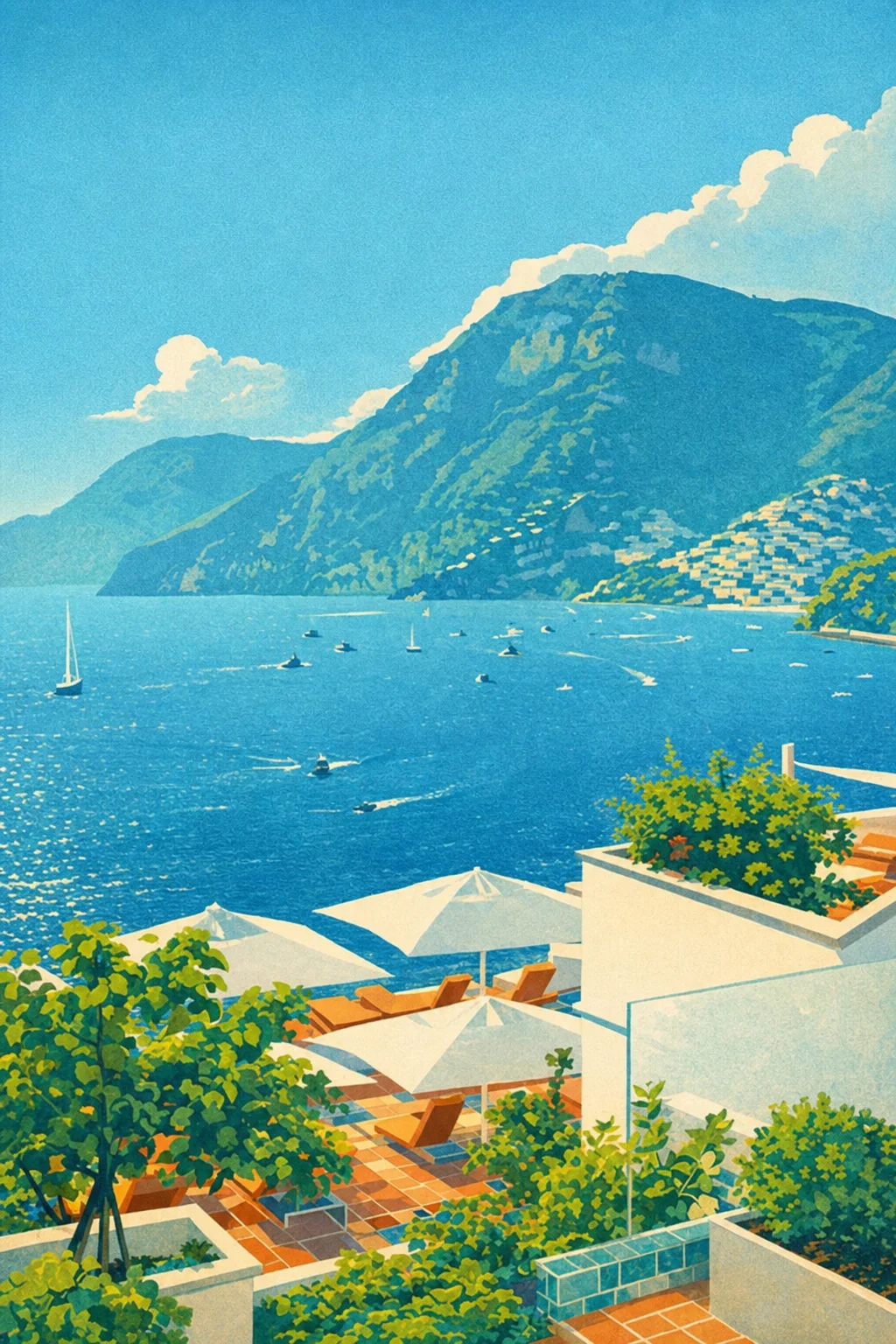
The Amalfi Coast is 50 kilometers of vertical civilization. Villages stack up limestone cliffs in improbable layers of painted stucco, ceramic domes, and staircase streets that function as the primary transit system. The SS163 coast road, carved into the rock face in the 1850s, connects it all in a single ribbon of hairpin turns above the Tyrrhenian Sea, from Positano in the west to Vietri sul Mare in the east. Below the road, lemon terraces drop toward the water on stone-walled platforms that have been cultivated since the 11th century. Above it, the mountains of the Lattari range block the northern weather systems, creating a microclimate where bougainvillea blooms from April through October and citrus grows year-round.
The food here is inseparable from the geography. Lemons the size of softballs become limoncello, lemon cake, lemon granita, and the defining garnish on almost everything. Anchovies from Cetara are salt-cured in wooden barrels using methods unchanged since the Roman colatura tradition. Pasta is made fresh daily in most villages, with scialatielli (a thick, short noodle invented in Amalfi) served with local shellfish. The Neapolitan pizza influence is strong on the eastern end of the coast, where the proximity to Naples keeps dough standards high. And seafood, obviously, is everywhere, but the preparation stays simple: grilled whole fish, raw crudo, clams with white wine.
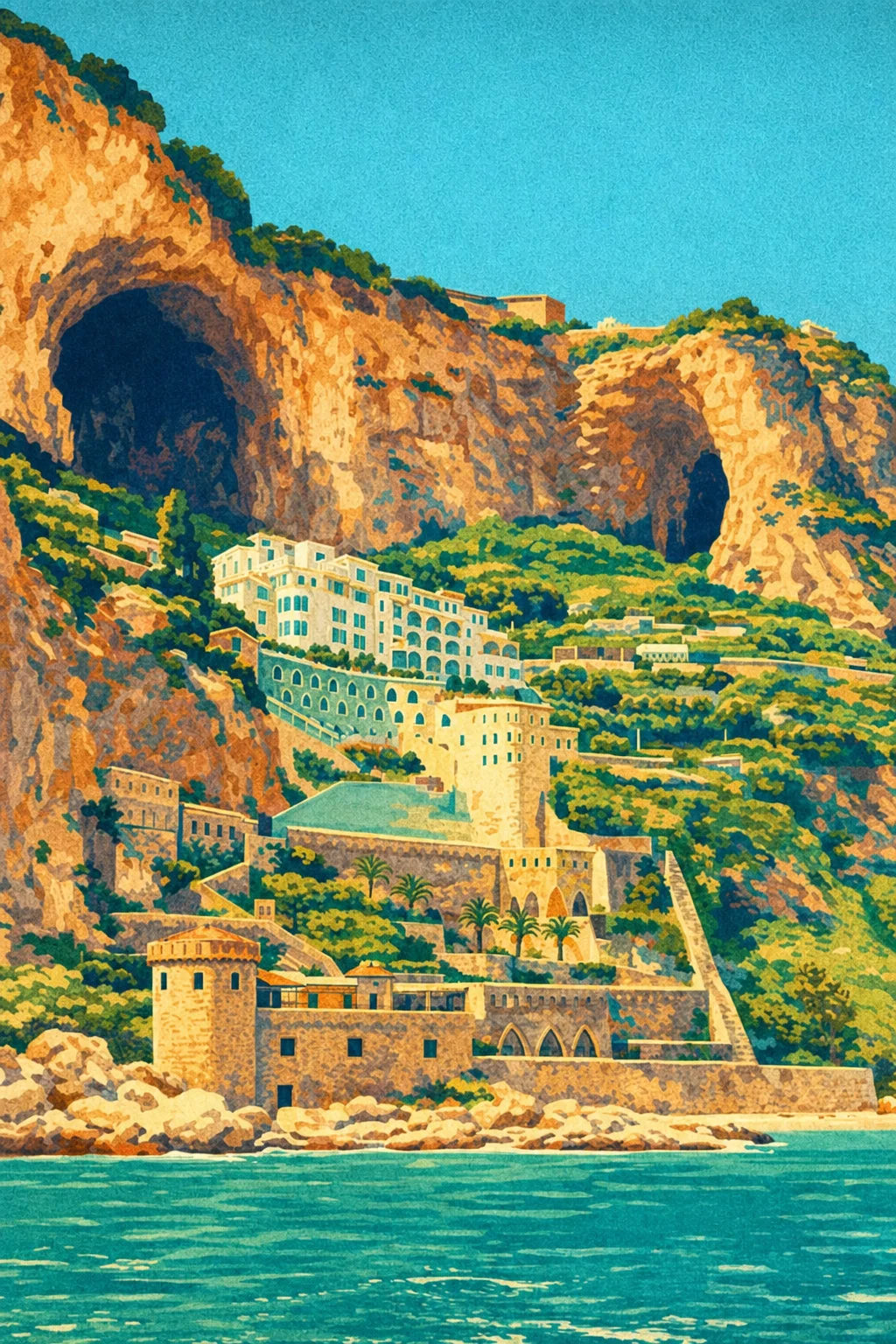
Architecturally, the coast reads as a timeline of Mediterranean power. Arab-Norman cathedrals in Amalfi and Ravello sit alongside Baroque churches, medieval watchtowers converted into private homes, and former monasteries that now operate as some of the most distinctive hotels in Southern Europe. The verticality is the defining feature. Buildings climb the cliff face in terraced layers, connected by hundreds of stone steps. Elevators have been cut into the rock at several hotels to shuttle guests between the lobby level and beach platforms far below.
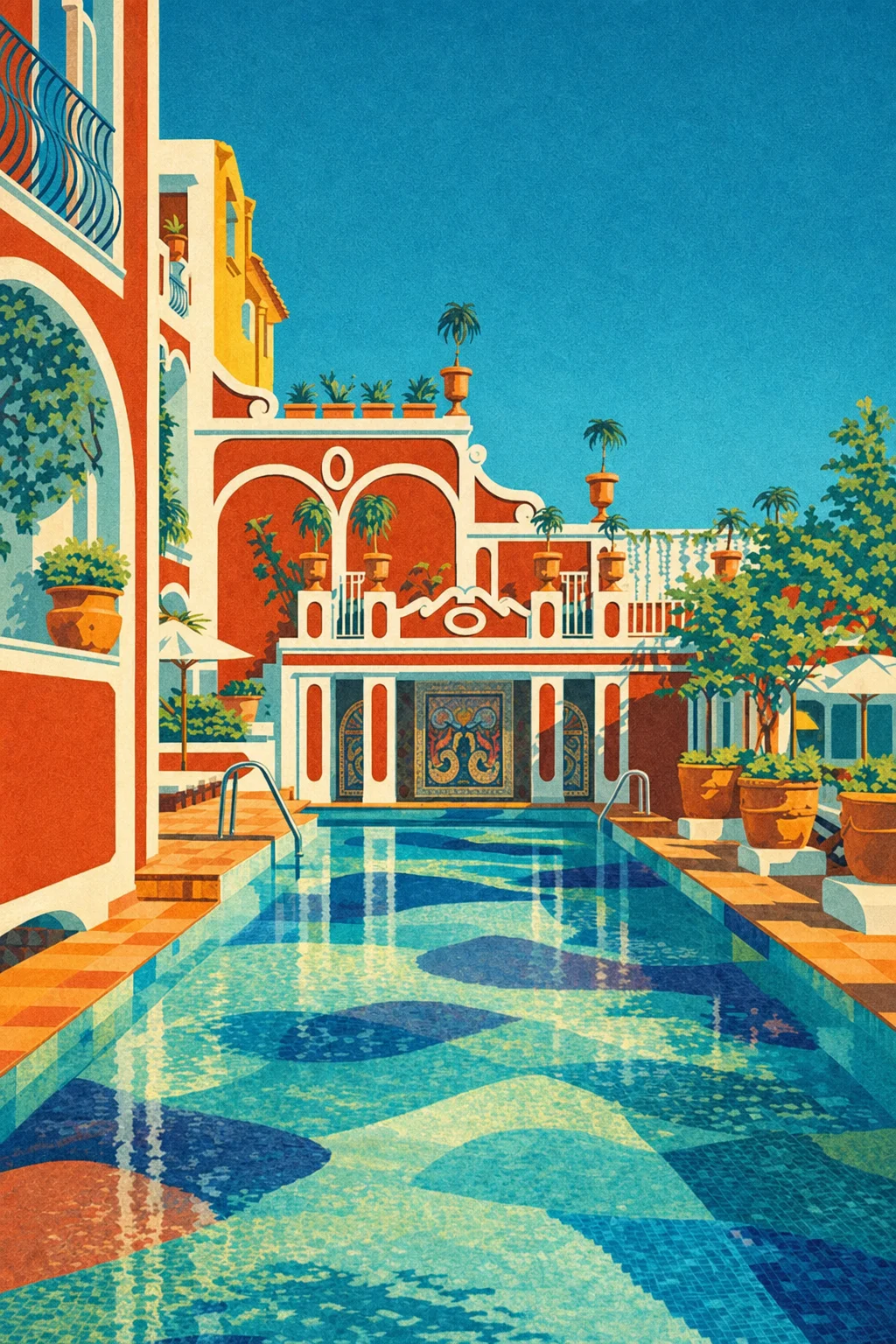
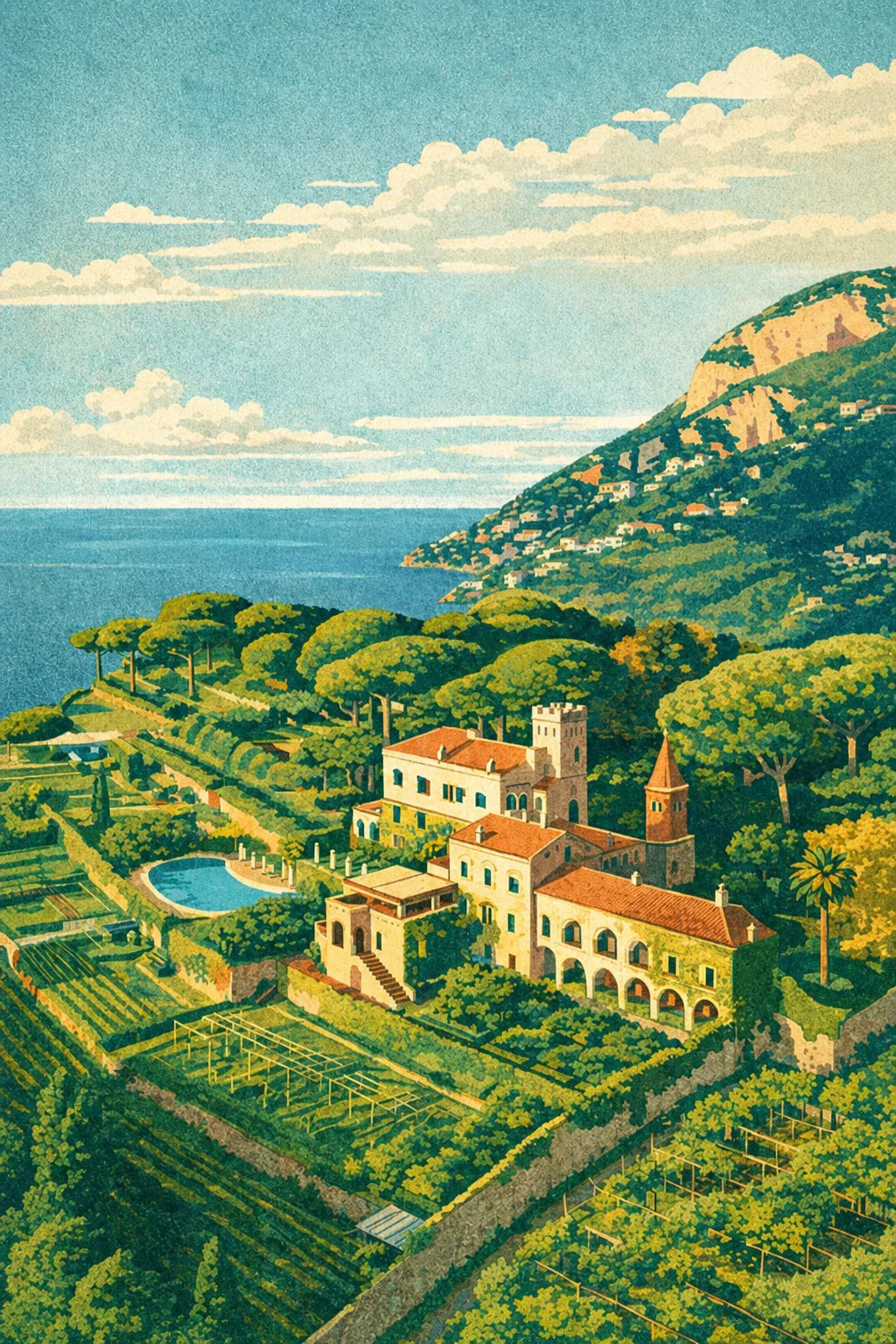
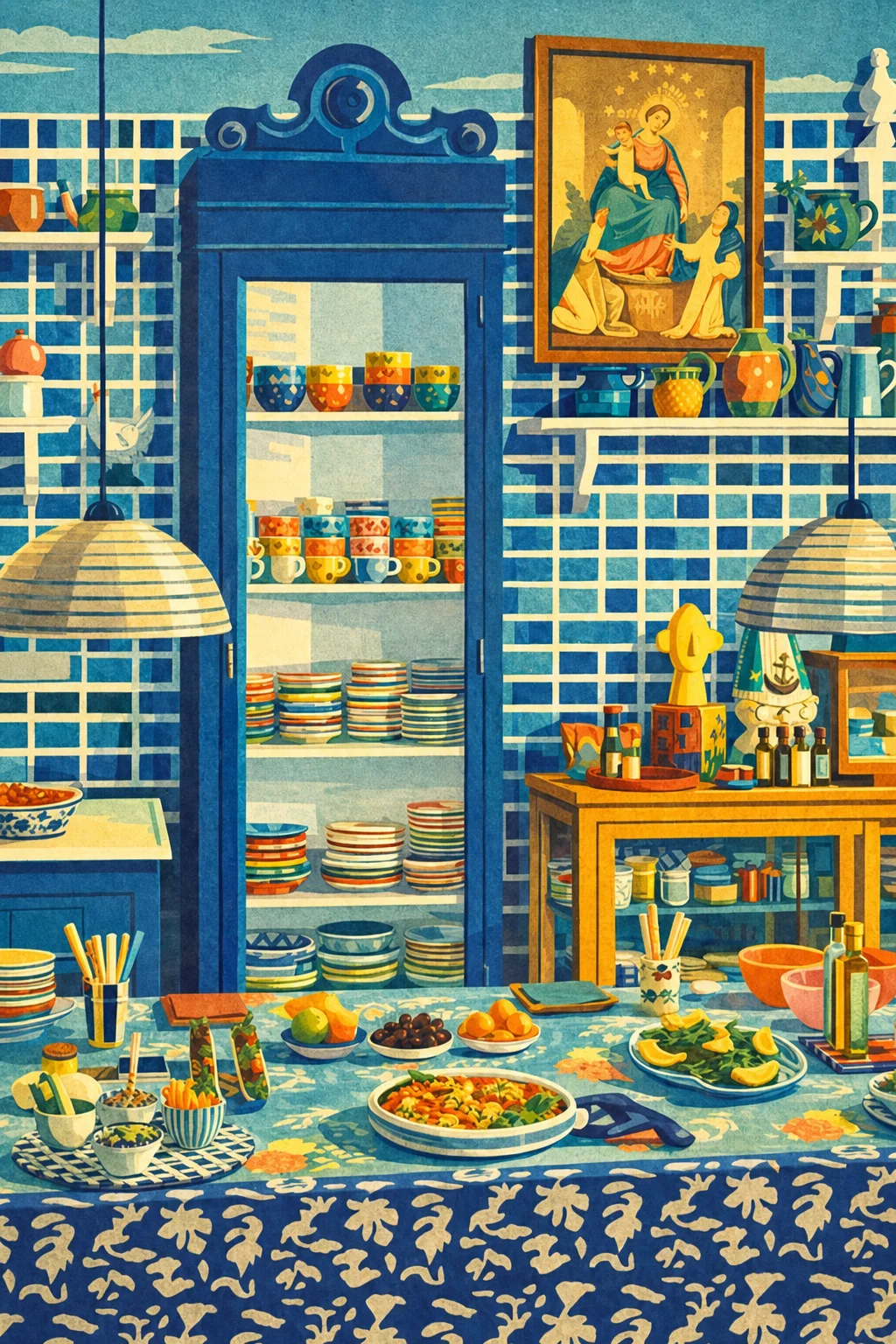
The hotel market reflects this landscape: properties are built into the cliffs, not spread across flat ground, which means room counts stay small and expansion is nearly impossible. Unbookable tracks 46 active properties across the coast. Five of those sit in the Ultra tier, the highest concentration of top-tier properties in any Italian coastal destination. Villa Cimbrone in Ravello leads the index with a score of 83 from just 19 rooms, a converted medieval estate where the Terrace of Infinity remains one of the most photographed viewpoints in Italy. Le Sirenuse in Positano, with 58 rooms and a score of 80, has been family-run since 1951 and still sets the standard for Amalfi Coast hospitality, its hand-painted majolica tiles and La Sponda restaurant now iconic reference points for the region.
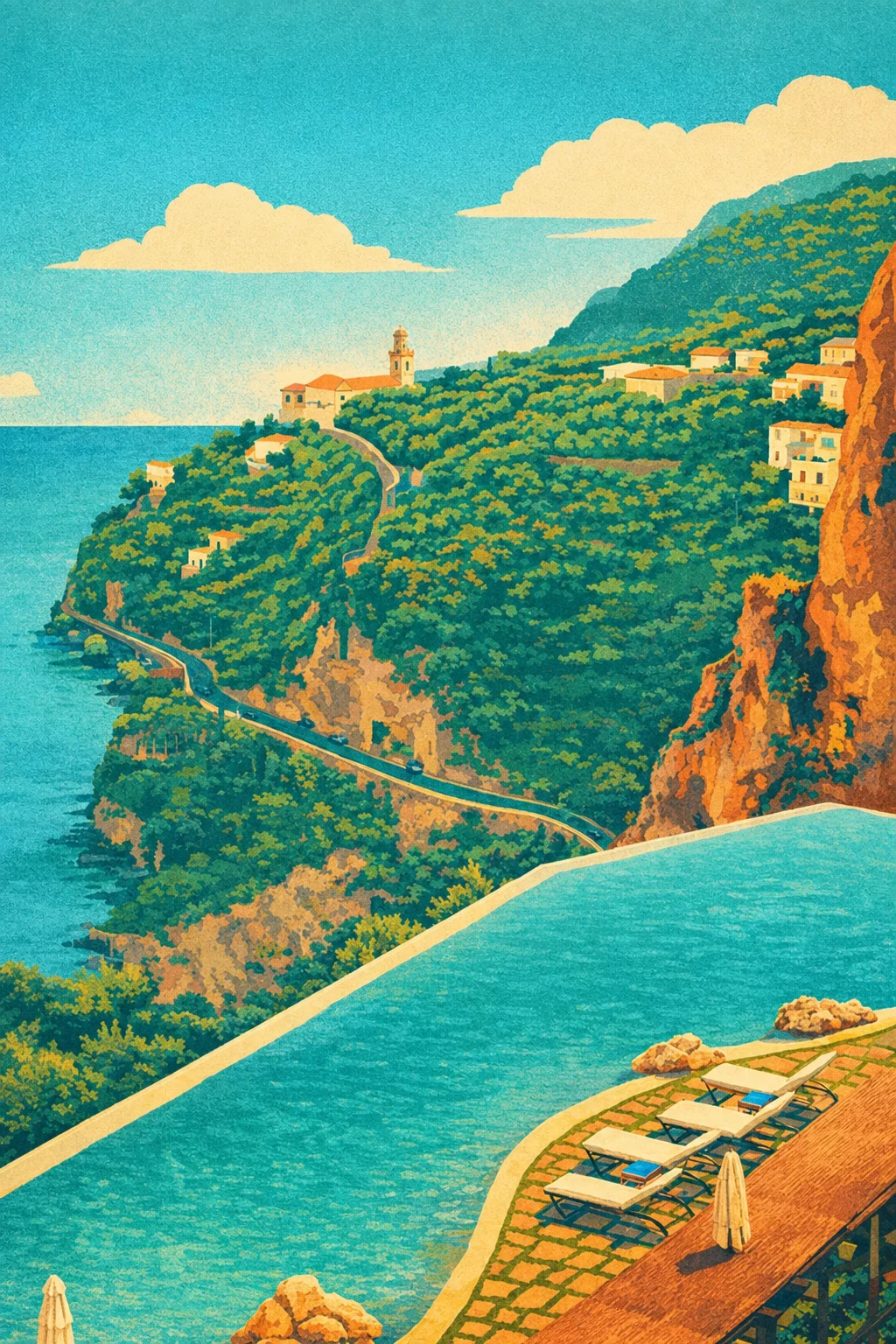
Il San Pietro di Positano takes a different approach, built directly into the cliff with a private beach accessible only by elevator, its 56 rooms carrying a score of 77. Caruso, A Belmond Hotel in Ravello occupies an 11th-century palazzo at the highest point on the coast with an infinity pool that seems to dissolve into the Gulf of Salerno below. And Monastero Santa Rosa, a 17th-century Dominican convent on a stretch of coast between Amalfi and Positano that locals call the Hidden Coast, rounds out the Ultra tier with 20 rooms and a score of 75.
What makes this market unusual is how little it changes. The cliffs prevent new construction at scale. Room supply has barely grown in two decades, and the properties that exist have deepened their identity rather than chased trends. There are no mega-resorts, no casino complexes, no all-inclusive compounds. The coast remains a collection of small, independent hotels where the relationship between property and landscape is the product.
The 2025-2026 season brings a few notable additions. Furore Grand Hotel is set to open along the cliffs near the Fiordo di Furore, and the Art Hotel Marmorata in Ravello has completed a full renovation. Belmond is launching a new Venice Simplon Orient Express route that terminates at Caruso in Ravello starting May 2026, the first direct luxury rail connection to the coast. Il San Pietro di Positano holds the distinction of being the only Amalfi Coast hotel to receive three Michelin Keys, a recognition of its singular guest experience. These are refinements, not disruptions. The coast absorbs change slowly, and that is part of its appeal.
The districts, mapped.
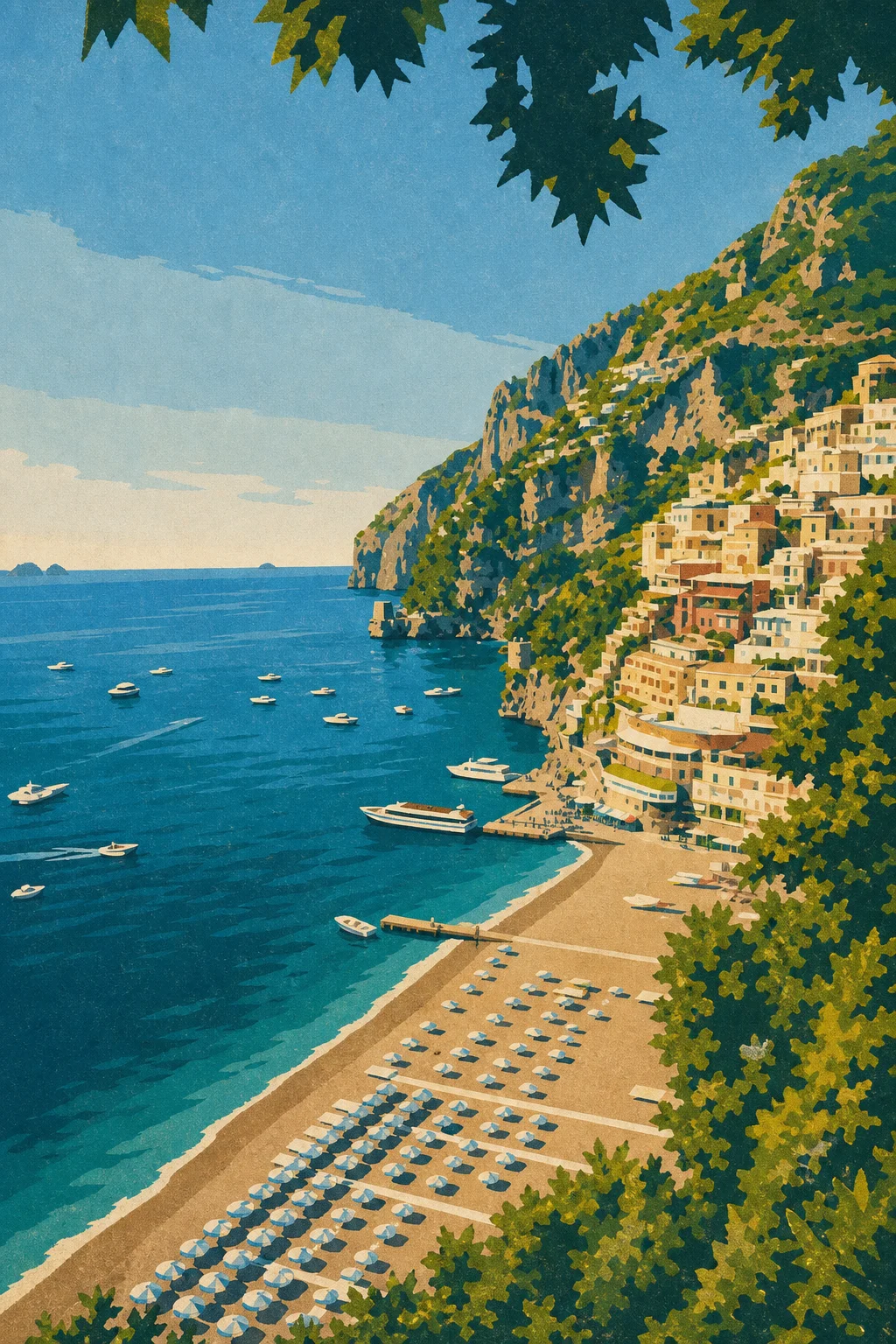
The Amalfi Coast divides into seven distinct areas, running roughly west to east along the cliff face. On the western end, Positano is the most densely developed, with 14 properties and the coast's highest visibility, its cascade of pastel buildings defining the destination's global image. Just east, Praiano offers a quieter alternative with 5 properties spread along a less trafficked stretch of the SS163. The Hidden Coast, the secluded coves between Praiano and Amalfi, holds just 2 properties but the highest average scores on the coast, including the Ultra-tier Monastero Santa Rosa.
Above the shoreline, Ravello sits at 350 meters elevation with 8 properties oriented around the town's famous gardens and concert venues rather than beach access. Two of the five Ultra-tier properties are here, making it the coast's center of gravity for high-scoring hotels.
Along the central and eastern stretch, Amalfi town anchors the largest cluster after Positano with 11 properties, many within walking distance of the cathedral and the historic paper mills of the Valle delle Ferriere. Cetara and the eastern villages remain lightly developed, with a single tracked property, though the area's anchovy tradition and relative calm draw repeat visitors.
The Sorrento Peninsula, at the western gateway to the coast, offers 5 properties with the highest area average score at 57.0, benefiting from easier airport access and a flatter geography that allows larger grounds.
What's moving.
The Amalfi Coast hotel market is defined by physical constraints. Cliff-face construction limits new supply, and the 46 active properties tracked by Unbookable represent a market that has added fewer than five hotels in the past decade. This supply ceiling keeps Room Demand Scores high across all tiers, particularly during the June through September window when demand outstrips available rooms by a significant margin.
The Ultra tier remains concentrated and stable. All five Ultra properties have held their tier positions for multiple index cycles, and none are direct-booking-only, making the coast one of the few Ultra-dense destinations with zero direct-only booking friction. This is unusual: comparable Mediterranean luxury markets in Santorini and the French Riviera show higher direct-only density at the top tier.
Geographically, demand is shifting. Positano remains the most searched and most booked area, but its 14-property cluster carries an average score of 53.9, below the coast average for Ravello (54.3) and significantly below the Hidden Coast (59.0) and Sorrento Peninsula (57.0). The pattern suggests a quality-to-attention gap: travelers default to Positano by name recognition, while scoring data indicates stronger experiences in less saturated areas.
New supply for 2025-2026 is minimal but deliberate. The Furore Grand Hotel, opening in the stretch between Praiano and Amalfi, adds rooms in a previously hotel-free zone. The Art Hotel Marmorata reopens in Ravello after renovation. Neither will materially change the supply picture.
Seasonal compression is intensifying. The coast now operates on a roughly seven-month cycle, with most properties closed November through March. Within the operating season, the spread between peak July demand and shoulder April or October demand has widened over recent years, concentrating more bookings into fewer weeks. For travelers, this means the planning window for July and August at Ultra-tier properties now extends to six months or more in advance. The Belmond Orient Express route launching to Ravello in May 2026 signals continued luxury-segment investment in the shoulder months, an encouraging sign for travelers seeking the coast without the summer squeeze.
The practical year.
The Amalfi Coast is not a year-round destination, and it doesn't pretend to be. Most hotels close entirely from November through March, and the handful that stay open run on reduced services and limited restaurant options. January through March posts demand scores in the single digits.
**April opens the season, and Easter week delivers the first booking pressure of the year.** Demand jumps to around 40, but availability stays reasonable outside the holiday itself. The weather suits walking the Path of the Gods and exploring without crowds, though some beach clubs and boat services haven't yet started running.
**May and June are the sweet spot.** Demand climbs from 65 to 85, the lemon groves are in full bloom, the sea warms enough for swimming by late May, and the SS163 coast road hasn't yet hit its summer gridlock. Restaurant reservations are manageable and hotel rates sit below their July peak. For Ultra-tier properties like Villa Cimbrone or Le Sirenuse, May still requires booking two to three months out, and June availability tightens further.
**July and August are a different animal entirely.** Demand hits 100 in July and 95 in August. The coast road slows to a crawl, particularly on weekends and around the Ferragosto holiday on August 15, when Italian domestic tourism surges and many restaurants switch to fixed holiday menus. Boat transfers become not just convenient but essential for moving between towns. Ultra-tier rooms in these months demand four to six months of lead time. The tradeoff is the fullest expression of the coast's energy: every restaurant open, every beach club running, warm seas, and long evenings.
> September is the most undervalued month on the coast, when quality of experience and ease of booking align most favorably.
**September rewards travelers who wait.** Demand drops to 70 as European schools reopen, yet the sea stays warm from months of summer heat. Hotel rates step down, the SS163 clears, and the grape harvest adds a layer of activity in the hillside towns. Late September into early October is the window worth targeting.
**October is the last shoulder month before the shutdowns.** Demand falls to 40, some properties begin their seasonal closures in the final week, and the weather grows less reliable. It works best for travelers who prioritize quiet over guaranteed sunshine.
Who books here.
The Amalfi Coast is for travelers who want dramatic coastal geography paired with Italian food culture and a hotel market built around small, character-driven properties rather than branded resorts. It works exceptionally well for couples, slow-travel itineraries, honeymoons, and food-focused trips where the daily rhythm involves a long lunch, a swim, and an evening passeggiata through a village that looks the same as it did 200 years ago.
It is also one of the strongest destinations in the Unbookable index for travelers who care about hotel quality at the top end. Five Ultra-tier properties within a 30-kilometer stretch is a rare concentration, and the fact that all 46 tracked properties accept third-party bookings means there is no direct-only friction anywhere on the coast.
The coast rewards travelers who plan. The compressed operating season and limited room supply mean that spontaneous trips in July or August often land in lower-tier options or in towns farther from the center of the coast. Booking three to six months ahead for peak season is standard, not excessive.
Skip the Amalfi Coast if you need a beach-forward trip. The coast's beaches are small, mostly pebble, and crowded in summer. Sand beaches are scarce and typically attached to private clubs. Skip it if you want nightlife beyond a late dinner. Skip it if mobility is a concern, as the terrain is relentlessly vertical, with hundreds of steps between most hotels and their nearest town centers. And skip it if you want a winter escape: this coast closes when the weather turns, and it does not apologize for it.