Why bali ranks.
Bali is an island of compound layers. Drive an hour in any direction and the landscape reinvents itself: the sculpted rice terraces of Tegallalang give way to the black-sand surf breaks of the Bukit peninsula, volcanic ridges dissolve into jungle valleys thick with frangipani and clove, and 20,000 temples punctuate the geography so thoroughly that daily offerings of flowers and incense line every sidewalk and dashboard. It is 5,780 square kilometers of Hindu culture in the world's largest Muslim-majority nation, and that singularity shapes everything from the ceremonial processions that halt traffic without apology to the temple architecture that anchors even the most contemporary hotel designs.
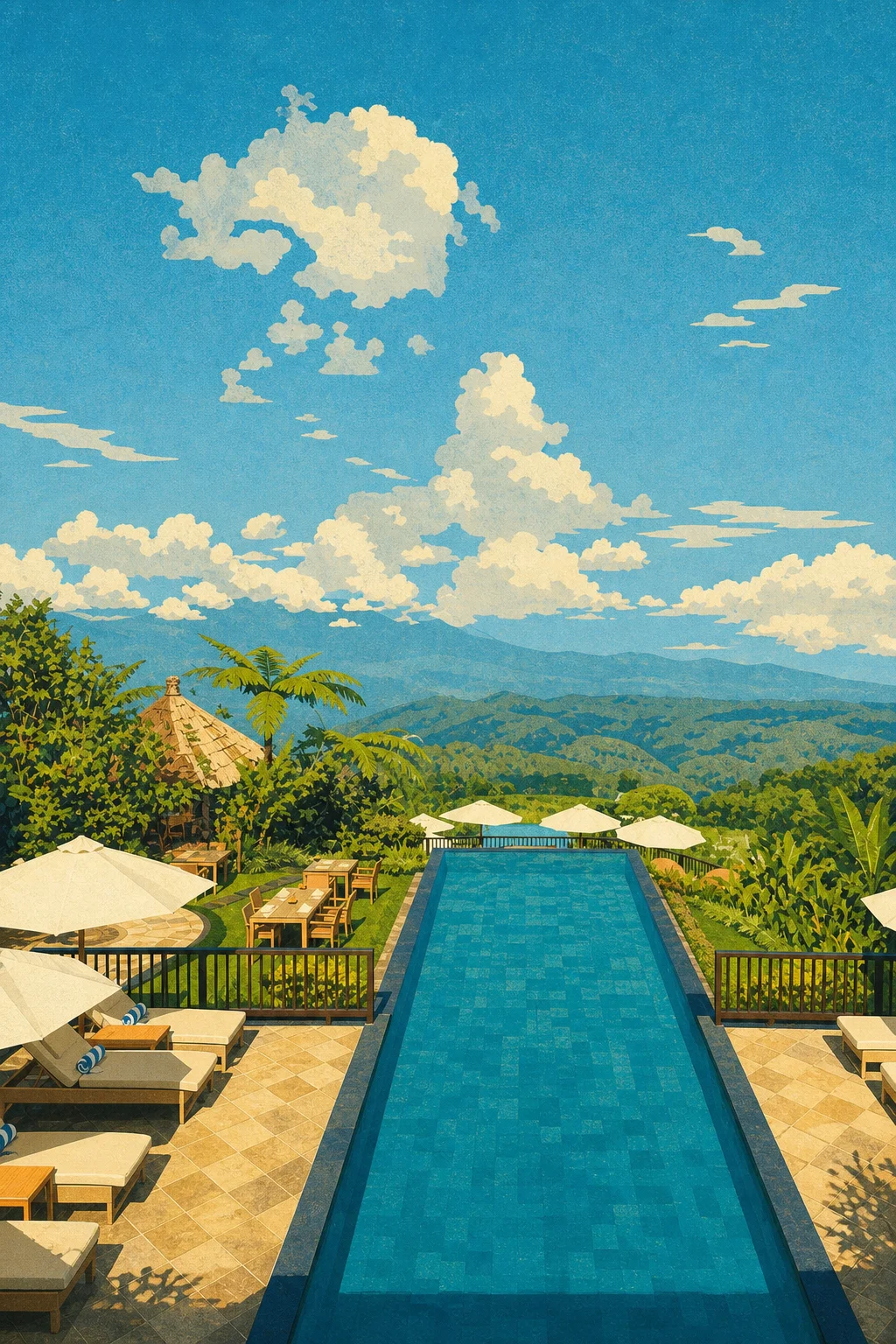
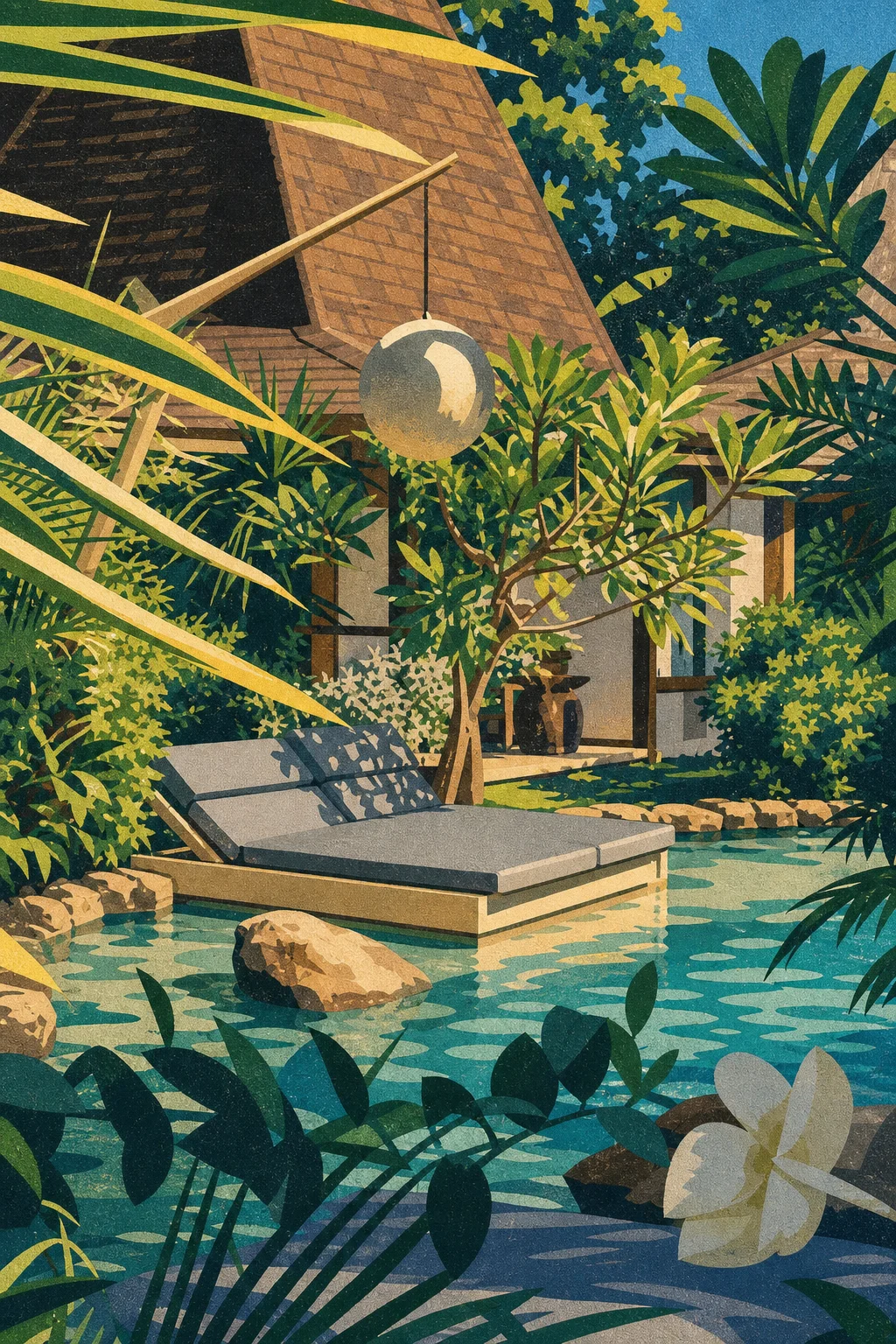
The hotel market here is unlike anywhere else in Southeast Asia. Bali's building tradition is rooted in the private villa compound, and that DNA runs through its hospitality industry. Rather than high-rise towers, you find low-slung pavilions open to the elements, infinity pools that terminate at jungle canopy or Indian Ocean horizon, and outdoor bathrooms that treat a shower as a garden experience. The island's design language pulls from volcanic stone, reclaimed teak, woven bamboo, and hand-cut terrazzo. International architects discovered this canvas decades ago, and the result is a concentration of design-forward small properties that few destinations can match.
Unbookable tracks 75 active properties across the island, spread over eight distinct areas. The top-scoring property on the platform is Uluwatu Surf Villas, a 10-room clifftop compound in South Bali that pairs raw limestone architecture with direct paddle-out access to some of the island's best reef breaks. It holds an Ultra tier rating, and demand runs so high it currently shows as sold out. Veluvana Bali, a five-room bamboo retreat in East Bali, matches that score at Ultra tier while operating at scarce availability. Both properties illustrate a pattern: the island's highest-performing stays tend to be small, architecturally distinctive, and built around a specific point of view rather than a generic resort template.
The range, though, is the real story. Ulu Cliffhouse brings seven rooms of brutalist concrete and ocean drama to the southern limestone coast. Le Pirate Beach Club on Nusa Ceningan offers 12 rooms of deliberately stripped-back island living, painted in the brand's signature blue-and-white palette. Munduk Moding Plantation, with 17 rooms in the volcanic highlands of North Bali, sits among coffee and clove plantations at an elevation where you need a blanket at night. These five properties alone span four of the island's eight areas and four different climate zones.
Bali's hotel market has never stopped evolving. International arrivals hit 6.95 million in 2025, a 10 percent increase year-on-year and a new all-time record surpassing the pre-pandemic peak. New supply keeps arriving: Maar Resort and Spa opened in Ubud in August 2025 with jungle-wrapped villas and private pools, Hyatt launched The Kleo in Seminyak with 60 rooms near Petitenget Beach, and Paradisus by Melia reopened as a full all-inclusive concept in February 2026. Meanwhile, a regulatory shift requiring all short-term rentals to demonstrate full legal compliance by March 2026 is reshaping the competitive landscape, pushing demand toward professionally managed properties.
What makes Bali work as a destination is the compression of variety into a small geographic footprint. You can surf a reef break at dawn, walk through a monkey forest before lunch, eat slow-roasted suckling pig from a warung at midday, and watch a Kecak fire dance above the ocean at sunset. The hotel scene mirrors that density. Whether you want a bamboo treehouse, a concrete villa cantilevered over a cliff, a plantation estate in the mountains, or a beach shack on a limestone island, the options exist within a two-hour drive of each other. That is Bali's structural advantage, and it shows in the data: 75 properties across eight areas, with tier ratings from Accessible to Ultra, and average scores that vary meaningfully by region.
The districts, mapped.
Bali's eight areas divide into natural clusters that track the island's geography. The south coast holds the highest concentration of properties: South Bali (16 properties) covers the Bukit peninsula and Uluwatu clifftops, while Canggu (12 properties) runs along the southwest shoreline where rice paddies meet black-sand surf beaches. Together they account for more than a third of the island's tracked inventory.
The central highlands belong to Ubud (16 properties), where the terrain shifts to river gorges, volcanic ridges, and the terraced rice paddies that define most visitors' mental image of the island. Ubud's hotel scene leans toward jungle-wrapped retreats and wellness-oriented design.
The outer ring covers three less-trafficked zones. East Bali (5 properties) holds the island's highest average score at 58.6, driven by small, architecturally ambitious stays like Veluvana Bali. North Bali (12 properties) climbs into volcanic plantation country around Munduk and Lovina. West Bali (5 properties) remains the island's quietest corridor, closer to the national park and the Java ferry crossing.
Offshore, the Nusa Islands (5 properties) and Gili Islands (4 properties) offer car-free island life with strong snorkeling and diving. The Gili Islands carry the second-highest average score among all areas at 53.8, reflecting a handful of well-executed small properties on tight geographic footprints.
What's moving.
Bali's hotel market is running on two opposing forces: record visitor numbers and rising supply pressure. International arrivals reached 6.95 million in 2025, a new all-time high that exceeded the previous 2019 peak by a meaningful margin. Yet early 2026 data shows occupancy softening from 2024 peaks, with operators reporting flatter sentiment and some segments expecting declining room rates as new inventory filters through.
The supply pipeline is active. Maar Resort and Spa Ubud, The Kleo Seminyak (Hyatt), Equipoise Resort Ubud, Fairfield Bali Kuta, and voco Seminyak all opened during 2025. Paradisus by Melia relaunched in February 2026. Novotel Ubud Resort is expected later this year. The pattern is clear: international brands are entering or expanding, and Ubud and the south coast are absorbing most of the new keys.
Geographically, Canggu and the Berawa corridor have dominated branded-residence development, accounting for roughly 40 percent of the island's 70-plus hospitality-managed projects currently on sale. But rising land costs are pushing new launches northwest toward Seseh, Pererenan, and Nyanyi. This geographic migration matters for travelers: the next wave of Bali's design hotels will likely open in areas that barely registered five years ago.
A regulatory shift is also reshaping the market. Indonesia now requires all short-term rentals to demonstrate full legal compliance by March 31, 2026. This is expected to thin out unlicensed villa operators and accelerate demand for professionally managed properties. For Unbookable's tracked inventory of 75 legally operating properties, this may prove a tailwind.
On the platform, East Bali stands out as the performance leader with an average score of 58.6, well above the island mean, driven by a small cluster of ambitious properties operating at low room counts. South Bali and the Gili Islands follow. The three Ultra-tier properties (Uluwatu Surf Villas, Veluvana Bali, Ulu Cliffhouse) are all located outside the traditional tourist corridor, reinforcing the trend that Bali's highest-rated stays reward geographic specificity over convenience.
The practical year.
Bali runs on two overlapping clocks: its equatorial wet-dry cycle and the school holiday calendars of Australia and Europe, its two largest visitor markets. Where those systems collide, demand spikes hard. The rest of the year, the island is far more negotiable than its reputation suggests.
**The dry season runs April through October, and July and August are its unforgiving peak.** European summer holidays flood the island in July; Australian school holidays layer on top in August, pushing demand to its annual maximum. Skies clear, humidity drops, and the island's outdoor infrastructure runs at full capacity. If your dates are fixed in those two months, book early. Ultra and Very High tier properties fill months in advance. Uluwatu Surf Villas currently shows as sold out, and Veluvana Bali runs at scarce availability through peak periods.
**The shoulder windows, April through May and September through October, deliver the best value equation on the island.** Weather is reliably dry, crowds thin considerably once the school-holiday cohorts leave, and Room Demand Scores fall to roughly half the August peak. These months are especially strong for Ubud and the highland properties, where clear mornings reveal volcanic panoramas that vanish during the wet season.
> Book the April-to-May shoulder for dry weather, moderate demand, and the full range of the island's 75 tracked properties available without peak-season competition.
**The wet season spans November through March, and it is more manageable than the name implies.** Rain arrives in intense afternoon bursts rather than all-day gray, and mornings are often clear. Temperatures stay warm. The trade-offs are real: some outdoor activities turn unreliable, rural roads can flood, and boat crossings to the Nusa and Gili Islands get rougher. But hotel pricing drops significantly, and the rice terraces turn an almost electric green.
**One date demands specific attention: Nyepi, the Balinese Day of Silence, falls in March on a date that shifts annually with the Saka lunar calendar.** The entire island shuts down for 24 hours. No flights land or depart, no cars move, no lights are permitted after dark, and hotels ask guests to remain on property. It is a genuinely singular cultural experience, but it requires planning. If your trip overlaps with Nyepi, confirm your hotel's policy in advance and treat the day as part of the itinerary rather than an inconvenience.
Who books here.
Bali works for couples seeking villa privacy, surfers chasing reef breaks, design and architecture enthusiasts, wellness travelers who want yoga and spa infrastructure built into the landscape, and families with kids old enough to handle motorbike-dense roads and tropical heat. The island's compression of terrain means a single trip can combine ocean, jungle, volcanic highlands, and island-hopping without internal flights.
It is particularly strong for travelers who care about where they sleep. The villa tradition means even mid-range properties tend to offer private pools, outdoor living spaces, and a level of architectural intention that would cost three times more in the Caribbean or Mediterranean. The 75 properties tracked on Unbookable range from Accessible to Ultra tier, with options at every price point that prioritize design over room count.
Bali also suits long stays. Visa-on-arrival allows 30 days (extendable to 60), and the cost of living outside peak-season hotel rates is low. Canggu has become a base for remote workers specifically because the cafe, coworking, and fitness infrastructure rivals cities at a fraction of the cost.
Skip Bali if you want emptiness. Even the quiet corners of the island carry a background hum of motorbike traffic, construction, and tourist infrastructure. The south coast and Canggu can feel congested, particularly in peak season. Skip it also if you want reliable luxury-brand service at chain-hotel scale. Bali's best properties are independent and small (the top five on Unbookable average just 10 rooms each), which means personality over standardization. If you prefer the predictability of a 200-room managed resort, the island has those too, but they are not where Bali distinguishes itself.