Why ho chi minh city ranks.
Ho Chi Minh City, which almost everyone who lives here still calls Saigon, is the commercial engine and appetite of southern Vietnam: a low, dense sprawl on the Saigon River where the Mekong Delta's humidity, the traffic of millions of motorbikes, and a French colonial street grid all press together. The rhythm hits you at street level. Coffee is a civic ritual, taken strong and sweet over ice or thickened with condensed milk, poured at plastic-stool cafes and glass-walled roasteries alike. A block of grilled pork and lemongrass smoke sits beside a shop selling lacquerware. This is a city you read with your senses before you read it on a map.
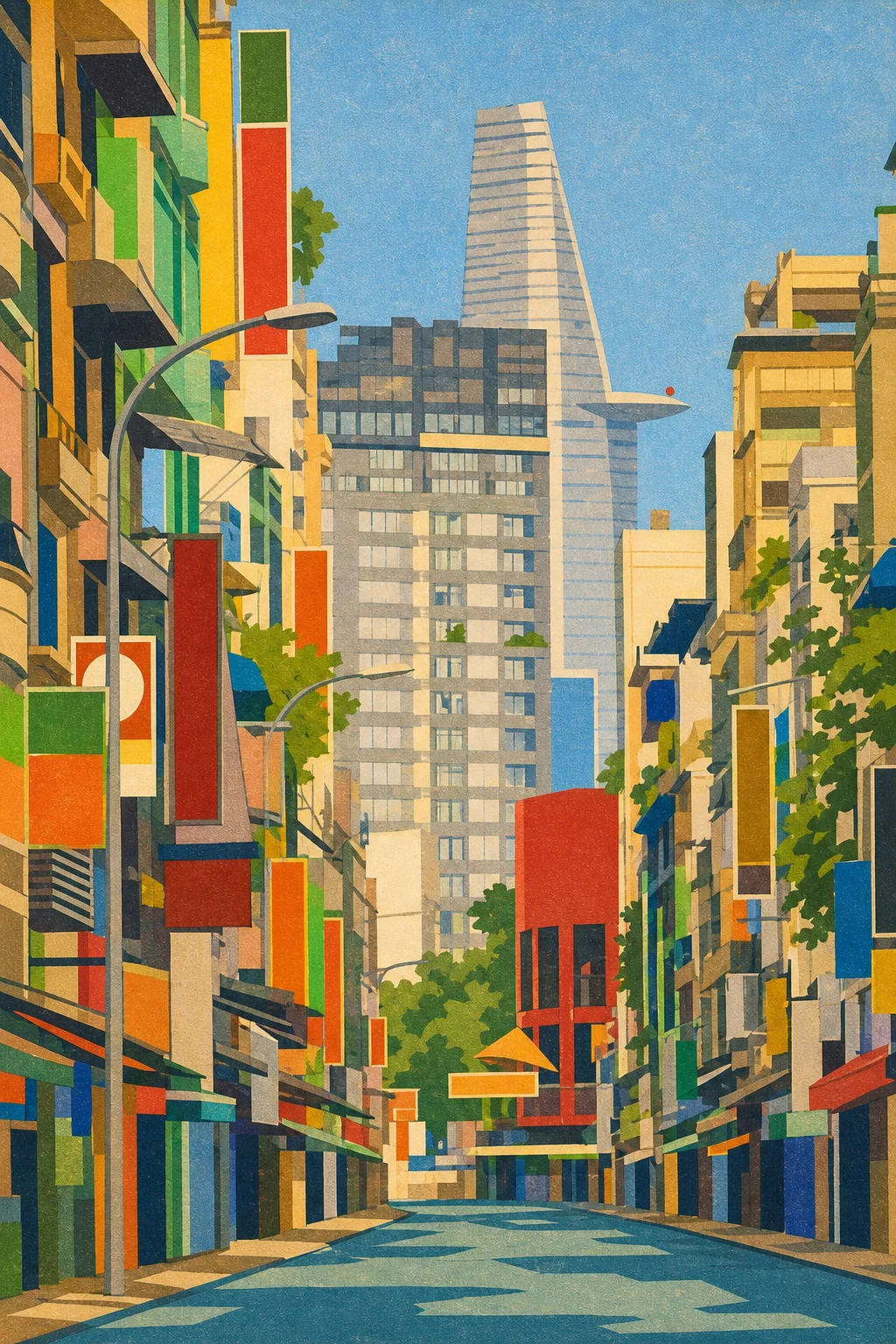
The bones are colonial and the skin is contemporary. In District 1 you get the postcard set: the red-brick Notre-Dame Cathedral, the Central Post Office built in Gustave Eiffel's era of iron and glass, the century-old Opera House, and Nguyen Hue, the wide pedestrian boulevard that fills every evening. A short walk away, Ben Thanh Market anchors the older tourist trade while Pham Ngu Lao and Bui Vien run the backpacker nightlife. District 3 keeps the leafy villa streets and the best of the old-money cafe culture. Cross the river to Thao Dien and the register changes entirely: tree-shaded lanes, riverside bars, an international crowd, and boutique hotels that trade grandeur for calm. Above it all, the Landmark 81 tower marks the skyline from Binh Thanh, Vietnam's tallest building and a vertical district of its own.
Food is the reason many people come and the reason more return. Pho and banh mi are the exports, but the city's own dishes reward attention: com tam, the broken-rice plate with grilled pork and a fried egg; bun thit nuong; the seafood streets of Cholon, the historic Chinatown in District 5 where Cantonese temples and herbal-medicine shops still hold. Eat on the street, then climb to a rooftop bar for the river view and the price jump.
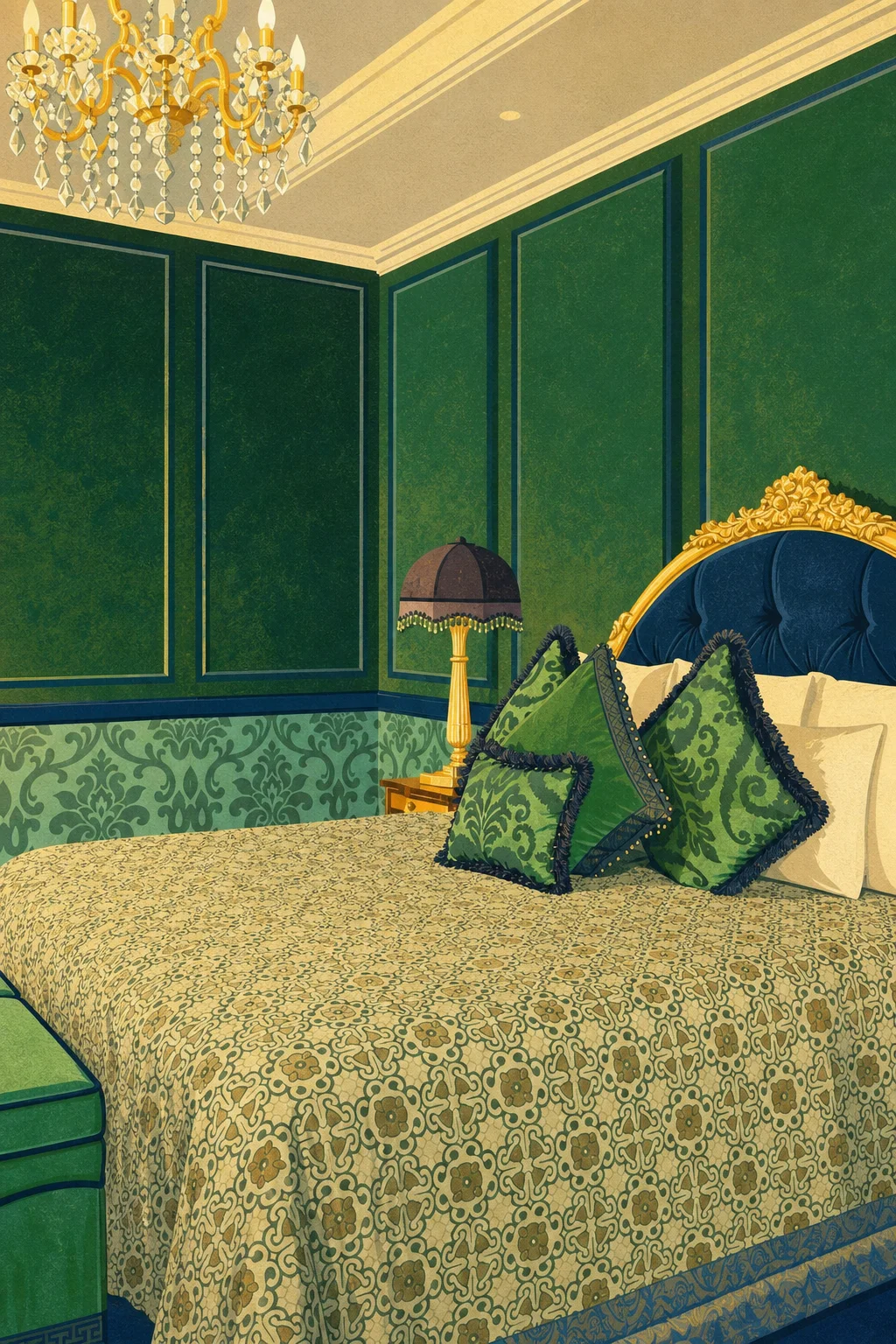
The hotel market follows the same split personality. At the top of the demand curve sits the Reverie Saigon, 286 rooms of unapologetic Italian baroque on Nguyen Hue, a High-tier property whose demand runs well ahead of its size. Its opposite number is Amanaki Thao Dien, a 29-room riverside boutique also in the High tier, proof that the small, design-led places generate the sharpest booking pressure of all. Between them are the workhorses of the central core. Hotel Continental Saigon, open since 1880 and forever tied to Graham Greene's The Quiet American, still trades on its colonial address and its Moderate-tier steadiness. Vinpearl Landmark 81, Autograph Collection, puts 223 rooms in the sky under Marriott's badge and pulls the demand of a genuine landmark. Fusion Original Saigon Centre brings its spa-inclusive formula to the Ben Thanh edge and sits near the top of our tracked set for demand.
Why is booking tense here despite the hundreds of hotels citywide? Timing and concentration. The dry-season and Tet peak stacks four high-demand months onto a compact central footprint, and the properties travelers actually name, the design landmarks and the small Thao Dien boutiques, are few. When Amanaki has fewer than thirty rooms and a single busy week fills it, the difference between planning six weeks out and six days out is the difference between the room you wanted and a scramble across the river. Across our tracked coverage of 25 properties, not one is direct-only, so access is never the problem. The calendar is.
That is the tension Saigon rewards understanding. The city is generous, cheap by the standards of the region's other capitals, and endlessly walkable in its core. But the rooms with a story, a river view, or a rooftop worth the climb move on a rhythm set by the dry season and the Lunar New Year, and they move early.
The districts, mapped.
Saigon's areas sort into three moods rather than a neat grid. The central colonial core is where most visitors land and where most of our tracked coverage sits: Dong Khoi and the riverfront hold the grand old addresses, the walkable boulevards, and the largest share of our tracked properties; Ben Thanh and Pham Ngu Lao run from the market's tourist trade into backpacker nightlife; District 3 keeps the quieter villa-lined streets and cafe culture a few blocks back from the noise. Cross the river and the mood shifts to the modern city: Thao Dien and An Phu trade colonial weight for tree-shaded lanes, riverside bars, and small design-led boutiques, while Binh Thanh rises into the Landmark 81 tower and its vertical-luxury address. Further out, Phu My Hung and District 7 offer the planned, low-rise calm of Saigon's newer south, a district our tracked coverage has yet to reach. And Cholon, the historic Chinatown in District 5, stands apart entirely: temples, wholesale markets, and some of the oldest continuous street life in the city. Each cluster answers a different question about how you want to wake up in Saigon, grand and central, calm and riverside, or deep in the working city, and the area pages go district by district from here.
What's moving.
What's rising in Saigon is verticality and the boutique. Vinpearl Landmark 81, Autograph Collection, put 223 Marriott-badged rooms inside Vietnam's tallest tower and pulls Moderate-tier demand from a real skyline landmark, the clearest sign that the city's luxury story is moving upward off the colonial street grid. At the other end of the scale, the small riverside boutique is the quiet growth engine. Amanaki Thao Dien reaches the High demand tier on just 29 rooms, and the Thao Dien and An Phu cluster reads as an area punching well above its room count. Design and intimacy, not size, are where the sharpest demand now sits.
What's saturating is the central core. Dong Khoi and the riverfront carry 8 of our 25 tracked properties, the densest cluster in the city, anchored by the High-tier Reverie Saigon and the historic Hotel Continental. This is the address travelers name first, and it is also where new arrivals compete hardest for attention; demand is strong but the field is crowded. Ben Thanh and Pham Ngu Lao add another 6 properties at more accessible tiers, thickening the central field further.
What the data does not yet show is a true ceiling. No property in our tracked Saigon set reaches the Ultra or Very High demand tiers; the top of the market is High, held by the Reverie and Amanaki. That leaves room for a breakout, most likely a design-forward opening in Thao Dien or a branded tower play near Landmark 81, to redraw the top of the curve.
One structural fact underlies all of it: every one of the 25 tracked properties accepts third-party booking, none direct-only. Saigon is an open, OTA-friendly market where the competition plays out on price and timing rather than access. That keeps rates honest and keeps the pressure squarely on the calendar, where the dry-season and Tet peak does the real work.
The practical year.
Saigon's demand curve is blunt, and reading it before you book is the difference between the room you wanted and whatever's left. Four months — December through March — sit at the top for a reason: this is the only stretch when the city's heat arrives without the daily monsoon, and it overlaps with Tet, the Lunar New Year that pulls the entire country into motion at once.
**December through March is peak, and it fills from the top down.** The dry season delivers the conditions everyone wants, which is exactly why the good room categories close first. For the central design hotels or a small Thao Dien boutique in this window, treat four to eight weeks of lead time as your floor and book the better categories immediately.
**Tet itself deserves its own strategy.** Falling in late January or February, it is the single busiest booking moment of the year — and the strangest on the ground. Many family-run restaurants and shops shut for several days as locals return to their hometowns, and the normally relentless traffic thins to something almost calm. Plan around the closures and it's fascinating; ignore them and it's frustrating.
**The shoulders are where the value hides.** April and November carry high but not peak demand, buying you dry-season conditions without the Tet surcharge — the sweet spot repeat visitors quietly aim for. This is the window that rewards travelers who know the calendar without paying for the crowd.
> September and October are the easiest months of the year to walk into the room you actually wanted: warm, green, quiet, and roughly half the demand of peak.
**The long wet season, May through October, cuts demand by about half.** Rates and booking friction fall with it. The rain is real but rarely a washout — it arrives as heavy afternoon downpours that clear within an hour or two, leaving mornings and evenings open. There is no closed season in Saigon and no month the city stops working; what changes is the math of getting a bed. Plan the peak months like a competition, the shoulders like a gift, and let the wet season carry the trips where flexibility matters more than sunshine.
Who books here.
Pick Ho Chi Minh City if you travel on your appetite and your feet. Among the destinations Unbookable covers, this is one of the best-value big cities in the region: a place where the street food is the main event, the coffee culture is a genuine reason to linger, and the collision of colonial and contemporary gives you real texture without the price tag of Singapore, Hong Kong, or the top of Bangkok. It rewards travelers who want density, energy, and a city that never quite stops.
Choose it, too, if you want a base rather than a beach. Saigon is the logical launch point for the Mekong Delta, the Cu Chi tunnels, and onward flights across Vietnam, and it works beautifully as the urban bookend to a coast or highlands trip.
Skip it, or at least go in clear-eyed, if you want quiet, cool air, or a resort. The heat is relentless and year-round, the traffic is a full-contact sport, and the city offers energy rather than calm. If you are after a serene, low-rise retreat, Thao Dien softens the edges but the rest of Saigon will not. And if a rooftop pool with a river view is non-negotiable, know that the properties delivering it, the Reverie, Landmark 81, a few Thao Dien boutiques, are exactly the ones that book earliest and hold the firmest demand tiers.
Come for the food, the history, and the pace. Stay long enough to cross the river and see the calmer city on the other side. Just do not come expecting to slow down the moment you land.