Why kyoto ranks.
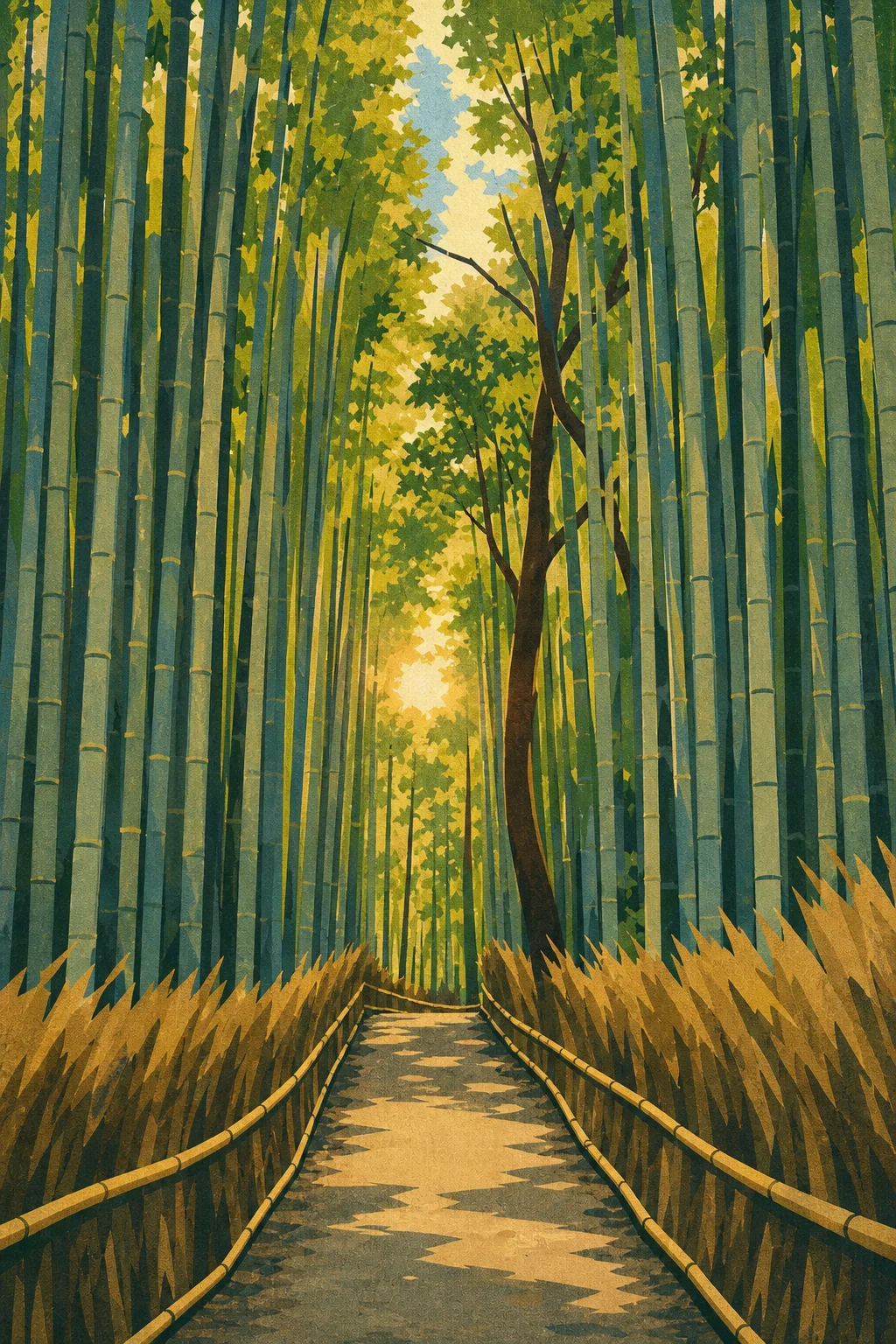
Kyoto sits in a basin closed on three sides by low forested mountains, at the southern end of Honshu in Japan's Kansai region. Water runs through everything here. The Kamo River splits the city north to south, narrow channels line the lanes of Gion, and the moss gardens of the western temples depend on the damp, still air that settles between the hills. Founded as the imperial capital in 794 and spared the worst of the twentieth century's wars, Kyoto still follows the Chinese-style grid the court laid out, its numbered streets running clean from east to west. You feel the age in specific textures: the give of tatami underfoot, the smell of cypress in a temple hall, the wash of sound as a bamboo grove in Arashiyama moves in wind.
This is where much of what the world reads as "Japanese" was codified. The tea ceremony, kaiseki cooking, Noh theatre, and the geiko and maiko districts of Gion and Pontocho all took their form here. Food is seasonal to the point of ritual: a kaiseki menu can turn on a single spring bamboo shoot or an autumn matsutake, tofu and yuba are treated as main courses near the temples, and the covered Nishiki Market runs a few hundred metres of pickles, knives, and sea bream. The architecture is a layering of eras, from Heian temple compounds and Momoyama gold to the low wooden machiya of the old merchant quarters and, more recently, a wave of quiet concrete-and-timber design hotels.
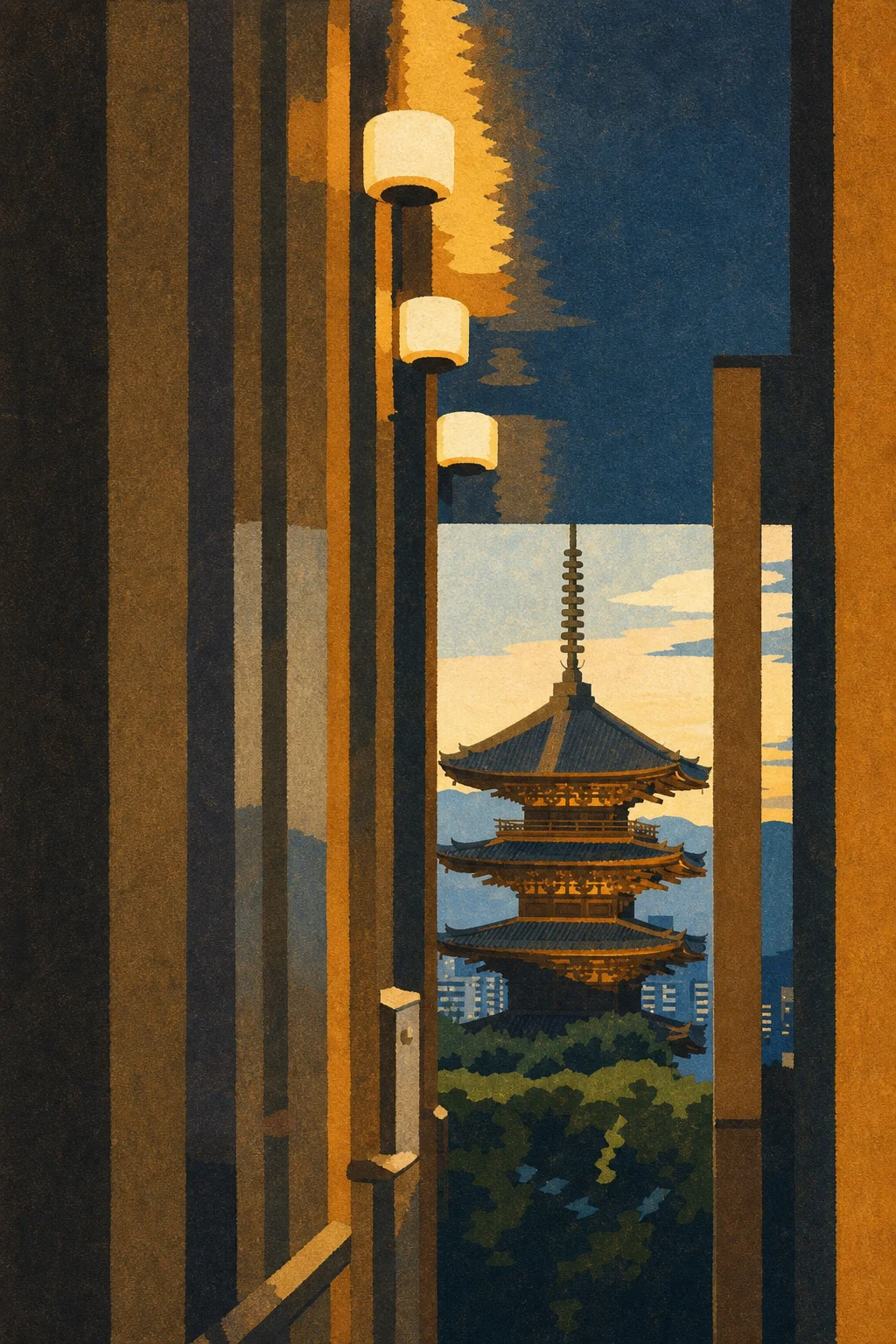
That layering is exactly what the hotel scene now trades on. Two kinds of property dominate the top of the market. The first is the international flag operating at full scale. The Four Seasons Hotel Kyoto (123 rooms, Moderate tier) is built around an 800-year-old pond garden in Higashiyama, and the Park Hyatt Kyoto (79 rooms, Moderate) climbs the slope below Kodai-ji temple with Yasaka Pagoda framed in the window. The second is the tiny machiya-derived house, where scarcity is the whole proposition. The Shinmonzen, a nine-room Tadao Ando building on a Gion canal, sits in the Very High tier, because demand measured against nine keys behaves nothing like demand against a hundred. SOWAKA nearby (23 rooms, High) works the same trick on a former teahouse plot.
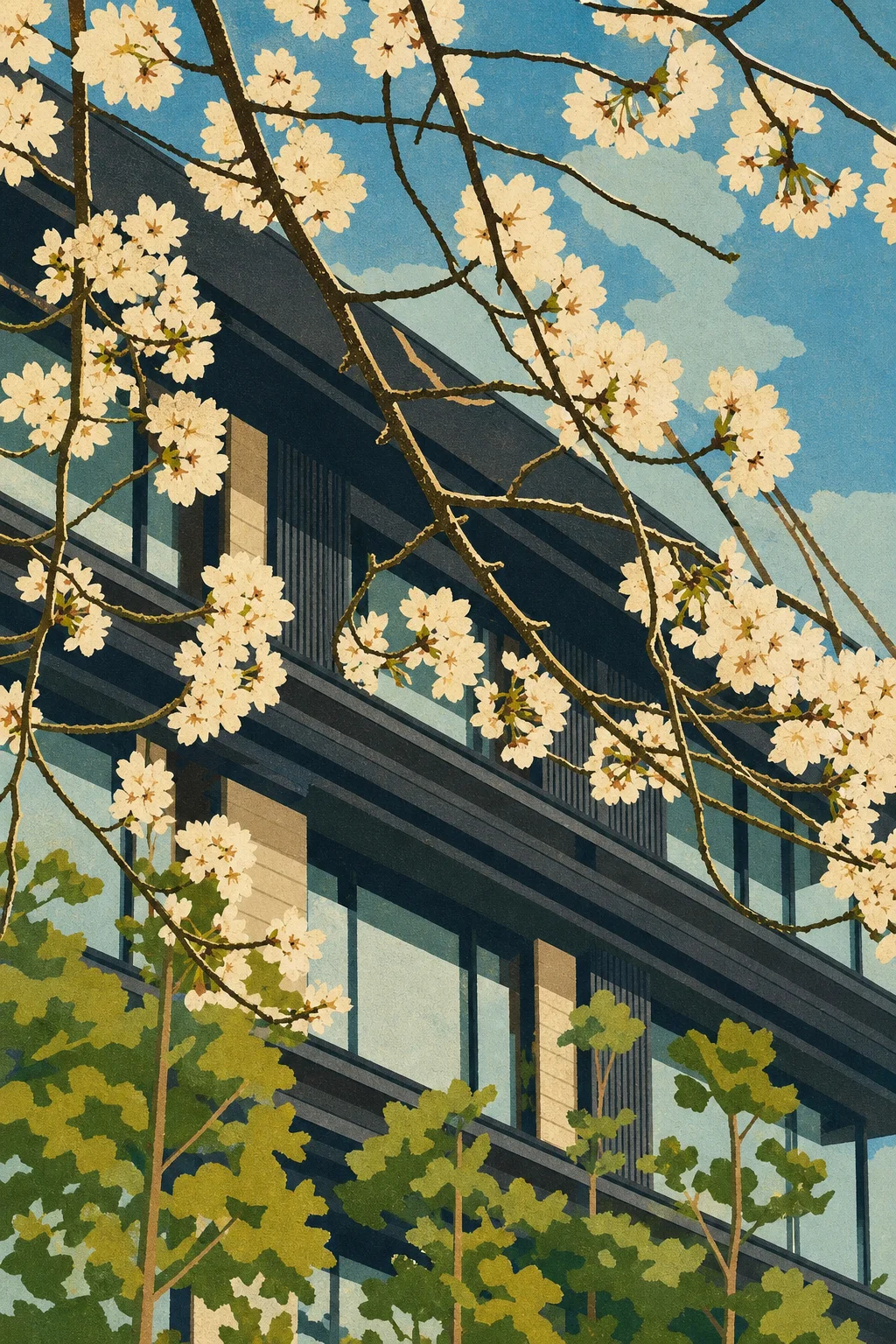
Booking tension in Kyoto is really two problems. At the small houses, room counts in the single and low double digits mean a property can be effectively spoken for across a season on repeat guests and word of mouth before public dates ever open. At the design-forward mid-scale end, places like Ace Hotel Kyoto (213 rooms, High), set in the Kengo Kuma-reworked former telephone exchange downtown, draw a crowd that arrives with the dates already chosen. Layered over both is the calendar. Cherry blossom in late March and April and maple color in November compress a year of travel ambition into a handful of weeks, and everyone is chasing the same rooms at the same addresses.
The east side is where this concentrates. Higashiyama and Gion, the temple-and-teahouse belt, carry the strongest demand in the city and hold most of the marquee stays; the flat center around Nishiki and Pontocho is where the design wave landed; and the western and northern edges, Arashiyama and the Northern Hills, offer villa-style seclusion for travelers willing to leave the tourist core. What ties the top of the market together is that the settings cannot be duplicated. A temple garden or a canal-side teahouse plot is one of one.
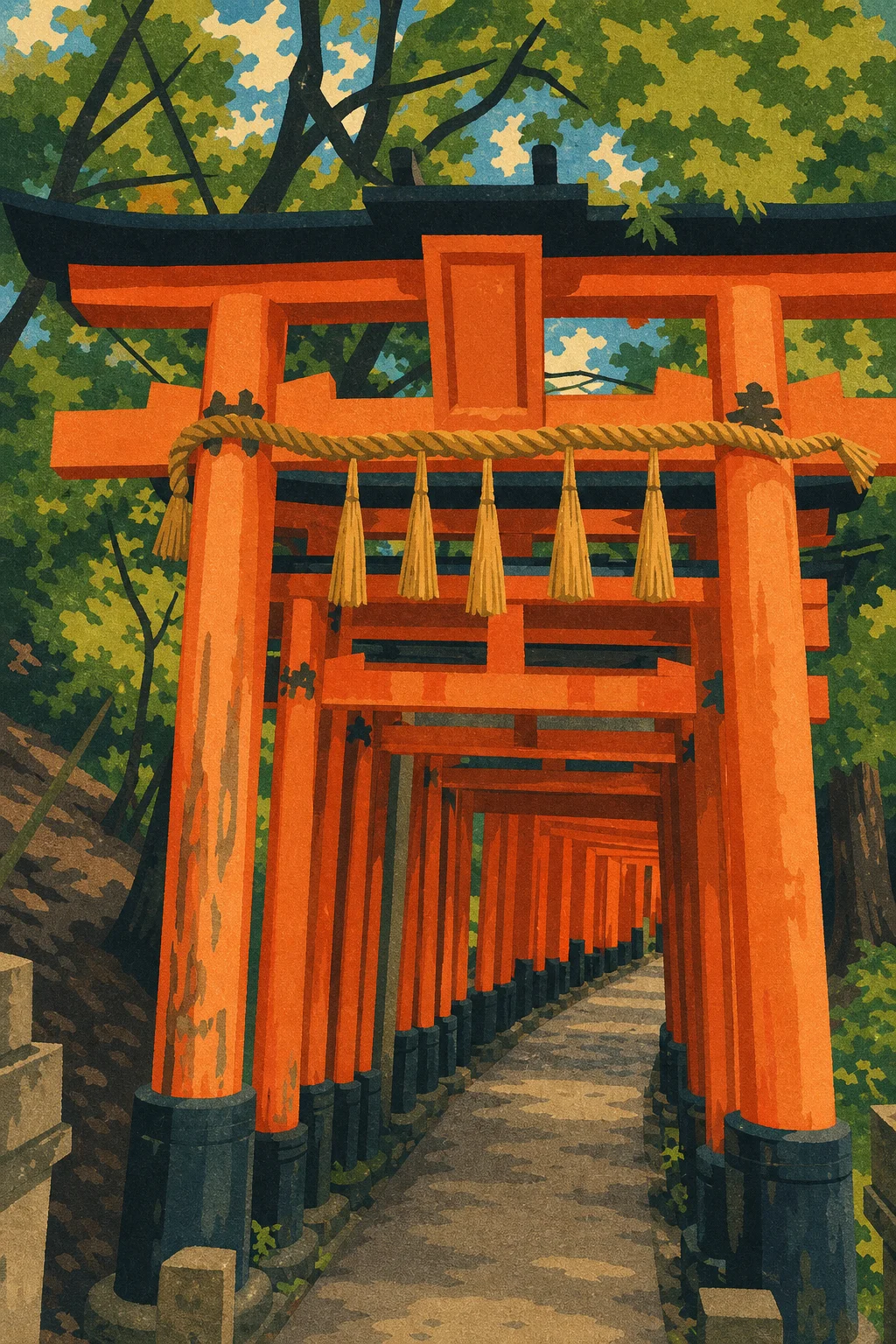
For all the pressure, Kyoto rewards the traveler who slows down. The city is best read on foot and by neighborhood: Fushimi Inari's vermilion gates in the early morning before the crowds arrive, an evening walk along the Kamo, a temple garden in off-season rain. The hotels that matter here understand that they are one room inside a much older room, and they price scarcity accordingly.
The districts, mapped.
Kyoto reads best as a handful of geographic clusters rather than a single downtown. The eastern temple belt is the emotional center. Higashiyama, where the Four Seasons and Park Hyatt sit among the great temple compounds, runs straight into Gion, the old geiko district of canals, teahouses, and small machiya-derived houses like The Shinmonzen and SOWAKA. This is where demand concentrates and where the marquee stays cluster.
The flat center is the working city. Downtown Kyoto, around the Nishiki Market and the Pontocho and Kiyamachi nightlife lanes, is where the design-hotel wave landed, Ace Hotel included. Nijo and Nishijin, quieter, hold the old weavers' quarter and the shogun's castle.
The edges each offer a different escape. Arashiyama and Sagano, to the west, trade temples for the bamboo grove, the Hozu River, and villa-style seclusion. The Northern Hills reach up toward Kurama and Ohara, forested and monastic, the choice for travelers who want distance from the crowds. Kyoto Station, to the south, is the arrival gateway, functional and fast rather than atmospheric. Each cluster answers a different question about what a Kyoto trip is for, which is exactly what the area pages go into.
What's moving.
The clearest pattern in Kyoto is the pull east. Higashiyama and Gion, the temple-and-teahouse belt, carry the strongest demand of any part of the city, and the top of the market reflects it. The Four Seasons Hotel Kyoto (123 rooms, Moderate tier) and the Park Hyatt Kyoto (79 rooms, Moderate) anchor Higashiyama, while Gion holds the small-house set led by The Shinmonzen (9 rooms, Very High tier) and SOWAKA (23 rooms, High).
Rising: the tiny machiya-and-ryokan hybrid. Scarcity is the entire pitch, and demand against single-digit room counts behaves nothing like demand against a full-scale flag. The Shinmonzen's Very High tier on nine keys is the sharpest example. Rising alongside it is northern seclusion. The wave of villa-style stays in the Northern Hills and Arashiyama, following Aman Kyoto's 2019 opening, has given high-spend travelers a reason to leave the tourist core, and those western and northern edges now hold their own.
Saturating: the design mid-scale downtown. Ace Hotel Kyoto (213 rooms, High), in the Kengo Kuma-reworked former telephone exchange, opened the category, and downtown is now the busiest hunting ground for style-led rooms. Volume there is high, but so is competition for the same dates.
Lagging, and arguably undervalued: the south. Kyoto Station and the Nijo and Nishijin quarter trail the rest of the city on demand, functional bases rather than destinations in their own right.
One structural note worth reading carefully. None of the properties we track in Kyoto are direct-only holdouts; every one takes reservations through standard channels. The tension here is not gated access but calendar and scale. With peak demand pinned to March, April, and November, and with the most wanted houses running on very few rooms, the squeeze comes from timing and size, not from booking walls. Recent luxury openings, Banyan Tree Higashiyama among them, keep adding weight to the top tiers without doing anything to loosen the peak-week crush.
The practical year.
Kyoto's demand curve is one of the most legible in Japan because it is almost entirely botanical. Two events set the peaks: cherry blossom in late March and April, and maple color in November. In those windows the city runs at capacity.
**The two blossom peaks are a lead-time contest, not a booking exercise.** Small houses in Gion and Higashiyama get spoken for six to nine months out, and the marquee rooms go further still. If your heart is set on blossom or foliage at a specific address, treat lead time as the whole game and book the moment dates open.
**The shoulder months either side reward flexibility.** February and December stay busy without hitting the peak — plum blossom and year-end temple illuminations, respectively. January is genuinely quiet: cold, clear, with the occasional dusting of snow on temple roofs that photographers wait years for. These are the months to chase the houses that vanish in spring.
**Summer is the real value story, and the least understood.** June through September reads as low demand despite holding one of Japan's great festivals, Gion Matsuri, which fills July with float processions, plus the Daimonji bonfires on August 16. The suppressant is simple: heat and humidity climb well into the thirties, and many travelers stay away.
> If you can tolerate the weather, summer is when the hardest rooms open up at the softest rates.
**The practical read is a split.** Peak seasons are about discipline and early commitment; shoulder and low seasons are about opportunism. Because the curve tracks leaves rather than school holidays or weather comfort, the undervalued months are the counterintuitive ones — the hot ones. Nothing in Kyoto closes across the year, so the only real constraint is the two blossom peaks and how far ahead you are willing to plan.
Who books here.
Pick Kyoto if you want cultural depth over resort ease. This is a city for slow days on foot: temple gardens at opening time, a kaiseki dinner that turns on a single seasonal ingredient, a machiya room where the architecture is half the experience. It suits first-timers chasing the icons, design-hotel travelers, and honeymooners after the villa-style seclusion of Arashiyama or the Northern Hills.
It is also a city that asks for patience. The best small houses run on a handful of rooms, and the two blossom peaks draw crowds that can test anyone's tolerance. If you come in April or November, you are sharing the famous gardens with a lot of other people.
Skip Kyoto, or pair it with somewhere else, if you want beach, nightlife, or a single-hotel switch-off. There is no coastline, and the after-dark scene is refined rather than loud. Travelers who want a party or a pure resort week are better served elsewhere in the Unbookable set. Kyoto rewards the opposite instinct: come for the culture, the food, and the craft, build the trip around a neighborhood rather than a hotel lobby, and let the city set the pace. Most visitors pair it with Tokyo or nearby Osaka, using Kyoto for the old Japan and the big cities for the new.