Why marrakech ranks.
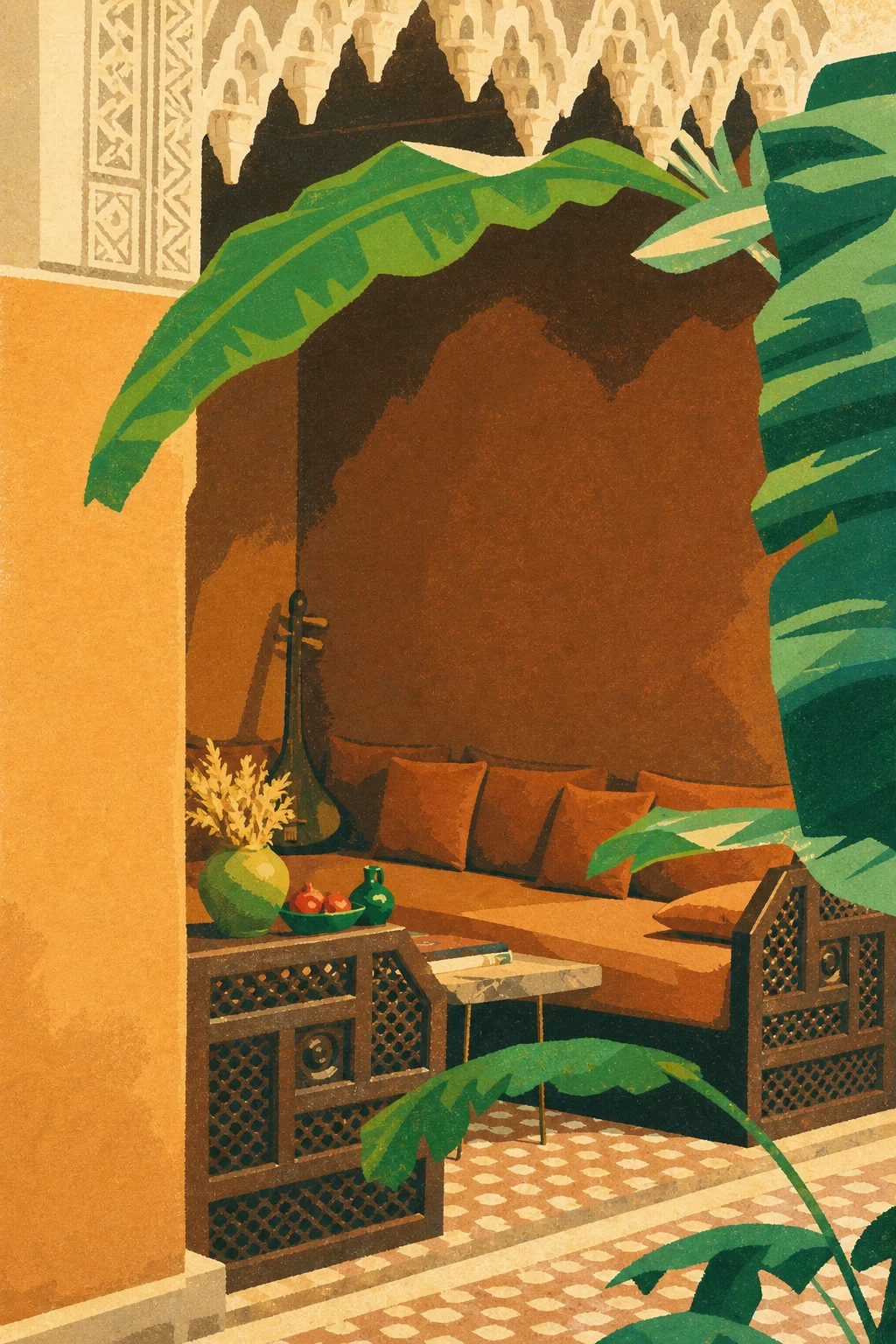
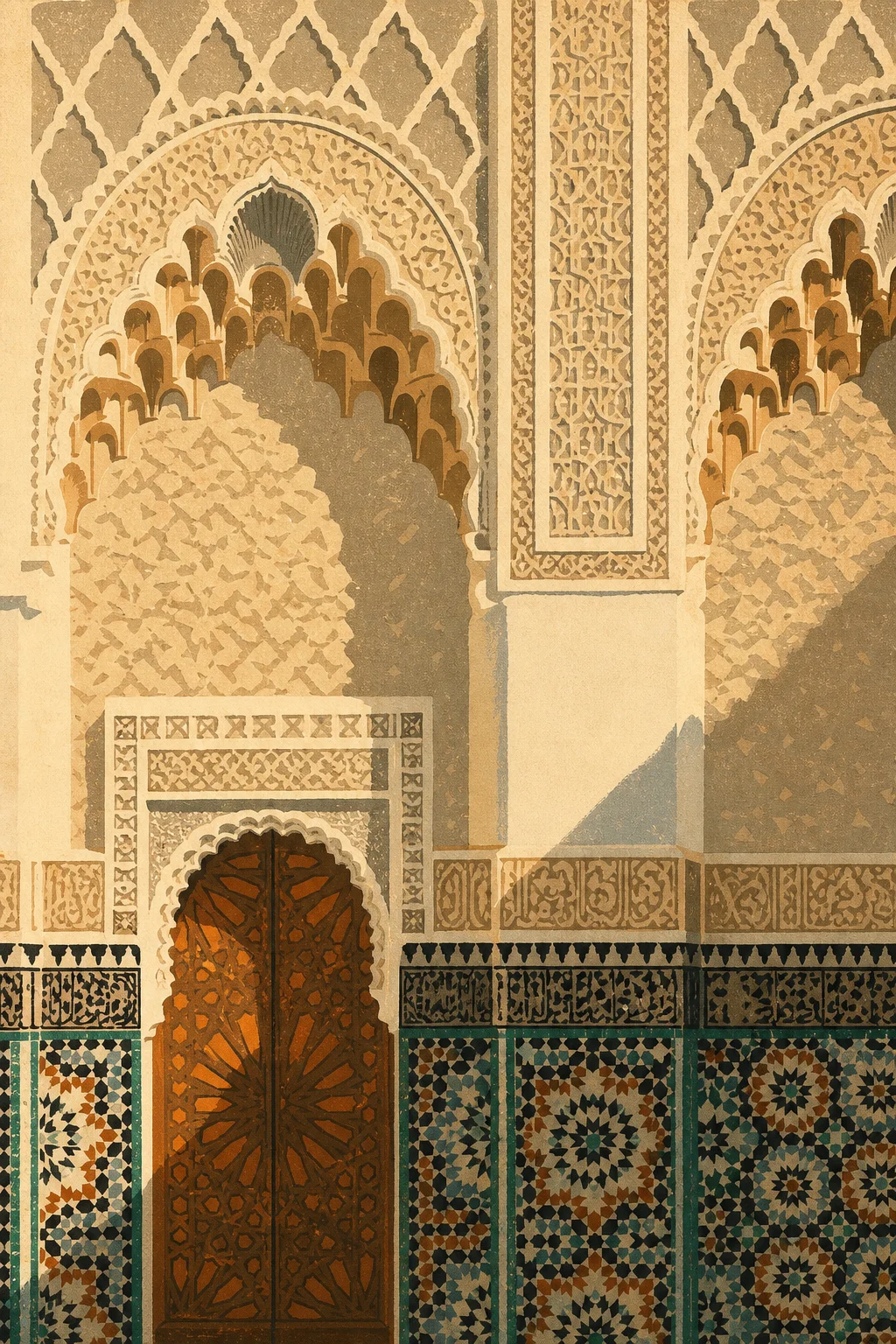
Marrakech is a city that operates on sensory overload by design. The medina is a thousand-year-old maze of ochre walls, zellige tile, and cedar wood where the call to prayer from the Koutoubia Mosque competes with the percussion of coppersmiths in the souks and the scent of cumin drifting from a street-side tagine. Jemaa el-Fna square shifts identity by the hour: orange juice vendors and snake charmers by day, an open-air food market with a hundred grills smoking at once by evening. Stepping through a riad's unremarkable wooden door into a courtyard of mosaic fountains and orange trees is the architectural trick Marrakech has been pulling for centuries, and it still works.
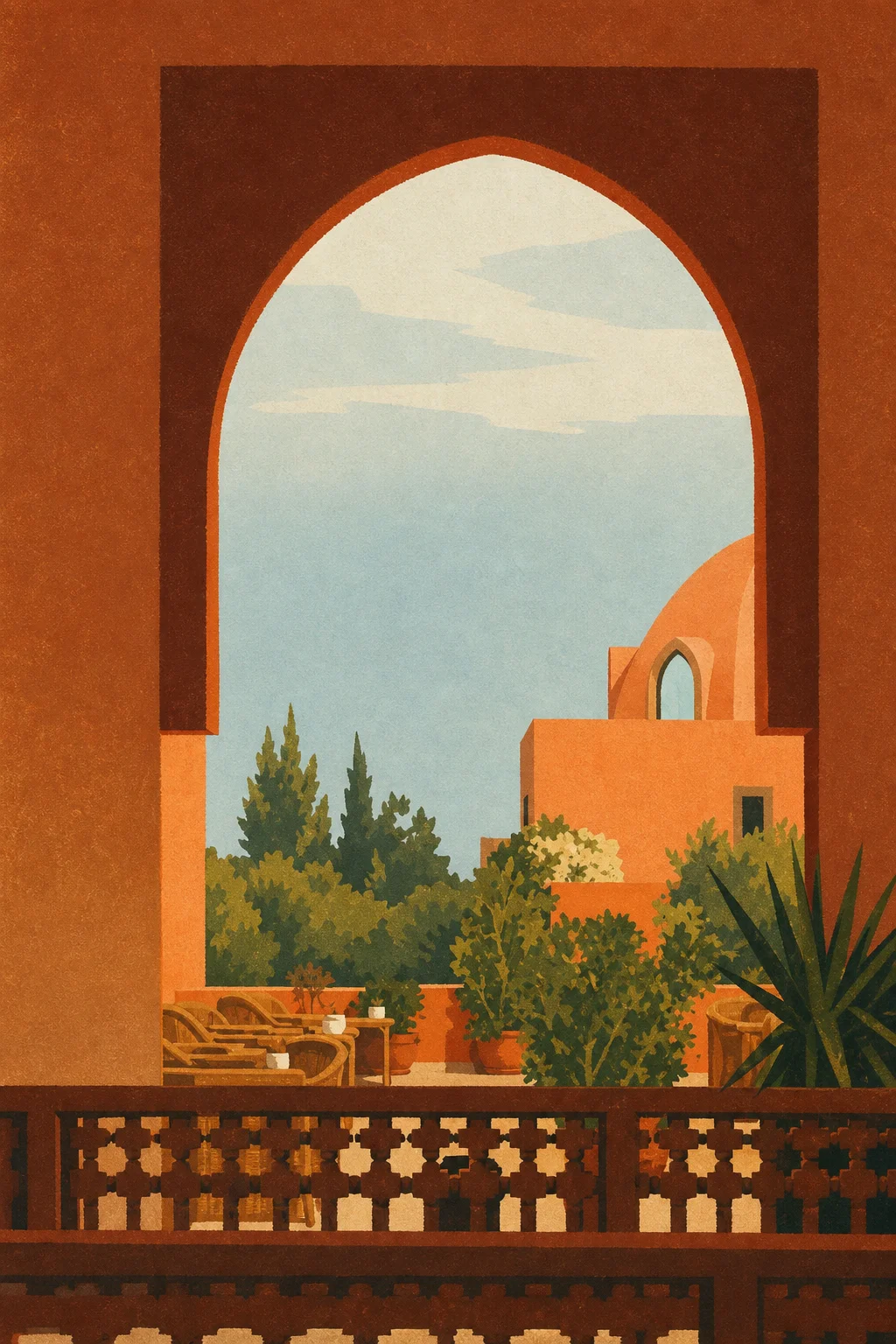
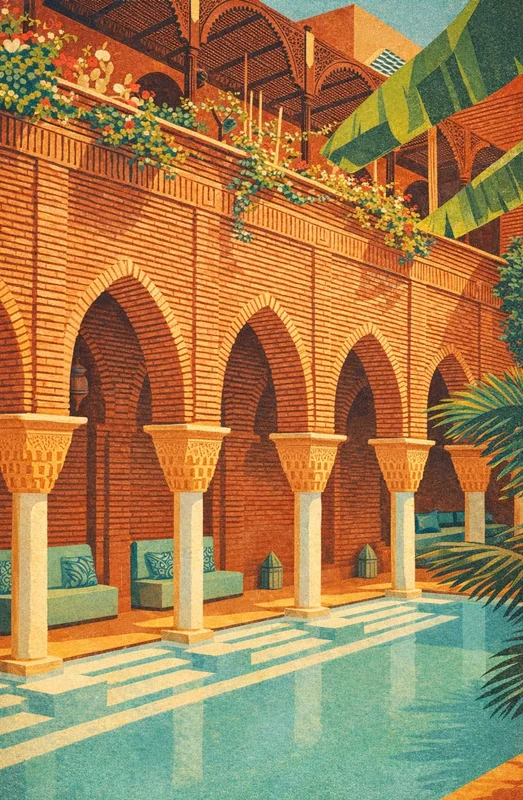
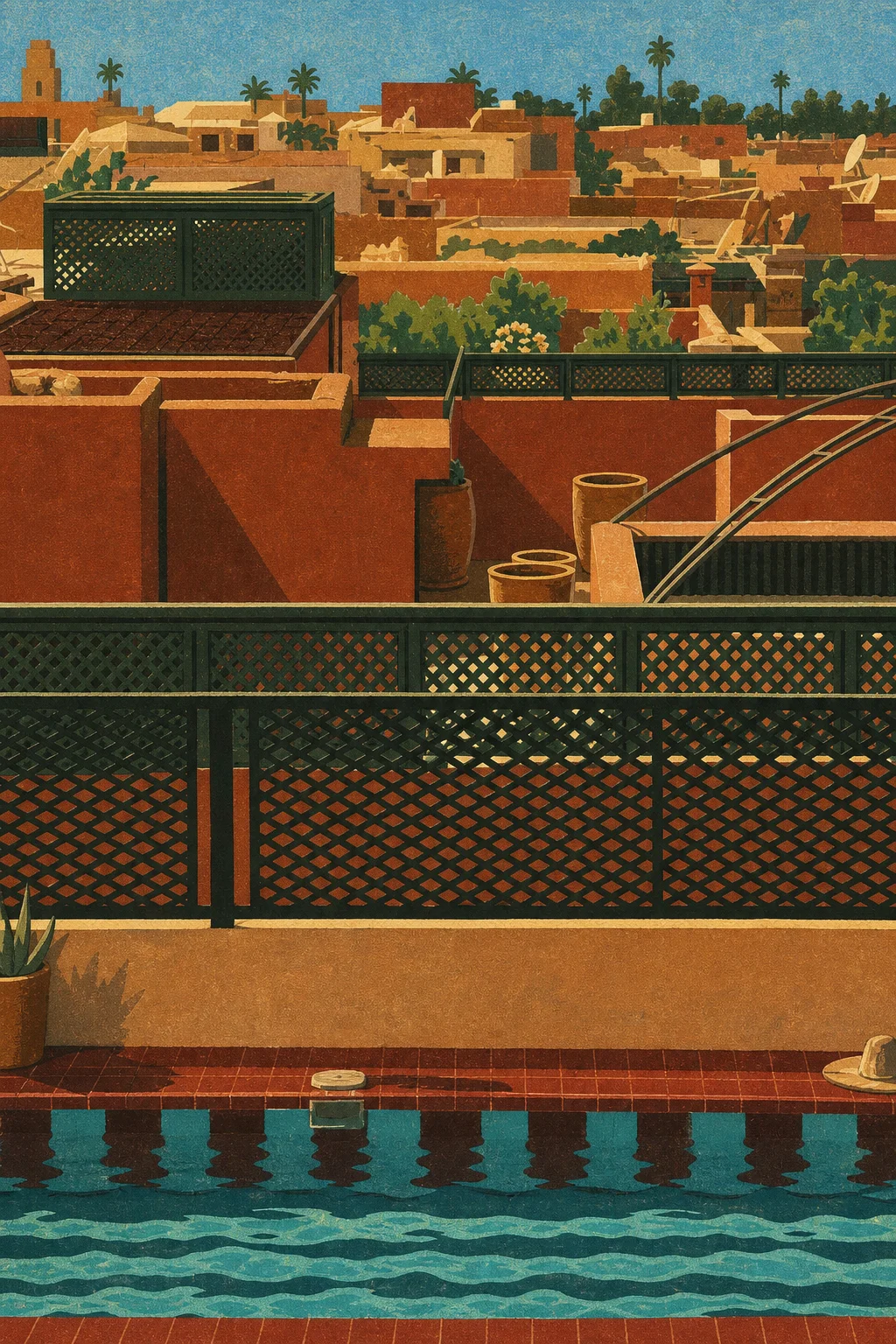
The hotel market here has no equivalent. The dominant typology is the riad: a traditional courtyard house converted into a guesthouse, typically between 5 and 20 rooms, with rooftop terraces overlooking the medina skyline. This building type does not exist as a hotel category anywhere else in the world. Properties range from three-room riads where the owner serves your breakfast to a 209-room palace that employed a thousand artisans during its restoration. The medina alone holds 43 of our tracked properties, concentrated in neighborhoods like Mouassine, Bab Doukkala, and the streets around the Koutoubia.
What distinguishes Marrakech's hotel scene from other Unbookable destinations is the range compressed into one city. Le Riad Yasmine is eight rooms behind a wooden door in Bab Taghzoute; Alice and Gaby's emerald zellige pool went viral in 2018 and the riad hasn't had a quiet week since, carrying one of the highest Room Demand Scores in the destination. La Sultana Marrakech is 28 rooms in the Kasbah, direct-only booking, no OTA will show you it exists. Royal Mansour, ranked number 13 on the 2025 World's 50 Best Hotels list, operates as its own medina within a medina: 53 riads, private courtyards, underground tunnels for staff so you never see a service trolley. At the other end, El Fenn occupies 41 rooms across interconnected riads near Bab El Ksour, with Vanessa Branson's art collection on the walls and a no-food-waste kitchen that sources locally.
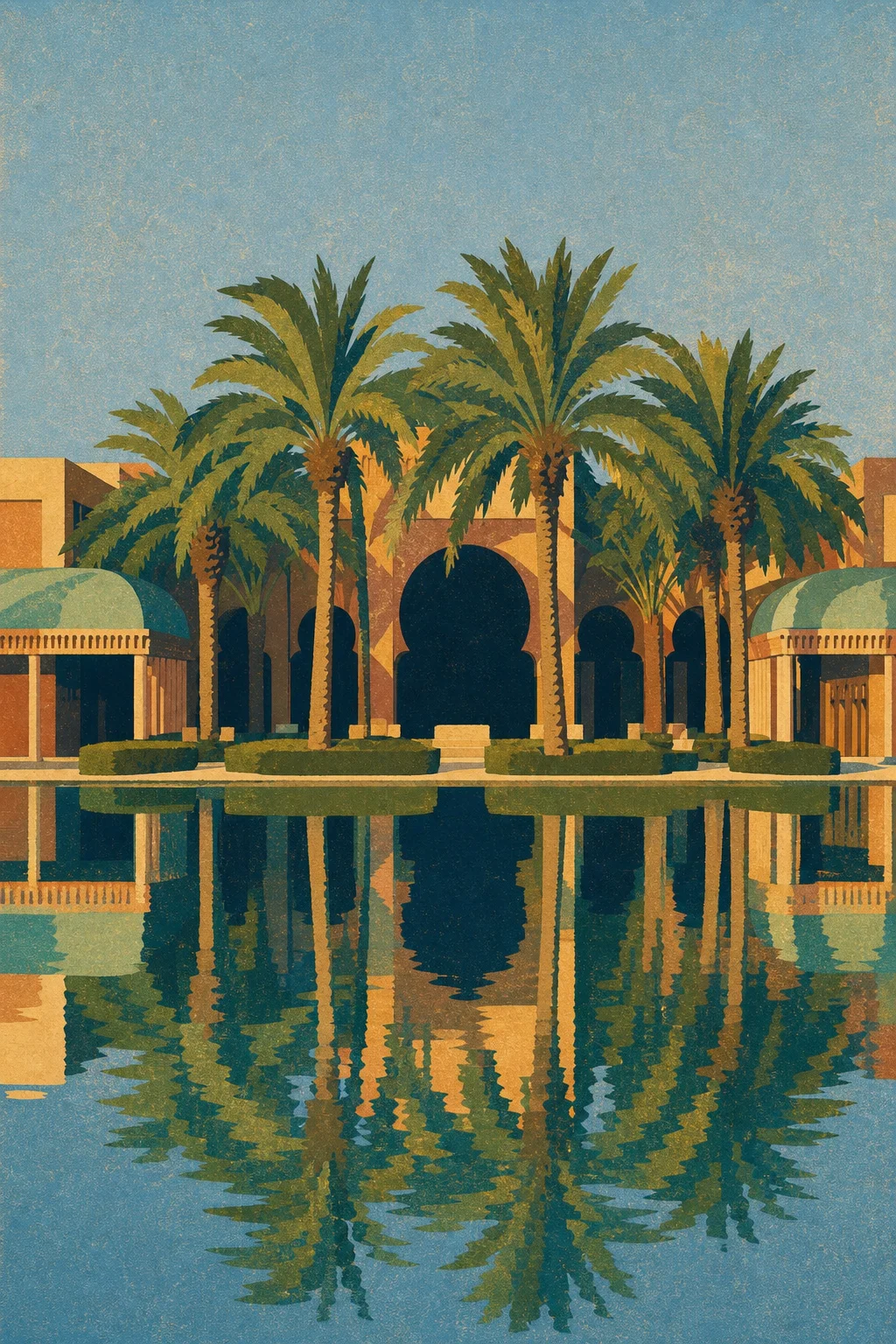
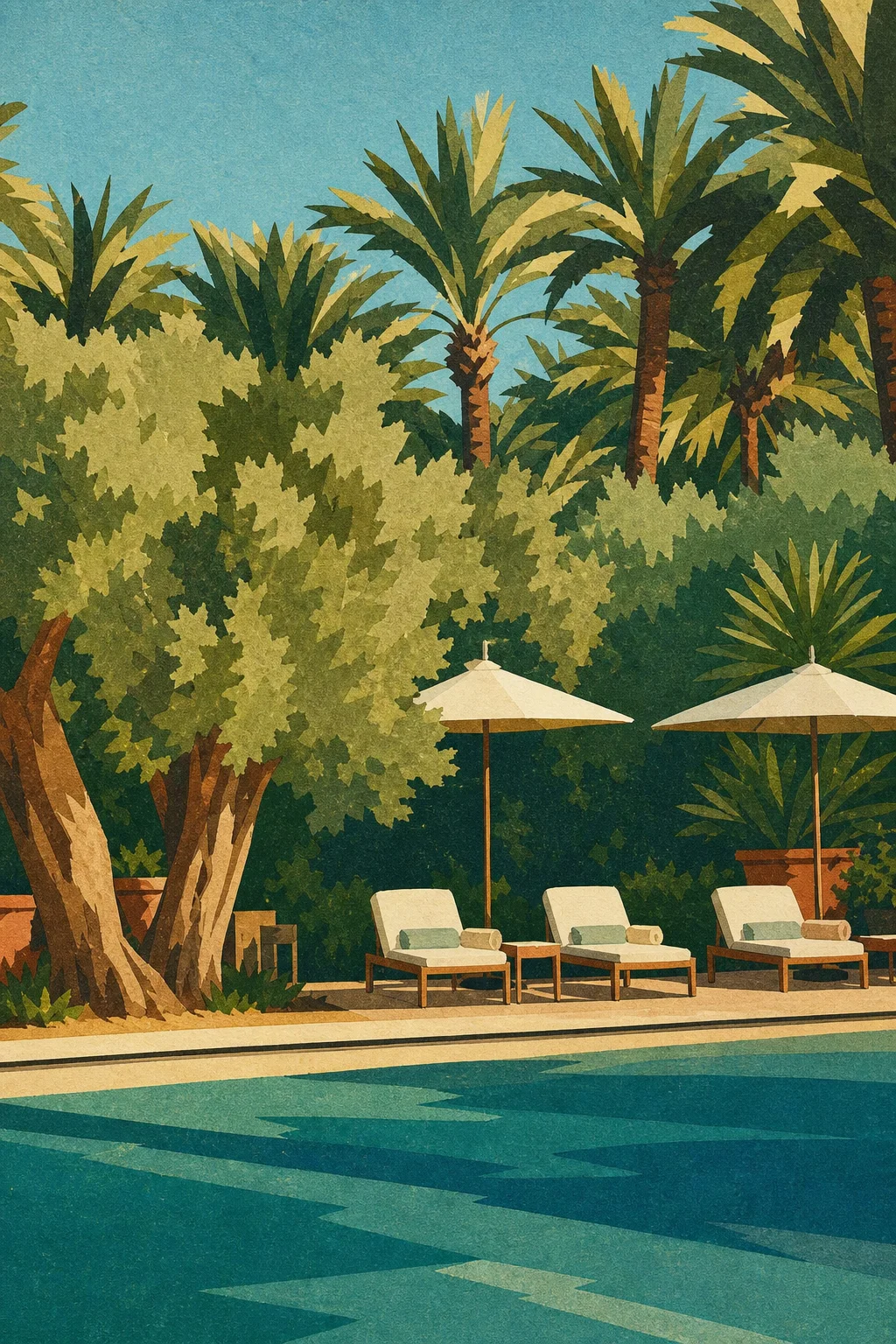
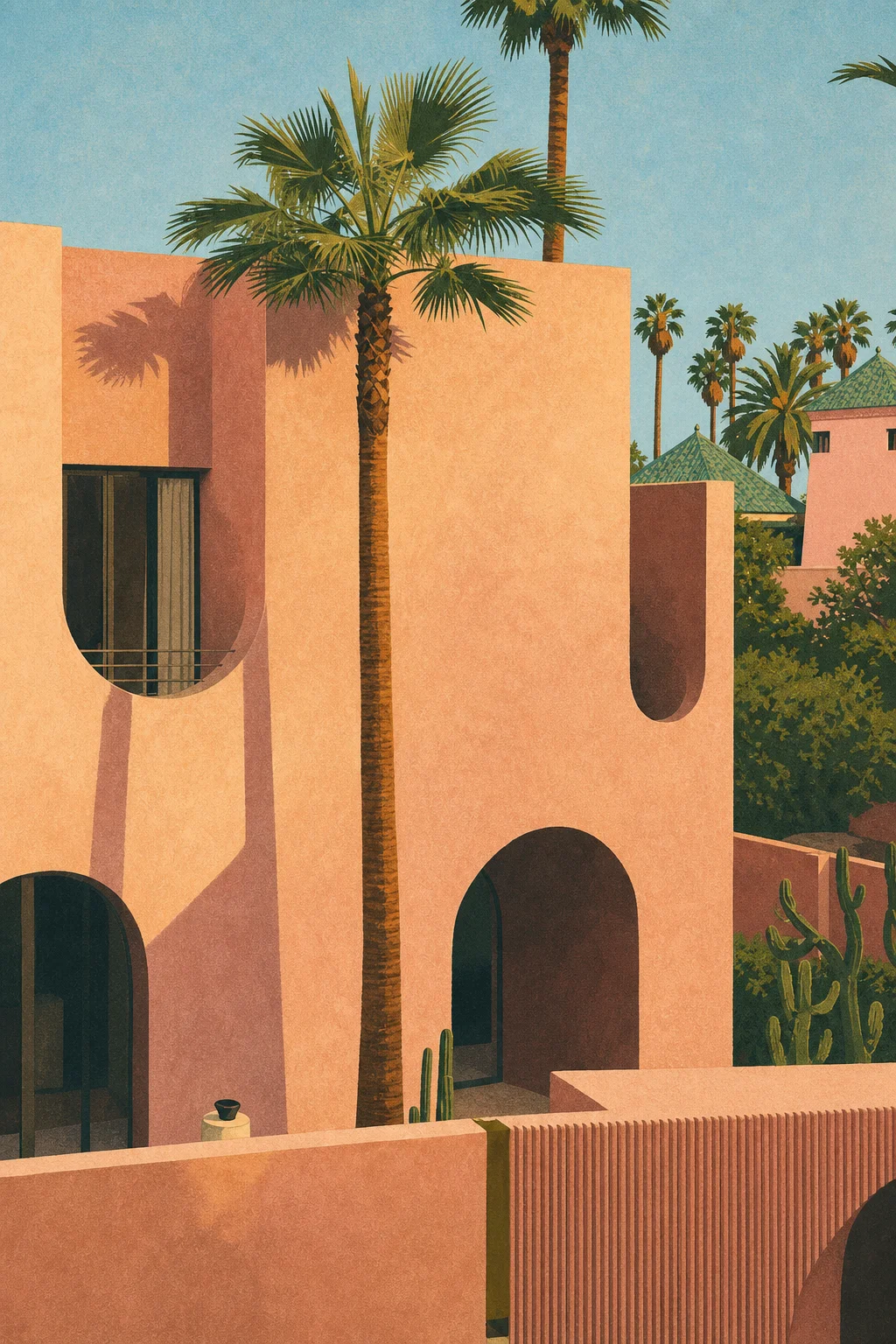
Beyond the medina walls, Marrakech becomes a different proposition. Hivernage is the Ville Nouvelle's luxury quarter: wide boulevards, pool compounds, La Mamounia's 209 rooms and century-old gardens. The Palmeraie stretches north of the city, thousands of palm trees and estate-scale resorts (The Oberoi, Palais Namaskar) where the experience is acreage and quiet rather than medina immersion. Further out, the Atlas foothills offer properties like Kasbah Tamadot (Richard Branson's Virgin Limited Edition) and Kasbah Bab Ourika, where the landscape shifts from desert to green valley within an hour's drive.
Many travelers sequence these layers: three nights in a medina riad for the souks, the food, the rooftop sunsets over the Atlas; then two nights in a Palmeraie or foothills property for the decompression. The Unbookable data supports this pattern; demand is distributed across both layers rather than concentrated in one, with the medina averaging 54.5 and the outlying estates averaging 57.5.
The food is a reason people return. Moroccan cuisine blends Berber, Arab, and Mediterranean traditions: slow-cooked tagines, hand-rolled couscous, pastilla (pigeon or chicken in phyllo with cinnamon and almonds), and mechoui (slow-roasted lamb). Riad breakfasts are their own category: fresh orange juice, msemmen flatbread, amlou (almond-argan butter), eggs, and olive oil. Several of the medina's top-scoring properties (El Fenn, IZZA, L'Hotel Marrakech) have made their kitchens a genuine draw.
The medina is not for everyone. The derbs are narrow enough that your luggage arrives by handcart. Sound travels between riad walls. The commercial pressure around the souks can be relentless. And there is a gap between the Instagram version of a courtyard pool and the 5am call to prayer that catches first-time visitors off guard. But the travelers who come back tend to come back specifically because Marrakech does not sand down its edges. It is a city that requires engagement, and the hotels have evolved to meet that: riads that serve as calm centers inside a city that never stops moving.
The districts, mapped.
Marrakech organizes into three layers, and the choice between them shapes every other decision about your trip.
Inside the walls, the Medina is where the riad experience lives. Forty-three properties across neighborhoods like Mouassine, Bab Doukkala, and Riad Zitoun, ranging from five Ultra-tier anchors to riads at accessible pricing in the Mellah. South of Jemaa el-Fna, the Kasbah is quieter and more residential, with Saadian Tombs and Bahia Palace within walking distance. The Mellah, Marrakech's historic Jewish quarter, offers the lowest average prices and a neighborhood that still feels local rather than touristic.
Beyond the ramparts, Hivernage and Guéliz offer a different Marrakech. Wide boulevards, pool compounds, and some of the destination's highest-scoring properties: Royal Mansour and La Mamounia both anchor Hivernage. Guéliz sits next to the Jardin Majorelle and the Yves Saint Laurent Museum, drawing a gallery and restaurant crowd.
The Palmeraie and Atlas foothills are where Marrakech becomes a resort destination. Estate-scale properties with gardens, mountain views, and room counts that start at 39. An hour's drive separates a medina riad breakfast from a lunch overlooking the Ourika Valley. Most travelers who stay more than three nights end up in at least two of these layers.
What's moving.
International luxury hotel groups are treating Marrakech as a standalone leisure market rather than a waypoint on a Morocco itinerary. Park Hyatt opened Morocco's first property of the brand. IHG signed a 67-key Kimpton for Q4 2026. Oblivion Palmeraie launched in 2025 as an adults-only all-villa resort. These arrivals sit alongside properties that have been here for decades (La Mamounia since 1923, La Maison Arabe since 1946), suggesting the market is deepening rather than replacing itself.
Inside the medina, the riad segment is consolidating. The buildings are centuries old, planning constraints are strict, and the remaining unconverted riads tend to be smaller or harder to access. Growth comes from renovation and repositioning rather than new construction. IZZA Marrakech assembled seven adjacent historic riads into a single 14-room property. This model, merging neighboring structures into one cohesive operation, has become the primary way medina inventory expands at the top end.
A younger demographic is driving a notable shift in what people search for. "Best riads in Marrakech" is no longer the only high-volume query; "where to stay in Marrakech first time" and "Marrakech medina vs new city" reflect travelers who are choosing between experiences, not just hotels. The medina's riad culture, with its courtyard pools, zellige tile, and rooftop terraces, resonates specifically with the Instagram and TikTok generation, and premium room rates for design-forward riads have held even as new resort supply opens on the periphery. Search interest for five-star Marrakech hotels has grown over 40 percent year on year.
The direct-only booking segment remains stable at roughly one in five properties. Fourteen of the 72 active properties accept reservations only through their own channels. This split matters for travelers who rely on OTA searches: roughly 20 percent of the Marrakech inventory, including La Sultana (Kasbah), IZZA (Medina), and Kasbah Tamadot (Atlas foothills), will not appear on Booking.com or Expedia.
The Atlas foothills corridor is quietly becoming its own sub-destination. Kasbah Bab Ourika, Dar Ahlam, and Caravan by Habitas all position themselves as countryside alternatives to the medina, targeting travelers who want the Marrakech airport but not the Marrakech density. Expect this segment to grow as new villa-format properties follow the Oblivion Palmeraie model.
The practical year.
In Marrakech, demand runs inverse to the thermometer. When Europe wants winter sun and the heat breaks, the city's riads compress into windows that close months ahead — and that pattern is entirely predictable.
**December is the single Peak month, and it behaves like nothing else on the calendar.** New Year's Eve collides with European winter-sun demand to squeeze the top properties into a roughly two-week window that books out far in advance. Plan on four to six months of lead time for Ultra-tier riads; three months is often already too late for properties like Riad BE or Le Riad Yasmine.
**October and November deliver the best value relative to experience quality.** Demand indexes high — 80 in October, 85 in November — but autumn rates at many properties run 30 to 60 percent below spring equivalents because the season falls outside European school holidays. October brings the 1-54 Festival, Marrakech's contemporary art biennale, adding a cultural layer spring lacks. November is the month our data flags as flat-out underpriced: it indexes at 85 without December's premium or the school-holiday crush.
**March and April are the traditional high season, driven by Easter breaks and the spring weather window.** Easter week is the tightest booking window outside December, and Jardin Majorelle requires timed-ticket advance purchase throughout this period. Ramadan shifts annually across the calendar; when it overlaps with March or April, restaurants and some services run reduced hours while hotels stay fully open.
> Check the Ramadan dates before you book — they reshape the dining and nightlife experience far more than the hotel experience.
**Summer is the strategic play for price-sensitive travelers who can handle heat.** Demand drops below 30 from June through August, and properties that validate as sold out in October often show wide-open availability through July. The medina's thick walls and internal courtyards were built for this climate, so morning and evening exploration stay comfortable — the tradeoff is that midday outdoor sightseeing is impractical. What disappears entirely is the sold-out pressure that defines the rest of the year.
**September is the transition window, and it favors the early mover.** Temperatures moderate and demand begins to climb, but rates have not yet caught up to autumn levels.
Who books here.
Marrakech is for travelers who want sensory immersion and architectural beauty in the same trip. The medina's riad culture (courtyard pools, zellige tile, rooftop terraces, handcart luggage) is a hotel experience that does not exist in the same form anywhere else. If architecture and design are part of why you travel, the depth of the riad inventory here is unmatched.
It is the right destination for couples on a first trip to North Africa or the Middle East. The hotel infrastructure is well-established, English is widely spoken in the tourism sector, and the combination of culture (souks, Jemaa el-Fna, Saadian Tombs, Majorelle Garden), food (tagines, pastilla, riad breakfasts), and resort options (Palmeraie, Atlas foothills) packs a lot into a short trip. Three to five nights is the sweet spot. RAK airport connects directly to most European capitals.
It works for multi-generational groups if you choose the right layer. The medina's narrow derbs and stairs are difficult with mobility limits or young children, but the Palmeraie and Hivernage properties offer flat, spacious, family-friendly alternatives with pools and gardens.
Skip Marrakech if you want beach access (the coast is three hours away), if quiet is non-negotiable (the medina is loud and the commercial pressure in tourist areas is real), or if you prefer a destination you can explore without a plan. Marrakech rewards preparation; arriving without restaurant bookings during high season or without knowing your riad's exact derb location leads to friction.
For travelers choosing between Marrakech and Fez: Fez is cheaper, less touristic, and has a more intact medieval medina, but its boutique hotel market is a fraction of Marrakech's depth. If the hotel is a meaningful part of the trip, Marrakech wins on selection.