Why tulum ranks.
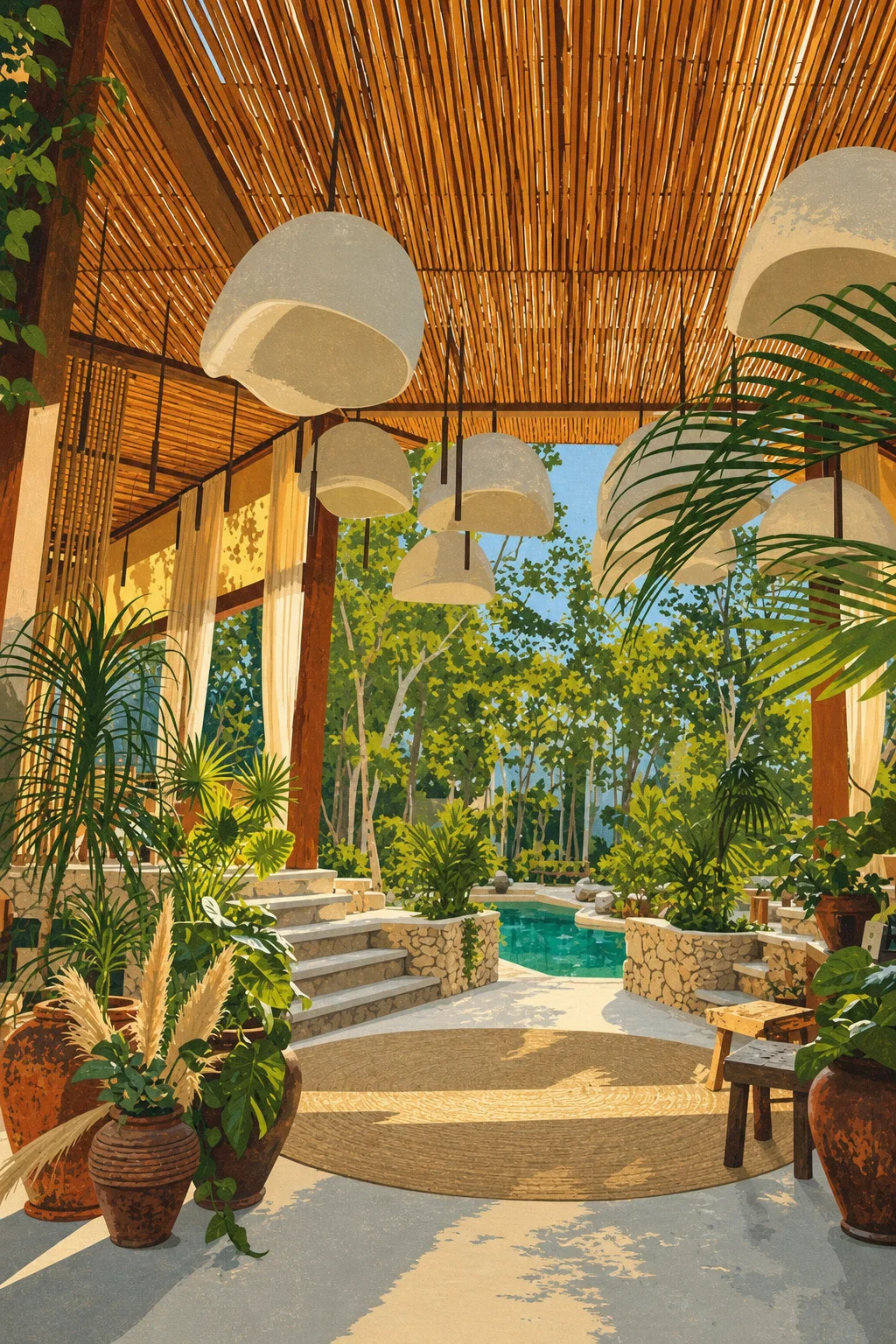
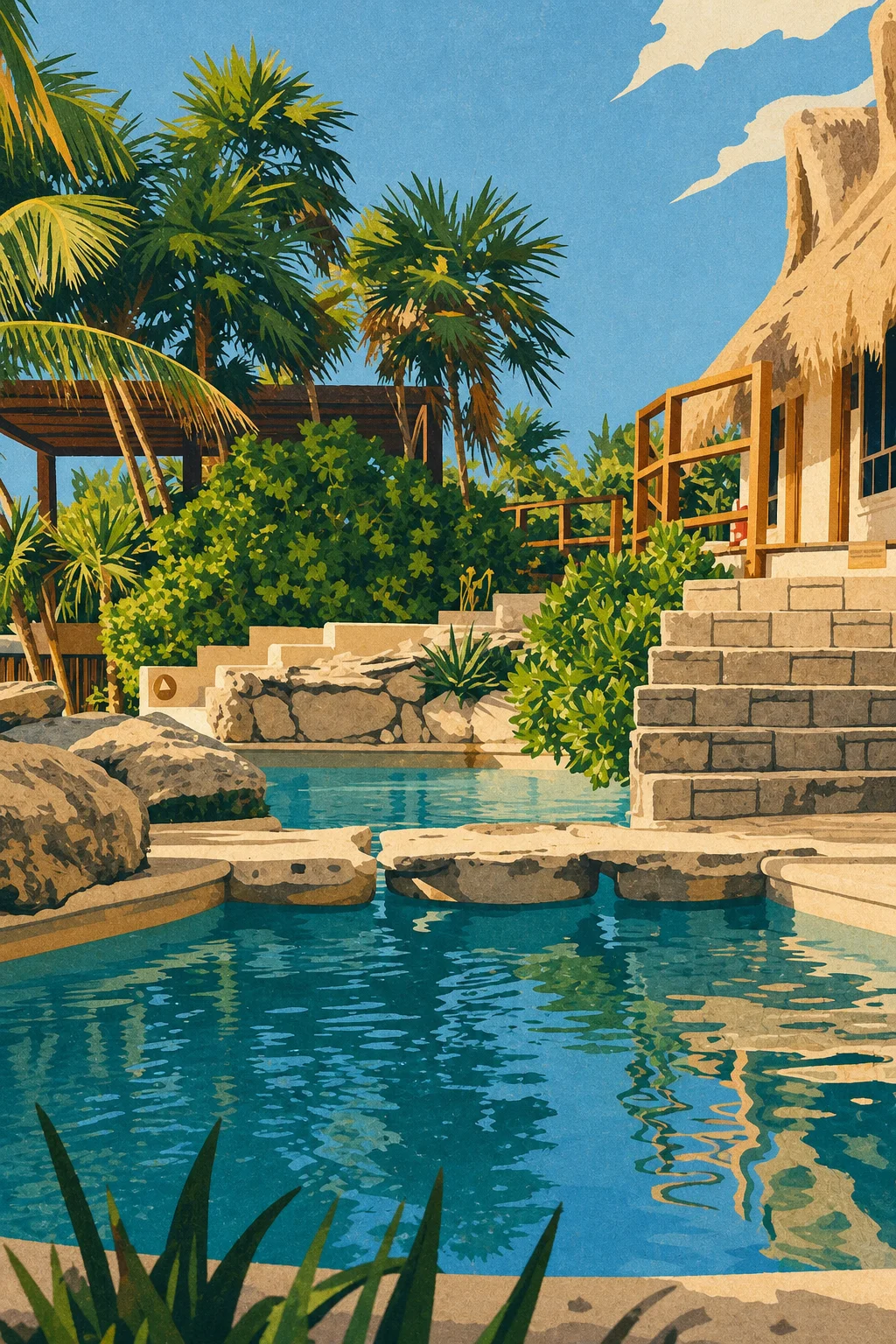
Tulum sits on a limestone shelf where the Yucatan jungle meets the Caribbean, and everything about the place reflects that collision. Mayan ruins stand on a forty-foot cliff above turquoise water. Behind them, a single road cuts south through dense vegetation, lined with hotels that range from concrete-and-thatch beach clubs to serious architectural statements built around cenotes and old-growth trees.
The landscape shapes the hotel market more than any branding exercise could. Properties on the beach road south of the ruins occupy a narrow strip between jungle and shore, which means most are small by design. Of the 75 active properties Unbookable tracks in Tulum, only three qualify at the Ultra tier, and all three book direct only: Nomade Tulum, a 38-room South Beach compound built around communal fire pits and ceremony spaces; Mezzanine, a 9-room SLH property on the quieter North Beach stretch with a kitesurfing pedigree; and Hotel Esencia, a 47-room estate out on Tankah Bay that operates at a different rhythm entirely, more private villa than beach hotel. That direct-only pattern runs deep here. Roughly 17% of Tulum's inventory requires booking through the property itself, a concentration that reflects how many operators view third-party distribution as incompatible with the experience they sell.
The food scene has matured well past the smoothie-bowl cliche. Wood-fire cooking defines the best kitchens, drawing on Mayan and Oaxacan traditions. Restaurants like Hartwood, which helped start the movement, still cook everything over open flame with no freezers and no walk-ins. The mezcal culture is equally serious, with agave bars sourcing single-village bottles from Oaxaca and Durango. At the better hotel restaurants, you will find cacao-rubbed proteins, hand-pressed tortillas from local corn, and ceviches that change based on what comes off the boats at dawn.
But Tulum's story in 2025 and 2026 is also one of tension. Rapid development over the past decade has strained the area's infrastructure. The water table, fed by an underground river system that connects cenotes across the peninsula, is vulnerable to contamination from construction runoff. Roads that were dirt tracks five years ago now carry steady traffic. The new Felipe Carrillo Puerto International Airport, which opened in late 2023 roughly 40 minutes from the hotel zone, was meant to relieve Cancun's dominance, but has seen airlines cut capacity by 27% for the 2025-2026 winter season as demand recalibrated. Delta, United, JetBlue, and Air Canada have all reduced or dropped routes. Most international visitors still connect through Cancun, a two-hour drive north.
The property landscape breaks into distinct zones. South Beach, also called the Hotel Zone, holds the highest concentration of inventory, with 26 properties and an average Unbookable score in the mid-50s. This is where Nomade, Nest Tulum, and Be Tulum sit, all within walking distance of each other on the same coastal road. North Beach is quieter, with 10 properties and lower density. Inland, the neighborhoods of La Veleta and Aldea Zama have attracted a wave of condo-hotels and design-forward stays aimed at longer visits and remote workers. Tankah Bay and Soliman Bay, 15 to 20 minutes north, offer something the beach road cannot: space, privacy, and less foot traffic.
What holds Tulum together, despite the growing pains, is the raw geography. The cenotes alone are reason enough to visit, limestone sinkholes filled with fresh water so clear it looks lit from below. Gran Cenote and Cenote Calavera are within biking distance of town. The reef system offshore supports diving and snorkeling at sites like the Mesoamerican Barrier Reef, the second largest in the world. And the ruins, modest by Chichen Itza standards but extraordinary for their setting, remain one of the only major Mayan sites directly on the coast.
Tulum rewards travelers who arrive knowing what it is and what it is not. It is a place where the jungle presses against every structure, where the best meals come from open kitchens with no walls, and where a 9-room hotel can outperform a 200-room resort on every metric that matters. It is not a place with reliable infrastructure, predictable beach conditions, or easy airport access. Both things are true at the same time.
The districts, mapped.
Tulum's 75 properties spread across four distinct zones, each with a different relationship to the coastline.
South Beach and the Hotel Zone form the core, with 26 properties lining the narrow road between the jungle and the Caribbean. This is where Tulum's reputation was built, and where density is highest. Nomade, Nest, and Be Tulum all operate here. North Beach, above the ruins, is a shorter, quieter stretch with 10 properties and fewer pedestrians. Mezzanine sits at this end, and the general feel skews calmer and less scene-driven.
Inland, Tulum Town and the newer developments of La Veleta and Aldea Zama account for 16 properties. These neighborhoods sit 10 to 15 minutes from the beach by bike or car. The trade-off is straightforward: lower nightly rates, more restaurant variety, and proximity to cenotes, but no ocean access on foot. This zone draws longer-stay visitors and remote workers.
Tankah Bay, Soliman Bay, and the outer coast hold 23 properties spread over a much larger geographic area north of the hotel zone. Hotel Esencia, Tulum's highest-scoring Ultra property outside the beach road, operates from this stretch. The appeal is seclusion and reef access without the congestion of the main strip.
What's moving.
Tulum's hotel market is navigating a correction after years of aggressive growth, and the data tells a clear story.
The opening of Felipe Carrillo Puerto International Airport (TQO) in December 2023 was supposed to transform access. Two years in, the results are mixed at best. Airlines have cut winter 2025-2026 capacity by 27% compared to the previous season. Delta dropped two of its three routes, keeping only Atlanta. United, JetBlue, Spirit, and Air Canada have all scaled back. The airport sits roughly 40 minutes from the hotel zone with limited transport options and taxi fares running $60 to $100 each way. Most international travelers still route through Cancun, which offers dozens of daily nonstops from U.S. and Canadian cities.
Hotel occupancy has softened. Quintana Roo tourism data showed Tulum's coastal zone at around 30% occupancy during summer 2025, with town-center properties dipping to 15%. These numbers partially reflect seasonality, but they also indicate oversupply. The construction wave that added boutique hotels, condo-hotels, and jungle lodges through 2021-2024 outpaced demand growth.
Within Unbookable's tracked inventory, direct-only booking density sits at 17%, with 13 of 75 properties requiring guests to book through the hotel. That ratio is notably high for a Mexican Caribbean destination and skews toward the top of the market. All three Ultra-tier properties are direct-only. This pattern creates a two-track system: the best properties control their distribution completely, while the broader market competes on OTA visibility.
The overtourism conversation has shifted. Five years ago, the concern was environmental degradation from unchecked development along the beach road. That pressure continues, but the more immediate issue is whether Tulum's infrastructure can support its inventory. Road quality, water treatment, and power reliability remain inconsistent. The destination's next chapter depends less on adding rooms and more on whether the existing stock can sustain itself through a softer demand cycle.
The practical year.
Tulum runs on three overlapping forces — weather, crowd density, and sargassum seaweed — and misreading any one of them can wreck a trip. That triangulation matters more here than at almost any other Caribbean destination.
**December through March is peak season, and it earns the title.** Humidity drops, rain turns rare, and the Caribbean hits its clearest. December carries maximum demand on Christmas and New Year's pricing, while January through March hold steady before a March Spring Break surge fills South Beach Zone properties weeks out. For Ultra or Very High tier properties that book direct only, plan 60 to 90 days ahead — Nomade and Hotel Esencia both manage their own reservations and sell out specific room categories well before arrival.
**April is the bridge.** Easter and Semana Santa bring a final demand spike, driven largely by Mexican domestic travelers. Once that holiday window closes, both rates and crowds ease.
**May through November is where the trade-offs live.** Hurricane season officially runs June 1 through November 30, but statistical risk concentrates in September and October, with September carrying a 15 to 20% probability of tropical cyclone activity. June also opens the worst sargassum stretch: the floating brown algae, carried by Atlantic currents, piles onto Tulum's east-facing beaches from roughly May through October, peaking in July and August. Tulum's open coastline orientation means it catches more than Cancun or Playa del Carmen, and University of South Florida forecasts suggest 2026 could be among the heaviest sargassum years on record for the Mexican Caribbean.
> Hotels with dedicated beach cleanup crews manage the situation daily; properties without them can have significant accumulation.
**September is the genuine low point.** Demand bottoms out, hurricane risk peaks, sargassum lingers, and some smaller properties cut hours or close for maintenance. October begins a slow recovery, with Day of the Dead at month's end marking the cultural pivot back toward high season. November is a legitimate value window: sargassum fades, hurricane odds drop sharply, and pricing hasn't yet climbed to December levels.
Who books here.
Tulum works best for travelers who want a beach destination with genuine design sensibility and a food scene that goes beyond resort buffets. The small-property format, with most hotels under 50 rooms, appeals to couples and small groups who prefer atmosphere over amenity lists. Wellness-focused travelers will find the concentration of yoga programs, temazcal ceremonies, and holistic spa treatments unusually deep. Cenote access alone makes Tulum worth considering for snorkelers and open-water swimmers.
It is also a strong fit for travelers comfortable booking direct. The best properties here do not appear on major OTAs, and that is intentional. If you enjoy the process of researching a property, contacting it directly, and building a stay around its specific character, Tulum's top tier rewards that approach.
Skip Tulum if you want reliable, resort-style infrastructure. There is no property here with a golf course, a kids' club with structured programming, or the kind of full-service concierge operation common at large Riviera Maya resorts. Power outages happen. The beach road floods in heavy rain. Sargassum seaweed can dominate the shoreline for weeks during summer months, and no amount of hotel staff can fully manage it during peak accumulation.
Also reconsider if easy airport access matters to you. The new Tulum airport has seen significant airline pullbacks, and most visitors still fly into Cancun, facing a two-hour transfer. Families with young children or travelers with mobility concerns may find the unpaved roads, steep stairs, and open-air construction of many properties more friction than charm.