IKAL TULUM
HOTEL.
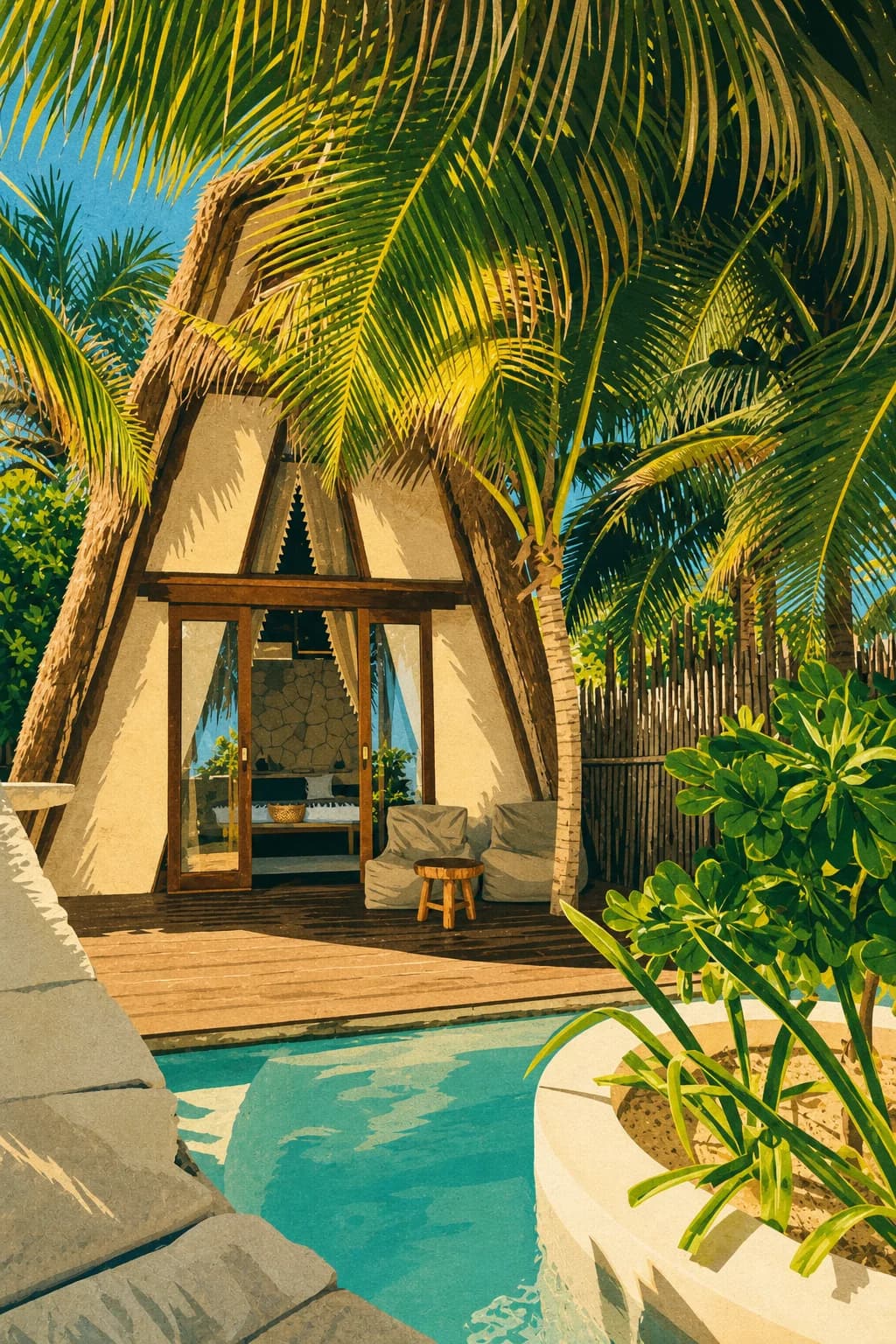
The hype gets the scale and the spiritual programming right. It misses the gap between budget tents and expensive suites, which can make arrival feel uneven depending on which category you booked into.
The Tara Stupa is a working Buddhist meditation space, not decoration, and non-guests from other park hotels occasionally walk over to sit. Early morning before the yoga mats come out is the quietest window.
angles.
A Sanctuary, Not a Resort
This is one of the most experiential properties inside the Parque del Jaguar, built around ceremonies rather than pool parties. The Tara Stupa, Medicine Wheel space, daily meditation, and temazcal rituals give the compound a retreat-centre rhythm. People come here to do the morning yoga, attend a ceremony, and eat vegetable-forward food at Maïa. It is closer in spirit to a Tulum wellness ashram than a beach hotel.
Four Room Formats, One Compound
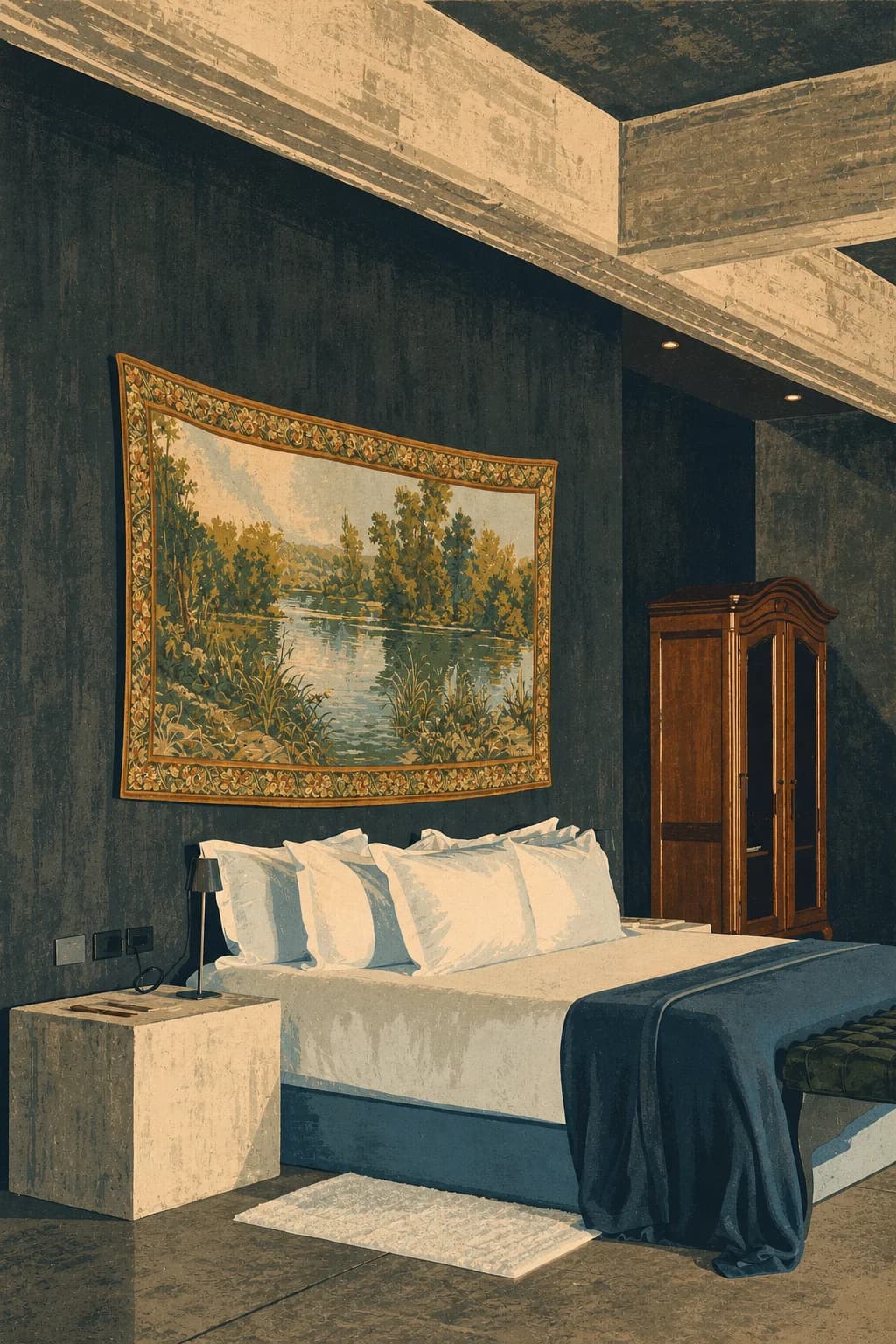
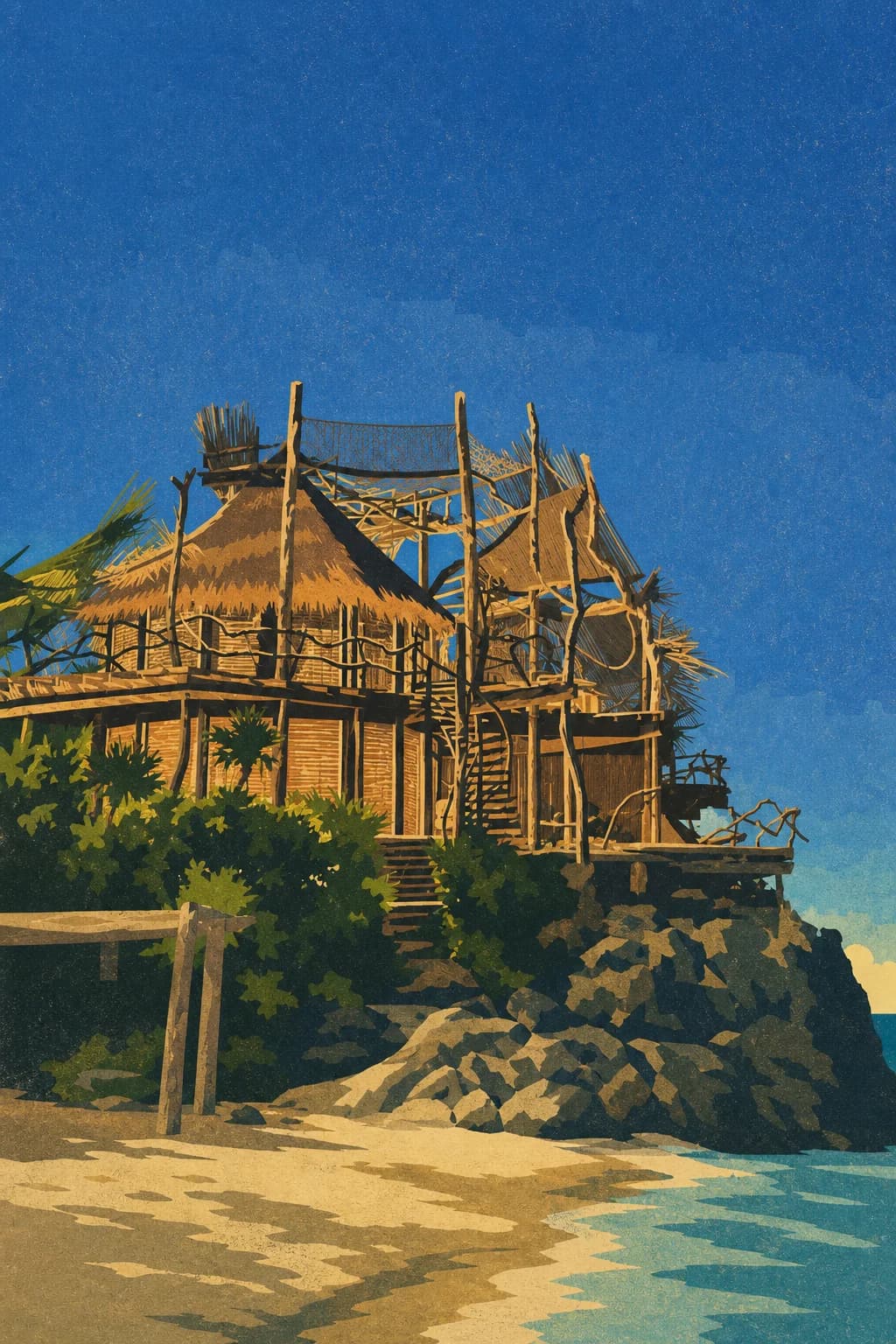
You can sleep in a bamboo treehouse, a biomimetic suite with an oceanfront plunge pool, a standard cabaña, or a glamping tent on raised wooden platforms next door under the GLAMPIKAL brand. Few Tulum properties let you switch between a 99-dollar wellness tent and a room approaching four figures inside the same complex. Rooms sprawl across jungle paths with very different energies and privacy levels depending on which you pick.
Restaura Festival Weeks
Once a year the property hosts Restaura, a wellness festival with visiting teachers, sound bath practitioners, and ceremony leaders. During festival weeks the hotel effectively becomes a closed retreat campus with its own programming rhythm and guests on workshop schedules. Book during festival dates and the mood is shared-intention community; book outside and it plays as a standard boutique stay with yoga on the beach.
talk.
mapped.
record.
The 37 keys split into biomimetic suites, jungle treehouses, bamboo cabañas, and the glamping extension next door. The wellness programming is genuinely layered, with daily yoga, meditation, temazcal ceremonies, a Medicine Wheel space, and a Tara Stupa used for Buddhist meditation.
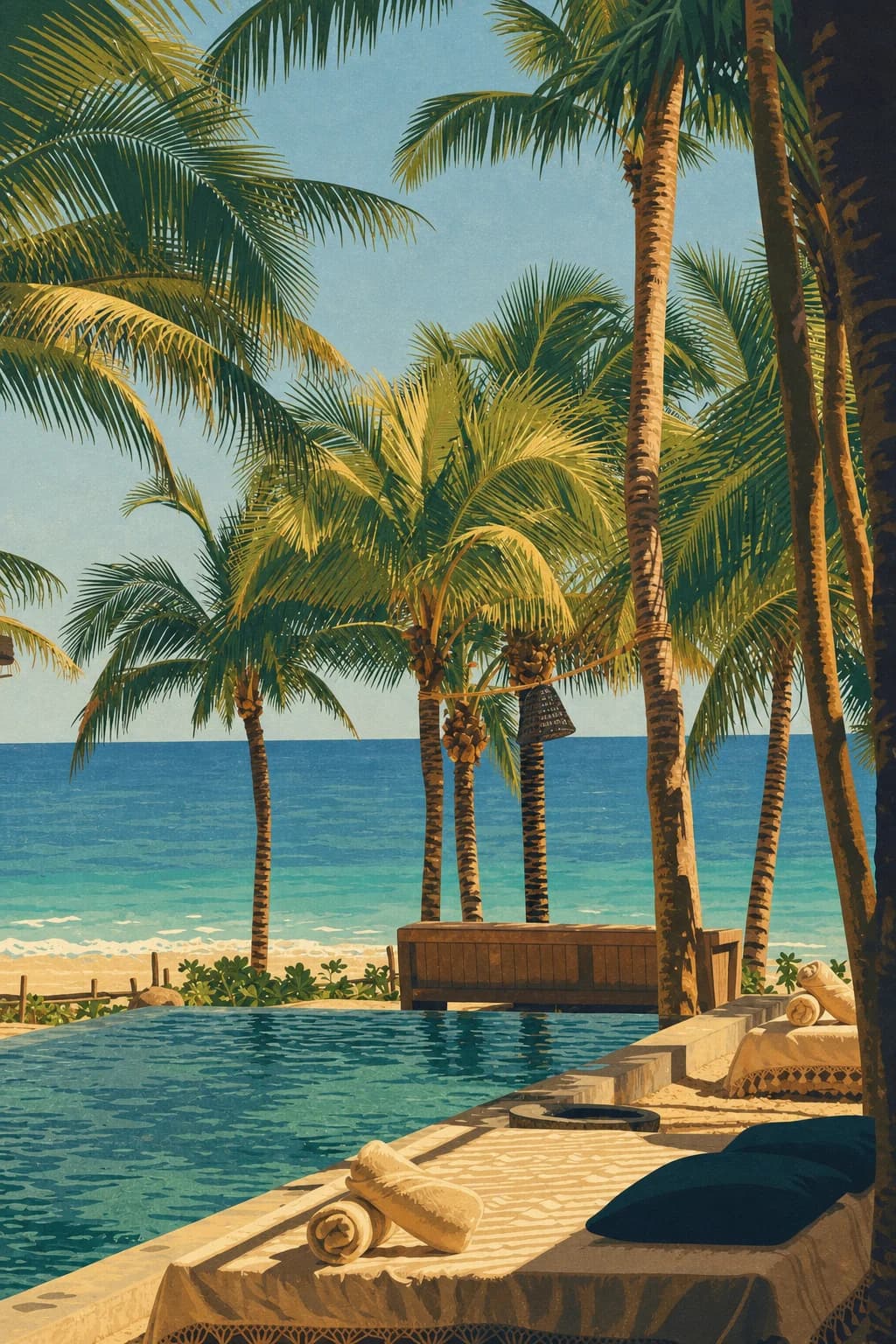
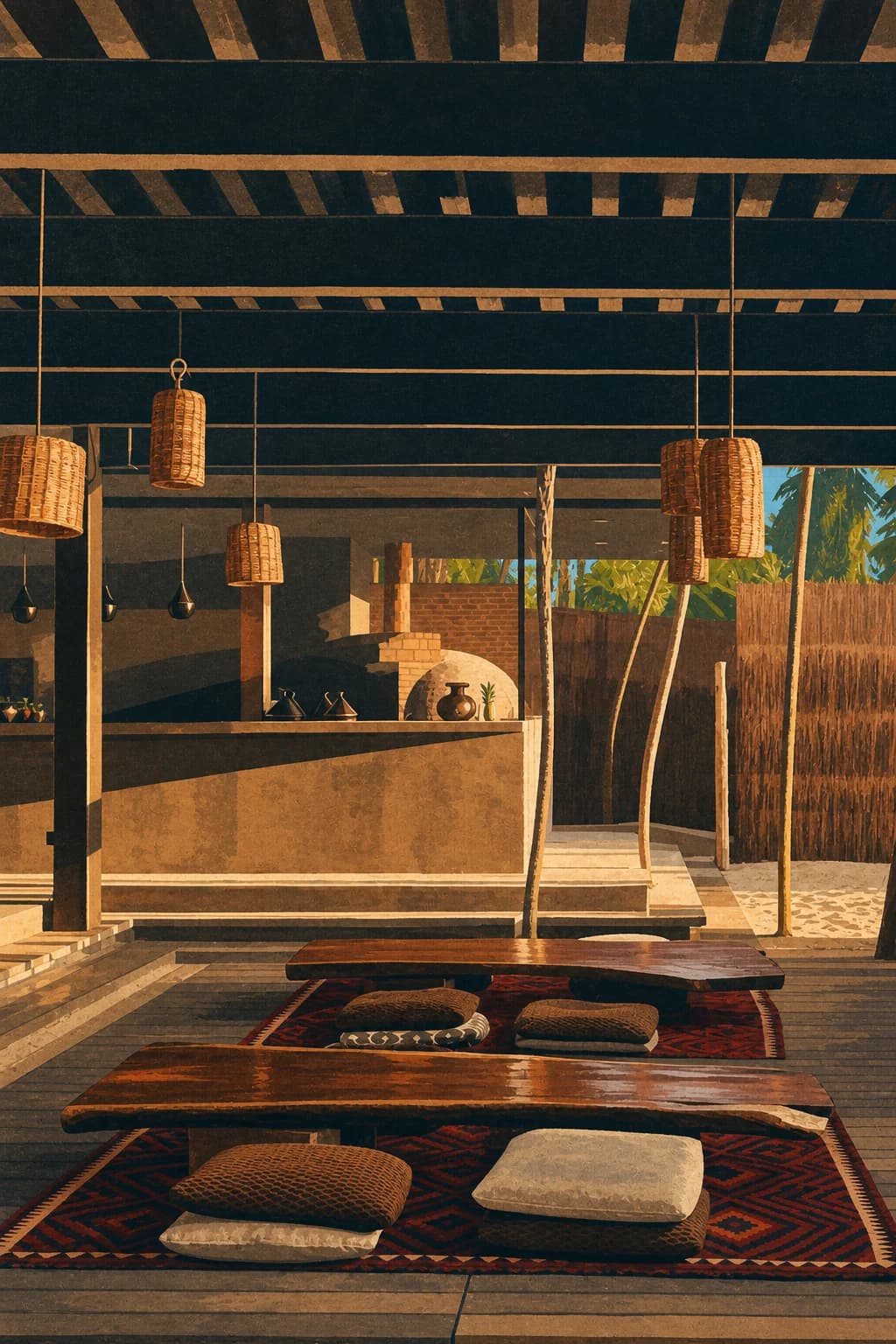
Maïa restaurant handles food, two pools and the Restaura Festival anchor the calendar, and the whole operation doubles as a retreat venue selling packages alongside nightly rooms. Big-publication editorial coverage has not really found it, which keeps pricing wide and availability real for travellers willing to skip the trophy names further down the beach road.
changed.
December through March peaks. November is the value window. Avoid September: sargassum and hurricane risk peak together.
Tulum runs on three overlapping forces — weather, crowd density, and sargassum seaweed — and misreading any one of them can wreck a trip. That triangulation matters more here than at almost any other Caribbean destination.
December through March is peak season, and it earns the title. Humidity drops, rain turns rare, and the Caribbean hits its clearest. December carries maximum demand on Christmas and New Year's pricing, while January through March hold steady before a March Spring Break surge fills South Beach Zone properties weeks out. For Ultra or Very High tier properties that book direct only, plan 60 to 90 days ahead — Nomade and Hotel Esencia both manage their own reservations and sell out specific room categories well before arrival.
April is the bridge. Easter and Semana Santa bring a final demand spike, driven largely by Mexican domestic travelers. Once that holiday window closes, both rates and crowds ease.
May through November is where the trade-offs live. Hurricane season officially runs June 1 through November 30, but statistical risk concentrates in September and October, with September carrying a 15 to 20% probability of tropical cyclone activity. June also opens the worst sargassum stretch: the floating brown algae, carried by Atlantic currents, piles onto Tulum's east-facing beaches from roughly May through October, peaking in July and August. Tulum's open coastline orientation means it catches more than Cancun or Playa del Carmen, and University of South Florida forecasts suggest 2026 could be among the heaviest sargassum years on record for the Mexican Caribbean.
Hotels with dedicated beach cleanup crews manage the situation daily; properties without them can have significant accumulation.
September is the genuine low point. Demand bottoms out, hurricane risk peaks, sargassum lingers, and some smaller properties cut hours or close for maintenance. October begins a slow recovery, with Day of the Dead at month's end marking the cultural pivot back toward high season. November is a legitimate value window: sargassum fades, hurricane odds drop sharply, and pricing hasn't yet climbed to December levels.
approach.
briefing.
stands.
demand's going.
The real Instagram following over time, plus where this hotel sits for demand in Tulum. Pick a range, toggle the lines. Followers are reach and demand, not engagement.
assessment.
File closes at MODERATE. Book direct one to two months out, more for Restaura Festival weeks. Skip if your dates show full on the hotel side; check the GLAMPIKAL stock separately.
The numbers behind the tiers
IKAL TULUM HOTEL · SOURCE READINGS · REDACTED- Availability density · sampled
- Monthly search volume · raw
- TikTok hashtag views · raw
- YouTube total views · raw
- TikTok following · latest sweep
- Pinterest saves · latest sweep
More from Tulum.
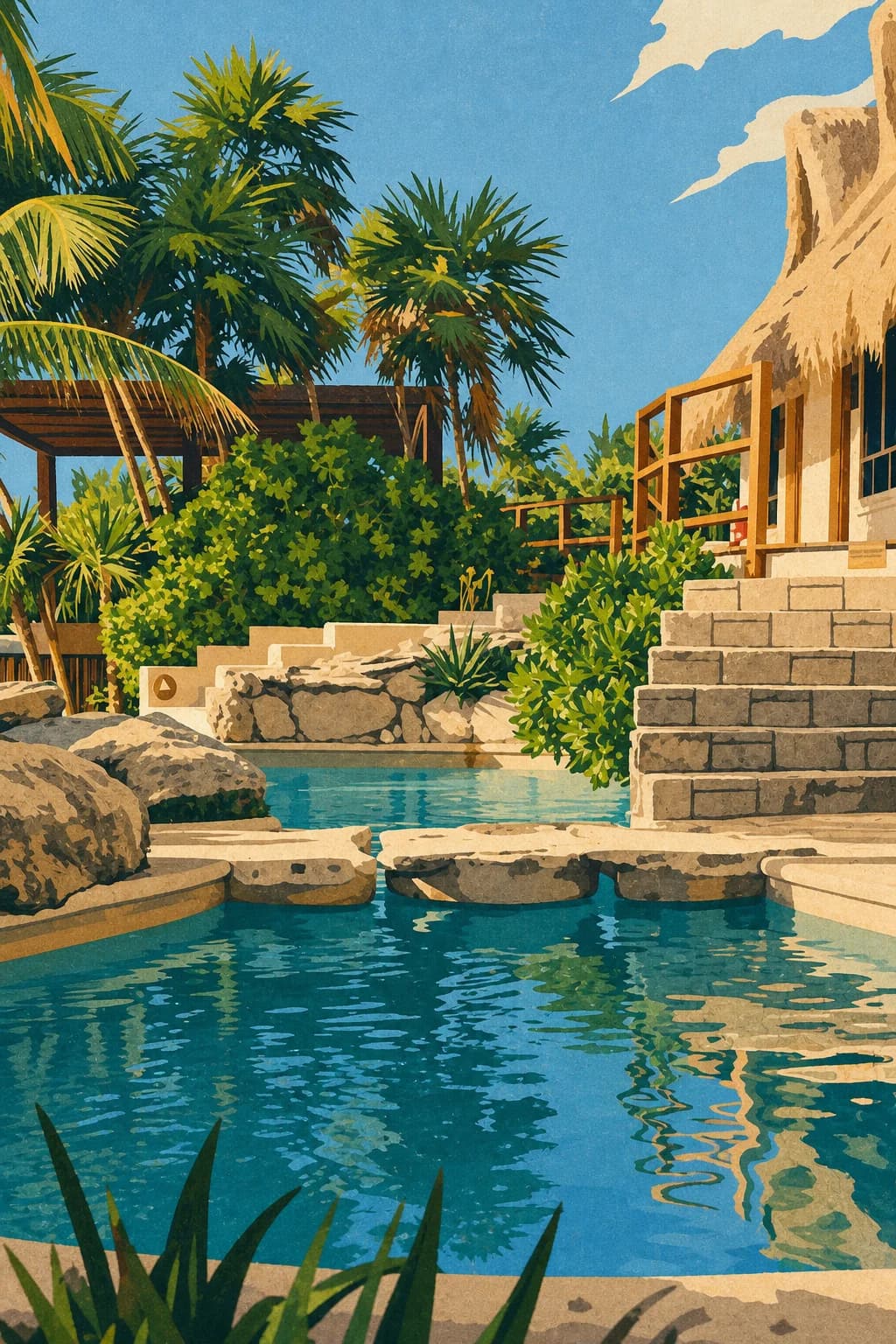



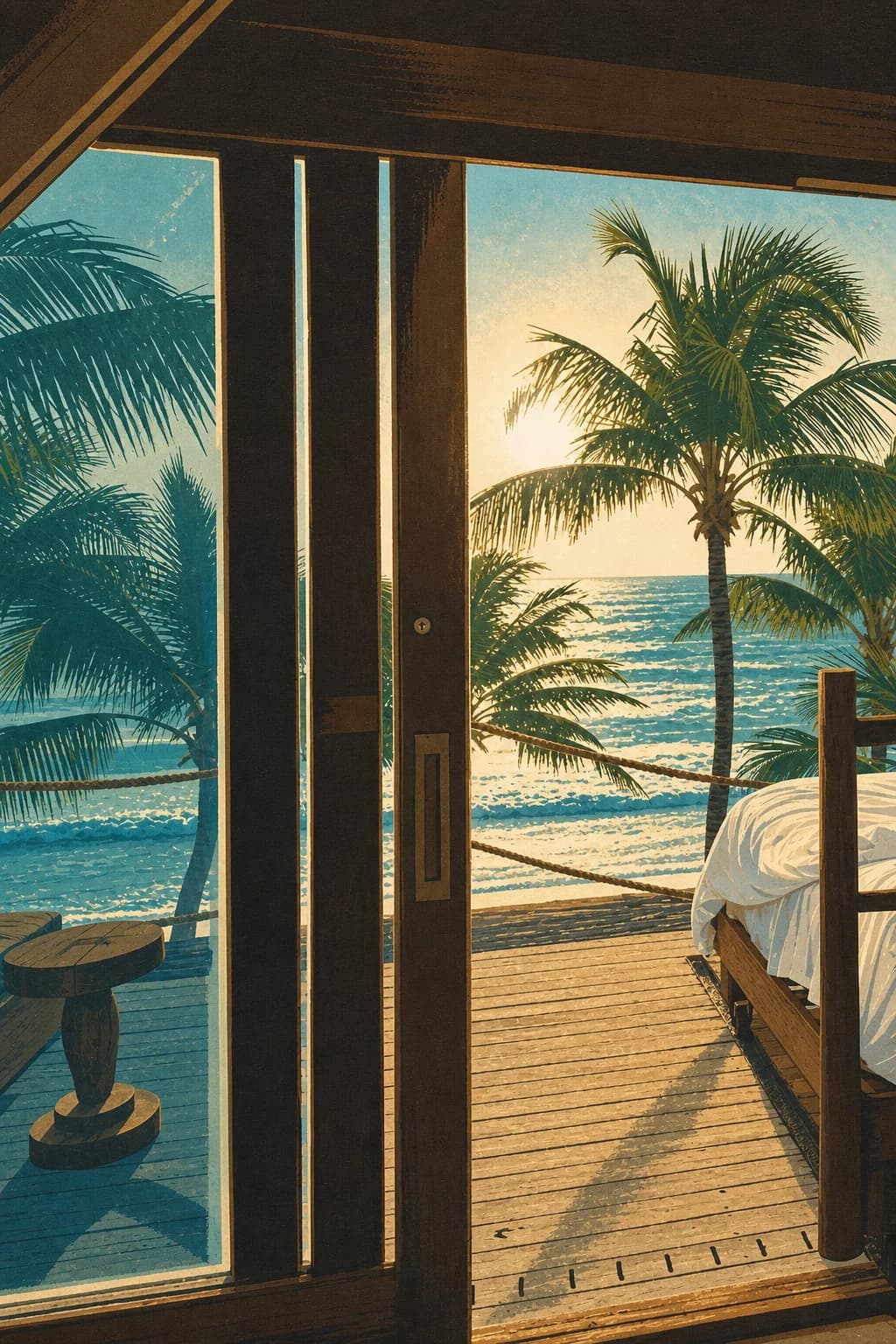
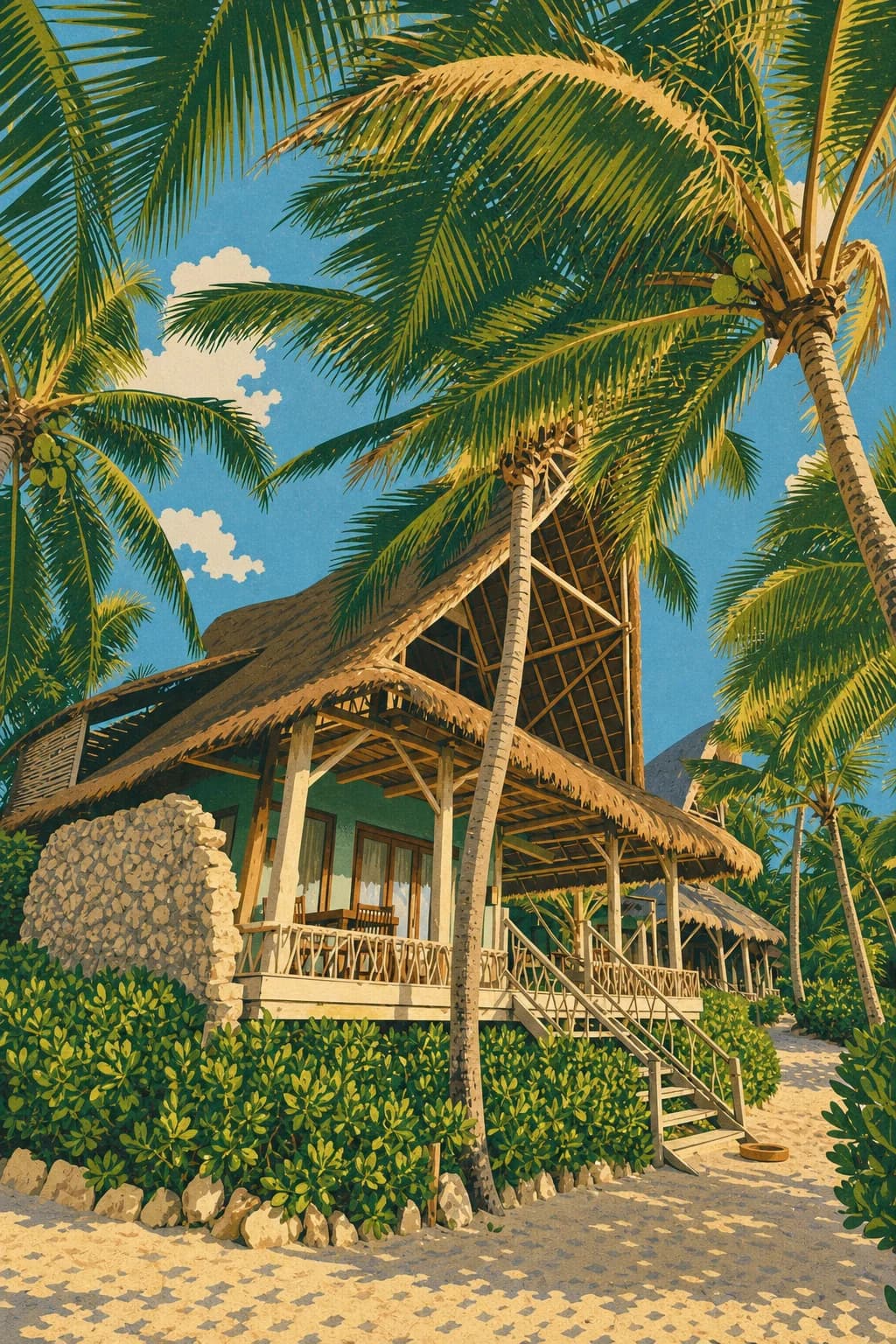
Get the hotel's Unbookable Score.
Any post or reel with a hotel in it. Booking.com hotel pages work too. One free check, no account needed.