Papaya Playa Project
(Design Hotels).
8 critic reviews
filed.
The hype gets the legacy and the scale right; this really is the property that defined Tulum's barefoot-luxury era, and the CNT UK 2024 top spot proves it still lands with design-minded travellers. What the hype underplays is the unevenness across categories. Book into the right tier and you'll love it; book the entry-level cabaña expecting boutique standards and you won't.
The Mayan shaman spa is an actual resident shaman running temazcal and ceremony work, not a spa menu item. Guests who book through Booking.com rarely know to ask for it; the front desk can arrange a private session if you flag it on arrival, and it's a more authentic wellness experience than most Tulum properties offer.
angles.
The Full-Moon Legacy
The monthly full-moon parties and Saturday DJ events are why Papaya Playa Project became a proper noun in electronic music. Tablet Magazine called it the hotel from which to experience Tulum before the tourism boom. That heritage matters if you care about the scene, and makes the property a guaranteed weekend event rather than a sanctuary. Off-moon weekdays are dramatically calmer.
93% Jungle Preserved
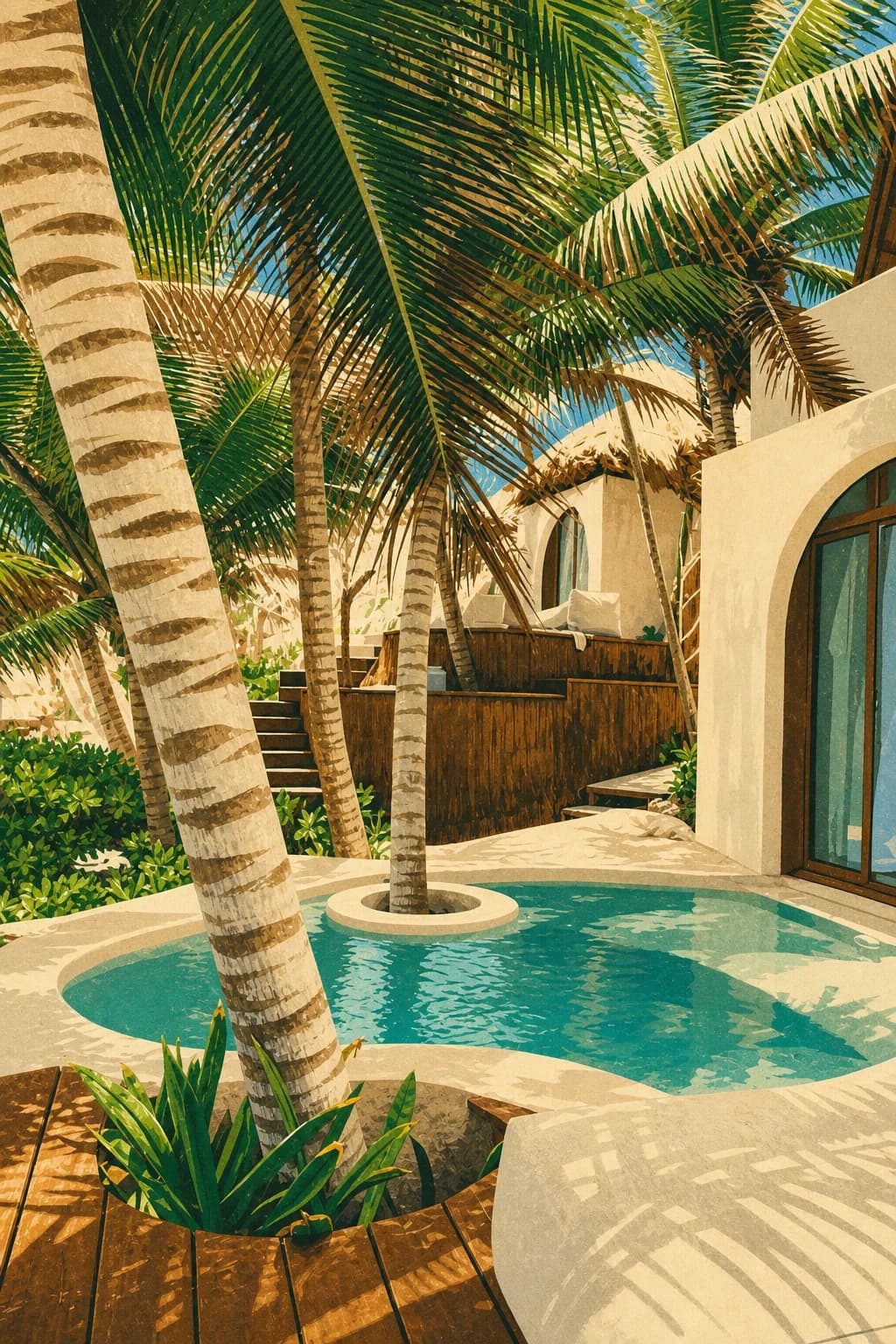
The sustainability plan is genuine rather than marketing language: Design Hotels confirms the property preserves 93% of the original jungle on its land. That means cabañas are spread across 900 metres of shoreline with real distance between them, rather than packed into a dense resort footprint. The Michelin Guide called it ultra-bohemian and ultra-sustainable, and structurally distinct compared to newer Tulum builds.
The Range Of Accommodations
Papaya Playa runs 84 to 100 units across cabañas (simple palapa huts), casitas (mid-range), and full beachfront villas. The rate spread is enormous because the cabin you pick genuinely changes the experience, from rustic-beach-hut to private-villa-with-butler. Most properties this size only offer two or three categories; here there are closer to six, and the cheapest and most expensive share the same shoreline.
talk.
mapped.
“Something of a throwback to the days when Tulum hadn't yet filled up with luxury boutique hotels, the ultra-bohemian, ultra-sustainable Papaya Playa Project is nothing if not unique.”
record.
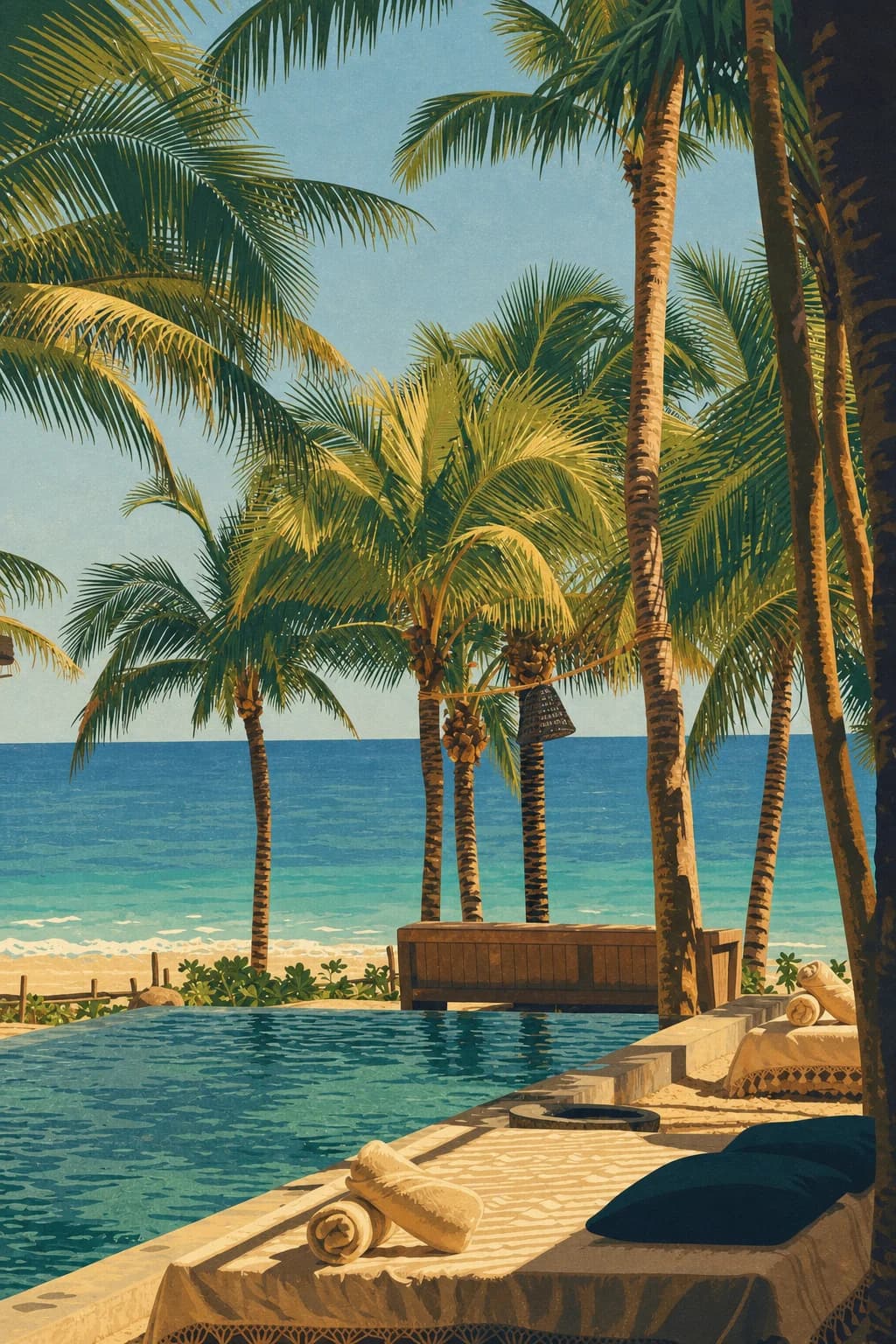
It's a Design Hotels member (so bookable through Marriott Bonvoy) and carries a Michelin Guide listing. The site runs 900 metres of beachfront with roughly 84 to 100 cabañas, casitas and villas, and the operating philosophy preserves 93% of the jungle.
The monthly full-moon parties and Saturday DJ sessions remain the social gravity of southern Tulum, though the Tablet Magazine piece from 2020 already noted this is something of a throwback to the era when Tulum had not yet filled up with boutique hotels. The party is still here. So is the crowd that made it famous.
changed.
December through March peaks. November is the value window. Avoid September: sargassum and hurricane risk peak together.
Tulum runs on three overlapping forces — weather, crowd density, and sargassum seaweed — and misreading any one of them can wreck a trip. That triangulation matters more here than at almost any other Caribbean destination.
December through March is peak season, and it earns the title. Humidity drops, rain turns rare, and the Caribbean hits its clearest. December carries maximum demand on Christmas and New Year's pricing, while January through March hold steady before a March Spring Break surge fills South Beach Zone properties weeks out. For Ultra or Very High tier properties that book direct only, plan 60 to 90 days ahead — Nomade and Hotel Esencia both manage their own reservations and sell out specific room categories well before arrival.
April is the bridge. Easter and Semana Santa bring a final demand spike, driven largely by Mexican domestic travelers. Once that holiday window closes, both rates and crowds ease.
May through November is where the trade-offs live. Hurricane season officially runs June 1 through November 30, but statistical risk concentrates in September and October, with September carrying a 15 to 20% probability of tropical cyclone activity. June also opens the worst sargassum stretch: the floating brown algae, carried by Atlantic currents, piles onto Tulum's east-facing beaches from roughly May through October, peaking in July and August. Tulum's open coastline orientation means it catches more than Cancun or Playa del Carmen, and University of South Florida forecasts suggest 2026 could be among the heaviest sargassum years on record for the Mexican Caribbean.
Hotels with dedicated beach cleanup crews manage the situation daily; properties without them can have significant accumulation.
September is the genuine low point. Demand bottoms out, hurricane risk peaks, sargassum lingers, and some smaller properties cut hours or close for maintenance. October begins a slow recovery, with Day of the Dead at month's end marking the cultural pivot back toward high season. November is a legitimate value window: sargassum fades, hurricane odds drop sharply, and pricing hasn't yet climbed to December levels.
approach.
briefing.
“In Tulum, Papaya Playa Project is achingly cool with thatched villas, a beach club packed with digital nomads by day and stylish clubbers at night, and a robust wellness calendar.”
stands.
demand's going.
The real Instagram following over time, plus where this hotel sits for demand in Tulum. Pick a range, toggle the lines. Followers are reach and demand, not engagement.
assessment.
File closes at HIGH. Book two to three months out for full moons, or use Marriott Bonvoy points as the underused lever here. Skip if sargassum bothers you; April through August the smell drifts inland.
The numbers behind the tiers
Papaya Playa Project (Design Hotels) · SOURCE READINGS · REDACTED- Availability density · sampled
- Monthly search volume · raw
- TikTok hashtag views · raw
- YouTube total views · raw
- TikTok following · latest sweep
- Pinterest saves · latest sweep
More from Tulum.








Get the hotel's Unbookable Score.
Any post or reel with a hotel in it. Booking.com hotel pages work too. One free check, no account needed.