Hotel Tiki
Tiki Tulum.
4 critic reviews
filed.
The hype understates how different the design vocabulary is from everything else in Tulum. What it oversells is the beach access, since you are firmly inland and reliant on a taxi or cycle to reach the sand.
The breeze-block shadows in the late afternoon make the courtyard look like a Slim Aarons photograph for about 40 minutes before sunset. Most guests are at the beach by then and miss the best light of the day on the property.
angles.
One of a Kind Architecture
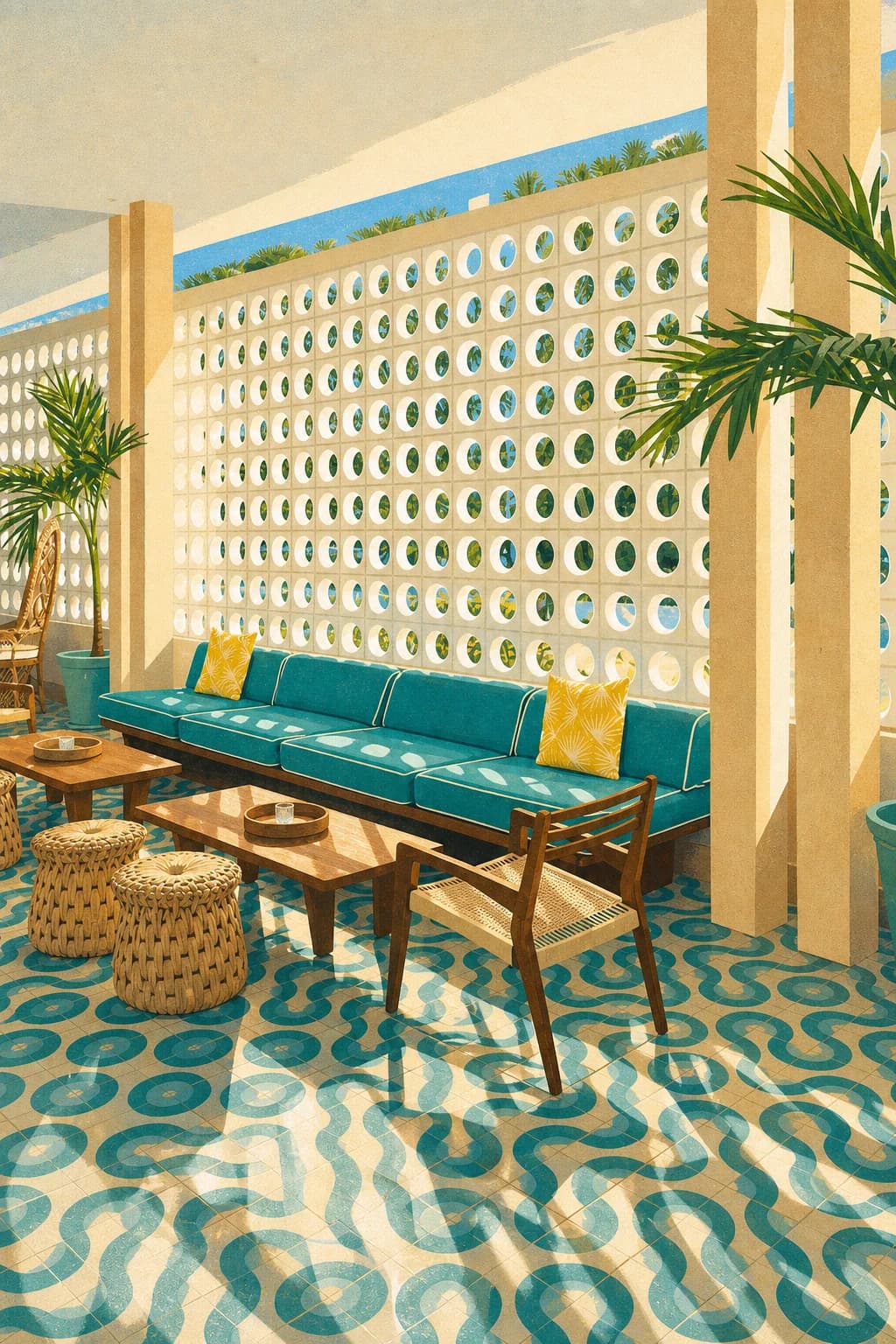
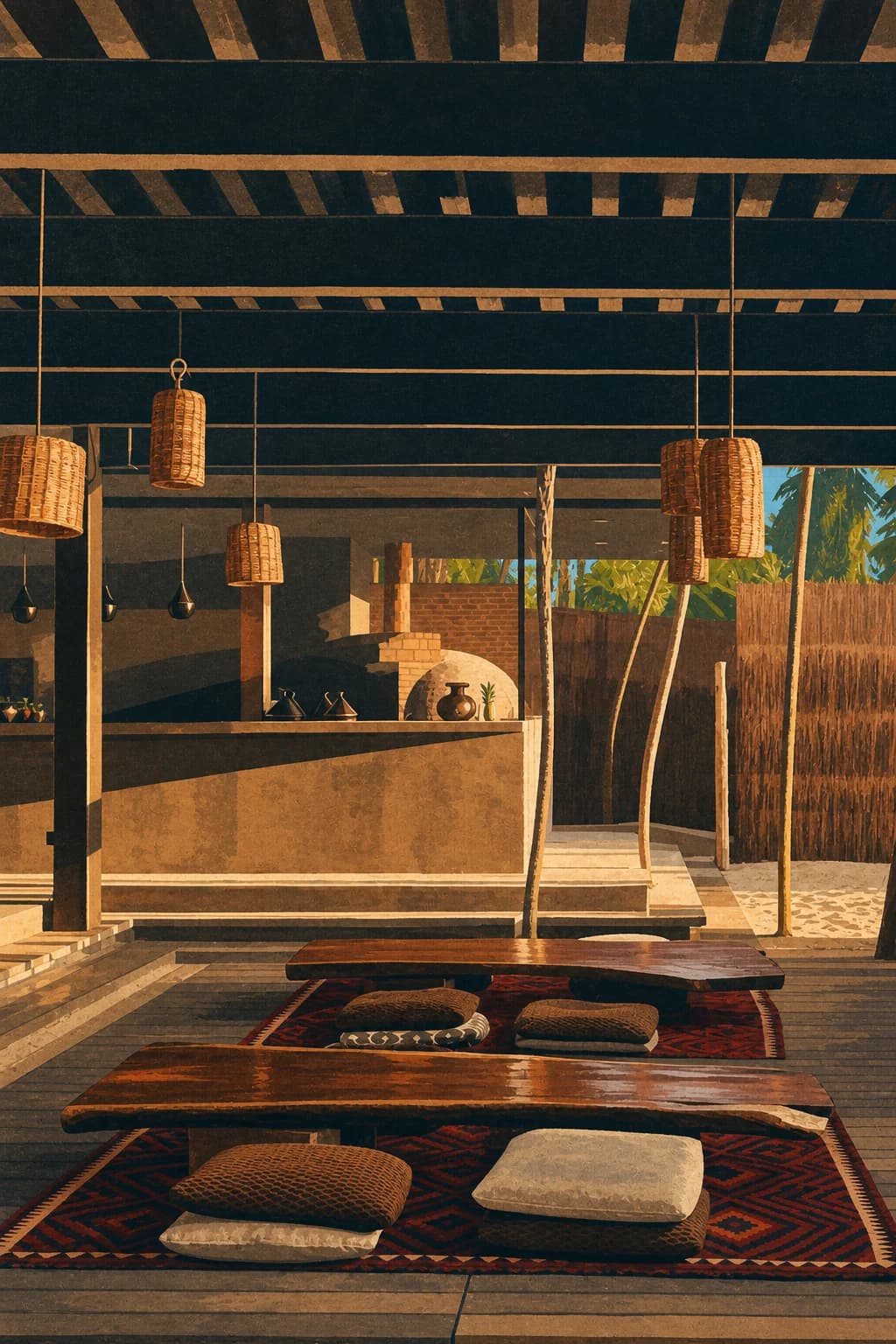
Glass block, perforated screens, custom Guadalajara tiles, and slatted wood are not Tulum design language. Zavala Haag lifted the whole thing out of 1950s Miami and dropped it into the jungle, and the result is the only mid-century modern hotel in the region. ArchDaily and Dwell both documented the build in detail when it opened in 2016.
Holistika Campus Access
The hotel sits inside the Holistika wellness campus in Tulum Pueblo, which means your stay includes access to Holistika's yoga, meditation, sound healing sessions, and vegan café without leaving the gates. You can wake up, walk to a class, eat a bowl, swim in the courtyard pool, and never hire a taxi. Few Tulum boutiques bundle wellness programming this completely.
Fifteen Keys, Inland Pricing
At 15 rooms priced in the lower inland band, Tiki Tiki is a rarity in Tulum: a genuinely designed hotel at that money. The trade is inland, not beachfront, and the rooms are more Miami apartment than beach cabana. For two nights as a design fan or Holistika regular, the maths actually work before the beach club bill starts running.
talk.
mapped.
“While Hotel Tiki Tiki Tulum was cute and offered a small slice of Mid-Century modern style in Tulum's La Veleta neighborhood, it was rather basic”
record.
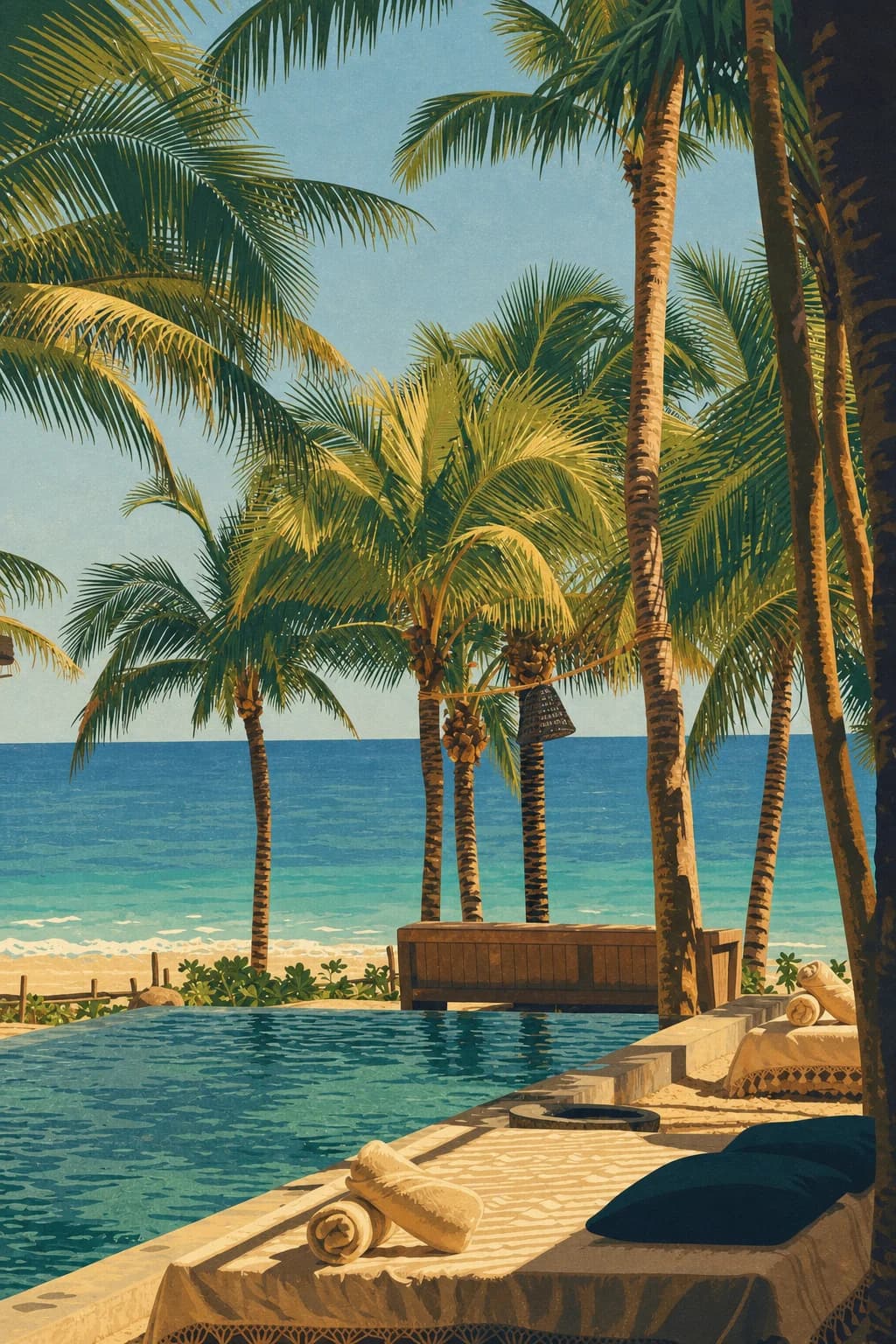
Architect Arturo Zavala Haag designed and owns the place, and every move is mid-century Miami filtered through a Yucatán jungle campus. Glass block windows, perforated breeze walls, custom floor tiles sourced from Guadalajara, slatted wood, a 36-foot courtyard pool, and rooms with snug hammocks and jungle views.
Fifteen keys only, set inside the Holistika wellness campus, which means guests get complimentary access to Holistika's yoga classes, pools, and vegan dining without leaving the grounds. MICHELIN Guide, Mr & Mrs Smith, ArchDaily and Dwell have all written it up, and the Hotels.com guest score sits at 9.6. It is the rare Tulum boutique that gives you an obvious reason to book.
changed.
December through March peaks. November is the value window. Avoid September: sargassum and hurricane risk peak together.
Tulum runs on three overlapping forces — weather, crowd density, and sargassum seaweed — and misreading any one of them can wreck a trip. That triangulation matters more here than at almost any other Caribbean destination.
December through March is peak season, and it earns the title. Humidity drops, rain turns rare, and the Caribbean hits its clearest. December carries maximum demand on Christmas and New Year's pricing, while January through March hold steady before a March Spring Break surge fills South Beach Zone properties weeks out. For Ultra or Very High tier properties that book direct only, plan 60 to 90 days ahead — Nomade and Hotel Esencia both manage their own reservations and sell out specific room categories well before arrival.
April is the bridge. Easter and Semana Santa bring a final demand spike, driven largely by Mexican domestic travelers. Once that holiday window closes, both rates and crowds ease.
May through November is where the trade-offs live. Hurricane season officially runs June 1 through November 30, but statistical risk concentrates in September and October, with September carrying a 15 to 20% probability of tropical cyclone activity. June also opens the worst sargassum stretch: the floating brown algae, carried by Atlantic currents, piles onto Tulum's east-facing beaches from roughly May through October, peaking in July and August. Tulum's open coastline orientation means it catches more than Cancun or Playa del Carmen, and University of South Florida forecasts suggest 2026 could be among the heaviest sargassum years on record for the Mexican Caribbean.
Hotels with dedicated beach cleanup crews manage the situation daily; properties without them can have significant accumulation.
September is the genuine low point. Demand bottoms out, hurricane risk peaks, sargassum lingers, and some smaller properties cut hours or close for maintenance. October begins a slow recovery, with Day of the Dead at month's end marking the cultural pivot back toward high season. November is a legitimate value window: sargassum fades, hurricane odds drop sharply, and pricing hasn't yet climbed to December levels.
approach.
briefing.
stands.
demand's going.
The real Instagram following over time, plus where this hotel sits for demand in Tulum. Pick a range, toggle the lines. Followers are reach and demand, not engagement.
assessment.
File closes at HIGH. Book direct six to eight weeks out, longer for peak winter. Skip the base category if architecture is the draw; the pool-view design payoff justifies the upgrade.
The numbers behind the tiers
Hotel Tiki Tiki Tulum · SOURCE READINGS · REDACTED- Availability density · sampled
- Monthly search volume · raw
- TikTok hashtag views · raw
- YouTube total views · raw
- TikTok following · latest sweep
- Pinterest saves · latest sweep
More from Tulum.





Get the hotel's Unbookable Score.
Any post or reel with a hotel in it. Booking.com hotel pages work too. One free check, no account needed.