Munduk Moding
Plantation.

8 critic reviews
filed.
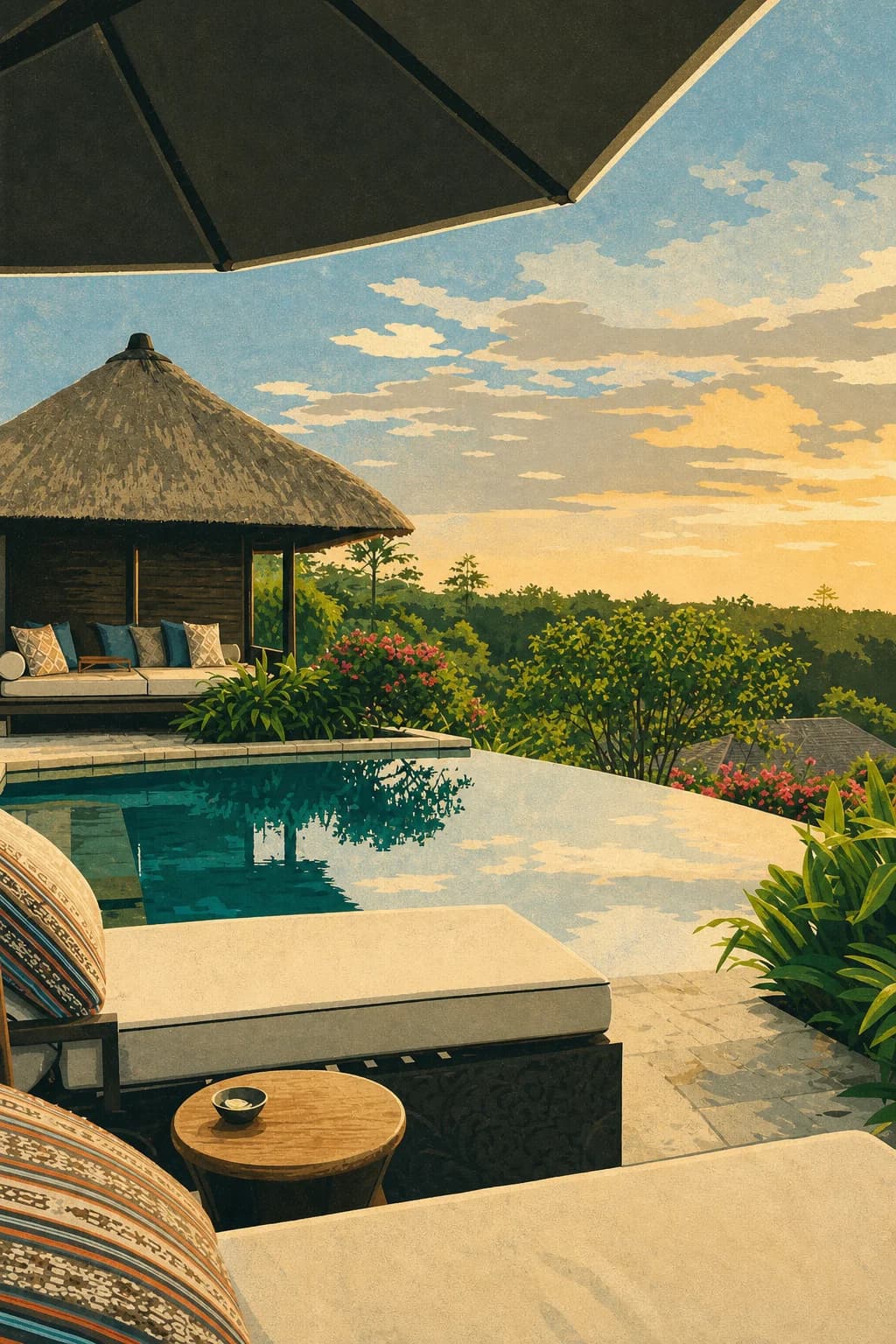
Munduk Moding Plantation is one of the older North Bali properties and the infinity pool in the clouds is the reel that launched the whole North Bali look. The hype still holds on the view and the cool-climate setting. It misses that the rooms are dated by current luxury standards and the property has not done the hard refurbishment that the rate increases would justify.
The coffee plantation tour is run by the owner's family and the early-morning version before the tour-group slot happens in Balinese with translation on request. Book it through the restaurant manager at dinner the night before rather than the front desk, and the cup at the end is from beans picked that week rather than the house roast.
angles.
Popo Danes's Master Plan
Popo Danes is one of Bali's most respected architects, known for designs that integrate buildings with landscape rather than competing with it. His master plan for Munduk Moding positioned the rooms to follow the plantation's contours. Era Anastasia continued the approach in later buildings. The architecture serves the coffee trees rather than replacing them.
The Working Plantation
The coffee and clove plantation is operational, not decorative. Guests walk between rows of coffee plants, see the drying process, and taste the product. The plantation gives the property an agricultural purpose beyond tourism. The organic practices and composting connect the hotel to the land it sits on. The coffee you drink at breakfast grew outside the window.
Green Globe Since 2014
Green Globe certification since 2014, with 100% Balinese staff and community programmes in the surrounding villages. The no-plastic policy and composting are standard for eco-properties, but the Green Globe audit makes the claims accountable. The 100% local staffing commitment means the economic impact stays in the highland community.
talk.
mapped.
“Swimming in Munduk Moding Plantation's infinity pool is like swimming in the clouds, with birds included. The only working coffee plantation in Bali you can stay in.”
record.
Seventeen rooms sit above a working coffee and clove plantation at approximately 1,200 metres elevation. Green Globe certified since 2014. Organic plantation, composting, no plastic, 100% Balinese staff, and community programmes.
Over 111,000 Instagram followers. The infinity pool overlooks the valley below. Exceptional breakfast included. Family suites available. 2.5 hours from DPS airport. At $$$$$ pricing, the combination of Popo Danes architecture, Green Globe certification, a working plantation, and the highland setting creates a proposition unique in Bali.
changed.
Book April–June or September–October for the value sweet spot. Plan July–August four to six months out. Confirm Nyepi (March) before booking.
Bali runs on two overlapping clocks: its equatorial wet-dry cycle and the school holiday calendars of Australia and Europe, its two largest visitor markets. Where those systems collide, demand spikes hard. The rest of the year, the island is far more negotiable than its reputation suggests.
The dry season runs April through October, and July and August are its unforgiving peak. European summer holidays flood the island in July; Australian school holidays layer on top in August, pushing demand to its annual maximum. Skies clear, humidity drops, and the island's outdoor infrastructure runs at full capacity. If your dates are fixed in those two months, book early. Ultra and Very High tier properties fill months in advance. Uluwatu Surf Villas currently shows as sold out, and Veluvana Bali runs at scarce availability through peak periods.
The shoulder windows, April through May and September through October, deliver the best value equation on the island. Weather is reliably dry, crowds thin considerably once the school-holiday cohorts leave, and Room Demand Scores fall to roughly half the August peak. These months are especially strong for Ubud and the highland properties, where clear mornings reveal volcanic panoramas that vanish during the wet season.
Book the April-to-May shoulder for dry weather, moderate demand, and the full range of the island's 75 tracked properties available without peak-season competition.
The wet season spans November through March, and it is more manageable than the name implies. Rain arrives in intense afternoon bursts rather than all-day gray, and mornings are often clear. Temperatures stay warm. The trade-offs are real: some outdoor activities turn unreliable, rural roads can flood, and boat crossings to the Nusa and Gili Islands get rougher. But hotel pricing drops significantly, and the rice terraces turn an almost electric green.
One date demands specific attention: Nyepi, the Balinese Day of Silence, falls in March on a date that shifts annually with the Saka lunar calendar. The entire island shuts down for 24 hours. No flights land or depart, no cars move, no lights are permitted after dark, and hotels ask guests to remain on property. It is a genuinely singular cultural experience, but it requires planning. If your trip overlaps with Nyepi, confirm your hotel's policy in advance and treat the day as part of the itinerary rather than an inconvenience.
approach.
briefing.
“The property is truly breathtaking — from its beautiful infinity pool, which overlooks the dense rainforest of North Bali, to its spacious villas.”
stands.
demand's going.
The real Instagram following over time, plus where this hotel sits for demand in Bali. Pick a range, toggle the lines. Followers are reach and demand, not engagement.
assessment.
File closes at VERY HIGH. Book direct one to two months out and combine with Lovina or Munduk for the drive. Skip if you want beach access; this is a coffee-plantation property in the highlands.
The numbers behind the tiers
Munduk Moding Plantation · SOURCE READINGS · REDACTED- Availability density · sampled
- Monthly search volume · raw
- TikTok hashtag views · raw
- YouTube total views · raw
- TikTok following · latest sweep
- Pinterest saves · latest sweep
More from Bali.





Get the hotel's Unbookable Score.
Any post or reel with a hotel in it. Booking.com hotel pages work too. One free check, no account needed.