Le Pirate
Beach Club.
5 critic reviews
filed.
Le Pirate Beach Club on Nusa Ceningan is the original cheap-and-cheerful beach bungalow that went viral on Instagram years before the Gilis and Lembongan did, and it still delivers on colour and vibe. The hype gets the scene right. It misses how basic the rooms actually are, because the budget is in the beach club not the bungalows, and first-time visitors often expect more.
The beach club is packed with day-trippers from noon until 4pm and is effectively private for overnight guests outside those hours. Order the sunset set menu as a guest add-on at check-in, sit on the sand deck rather than the elevated bar, and the Ceningan cliff walk two minutes south is one of the emptier sunset spots on the island.
angles.
Taffin's Beach Boxes
Fredo Taffin designed compact, air-conditioned boxes that prioritise the cliff view over the room size. The retro-chic aesthetic is consistent: white-and-blue palette, minimal furniture, maximum window. Travelfish noted "you don't have to be big and flashy to be comfortable." The design philosophy is deliberate restraint: small rooms, big cliff, turquoise water.
Nusa Ceningan's Yellow Bridge
Nusa Ceningan is connected to Nusa Lembongan by a famous yellow bridge. The island is smaller and quieter than its neighbour, with limited development and genuine remoteness. Le Pirate's cliff position faces the open ocean. The island's small scale means the property feels like a destination in itself, not a room within a larger resort area.
Pocket Change on a Cliff Edge
At $$ pricing, Le Pirate offers cliff-edge accommodation and a social beach-club atmosphere at rates that remove financial barriers. The value proposition is simple: a cliff, a box, air conditioning, breakfast, and the ocean. Most properties at this price point can't offer this setting. Most properties at this setting can't offer this price.
talk.
mapped.
“The white and turquoise beach boxes at Le Pirate Beach Club Ceningan make it feel more like a Caribbean island than a tiny island in Indonesia.”
record.
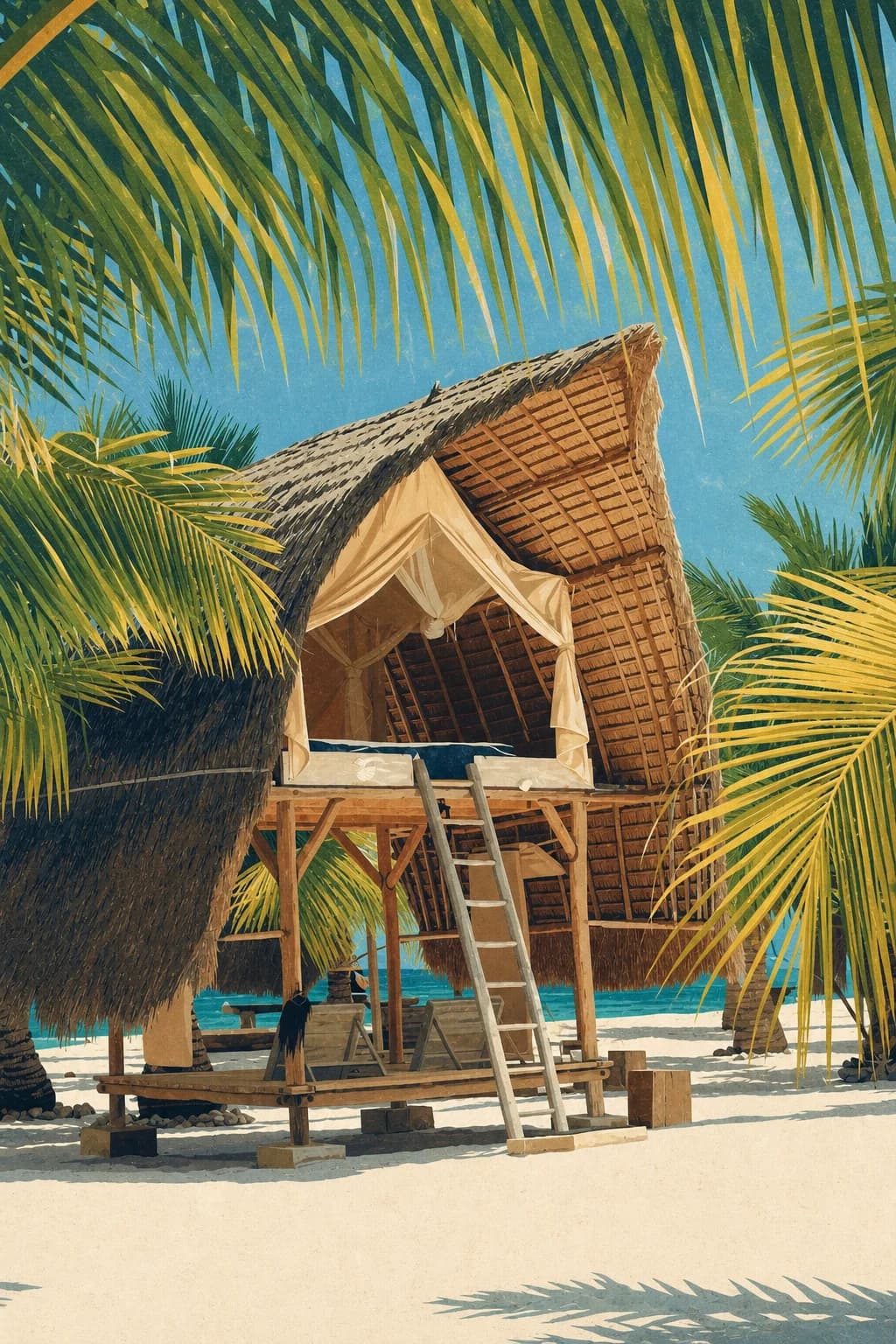
Fredo Taffin designed twelve air-conditioned beach boxes in a retro-chic aesthetic: white-and-blue colour scheme, compact bungalows with bunk beds or doubles, and beanbags scattered along the cliff.
Lonely Planet described it as "retro-chic island kitsch." Time Out called it "the epitome of island living." Adults only since 2013. Breakfast included. At $$ pricing, Le Pirate delivers a cliff-edge social experience at backpacker rates. Over 105,000 Instagram followers. The property is a club, a hotel, and a sunset institution. The turquoise water below the cliff does the rest.
changed.
Book April–June or September–October for the value sweet spot. Plan July–August four to six months out. Confirm Nyepi (March) before booking.
Bali runs on two overlapping clocks: its equatorial wet-dry cycle and the school holiday calendars of Australia and Europe, its two largest visitor markets. Where those systems collide, demand spikes hard. The rest of the year, the island is far more negotiable than its reputation suggests.
The dry season runs April through October, and July and August are its unforgiving peak. European summer holidays flood the island in July; Australian school holidays layer on top in August, pushing demand to its annual maximum. Skies clear, humidity drops, and the island's outdoor infrastructure runs at full capacity. If your dates are fixed in those two months, book early. Ultra and Very High tier properties fill months in advance. Uluwatu Surf Villas currently shows as sold out, and Veluvana Bali runs at scarce availability through peak periods.
The shoulder windows, April through May and September through October, deliver the best value equation on the island. Weather is reliably dry, crowds thin considerably once the school-holiday cohorts leave, and Room Demand Scores fall to roughly half the August peak. These months are especially strong for Ubud and the highland properties, where clear mornings reveal volcanic panoramas that vanish during the wet season.
Book the April-to-May shoulder for dry weather, moderate demand, and the full range of the island's 75 tracked properties available without peak-season competition.
The wet season spans November through March, and it is more manageable than the name implies. Rain arrives in intense afternoon bursts rather than all-day gray, and mornings are often clear. Temperatures stay warm. The trade-offs are real: some outdoor activities turn unreliable, rural roads can flood, and boat crossings to the Nusa and Gili Islands get rougher. But hotel pricing drops significantly, and the rice terraces turn an almost electric green.
One date demands specific attention: Nyepi, the Balinese Day of Silence, falls in March on a date that shifts annually with the Saka lunar calendar. The entire island shuts down for 24 hours. No flights land or depart, no cars move, no lights are permitted after dark, and hotels ask guests to remain on property. It is a genuinely singular cultural experience, but it requires planning. If your trip overlaps with Nyepi, confirm your hotel's policy in advance and treat the day as part of the itinerary rather than an inconvenience.
approach.
briefing.
“Le Pirate gave us one of our most memorable getaways with its cute and casual vibes, perfect for adventurers escaping the hustle of Seminyak.”
stands.
demand's going.
The real Instagram following over time, plus where this hotel sits for demand in Bali. Pick a range, toggle the lines. Followers are reach and demand, not engagement.
assessment.
File closes at VERY HIGH. Book direct one to two months out and aim for weekdays. Skip if hotel-grade rooms matter; the boxes are intentionally compact and social-focused.
The numbers behind the tiers
Le Pirate Beach Club · SOURCE READINGS · REDACTED- Availability density · sampled
- Monthly search volume · raw
- TikTok hashtag views · raw
- YouTube total views · raw
- TikTok following · latest sweep
- Pinterest saves · latest sweep
More from Bali.










Get the hotel's Unbookable Score.
Any post or reel with a hotel in it. Booking.com hotel pages work too. One free check, no account needed.