VILLA PESCADORES
(Ahau Collection).

2 critic reviews
filed.
The hype is modest and fair. Oyster covered it, no Tier-A publication has, and the beachfront-at-the-ruins pitch is straightforward rather than inflated. What reviews get right is the location. What they undersell is how much sargassum timing and shoulder-season pricing change the value calculation from one month to the next.
The Ahau Collection also runs Kai Tulum next door, which shares the same stretch of beach and the same kitchen team but with a quieter, no-televisions-by-design feel. If Villa Pescadores is full, Kai is the sister property to ask about, and it rarely shows up in the Tulum search results first-timers see.
angles.
Walk to the Ruins
No property on the beach road puts you closer to the archaeological site. The walk from Villa Pescadores to the Tulum gate is around five minutes on sand, and you can beat the 9am coach wave by a solid hour. For anyone who came to Tulum for the ruins rather than the beach club scene, that geography alone justifies the rate.
The Original Fishermen's Huts
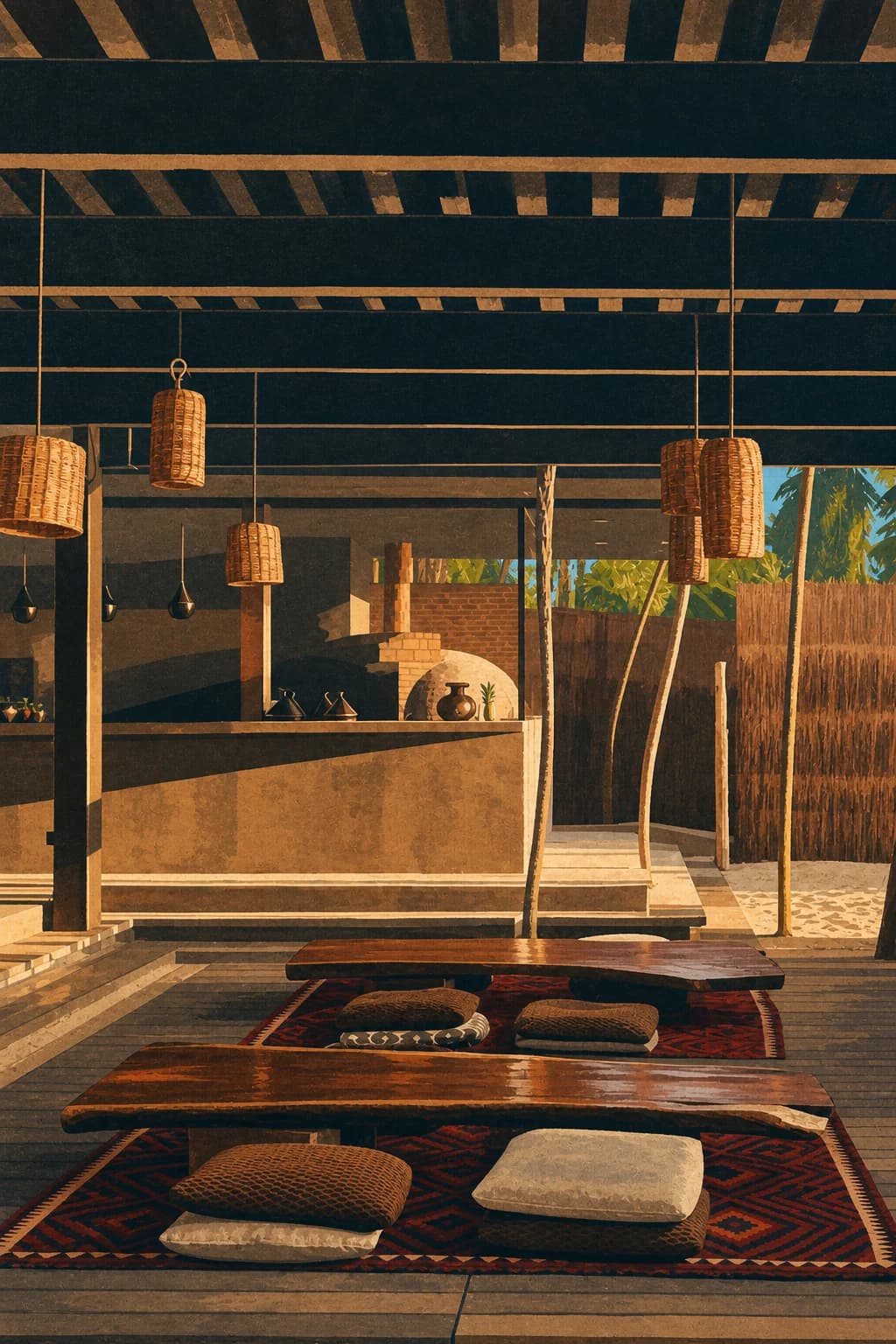
The site has been a hotel since 2002, when the cabanas were literally adapted from working fishing structures. The 2014 Ahau rebuild kept the palapa-and-thatch language instead of importing the concrete-and-linen look that dominates the middle of the beach road, and the result feels connected to the place rather than imposed on it. Eighteen rooms, all on the beach.
Family-Friendly on the Beach Road
Tulum's Hotel Zone skews adults-only or party-first, which makes genuine family options scarce. Villa Pescadores accepts kids without making it the marketing message, and the calm section of Playa Pescadores is safer for swimming than the open stretches further south. It is also a wedding venue for groups up to 40, which is small by Tulum standards.
talk.
mapped.
“There's a fabulously relaxing vibe around Villa Pescadores, where nature, rather than self-conscious stylishness, sets the tone.”
record.
The Ahau Collection took over and rebuilt it in 2014 into eighteen cabanas with palapa roofs and handcrafted furniture, and the building code inside Parque del Jaguar has since made anything like it impossible to replicate.
The draw is the walk: five minutes on sand and you are at the Tulum ruins entrance, which means you can be standing in front of the Temple of the Frescoes before the shuttle buses from Playa del Carmen have even finished loading. It is family-friendly, which is unusual for the beach road, and it books through the OTAs, which means the friction is pricing rather than access. Rates swing wildly by season, and the shoulder months are where the value lives.
changed.
December through March peaks. November is the value window. Avoid September: sargassum and hurricane risk peak together.
Tulum runs on three overlapping forces — weather, crowd density, and sargassum seaweed — and misreading any one of them can wreck a trip. That triangulation matters more here than at almost any other Caribbean destination.
December through March is peak season, and it earns the title. Humidity drops, rain turns rare, and the Caribbean hits its clearest. December carries maximum demand on Christmas and New Year's pricing, while January through March hold steady before a March Spring Break surge fills South Beach Zone properties weeks out. For Ultra or Very High tier properties that book direct only, plan 60 to 90 days ahead — Nomade and Hotel Esencia both manage their own reservations and sell out specific room categories well before arrival.
April is the bridge. Easter and Semana Santa bring a final demand spike, driven largely by Mexican domestic travelers. Once that holiday window closes, both rates and crowds ease.
May through November is where the trade-offs live. Hurricane season officially runs June 1 through November 30, but statistical risk concentrates in September and October, with September carrying a 15 to 20% probability of tropical cyclone activity. June also opens the worst sargassum stretch: the floating brown algae, carried by Atlantic currents, piles onto Tulum's east-facing beaches from roughly May through October, peaking in July and August. Tulum's open coastline orientation means it catches more than Cancun or Playa del Carmen, and University of South Florida forecasts suggest 2026 could be among the heaviest sargassum years on record for the Mexican Caribbean.
Hotels with dedicated beach cleanup crews manage the situation daily; properties without them can have significant accumulation.
September is the genuine low point. Demand bottoms out, hurricane risk peaks, sargassum lingers, and some smaller properties cut hours or close for maintenance. October begins a slow recovery, with Day of the Dead at month's end marking the cultural pivot back toward high season. November is a legitimate value window: sargassum fades, hurricane odds drop sharply, and pricing hasn't yet climbed to December levels.
approach.
briefing.
stands.
demand's going.
The real Instagram following over time, plus where this hotel sits for demand in Tulum. Pick a range, toggle the lines. Followers are reach and demand, not engagement.
assessment.
File closes at MODERATE. Book two to three months out for peak, two to four weeks in shoulder. Skip June or July without a sargassum hedge; book OTA with free cancellation in summer.
The numbers behind the tiers
VILLA PESCADORES (Ahau Collection) · SOURCE READINGS · REDACTED- Availability density · sampled
- Monthly search volume · raw
- TikTok hashtag views · raw
- YouTube total views · raw
- TikTok following · latest sweep
- Pinterest saves · latest sweep
More from Tulum.









Get the hotel's Unbookable Score.
Any post or reel with a hotel in it. Booking.com hotel pages work too. One free check, no account needed.