Grün
Canggu.
3 critic reviews
filed.
Grün is small, quiet, and genuinely plant-forward in a Canggu neighbourhood that mostly serves cocktails in pineapples. The four-room format means the pool is never busy and the kitchen actually knows your name by day two. What the hype undersells is how close it sits to the Berawa traffic spine, so the bubble is real until you step outside the gate.
The kitchen runs a set-menu dinner most nights that is not on any public channel and costs a fraction of the bigger Canggu restaurants. Ask at check-in whether it is running during your stay, and request the table by the garden rather than the one closest to the pool.
angles.
Dornier's Studio N
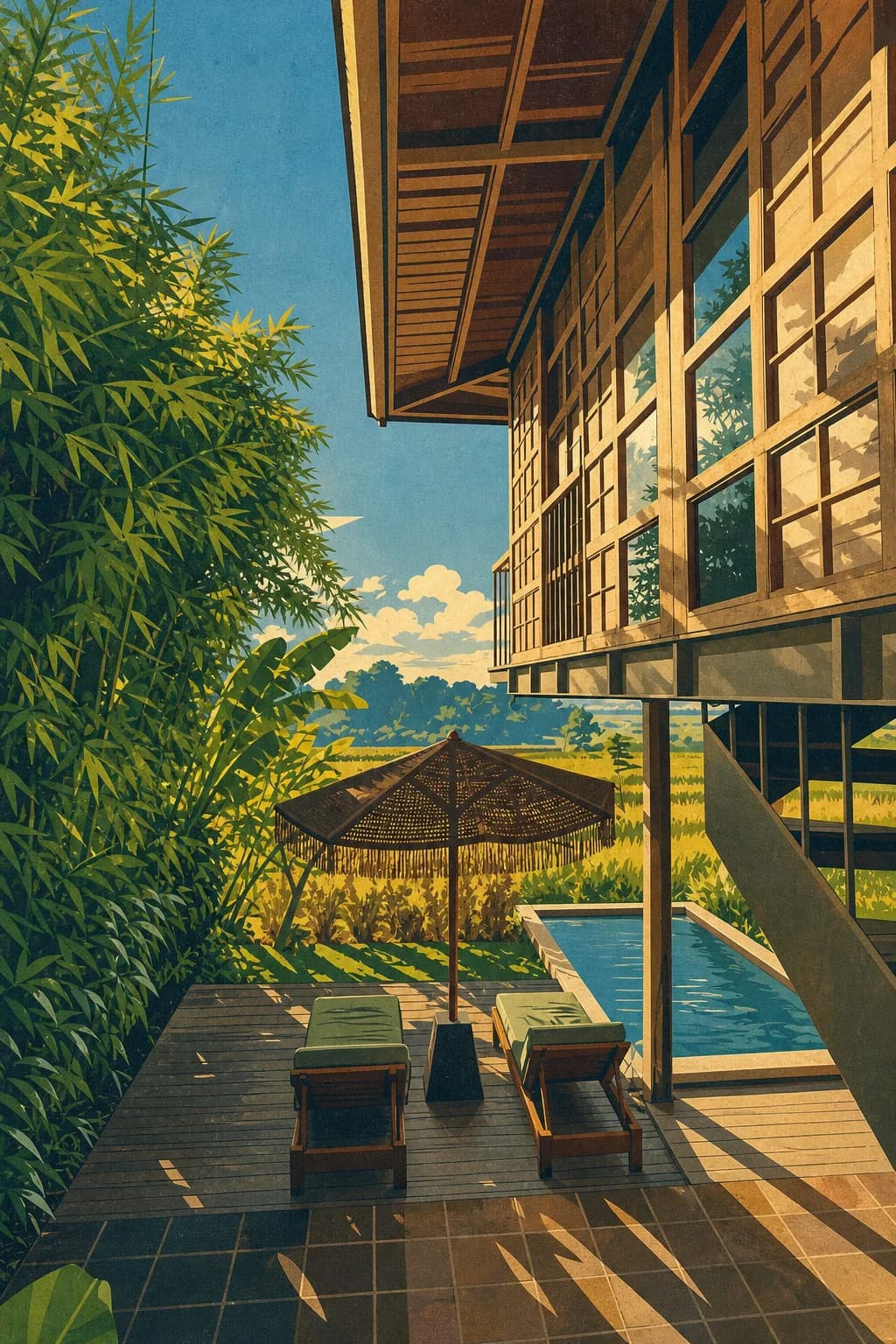
Alexis Dornier designed Studio N, a 64-square-metre one-bedroom living concept completed in 2022. It sits on stilts above the rice fields with a private pool, floor-to-ceiling glass, and the angular geometry that Dornier brings to every project. Designboom covered the build. For Stilt Studios, having a Dornier collaboration in the portfolio elevates the entire compound from eco-hostel to architecture destination.
Stilt Studios' Prefab Model
Florian Holm's company designs, fabricates, and installs its own prefab elevated structures. The treehouses are manufactured off-site and assembled on location, which reduces construction waste and ground disturbance. Solar panels handle electricity. Recycled plastic panels form part of the structure. Reclaimed wood fills the interiors. The environmental claim of 95% reduced ground footprint is bold but consistent with the elevated, modular approach.
Babakan's Rice Fields
Babakan is the inland side of Canggu, where rice paddies still outnumber villas. Ten minutes from Batu Bolong Beach by scooter, but visually a different world: working agricultural land, palm trees, and the kind of green horizon that Canggu's coast has largely built over. The rice fields that surround Grün are the view, and they're still being farmed. How long that lasts, given Canggu's development pace, is an open question.
talk.
mapped.
record.
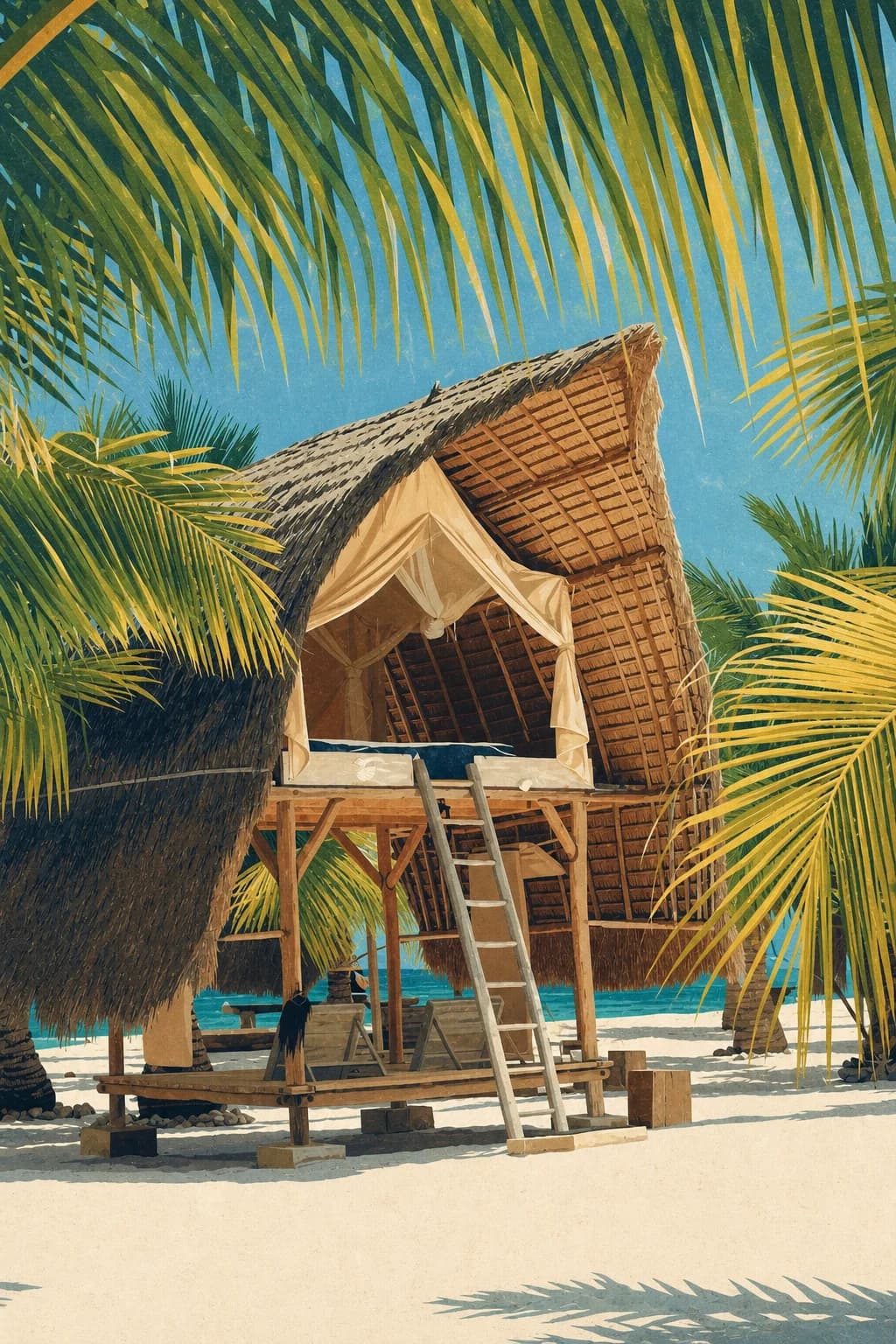
Grün Canggu is the proof of concept: treehouses and studios raised on stilts above rice fields in Babakan, the quieter inland edge of Canggu, about ten minutes from Batu Bolong Beach. Treehouse units (A, B, Ficus) float on stilts with rice-field views.
The Treehouse Suite and Studio have private pools. Studio N, a 64-square-metre one-bedroom unit designed by Alexis Dornier, was completed in 2022 and covered by Designboom. Solar panels, recycled plastic panels, reclaimed wood, and a claimed 95% reduction in ground footprint. Won Bali's Best Award 2025 for Best Eco Friendly Stay. The entire property can be booked as a seven-bedroom Ricefield Estate for groups.
changed.
Book April–June or September–October for the value sweet spot. Plan July–August four to six months out. Confirm Nyepi (March) before booking.
Bali runs on two overlapping clocks: its equatorial wet-dry cycle and the school holiday calendars of Australia and Europe, its two largest visitor markets. Where those systems collide, demand spikes hard. The rest of the year, the island is far more negotiable than its reputation suggests.
The dry season runs April through October, and July and August are its unforgiving peak. European summer holidays flood the island in July; Australian school holidays layer on top in August, pushing demand to its annual maximum. Skies clear, humidity drops, and the island's outdoor infrastructure runs at full capacity. If your dates are fixed in those two months, book early. Ultra and Very High tier properties fill months in advance. Uluwatu Surf Villas currently shows as sold out, and Veluvana Bali runs at scarce availability through peak periods.
The shoulder windows, April through May and September through October, deliver the best value equation on the island. Weather is reliably dry, crowds thin considerably once the school-holiday cohorts leave, and Room Demand Scores fall to roughly half the August peak. These months are especially strong for Ubud and the highland properties, where clear mornings reveal volcanic panoramas that vanish during the wet season.
Book the April-to-May shoulder for dry weather, moderate demand, and the full range of the island's 75 tracked properties available without peak-season competition.
The wet season spans November through March, and it is more manageable than the name implies. Rain arrives in intense afternoon bursts rather than all-day gray, and mornings are often clear. Temperatures stay warm. The trade-offs are real: some outdoor activities turn unreliable, rural roads can flood, and boat crossings to the Nusa and Gili Islands get rougher. But hotel pricing drops significantly, and the rice terraces turn an almost electric green.
One date demands specific attention: Nyepi, the Balinese Day of Silence, falls in March on a date that shifts annually with the Saka lunar calendar. The entire island shuts down for 24 hours. No flights land or depart, no cars move, no lights are permitted after dark, and hotels ask guests to remain on property. It is a genuinely singular cultural experience, but it requires planning. If your trip overlaps with Nyepi, confirm your hotel's policy in advance and treat the day as part of the itinerary rather than an inconvenience.
approach.
briefing.
stands.
demand's going.
The real Instagram following over time, plus where this hotel sits for demand in Bali. Pick a range, toggle the lines. Followers are reach and demand, not engagement.
assessment.
File closes at HIGH. Book direct one to two months out; pool units fill first. Skip if central Canggu walking access matters; Babakan sits inland by scooter or transfer.
The numbers behind the tiers
Grün Canggu · SOURCE READINGS · REDACTED- Availability density · sampled
- Monthly search volume · raw
- TikTok hashtag views · raw
- YouTube total views · raw
- TikTok following · latest sweep
- Pinterest saves · latest sweep
More from Bali.






Get the hotel's Unbookable Score.
Any post or reel with a hotel in it. Booking.com hotel pages work too. One free check, no account needed.