BASK Gili
Meno.
2 critic reviews
filed.
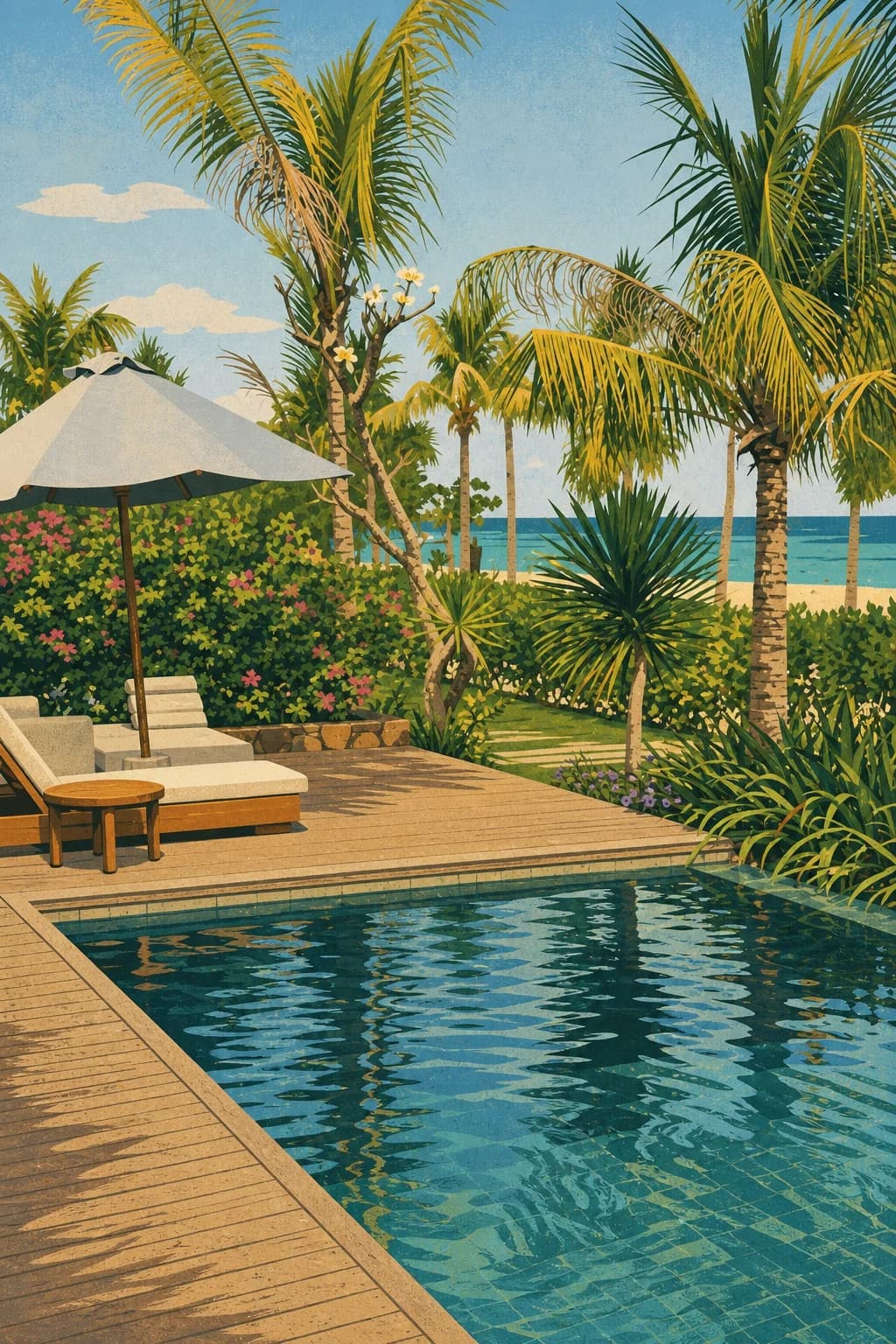
BASK on Gili Meno is the closest thing the middle Gili gets to a polished design hotel, and the thirteen villas have private pools and direct beach access that Meno actually delivers because the island is so undeveloped. The hype gets the remoteness right. It misses that Meno has effectively no nightlife and no walkable dining cluster, so the property is your world for the stay.
Meno's salt lake is a ten-minute walk from the villas and almost nobody visits outside of the occasional birder, because the path looks like a shortcut to nowhere. Go at golden hour when the herons come in, wear something you are fine getting salt-crusted, and have the kitchen pack a sunset drink from the bar menu at take-away rates.
angles.
NEST Underwater Sculptures
NEST is an underwater sculpture installation where coral grows on designed structures, regenerating the reef around Gili Meno. The project combines art with marine biology. Guests can snorkel directly to the sculptures from the property. The reef regeneration is measurable: coral coverage increases annually. This isn't a donation programme. It's an active, visible, growing artwork beneath the water.
Gorrow's Creative Direction
George Gorrow built Ksubi into one of Australia's most recognisable denim brands. His creative direction at BASK shows in the material choices, the graphic identity, and the atmosphere: contemporary without being cold, beach-appropriate without being basic. Gary Fell of GFAB Architects designed the buildings. The Gorrow-Fell collaboration gives BASK a visual identity that most Gili island properties don't attempt.
The Quietest Gili
Gili Meno is the smallest and quietest of the three Gili islands. No cars, no motorbikes, no party scene. Turquoise water and white sand. The island's turtle sanctuary and underwater statues (separate from BASK's NEST) draw snorkellers. BASK chose Gili Meno specifically for the quiet. The island's atmosphere aligns with the reef-regeneration mission.
talk.
mapped.
“BASK on Gili Meno transcends conventional paradigms, offering a fusion of sophistication, natural beauty, and an immersive, unhurried journey that transcends the ordinary travel experience.”
record.
BASK Gili Meno opened in 2023 on the quietest of the three Gili islands, with thirteen rooms designed by Gary Fell of GFAB Architects. Gorrow serves as creative director. The headline feature is NEST, an underwater sculpture installation designed for reef regeneration: coral grows on the sculptures, rebuilding the marine ecosystem.
No plastic. Composting. Water treatment on-site. The Gili Meno location is 2.5 hours from DPS airport including the boat crossing, on a car-free island with turquoise water and genuine quiet. Family suites available. Breakfast at extra cost. At $$ pricing, BASK delivers design-forward accommodation with a genuine marine conservation programme at an accessible price point.
changed.
Book April–June or September–October for the value sweet spot. Plan July–August four to six months out. Confirm Nyepi (March) before booking.
Bali runs on two overlapping clocks: its equatorial wet-dry cycle and the school holiday calendars of Australia and Europe, its two largest visitor markets. Where those systems collide, demand spikes hard. The rest of the year, the island is far more negotiable than its reputation suggests.
The dry season runs April through October, and July and August are its unforgiving peak. European summer holidays flood the island in July; Australian school holidays layer on top in August, pushing demand to its annual maximum. Skies clear, humidity drops, and the island's outdoor infrastructure runs at full capacity. If your dates are fixed in those two months, book early. Ultra and Very High tier properties fill months in advance. Uluwatu Surf Villas currently shows as sold out, and Veluvana Bali runs at scarce availability through peak periods.
The shoulder windows, April through May and September through October, deliver the best value equation on the island. Weather is reliably dry, crowds thin considerably once the school-holiday cohorts leave, and Room Demand Scores fall to roughly half the August peak. These months are especially strong for Ubud and the highland properties, where clear mornings reveal volcanic panoramas that vanish during the wet season.
Book the April-to-May shoulder for dry weather, moderate demand, and the full range of the island's 75 tracked properties available without peak-season competition.
The wet season spans November through March, and it is more manageable than the name implies. Rain arrives in intense afternoon bursts rather than all-day gray, and mornings are often clear. Temperatures stay warm. The trade-offs are real: some outdoor activities turn unreliable, rural roads can flood, and boat crossings to the Nusa and Gili Islands get rougher. But hotel pricing drops significantly, and the rice terraces turn an almost electric green.
One date demands specific attention: Nyepi, the Balinese Day of Silence, falls in March on a date that shifts annually with the Saka lunar calendar. The entire island shuts down for 24 hours. No flights land or depart, no cars move, no lights are permitted after dark, and hotels ask guests to remain on property. It is a genuinely singular cultural experience, but it requires planning. If your trip overlaps with Nyepi, confirm your hotel's policy in advance and treat the day as part of the itinerary rather than an inconvenience.
approach.
briefing.
stands.
demand's going.
The real Instagram following over time, plus where this hotel sits for demand in Bali. Pick a range, toggle the lines. Followers are reach and demand, not engagement.
assessment.
File closes at HIGH. Book direct one to two months out and lock the boat crossing too. Skip if mainland-Bali convenience matters; Gili Meno trades infrastructure for quiet.
The numbers behind the tiers
BASK Gili Meno · SOURCE READINGS · REDACTED- Availability density · sampled
- Monthly search volume · raw
- TikTok hashtag views · raw
- YouTube total views · raw
- TikTok following · latest sweep
- Pinterest saves · latest sweep
More from Bali.







Get the hotel's Unbookable Score.
Any post or reel with a hotel in it. Booking.com hotel pages work too. One free check, no account needed.