Keliki Luxury
Lodge.
1 critic review
filed.
Keliki Luxury Lodge is a five-room property in a quieter Ubud pocket and the small scale is the actual value. The pool is private-feeling, the rooms are larger than the central Ubud hotels at the same rate, and the jungle ridge setting is genuine. The hype is low because the property has no scene and no restaurant draw, which is why it is on this list.
Keliki village itself runs a small school of miniature painting that predates the tourism around Ubud and the teachers will accept drop-in guests for an afternoon lesson at a fraction of the art-tour rates. The property can arrange it with a day's notice, and the lesson produces an actual piece you take home rather than a tourist product.
angles.
Le Gastronome's Bamboo Nests
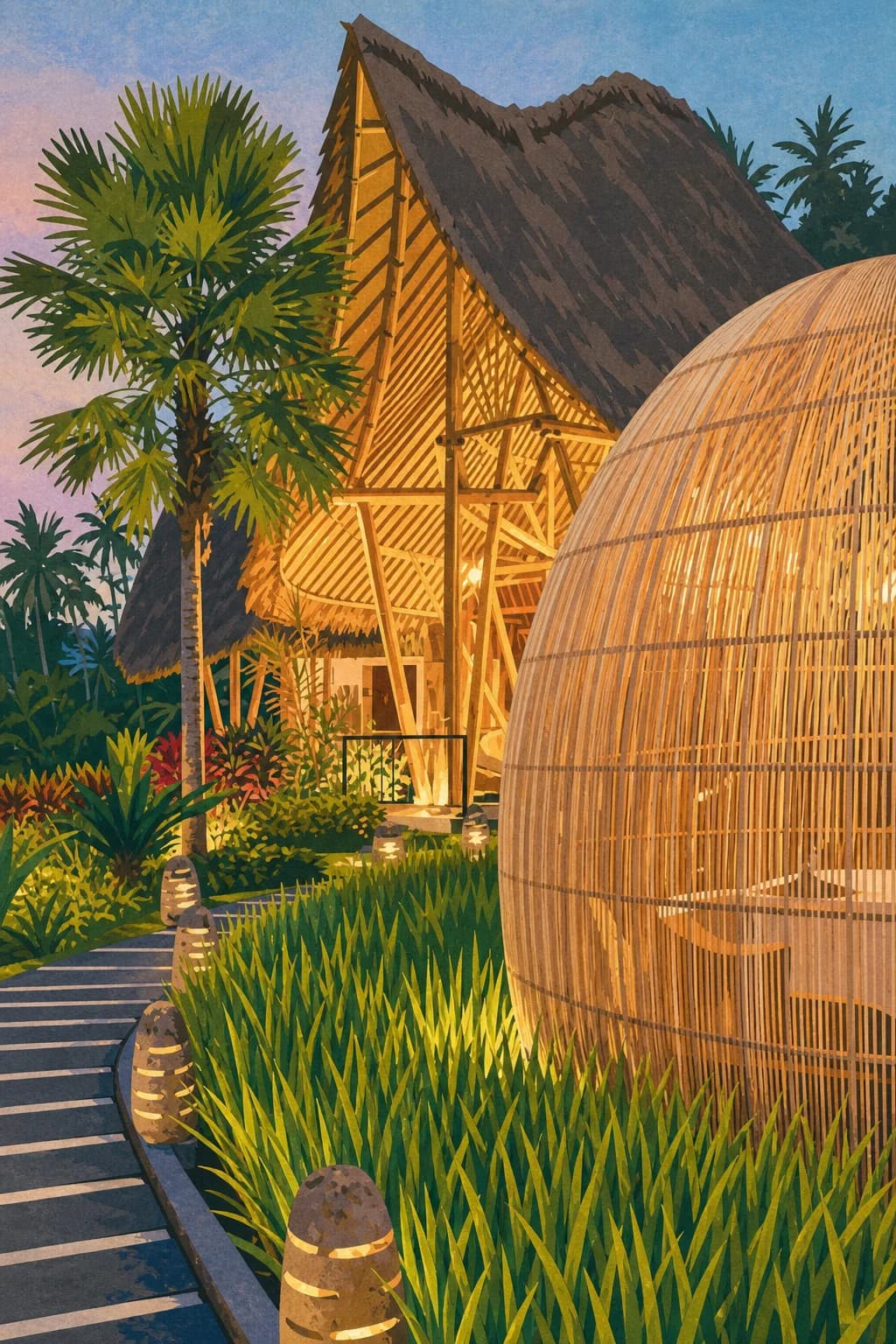
The restaurant operates in elevated bamboo pods above the canopy. French-Indonesian fusion cuisine served in structures that feel like oversized bird's nests. Honeycombers called it a "French-Indonesian feast in those bamboo nests." The dining experience is architectural as much as culinary: the elevation, the open air, and the bamboo construction create a setting that no conventional restaurant can replicate.
Five Lodges, Five Pools
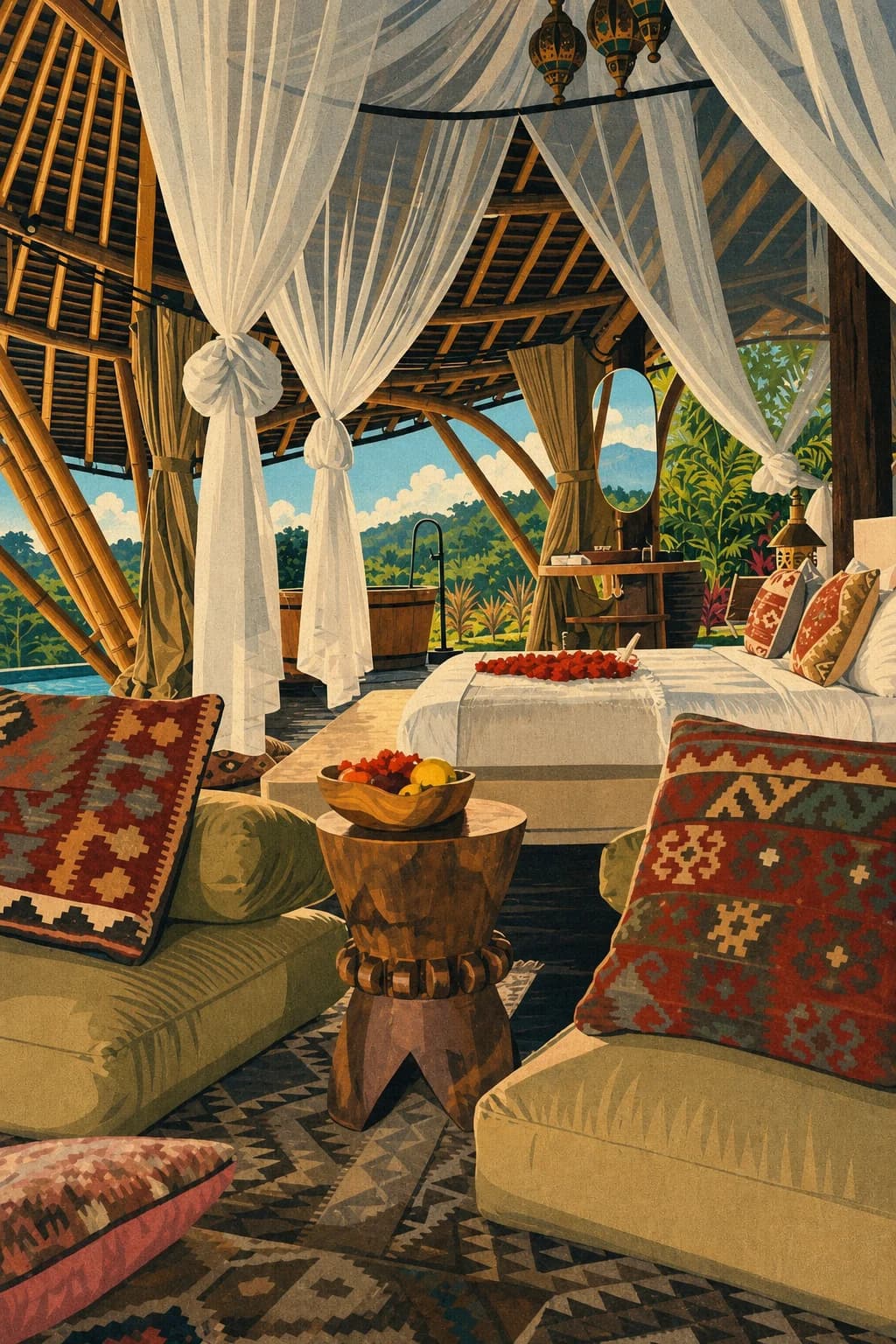
Each of the five lodges has a private pool. The Mezzanine Lodge, with two bedrooms, is the most spacious. The lodges are Balinese in style, set into the landscape with direct jungle views. At five lodges, the property is small enough that the pools feel genuinely private and the atmosphere stays intimate.
Keliki's Art Village
Keliki is a traditional Balinese painting village, known for miniature art in a distinctive local style. The village's artistic heritage gives the area cultural depth beyond the typical Ubud rice-terrace proposition. The lodge sits in this creative context: an art village that happens to have a bamboo-nest restaurant.
talk.
mapped.
record.
Honeycombers praised the "two-bedroom Mezzanine Lodge" and recommended spending "days drifting from your sun-soaked pool to a shaded daybed, before treating yourself to a French-Indonesian feast in those bamboo nests." Eco-friendly bamboo construction throughout with sustainable materials.
Family suites available. Exceptional breakfast included. Ninety minutes from DPS airport. The bamboo dining pods are the architectural signature: eating in an elevated nest above the jungle is a different experience from a ground-level restaurant. At $$$$ pricing, the combination of private pools, bamboo architecture, and a named restaurant justifies the tier.
changed.
Book April–June or September–October for the value sweet spot. Plan July–August four to six months out. Confirm Nyepi (March) before booking.
Bali runs on two overlapping clocks: its equatorial wet-dry cycle and the school holiday calendars of Australia and Europe, its two largest visitor markets. Where those systems collide, demand spikes hard. The rest of the year, the island is far more negotiable than its reputation suggests.
The dry season runs April through October, and July and August are its unforgiving peak. European summer holidays flood the island in July; Australian school holidays layer on top in August, pushing demand to its annual maximum. Skies clear, humidity drops, and the island's outdoor infrastructure runs at full capacity. If your dates are fixed in those two months, book early. Ultra and Very High tier properties fill months in advance. Uluwatu Surf Villas currently shows as sold out, and Veluvana Bali runs at scarce availability through peak periods.
The shoulder windows, April through May and September through October, deliver the best value equation on the island. Weather is reliably dry, crowds thin considerably once the school-holiday cohorts leave, and Room Demand Scores fall to roughly half the August peak. These months are especially strong for Ubud and the highland properties, where clear mornings reveal volcanic panoramas that vanish during the wet season.
Book the April-to-May shoulder for dry weather, moderate demand, and the full range of the island's 75 tracked properties available without peak-season competition.
The wet season spans November through March, and it is more manageable than the name implies. Rain arrives in intense afternoon bursts rather than all-day gray, and mornings are often clear. Temperatures stay warm. The trade-offs are real: some outdoor activities turn unreliable, rural roads can flood, and boat crossings to the Nusa and Gili Islands get rougher. But hotel pricing drops significantly, and the rice terraces turn an almost electric green.
One date demands specific attention: Nyepi, the Balinese Day of Silence, falls in March on a date that shifts annually with the Saka lunar calendar. The entire island shuts down for 24 hours. No flights land or depart, no cars move, no lights are permitted after dark, and hotels ask guests to remain on property. It is a genuinely singular cultural experience, but it requires planning. If your trip overlaps with Nyepi, confirm your hotel's policy in advance and treat the day as part of the itinerary rather than an inconvenience.
approach.
briefing.
stands.
demand's going.
The real Instagram following over time, plus where this hotel sits for demand in Bali. Pick a range, toggle the lines. Followers are reach and demand, not engagement.
assessment.
File closes at MODERATE. Book direct one to two months out and confirm the bamboo-nest restaurant is operating. Skip if you want city access; central Ubud is twenty minutes by car.
The numbers behind the tiers
Keliki Luxury Lodge · SOURCE READINGS · REDACTED- Availability density · sampled
- Monthly search volume · raw
- TikTok hashtag views · raw
- YouTube total views · raw
- TikTok following · latest sweep
- Pinterest saves · latest sweep
More from Bali.









Get the hotel's Unbookable Score.
Any post or reel with a hotel in it. Booking.com hotel pages work too. One free check, no account needed.