Hotel Royal
Hoi An.
4 critic reviews
filed.
Mostly yes, if you understand what it is: a grand, central, story-driven town hotel rather than a serene beach resort. The design and the walkable location deliver, while the scale means it can feel busy at peak. Right guest, right expectations, and it is a strong pick.
Not exactly under the radar. It has been covered by the likes of Head for Points, Rusty Compass and the MICHELIN Guide, and Beau Monde Traveler called it Vietnam's most lovely riverside retreat. Well known to Vietnam regulars, less so to first-timers who default straight to the beach resorts.
angles.
Two wings, two cultures
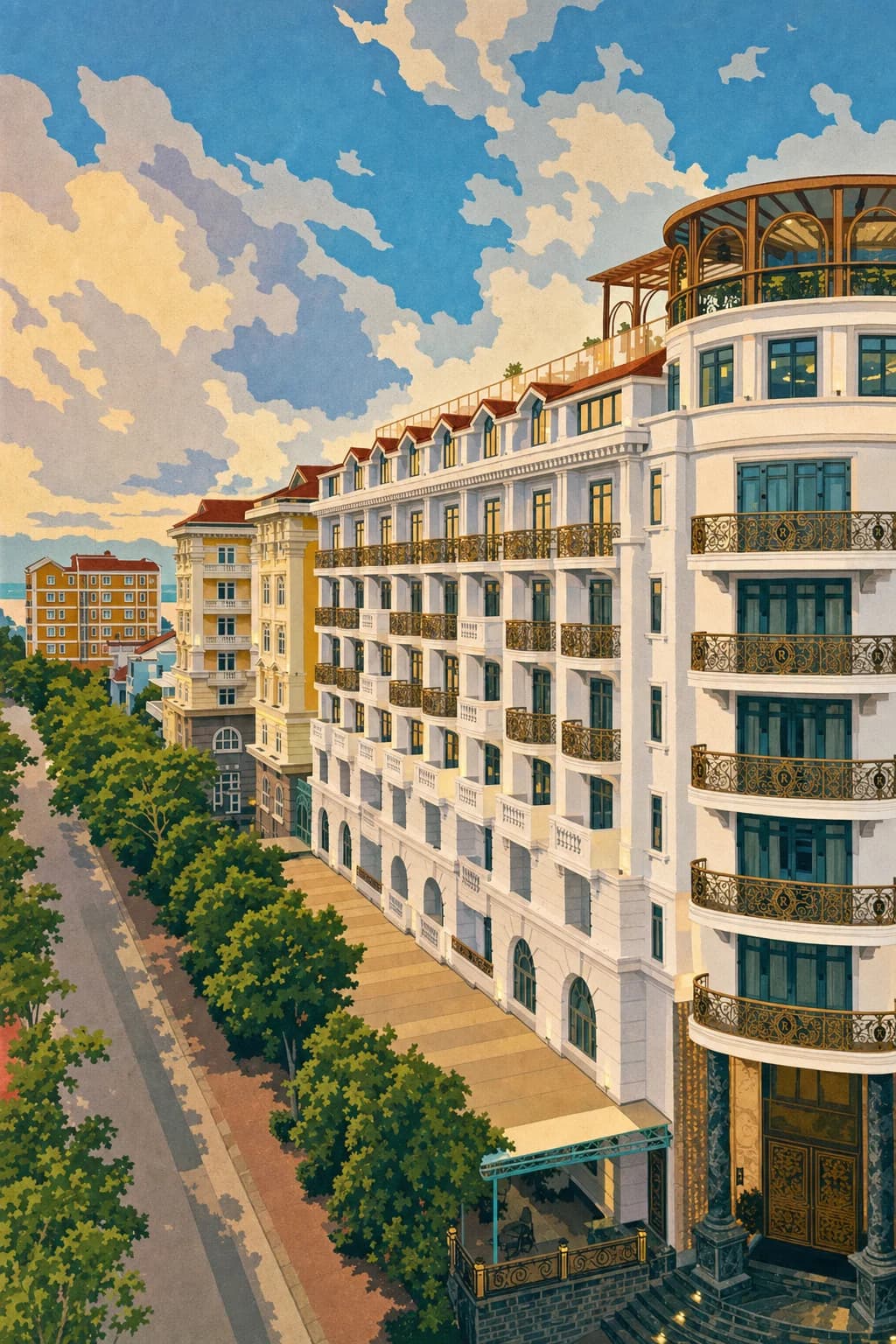
The building splits down a cultural seam. The Japanese wing goes dark and lantern-lit, all rich wood and low light; the Indochine wing answers with heavy drapery, mirrored ceilings, and a swimming pool styled after Art Nouveau. It sounds like a theme, but it tracks Hoi An's real history as a port where Japanese and Vietnamese traders settled side by side. Rooms carry the same duality in miniature.
Riverside breakfast, refined Japanese dinner
Faifo Cafe, named for Hoi An's old trading name, runs the daily breakfast buffet and an all-day menu of Vietnamese and international plates, best taken on the terrace over the Hoai River as the Ancient Town wakes up. For dinner, Wakaku turns seasonal ingredients into precise Japanese cooking. Between them sits The Deck, a rooftop bar for sundowners above the old quarter's tiled roofs.
Walk to the lanterns
The location is the whole argument. You are at the confluence of the Thu Bon and Hoai rivers, on the Ancient Town's doorstep, so the pedestrian old quarter, the night market, the tailors and the cao lau shops are a short flat walk, not a cab ride. Per Da Nang's tourism board, it is the only five-star property sitting in Hoi An's city center rather than out by the beach.
talk.
mapped.
“The 7 story structure may not be an architectural masterpiece but the people from French owned Accor, have done an admirable job softening it up and lending it some colour and class.”
record.
This one planted itself where the Thu Bon and Hoai rivers meet, at the edge of the Ancient Town, and it fills up fast when the old quarter is busiest. The design runs on a real story: a late-1500s romance between a Japanese merchant and a Vietnamese aristocrat who took the name Wakaku.
The hotel's two wings are named for the couple, and you feel the split everywhere: dark wood and hanging lanterns on the Japanese side, Indochine drapery and an Art Nouveau pool on the other. The second wing, Wakaku, opened in 2018. Rooms lean bright and neutral with jolts of blue and turquoise, four-poster beds, silk brocade, free-standing tubs. Come during festival season and dates go quickly, so plan ahead.
changed.
Hoi An's demand curve has one sharp spike and a long, flat tail, and understanding why saves both money and disappointment. The February-to-April peak exists because it is the only stretch when central Vietnam reliably delivers dry, mild days. Everything else in the calendar trades certainty for value.
February through April is the only genuinely reliable weather window, and the entire market knows it. The winter rains have gone and the brutal summer heat has not yet arrived. That stretch also overlaps Tet, the lunar new year, which stacks a wall of domestic demand on top of the international crowd. If you want a specific room in a small Cam Thanh retreat or a heritage resort near the Covered Bridge during these months, plan on booking three to six months out. The top-tier addresses are few, and they sell their peak dates first.
May and September are the genuinely undervalued months. They sit in the shoulder band on price and availability but still deliver plenty of usable weather, and September in particular lands before the rains turn serious. The deep summer of June through August is hot and humid, which is exactly why it prices as shoulder. For beach-first travelers and families who will spend the afternoons in a pool or at An Bang, that heat is a feature, not a deterrent, and it is the easiest time to walk into a good room on short notice.
October and November are the honest gamble. This is central Vietnam's wet season, and the Thu Bon can rise enough to flood the Ancient Town's lower streets; locals paddle boats down them most years. Demand stays in the shoulder band, which means the rooms are there and the rates are soft.
You are trading certainty for value, but nothing closes, so the calculus is yours.
The lantern festival cuts across every month and ignores the seasons entirely. It falls on the fourteenth night of each lunar cycle, when the town douses its electric lights for candlelit lanterns. It is worth building a trip around, and it is not a summer-versus-winter decision. Check the lunar calendar, then pick your dates.
approach.
briefing.
“The Hotel Royal Hoi An feels very upscale. When you consider how much a room is – mine was about $100 a night – you are getting very good value for money.”
stands.
demand's going.
The real Instagram following over time, plus where this hotel sits for demand in Hoi An. Pick a range, toggle the lines. Followers are reach and demand, not engagement.
assessment.
File closes at MODERATE. A riverside hotel that puts the Ancient Town at your feet, wrapped in a real love story. Book it if you want walkable Hoi An and don't need a beach; skip it if you came for the sand or want a small, quiet hideaway.
The numbers behind the tiers
Hotel Royal Hoi An · SOURCE READINGS · REDACTED- Availability density · sampled
- Monthly search volume · raw
- TikTok hashtag views · raw
- YouTube total views · raw
- TikTok following · latest sweep
- Pinterest saves · latest sweep
More from Hoi An.



Get the hotel's Unbookable Score.
Any post or reel with a hotel in it. Booking.com hotel pages work too. One free check, no account needed.