Four Seasons
Resort The Nam Hai, Hoi An.
7 critic reviews
filed.
Yes, with eyes open: the architecture, the service and the Two MICHELIN Keys are real, and it has held Forbes Five-Star status for years running. Just know you are paying for a beachfront villa estate, not a walkable base for exploring Hoi An. If you want both, split your trip.
Not exactly hidden, with 50,000 Instagram followers and a wall of awards, but quieter than the Bali and Phuket names it competes with. Plenty of well-travelled people still do not have it on their radar. That gap is closing fast.
angles.
Garden Houses, Reimagined
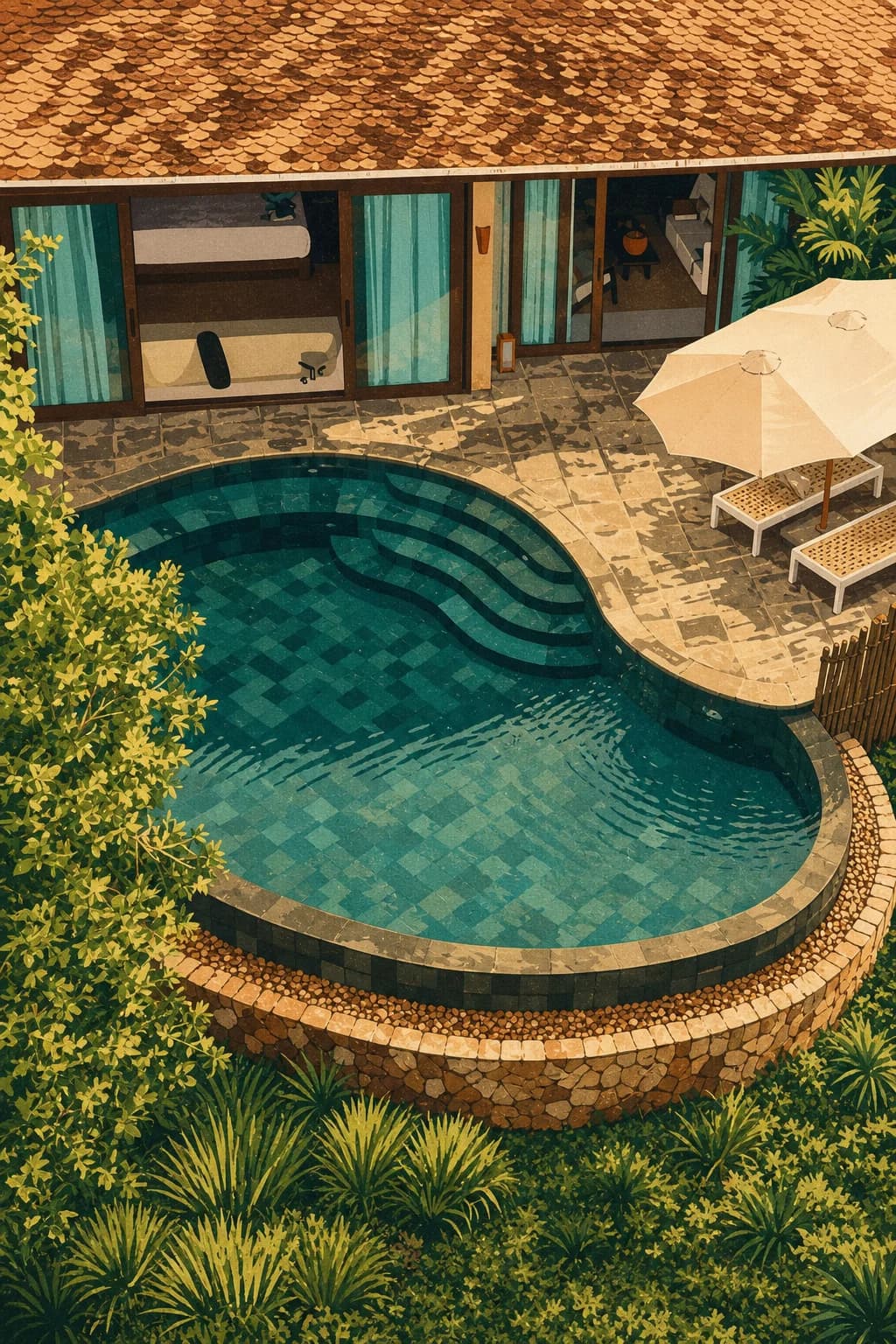
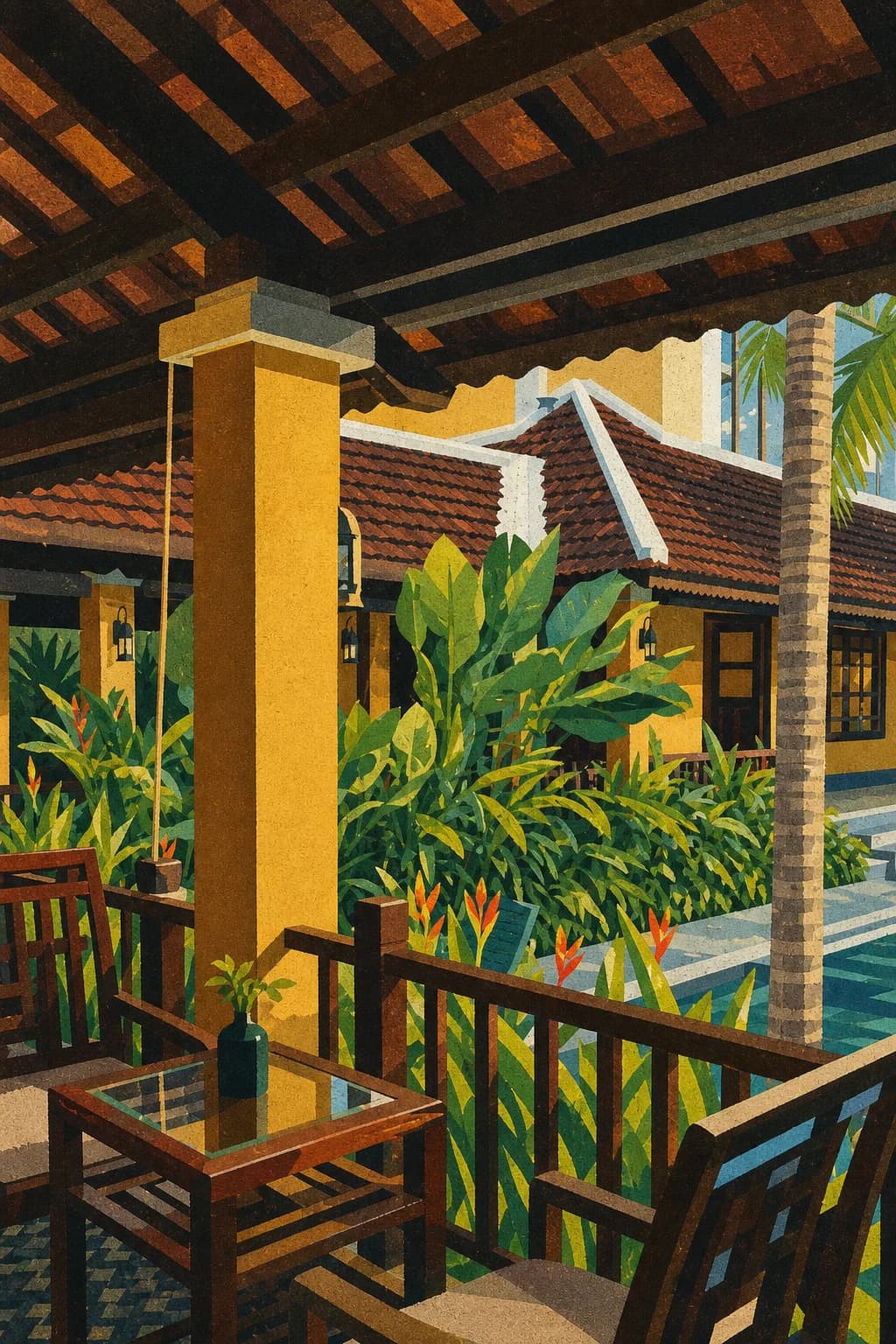
Reda Amalou's villas borrow the logic of the nhà rường, the timber garden house of imperial Hue: a raised platform, a pitched roof of Vietnamese tiles, deep eaves throwing shade. Inside, one sculptural plinth gathers the bed, daybed and bathtub into a single move. The late Jaya Ibrahim did the original interiors, and HBA Singapore refreshed them in 2025, nudging the one-bedrooms to 87 square metres without erasing the founding idea.
Omakase Beside the Sea
NAYUU is the surprise: an intimate Japanese omakase counter, the kind of thing you do not expect on a Vietnamese beach, and it works. Beyond it, the kitchens run Vietnamese and international menus, and the Cooking Academy lets you spend a morning learning local dishes before you eat them. None of it feels like resort filler. The omakase seats are limited, so book the counter when you book the room.
Beach First, Hoi An Close
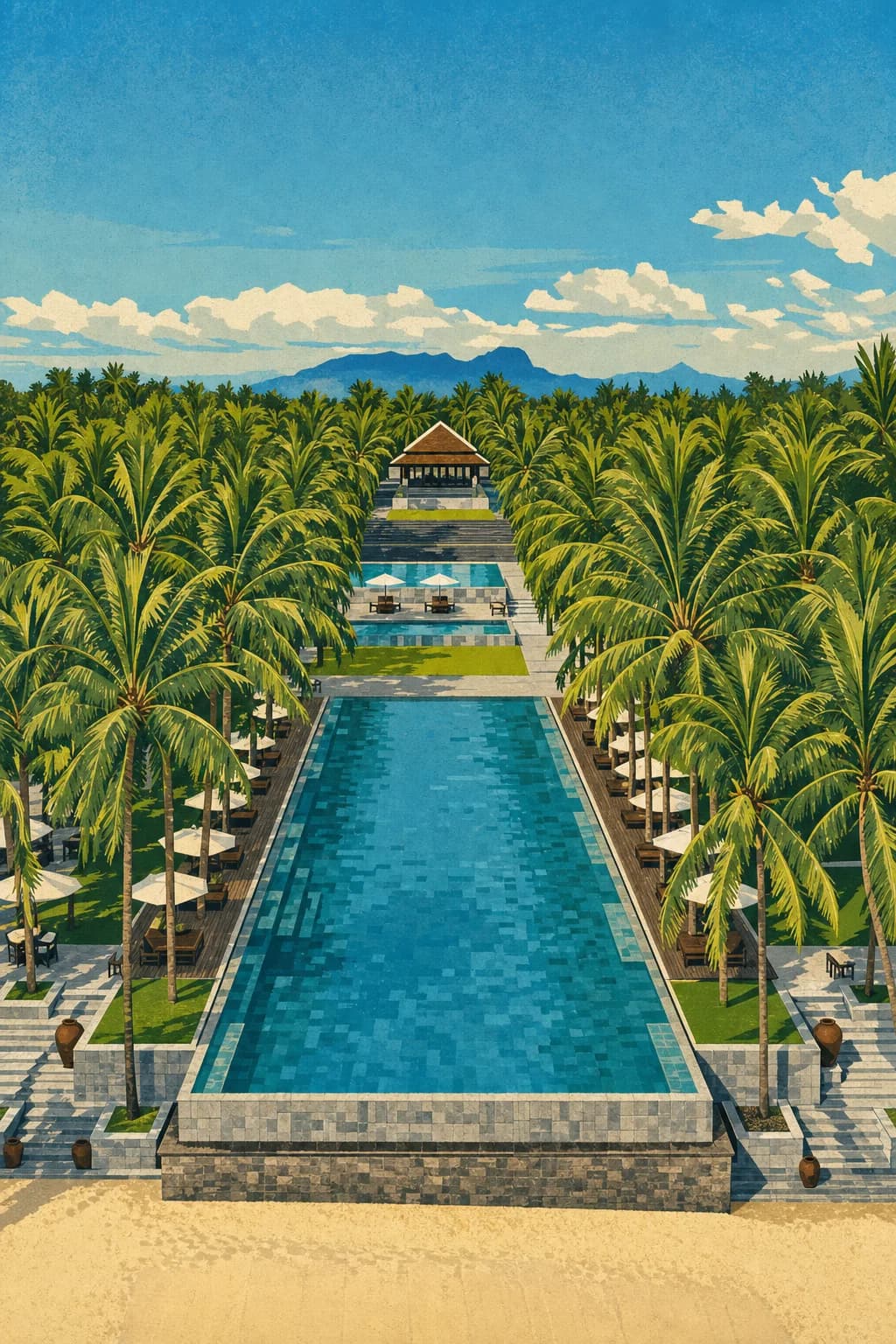
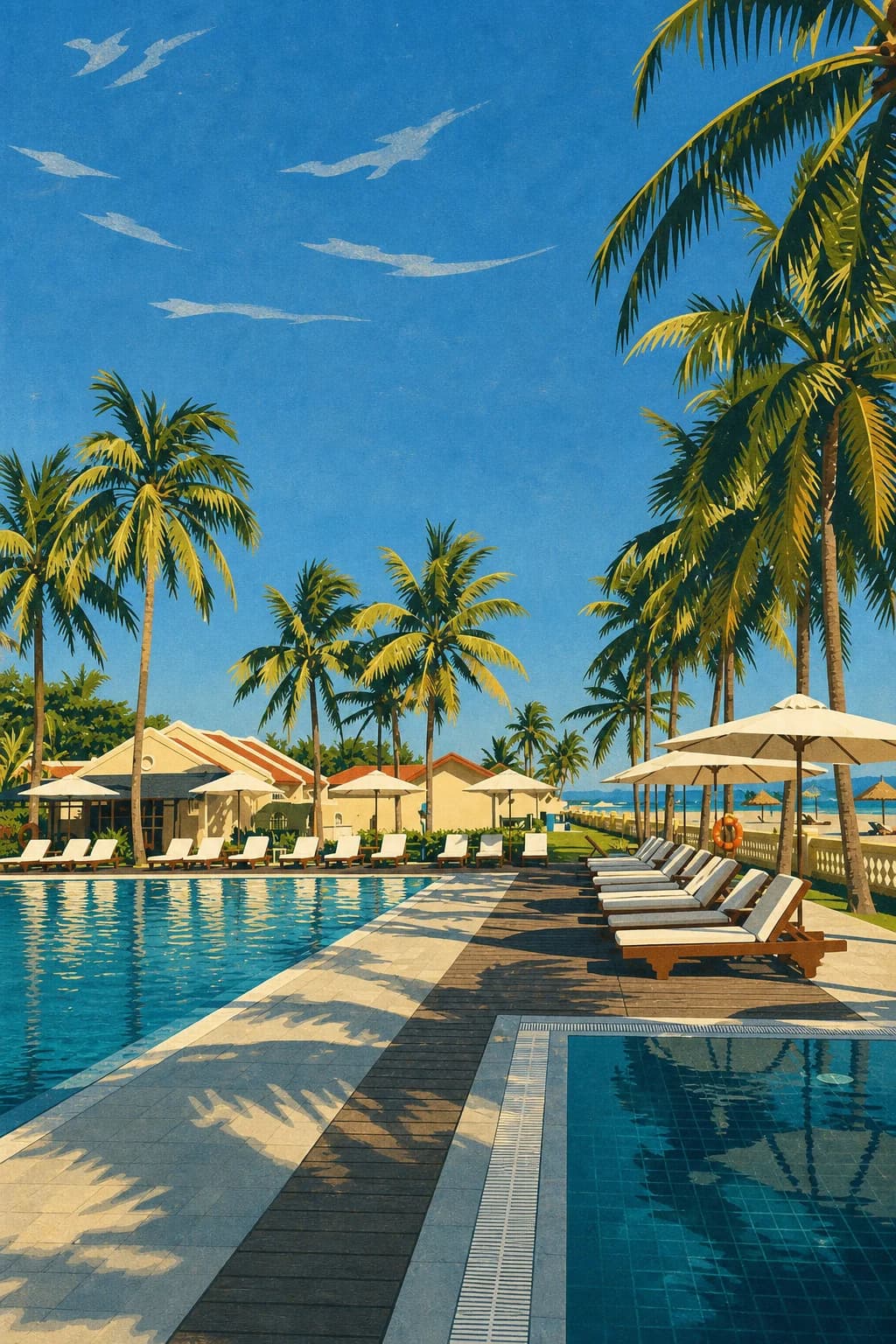
The resort sits on Ha My Beach in Dien Duong, a quiet ribbon of sand between Da Nang and Hoi An rather than inside either. That buys you calm and three pools stepping down to the water. The lantern-lit lanes of Hoi An's old town are a short drive south, while the My Son ruins and Da Nang's airport sit roughly forty minutes the other way. You are removed, but not stranded.
talk.
mapped.
“A hundred modern-minimal villas, designed by the Parisian architect Reda Amalou, stretch along the palm-lined beach, each walled off for privacy, and 40 of them with their own private plunge pools.”
record.
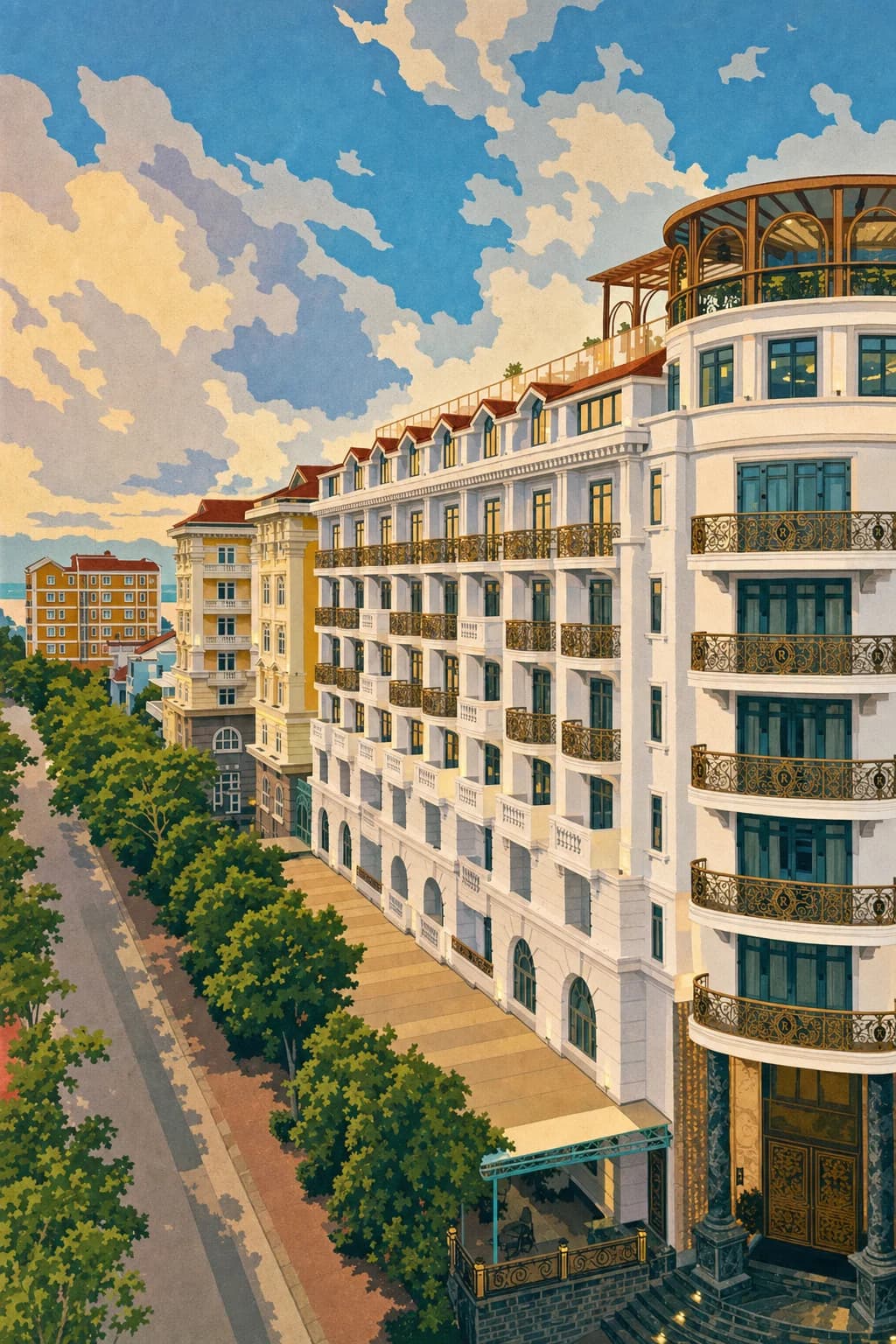
The Nam Hai opened in 2006, designed by Paris architect Reda Amalou and his AW² studio, and it reinterprets the timber-framed garden houses of central Vietnam, the nhà rường style from old Hue, as a hundred stand-alone pavilions on a 27-hectare stretch of beach.
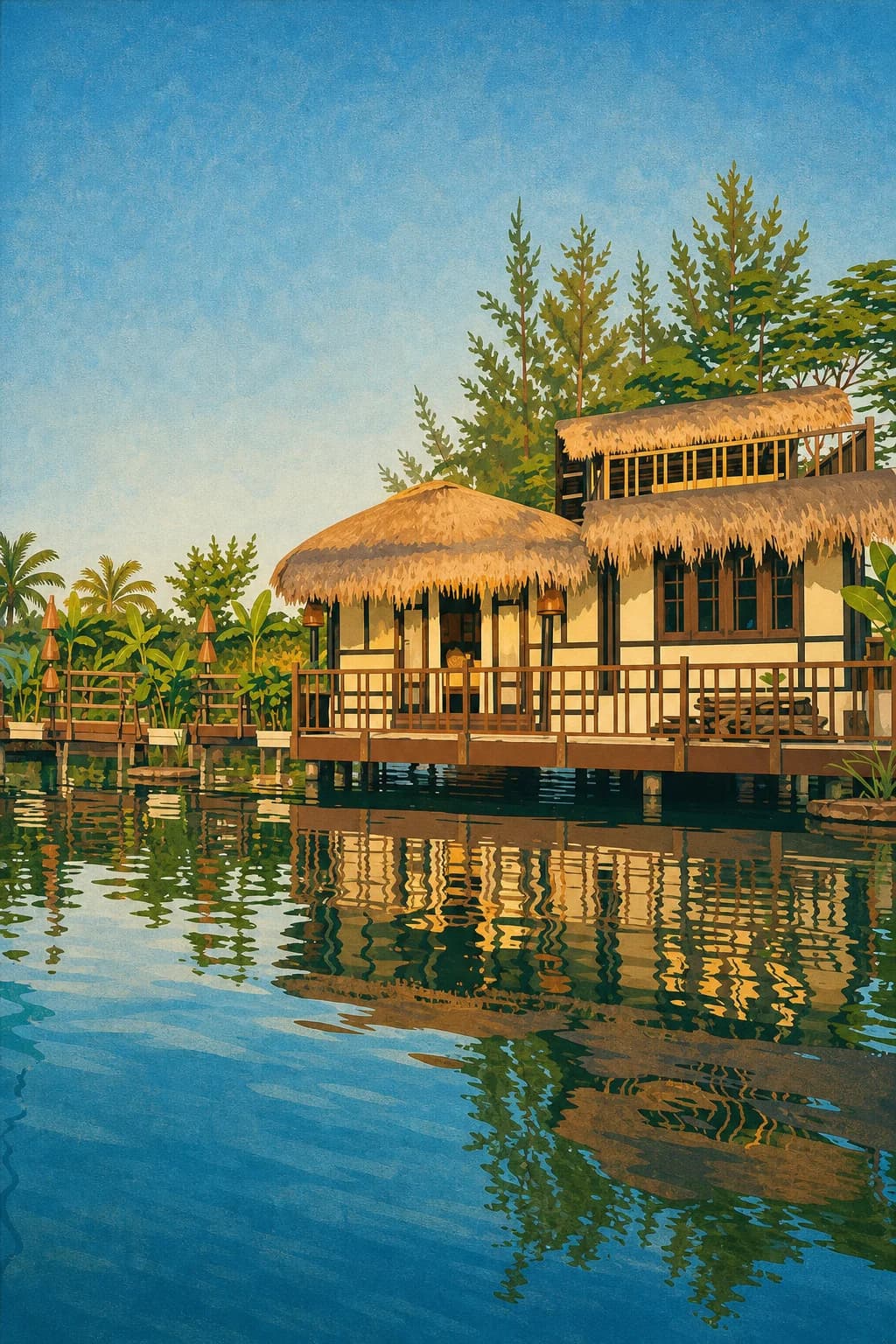
Each villa centers on a single raised platform that holds the bed, the daybed and the bathtub, the lot. Pitched tile roofs, deep overhangs, gardens walled for privacy. Forty villas get their own plunge pool, and three infinity pools cascade toward the East Sea. A 2025 refresh by HBA Singapore widened the rooms without touching the bones. It is genuinely bookable online, but villas go fast in the dry season, so plan ahead.
changed.
Hoi An's demand curve has one sharp spike and a long, flat tail, and understanding why saves both money and disappointment. The February-to-April peak exists because it is the only stretch when central Vietnam reliably delivers dry, mild days. Everything else in the calendar trades certainty for value.
February through April is the only genuinely reliable weather window, and the entire market knows it. The winter rains have gone and the brutal summer heat has not yet arrived. That stretch also overlaps Tet, the lunar new year, which stacks a wall of domestic demand on top of the international crowd. If you want a specific room in a small Cam Thanh retreat or a heritage resort near the Covered Bridge during these months, plan on booking three to six months out. The top-tier addresses are few, and they sell their peak dates first.
May and September are the genuinely undervalued months. They sit in the shoulder band on price and availability but still deliver plenty of usable weather, and September in particular lands before the rains turn serious. The deep summer of June through August is hot and humid, which is exactly why it prices as shoulder. For beach-first travelers and families who will spend the afternoons in a pool or at An Bang, that heat is a feature, not a deterrent, and it is the easiest time to walk into a good room on short notice.
October and November are the honest gamble. This is central Vietnam's wet season, and the Thu Bon can rise enough to flood the Ancient Town's lower streets; locals paddle boats down them most years. Demand stays in the shoulder band, which means the rooms are there and the rates are soft.
You are trading certainty for value, but nothing closes, so the calculus is yours.
The lantern festival cuts across every month and ignores the seasons entirely. It falls on the fourteenth night of each lunar cycle, when the town douses its electric lights for candlelit lanterns. It is worth building a trip around, and it is not a summer-versus-winter decision. Check the lunar calendar, then pick your dates.
approach.
briefing.
“We all know that Four Seasons does luxury well – but here it does it in a low-key, languid, gloriously Vietnamese way.”
stands.
demand's going.
The real Instagram following over time, plus where this hotel sits for demand in Hoi An. Pick a range, toggle the lines. Followers are reach and demand, not engagement.
assessment.
File closes at HIGH. Bookable online, but dry-season villas and omakase seats fill months out. Book it if you want a design-led beach estate near Hoi An and will plan ahead; skip it if you need a walkable old-town base every night.
The numbers behind the tiers
Four Seasons Resort The Nam Hai, Hoi An · SOURCE READINGS · REDACTED- Availability density · sampled
- Monthly search volume · raw
- TikTok hashtag views · raw
- YouTube total views · raw
- TikTok following · latest sweep
- Pinterest saves · latest sweep
More from Hoi An.





Get the hotel's Unbookable Score.
Any post or reel with a hotel in it. Booking.com hotel pages work too. One free check, no account needed.