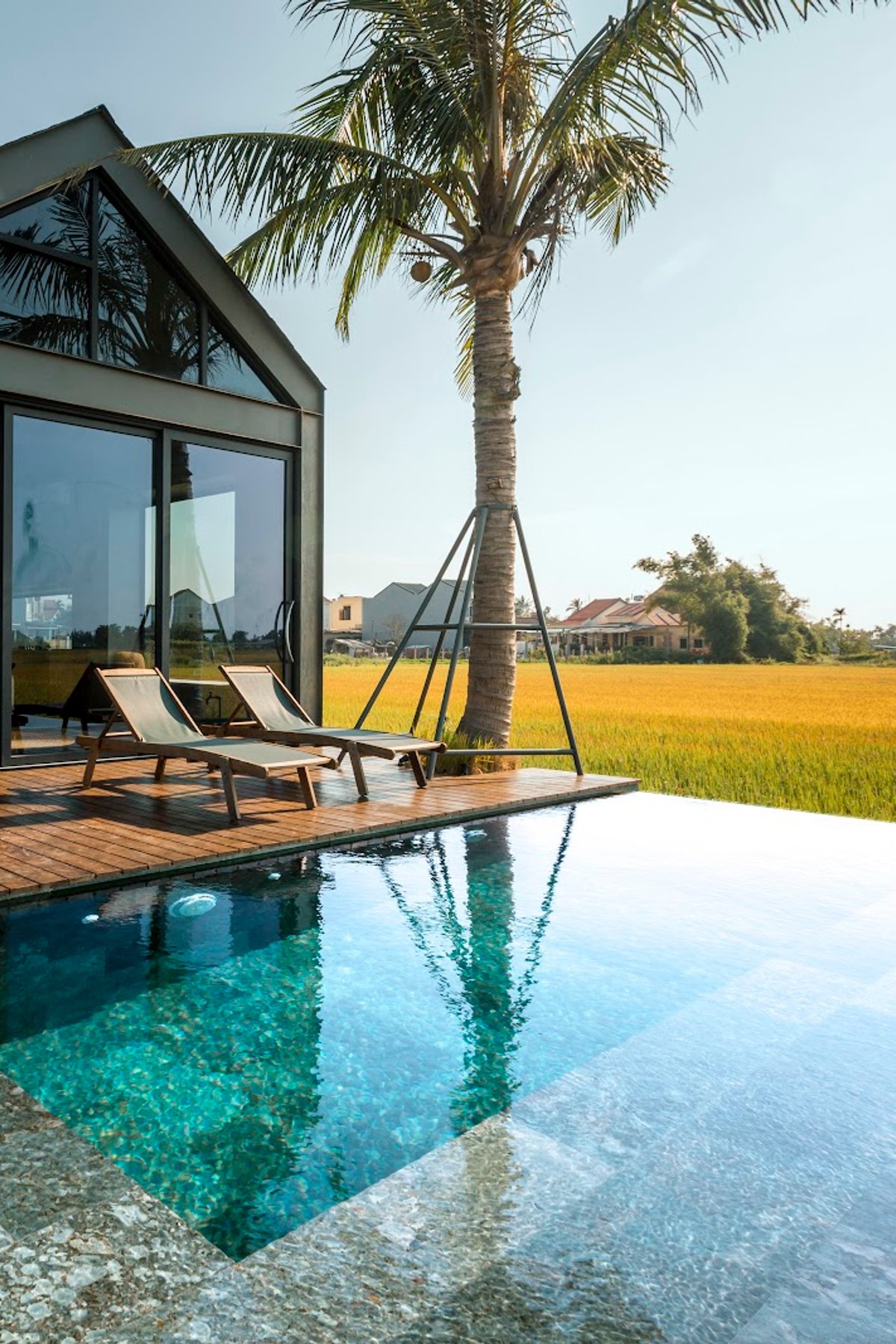
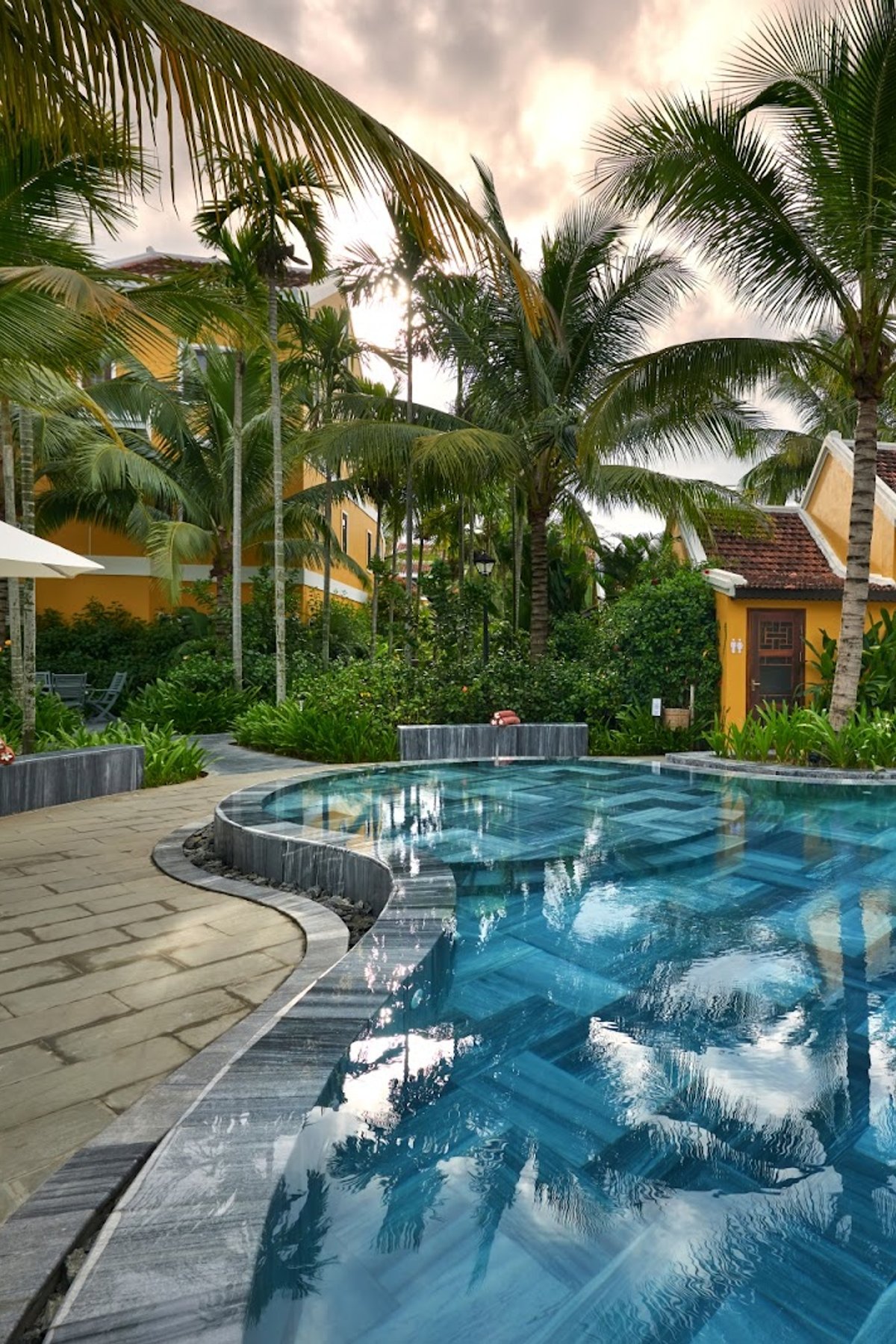
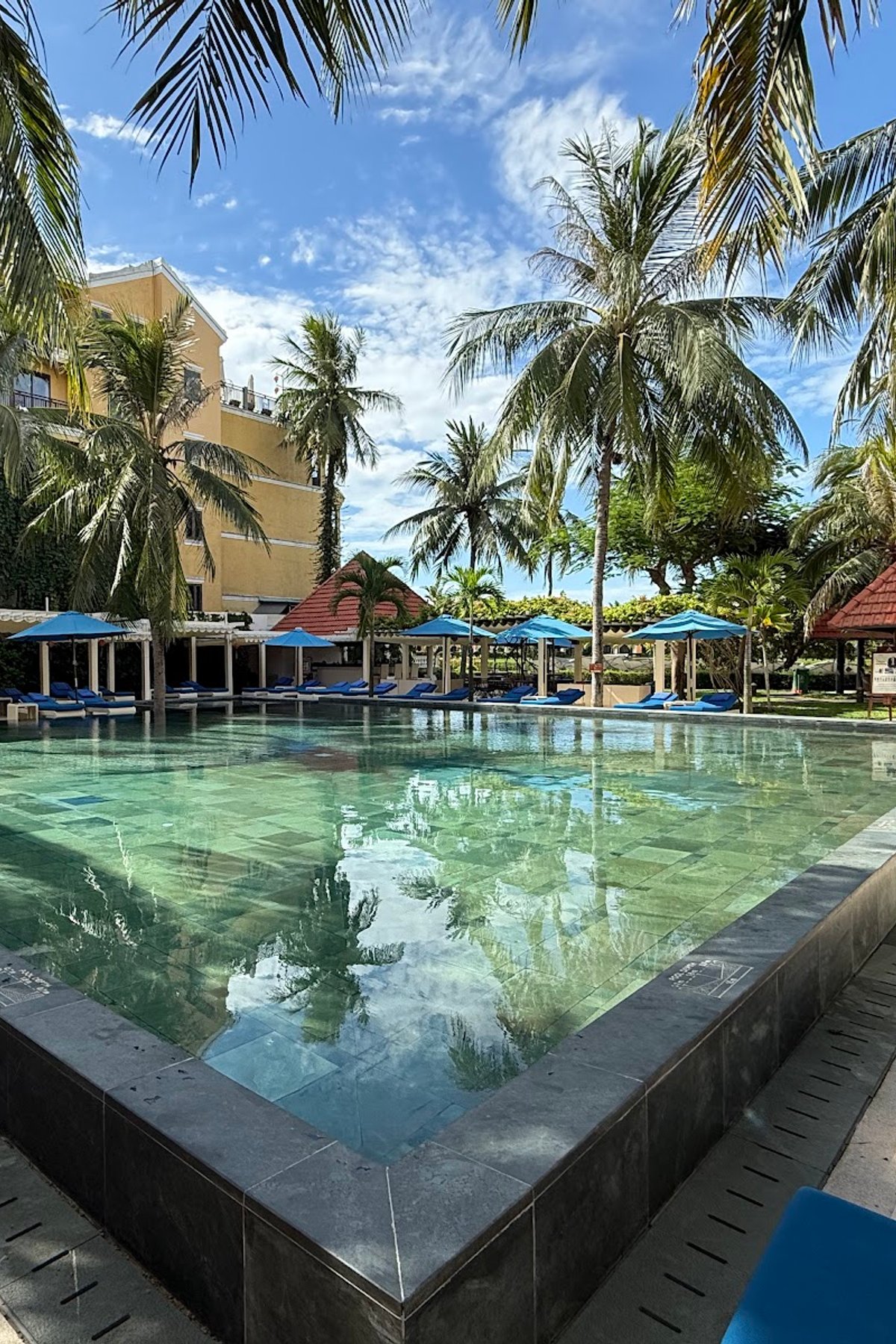
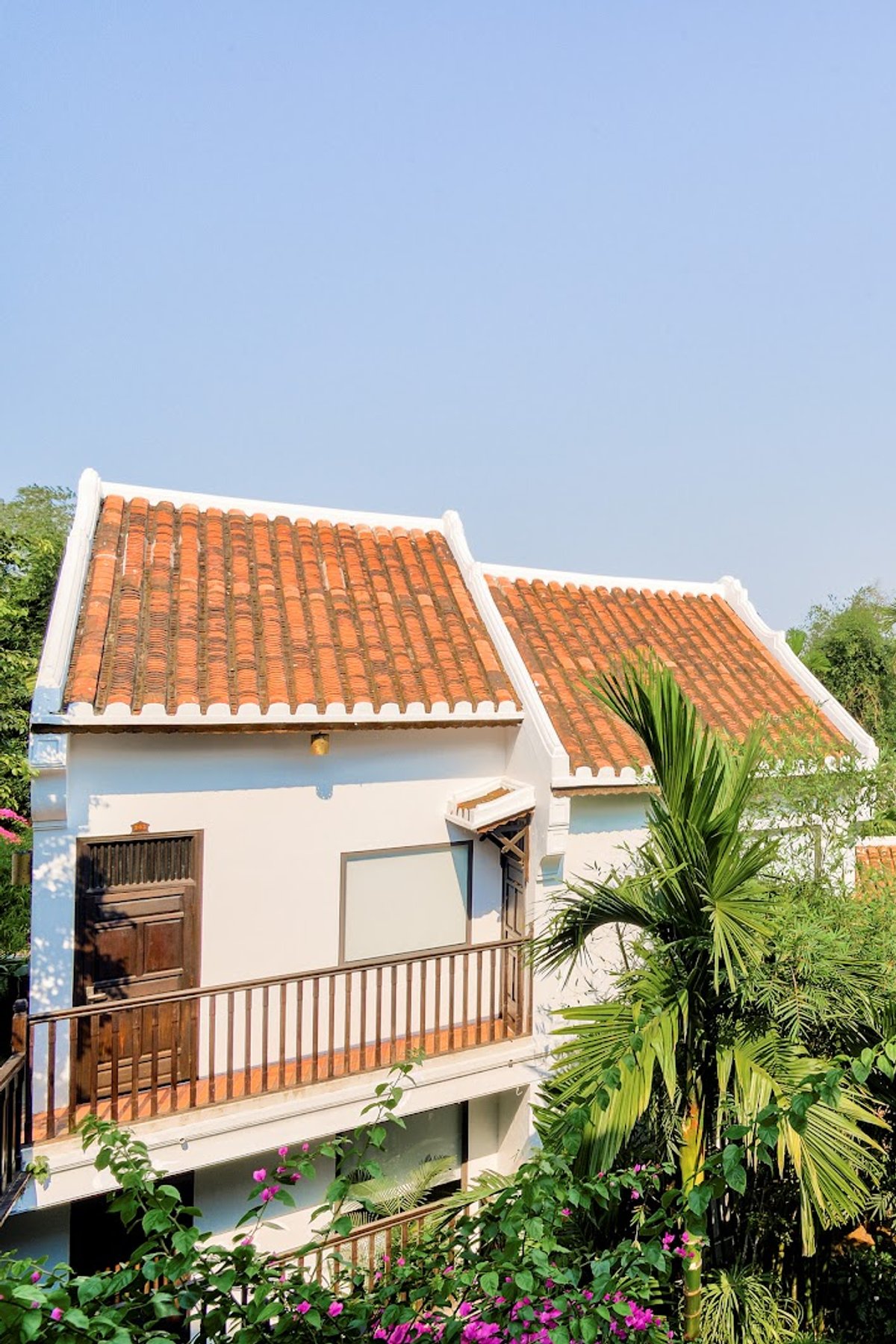
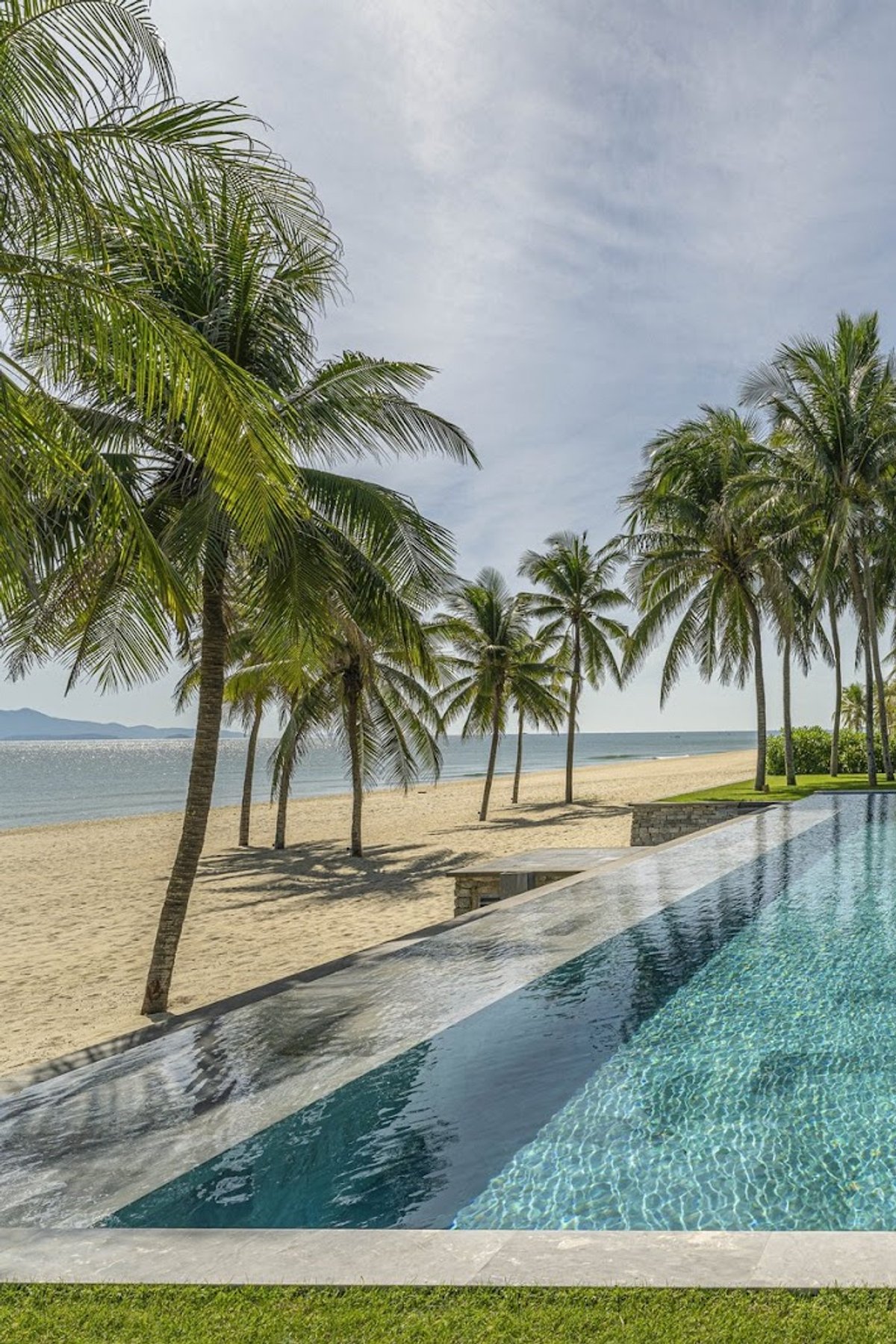
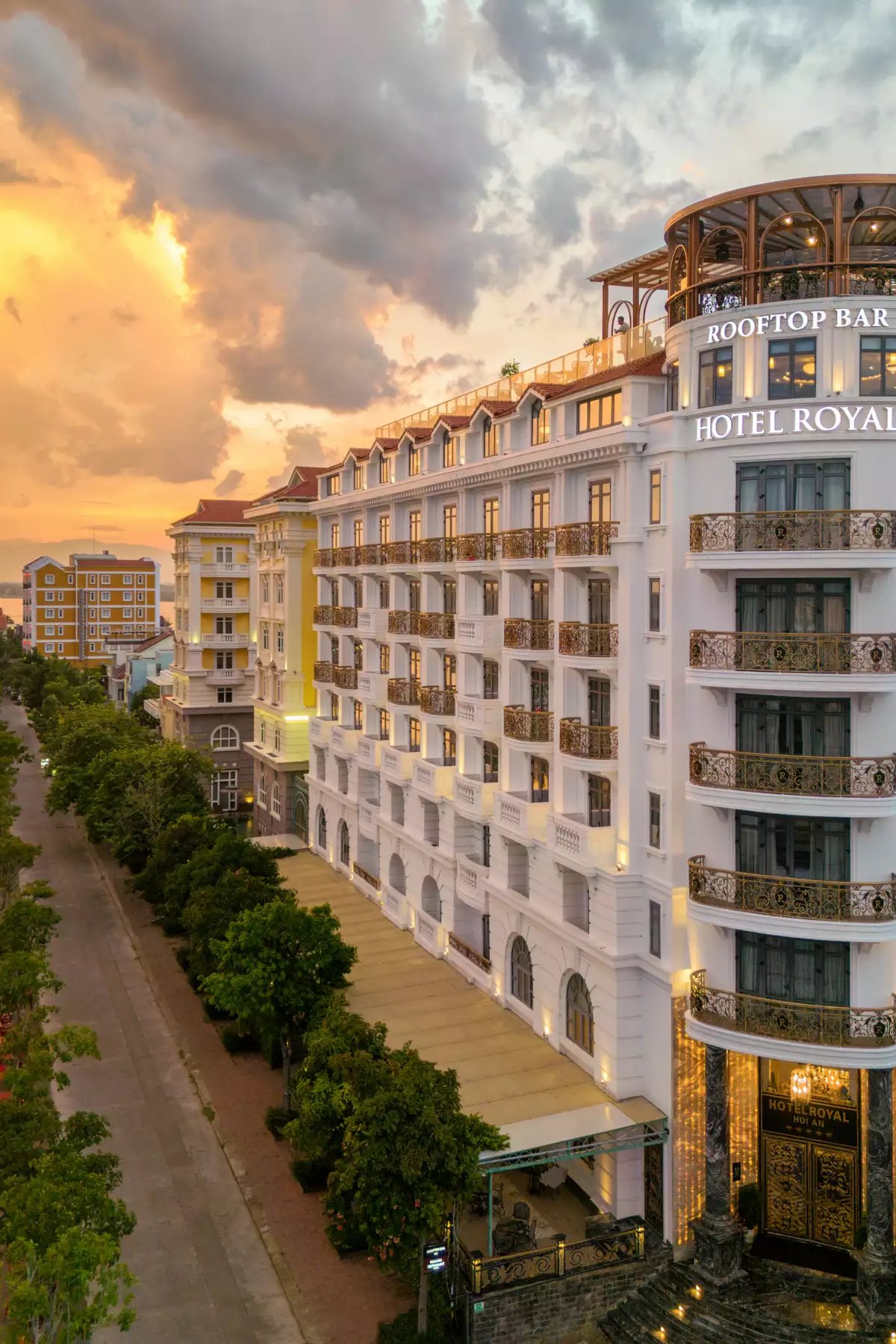
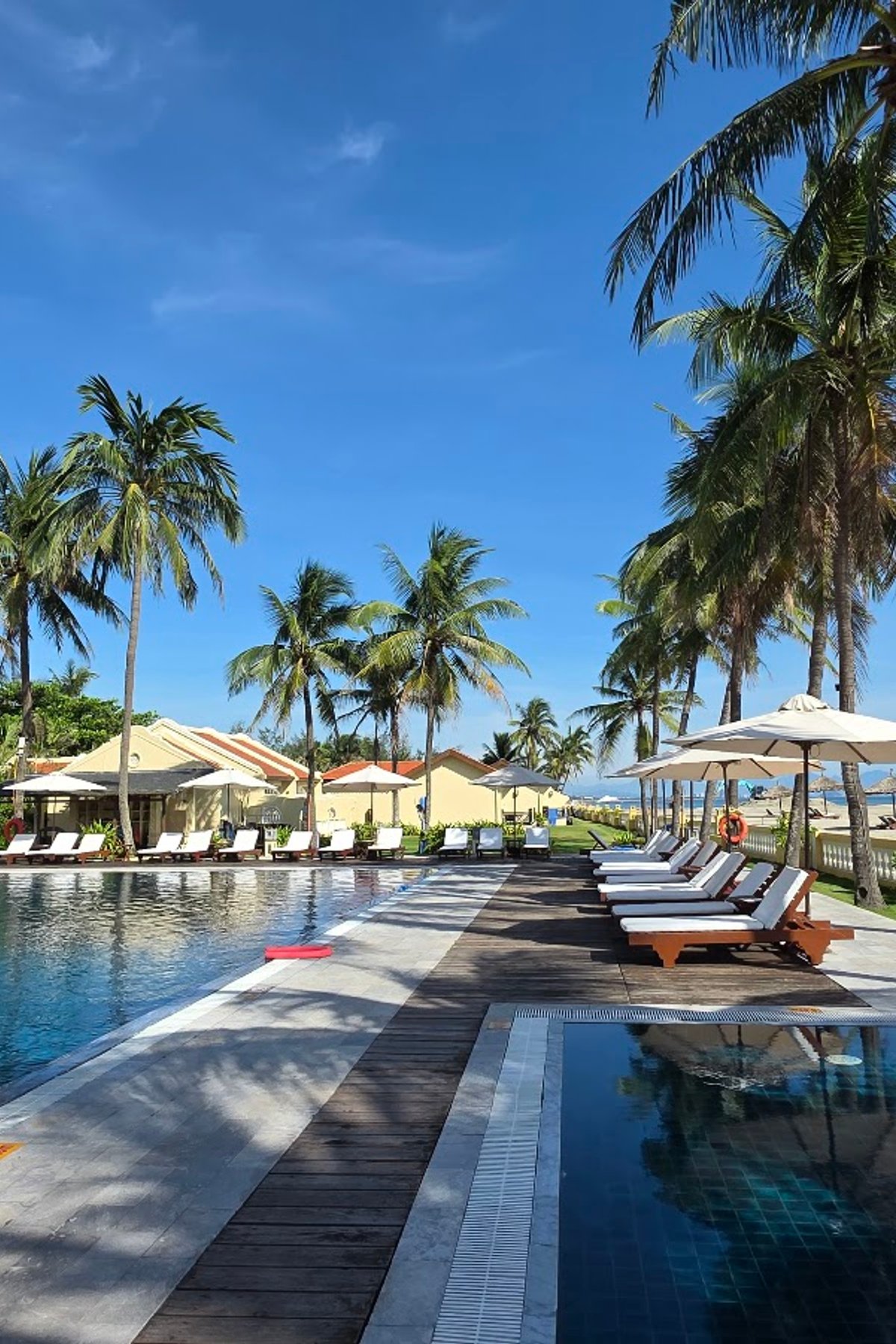
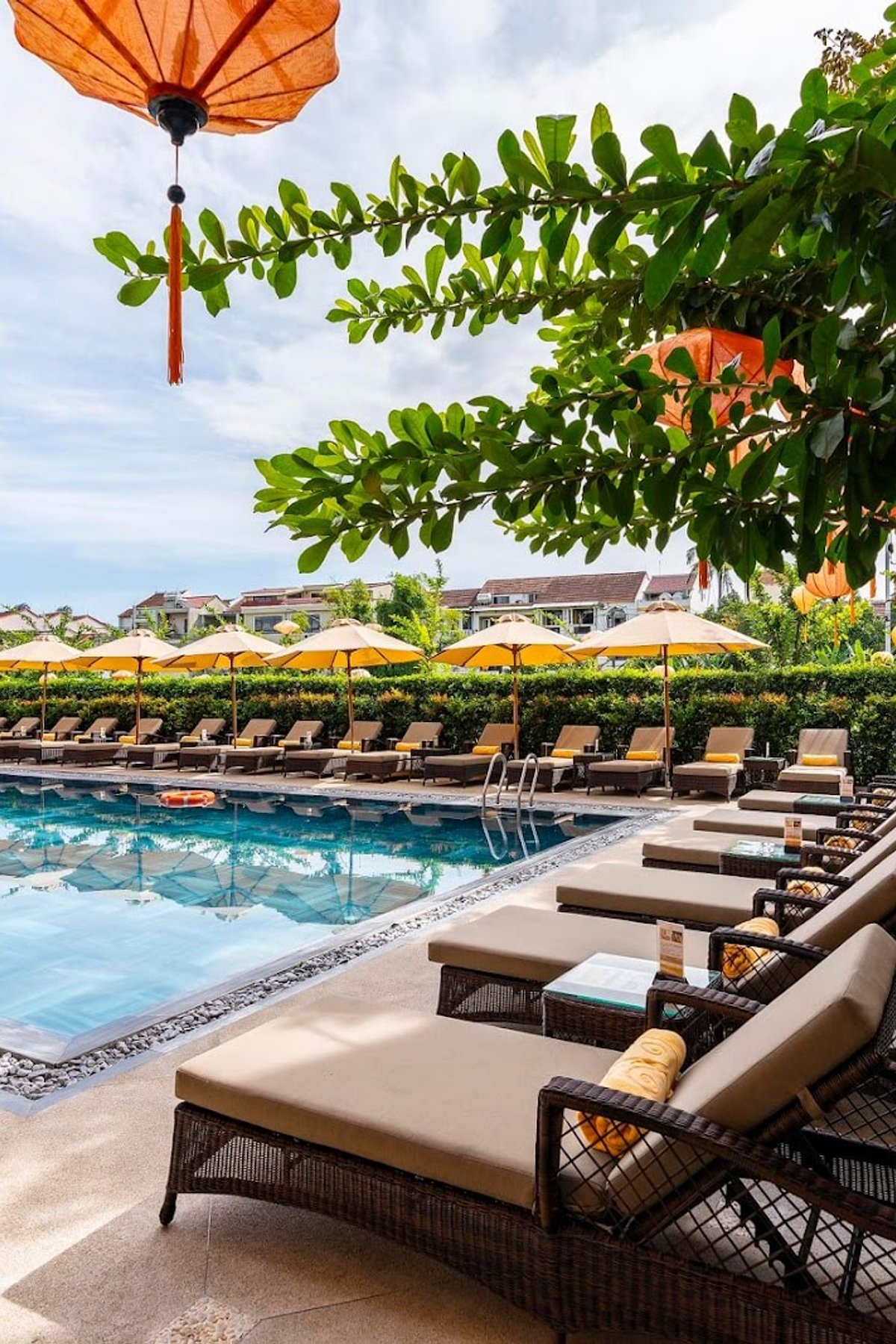
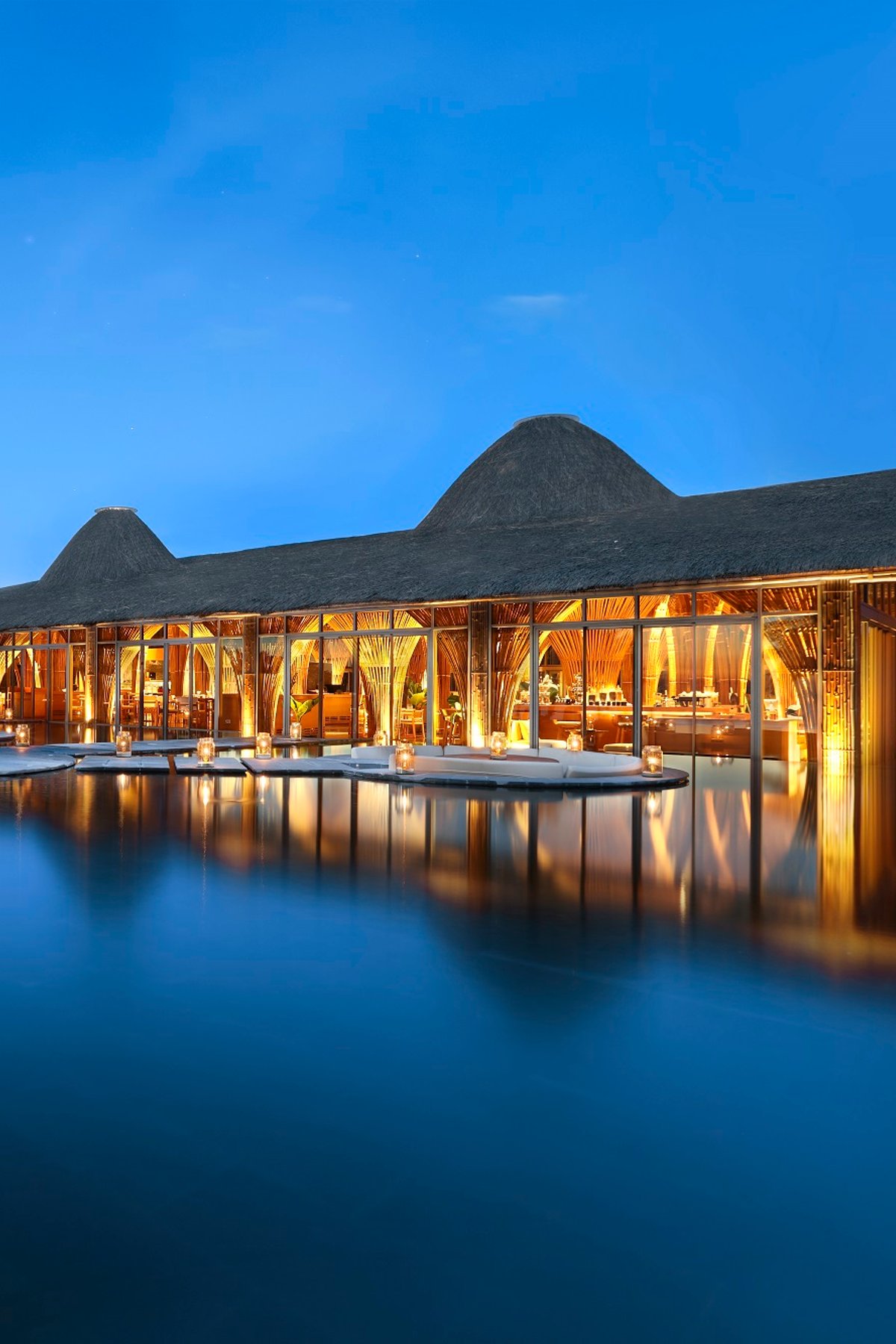
There is no marble-lobby spectacle here and the beach is a drive away, so judge it as a quiet nature retreat rather than a headline resort. On those terms it delivers: real local materials, three pools, and coconut palms instead of a car park. The pull, such as it is, is deserved and modest.
Genuinely under the radar. With no Instagram presence and a location most day-trippers never reach, ENSO trades on word of mouth more than feeds. That makes it one of the calmer places to land near a town that rarely slows down.
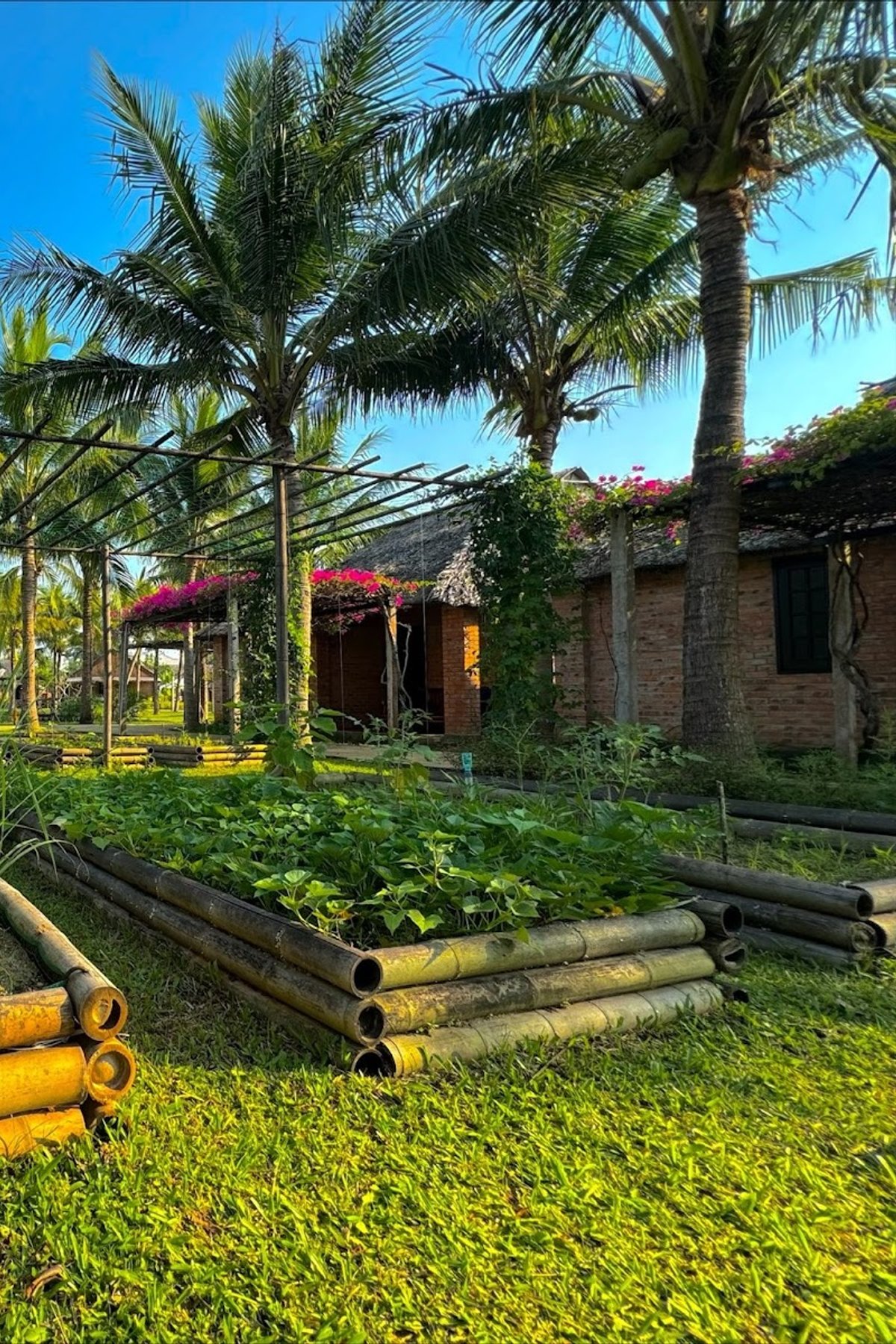
The frames are bamboo, the joinery coconut wood, the roofs thatch pitched over the terraces. Cam Thanh has worked these materials for generations, and ENSO uses them at resort scale rather than importing a five-star template. The result feels grown from the site: low, shaded, and cooler than the concrete blocks that pass for new hotels elsewhere around Hoi An.
Step past the gate and you are in Bay Mau, the flooded palm groves where fishermen spin round basket boats through tidal channels. This is the mangrove coconut forest a national paper singled the resort out for in 2025. Free bikes make the whole watery maze yours before breakfast, and the Seven Mile Coconut area sits a short pedal away.
Days here run at retreat pace: three outdoor pools to rotate between, a spa, and a restaurant leaning on local Quang Nam cooking rather than a global buffet. There is a gym and billiards if you must, but the intended rhythm is bike, swim, eat, repeat. The town's lanterns are a short shuttle ride away when you want noise.
At 37 rooms it stays quiet, but three pools and a spa mean this is a resort, not a homestay hideaway.
Built for travellers who want stillness and coconut palms, not walk-to-the-bar old-town energy.
Main-block rooms and standalone bungalows are different experiences, so the category you book matters more than the dates.
Cam Thanh has filled with eco-styled stays, so ENSO competes on materials and calm rather than being the only option.
Word about Cam Thanh spreads slowly, then all at once, and ENSO sits right where that curve steepens. This is the flooded coconut country east of Hoi An, water palms growing straight out of the tidal channels, and a Vietnamese national paper (Công an nhân dân) featured the place in April 2025 as a rare resort set inside that mangrove forest.
The 37 rooms and bungalows lean on what the village already makes: bamboo frames, coconut wood, thatched roofs pitched over garden terraces. Three pools thread the grounds, free bikes point you at the palms, and a shuttle covers the few kilometres into the old town. It is not remote and it is not hard to find a room most of the year. But peak season fills Hoi An fast, and a place this quiet books out when everyone arrives at once.
The demand curve here has one sharp spike and a long, flat tail, and understanding why saves both money and disappointment. The February-to-April peak exists because it is the only stretch when central Vietnam reliably delivers dry, mild days: the winter rains have gone and the brutal summer heat has not yet arrived. That window also overlaps Tet, the lunar new year, which stacks a wall of domestic demand on top of the international crowd. If you want a specific room in a small Cam Thanh retreat or a heritage resort near the Covered Bridge during these months, plan on booking three to six months out. The top-tier addresses are few, and they sell their peak dates first. The rest of the year rewards flexibility. May and September are the genuinely undervalued months. They sit in the shoulder band on price and availability but still deliver plenty of usable weather, and September in particular lands before the rains turn serious. The deep summer of June through August is hot and humid, which is exactly why it prices as shoulder; for beach-first travelers and families who will spend the afternoons in a pool or at An Bang, that heat is a feature, not a deterrent, and it is the easiest time to walk into a good room on short notice. October and November are the honest gamble. This is central Vietnam's wet season, and the Thu Bon can rise enough to flood the Ancient Town's lower streets; locals paddle boats down them most years. Demand stays in the shoulder band, which means the rooms are there and the rates are soft, but you are trading certainty for value. Nothing closes, so the calculus is yours. One timing note cuts across every month: the lantern festival falls on the fourteenth night of each lunar cycle, when the town douses its electric lights for candlelit lanterns. It is worth building a trip around, and it is not a summer-versus-winter decision. Check the lunar calendar, then pick your dates.
The real Instagram following over time, plus where this hotel sits for demand in Hoi An. Pick a range, toggle the lines. Followers are reach and demand, not engagement.
File closes at ACCESSIBLE. Rooms are usually there for the taking, so this is about intent, not scarcity: book if you want quiet coconut country and a bike into the lanterns, skip if you need the beach or the bar within stumbling distance.