Kasbah
Tamadot.
8 critic reviews
filed.
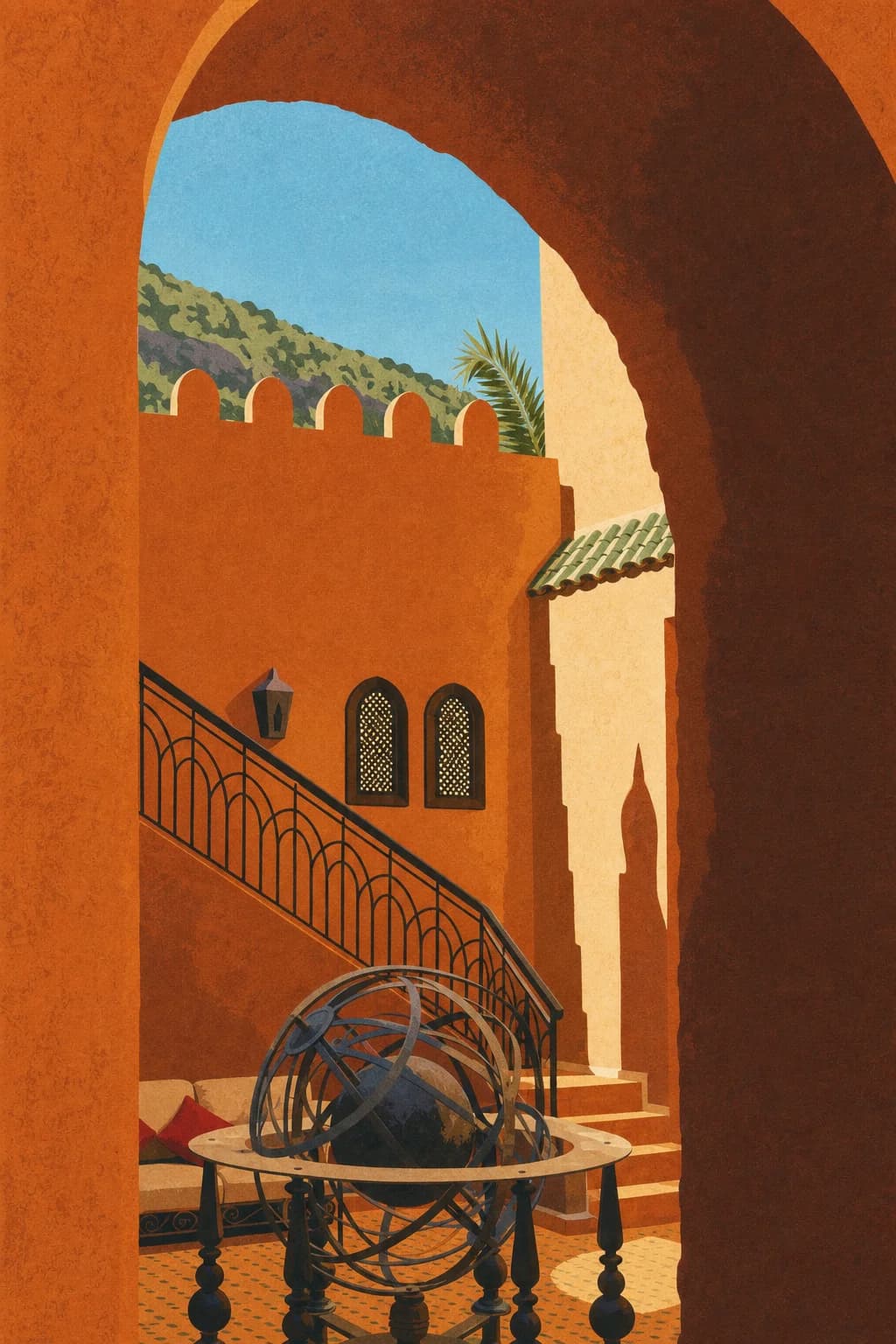
Kasbah Tamadot is Richard Branson's Atlas Mountains hotel in a restored Berber fortress, and the views genuinely are what the brochure promises: peaks on every side and the kind of silence you cannot find in the medina. The hype softens that you are committing to a mountain drive each way, and once you are in, you are in for the duration of the stay rather than day-tripping into town.
The property organises guided walks into the Berber villages that start from the hotel gates, which is a different experience from the Atlas day trips you book out of Marrakech. Do the sunrise walk with a local guide on your second morning, before the hotel breakfast service ramps up.
angles.
Tempo's Collection
Luciano Tempo was a world-renowned antique dealer who gathered objects from India, Indonesia, and North Africa over decades. When Branson bought the kasbah, a 1,000-square-metre warehouse of Tempo's treasures came with it. The furniture, textiles, and art throughout the property aren't staged. They're the original collection, placed by Tempo himself. The rooms feel like staying inside a museum that happens to have beds.
Kanoun and Asayss
Chef Yassine Khalal runs two restaurants. Kanoun sits in the heart of the kasbah and serves traditional tagines and grilled meats. Asayss, added in 2024 and named after a Moroccan gathering space for poets, operates in the garden beside the Berber Tents. Both use produce from the hotel's kitchen garden. Bread is baked each morning in a clay Berber oven on-site.
Eve Branson's Foundation
The Eve Branson Foundation, started by Richard's mother, operates from the surrounding Atlas communities. The hotel employs over 98% local staff from Berber villages in the valley. Pack for a Purpose brings roughly 400 kilograms of clothing and supplies each year via guests. This isn't corporate sustainability language. It's a genuine community commitment visible from the moment you arrive.
talk.
mapped.
“Less than an hour's drive from Marrakech, nestled at the foot of the breathtaking Atlas Mountains, the sprawling Kasbah leaves little to be desired. Landscaped gardens surround the property.”
record.
In 1998, Eve Branson spotted this property while her son Richard was attempting a hot-air balloon crossing over Morocco. It belonged to Luciano Tempo, an Italian antique dealer who had filled it with treasures gathered from India, Indonesia, and North Africa. Branson bought the kasbah, inheriting Tempo's entire collection.
After seven years of work, it opened in 2005 as part of Virgin Limited Edition. A 2024 renovation added six three-bedroom Riads and a second restaurant, Asayss, in the gardens beside the Berber Tents. Chef Yassine Khalal runs both kitchens, cooking Moroccan and international dishes with produce from the hotel's garden. Tagines from a clay Berber oven. Bread baked fresh each morning. Three MICHELIN Keys. Ninety minutes from Marrakech, in the High Atlas foothills near the Berber village of Asni.
changed.
Book December four to six months out. October–November is the value window. Skip summer unless heat-tolerant.
In Marrakech, demand runs inverse to the thermometer. When Europe wants winter sun and the heat breaks, the city's riads compress into windows that close months ahead — and that pattern is entirely predictable.
December is the single Peak month, and it behaves like nothing else on the calendar. New Year's Eve collides with European winter-sun demand to squeeze the top properties into a roughly two-week window that books out far in advance. Plan on four to six months of lead time for Ultra-tier riads; three months is often already too late for properties like Riad BE or Le Riad Yasmine.
October and November deliver the best value relative to experience quality. Demand indexes high — 80 in October, 85 in November — but autumn rates at many properties run 30 to 60 percent below spring equivalents because the season falls outside European school holidays. October brings the 1-54 Festival, Marrakech's contemporary art biennale, adding a cultural layer spring lacks. November is the month our data flags as flat-out underpriced: it indexes at 85 without December's premium or the school-holiday crush.
March and April are the traditional high season, driven by Easter breaks and the spring weather window. Easter week is the tightest booking window outside December, and Jardin Majorelle requires timed-ticket advance purchase throughout this period. Ramadan shifts annually across the calendar; when it overlaps with March or April, restaurants and some services run reduced hours while hotels stay fully open.
Check the Ramadan dates before you book — they reshape the dining and nightlife experience far more than the hotel experience.
Summer is the strategic play for price-sensitive travelers who can handle heat. Demand drops below 30 from June through August, and properties that validate as sold out in October often show wide-open availability through July. The medina's thick walls and internal courtyards were built for this climate, so morning and evening exploration stay comfortable — the tradeoff is that midday outdoor sightseeing is impractical. What disappears entirely is the sold-out pressure that defines the rest of the year.
September is the transition window, and it favors the early mover. Temperatures moderate and demand begins to climb, but rates have not yet caught up to autumn levels.
approach.
briefing.
“Nestled in the foothills of Morocco's High Atlas Mountains, luxury retreat Kasbah Tamadot combines charming mud brick design draped in locally handmade textiles with luxurious amenities.”
stands.
demand's going.
The real Instagram following over time, plus where this hotel sits for demand in Marrakech. Pick a range, toggle the lines. Followers are reach and demand, not engagement.
assessment.
File closes at VERY HIGH. Book direct two months out, or aim for March or November shoulder for the same Atlas light. Skip if you want quick city access; Marrakech is ninety minutes downhill.
The numbers behind the tiers
Kasbah Tamadot · SOURCE READINGS · REDACTED- Availability density · sampled
- Monthly search volume · raw
- TikTok hashtag views · raw
- YouTube total views · raw
- TikTok following · latest sweep
- Pinterest saves · latest sweep
More from Marrakech.
Get the hotel's Unbookable Score.
Any post or reel with a hotel in it. Booking.com hotel pages work too. One free check, no account needed.