Le
Riad Yasmine.
16 critic reviews
filed.
Yes, with caveats. The emerald zellige courtyard pool is as photogenic in person as it is on Instagram, the tadelakt walls and Moroccan rugs feel genuinely handmade, and the eight-room scale keeps service personal. What the hype misses is how tight the derb navigation gets with luggage and how every booking window fills months out, so romance fans who decide late end up at the sister property or nowhere.
Le Petit Yasmine next door catches the overflow when the main riad is full. It is three suites, same aesthetic, same neighbourhood, often bookable inside two weeks when Le Riad Yasmine is sold out three months deep. Ask Alice and Gaby directly by email rather than going through OTAs.
angles.
Fez Zellige, Hand-Carved Cedar
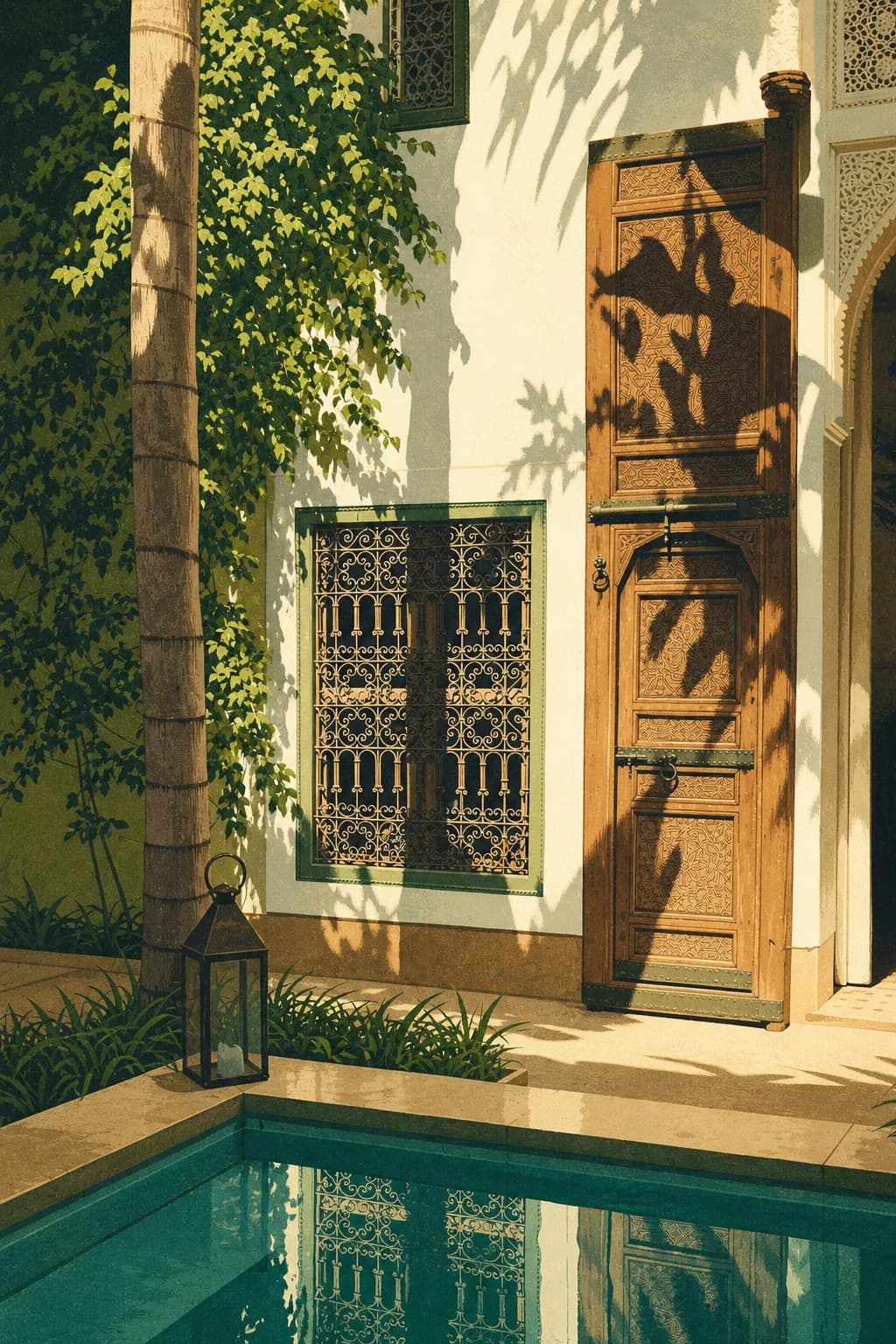
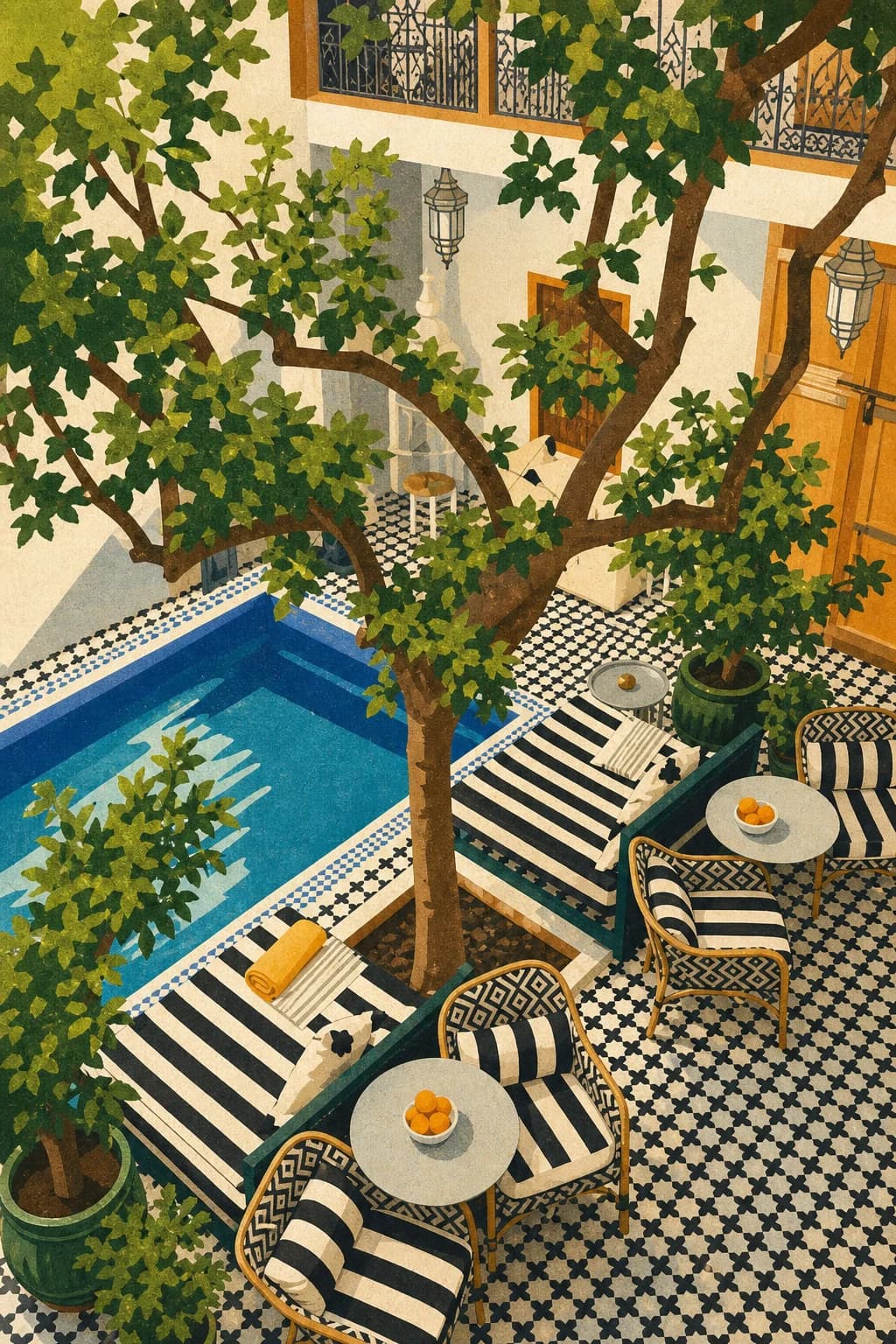
The pool tiles were sourced from Fez, Morocco's historic zellige capital. Each of the eight rooms has its own colour palette and pattern: Chefchaouen is lined in blue tile, Legzira in green zellige with a tadelakt shower, Merzouga in desert pink. The woodwork throughout is hand-carved using traditional Moroccan techniques. The 2015 renovation honoured the craft tradition of a building that, despite being built in 2002, feels centuries older.
Breakfast on the Roof
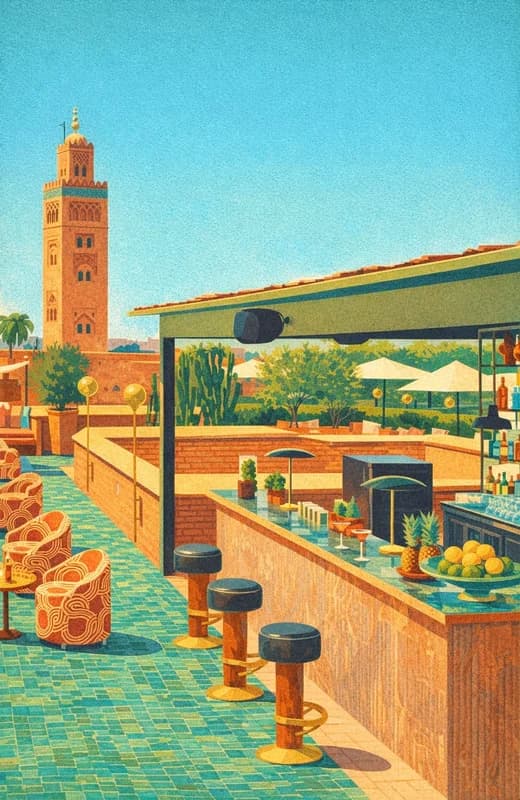
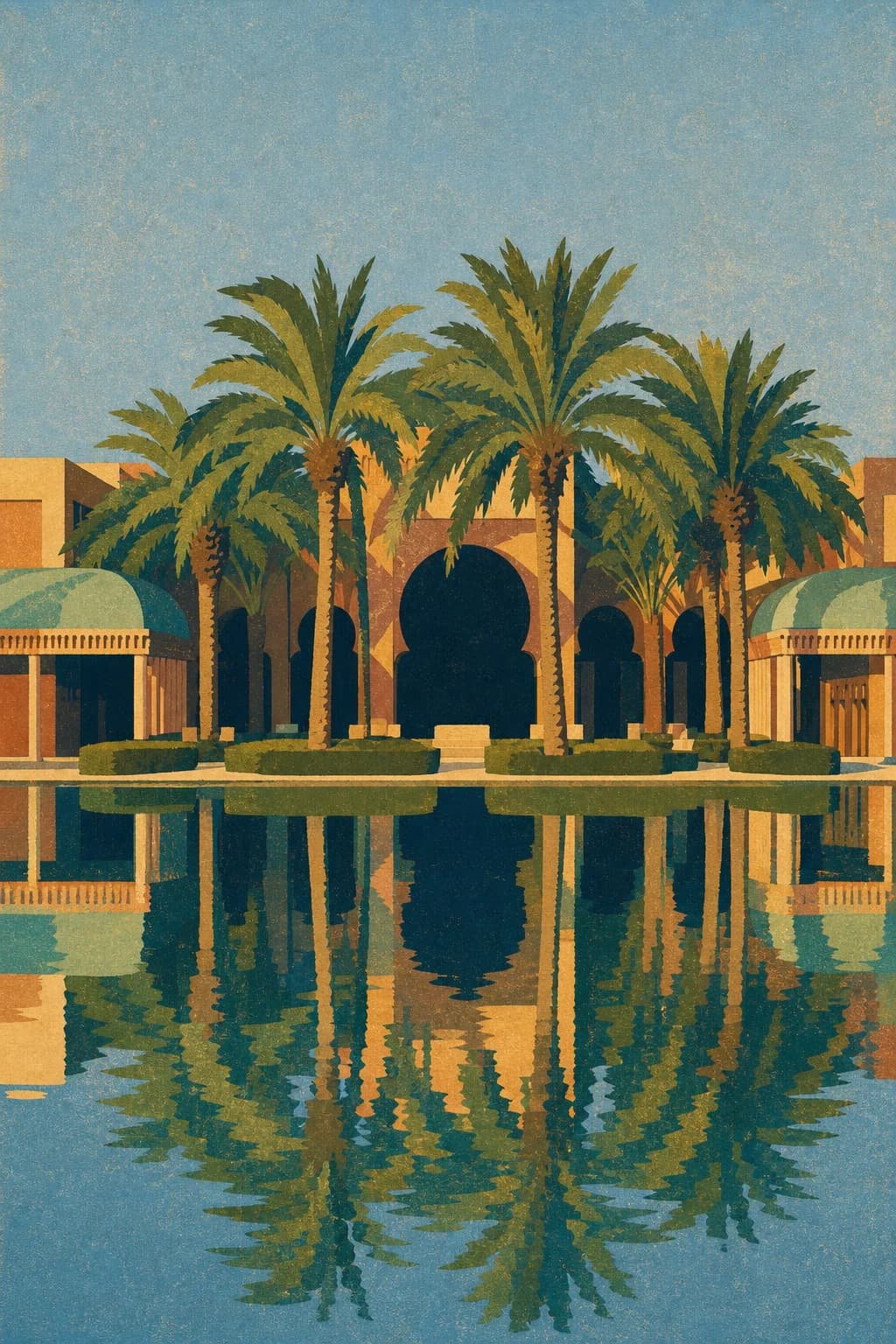
Chef Ibtissem prepares a traditional Moroccan breakfast served on the rooftop terrace every morning, included in the rate. The courtyard below, with its emerald pool and potted palms, is the common room. Guests read, swim, and share the space with Bowie the resident cat. The atmosphere is closer to staying in someone's home than checking into a hotel. At mid-range riad money a night, the value is exceptional.
Bab Taghzoute, Not the Souks
The riad sits in the northern Medina, a fifteen-minute walk from Jemaa el-Fna through a quieter, more residential part of the old city. The route passes artisan workshops and the Ben Youssef Medersa. The neighbourhood feels local in a way that riads closer to the main square don't. Far enough for calm, close enough that nothing in the Medina is out of reach.
talk.
mapped.
“A few months of works and a precise vision were all it took to create Riad Yasmine, a haven of softness sheltered from the effervescence of the medina.”
record.
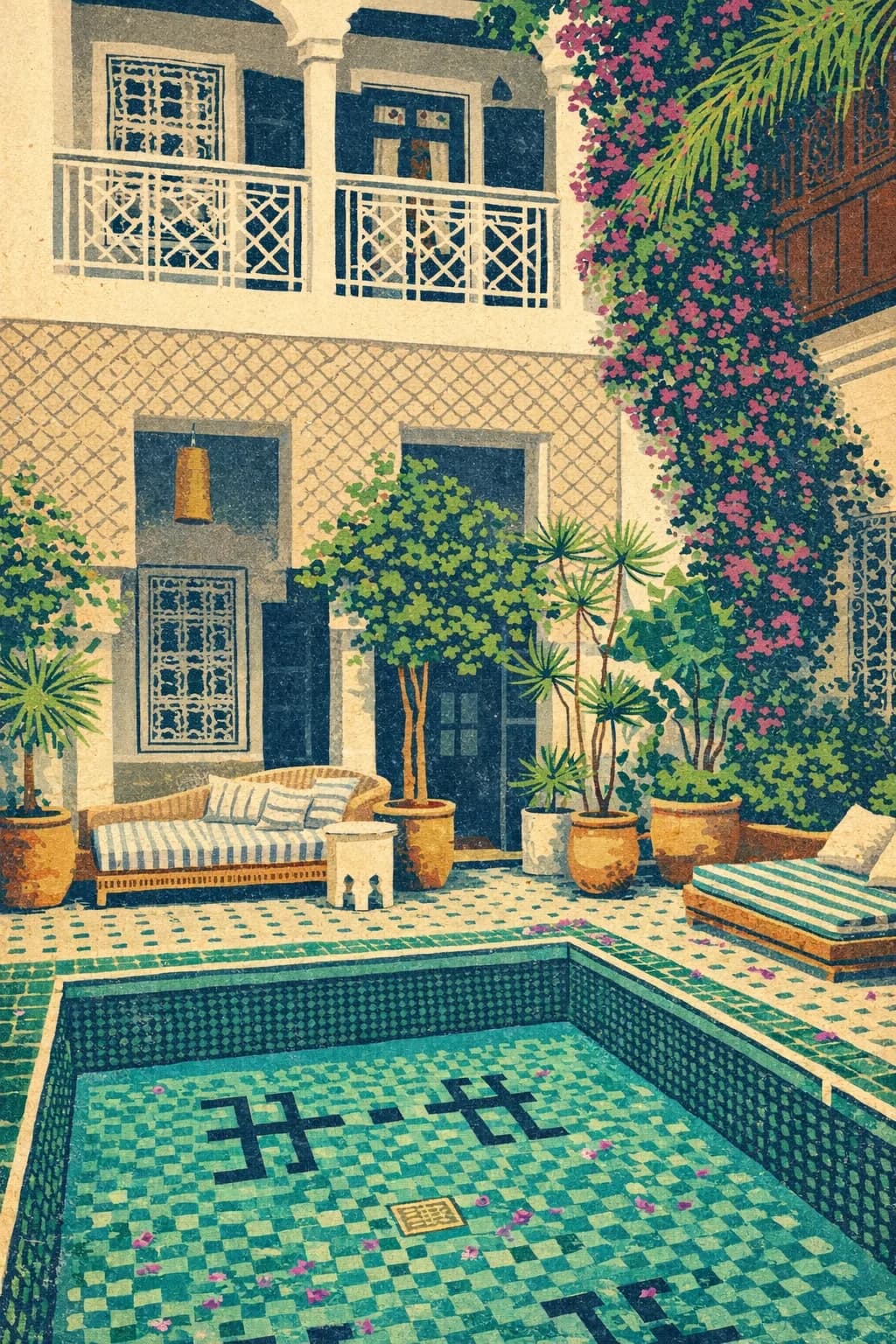
In 2015, Alice Tassery and Gabriel Paris took over Gabriel's father's guesthouse on a quiet street in Bab Taghzoute, in the northern Medina. They lined the courtyard pool with emerald zellige tiles sourced from Fez and set an Amazigh "Yaz" symbol into the floor, the Berber character for "free man." The woodwork is hand-carved cedar.
Each of the eight rooms is named after a Moroccan landscape: Merzouga, Toubkal, Chefchaouen. Mosaic bathrooms, tadelakt walls, Moroccan rugs on concrete floors. Alice, who had worked in communications, posted a photo of the pool. It went viral. By 2018, Le Riad Yasmine was the most tagged riad in Morocco. The riad hasn't had a quiet week since. At mid-range pricing with breakfast included, every room books months ahead.
changed.
Book December four to six months out. October–November is the value window. Skip summer unless heat-tolerant.
In Marrakech, demand runs inverse to the thermometer. When Europe wants winter sun and the heat breaks, the city's riads compress into windows that close months ahead — and that pattern is entirely predictable.
December is the single Peak month, and it behaves like nothing else on the calendar. New Year's Eve collides with European winter-sun demand to squeeze the top properties into a roughly two-week window that books out far in advance. Plan on four to six months of lead time for Ultra-tier riads; three months is often already too late for properties like Riad BE or Le Riad Yasmine.
October and November deliver the best value relative to experience quality. Demand indexes high — 80 in October, 85 in November — but autumn rates at many properties run 30 to 60 percent below spring equivalents because the season falls outside European school holidays. October brings the 1-54 Festival, Marrakech's contemporary art biennale, adding a cultural layer spring lacks. November is the month our data flags as flat-out underpriced: it indexes at 85 without December's premium or the school-holiday crush.
March and April are the traditional high season, driven by Easter breaks and the spring weather window. Easter week is the tightest booking window outside December, and Jardin Majorelle requires timed-ticket advance purchase throughout this period. Ramadan shifts annually across the calendar; when it overlaps with March or April, restaurants and some services run reduced hours while hotels stay fully open.
Check the Ramadan dates before you book — they reshape the dining and nightlife experience far more than the hotel experience.
Summer is the strategic play for price-sensitive travelers who can handle heat. Demand drops below 30 from June through August, and properties that validate as sold out in October often show wide-open availability through July. The medina's thick walls and internal courtyards were built for this climate, so morning and evening exploration stay comfortable — the tradeoff is that midday outdoor sightseeing is impractical. What disappears entirely is the sold-out pressure that defines the rest of the year.
September is the transition window, and it favors the early mover. Temperatures moderate and demand begins to climb, but rates have not yet caught up to autumn levels.
approach.
briefing.
“Arguably the most popular and recognizable riad in Marrakech, found Instagram fame in 2016”
stands.
demand's going.
The real Instagram following over time, plus where this hotel sits for demand in Marrakech. Pick a range, toggle the lines. Followers are reach and demand, not engagement.
assessment.
File closes at VERY HIGH. Book direct three to six months out and watch Stories for cancellations. Skip if anonymous luxury matters; this riad is photographed across half the Marrakech feeds.
The numbers behind the tiers
Le Riad Yasmine · SOURCE READINGS · REDACTED- Availability density · sampled
- Monthly search volume · raw
- TikTok hashtag views · raw
- YouTube total views · raw
- TikTok following · latest sweep
- Pinterest saves · latest sweep
More from Marrakech.


Get the hotel's Unbookable Score.
Any post or reel with a hotel in it. Booking.com hotel pages work too. One free check, no account needed.