La Sultana
Marrakech.

15 critic reviews
filed.
La Sultana earns its standing for reasons that hold up: the Kasbah location puts you walking distance from the Saadian Tombs and Badi Palace, the rooftop pool catches views across the old city that most riads cannot, and the 28-room scale means there is actually a spa rather than a token hammam. The hype softens how maximalist the interiors are, so if your reference for luxury is minimalist Japandi this will feel overwhelming.
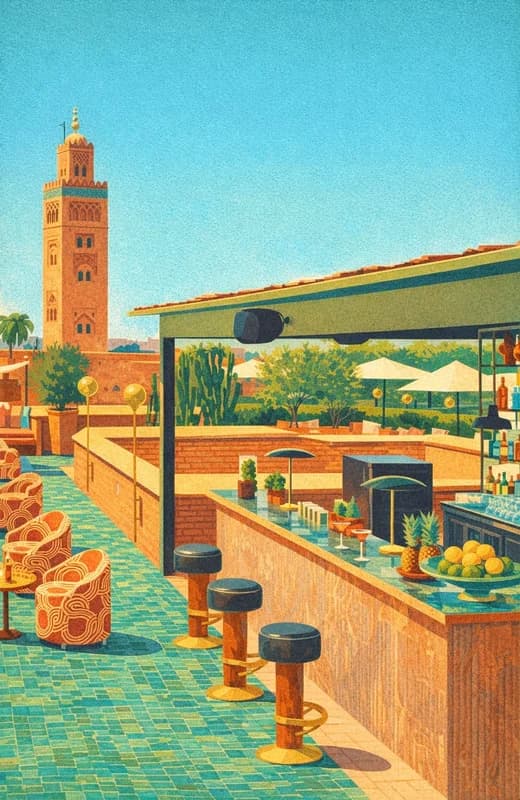
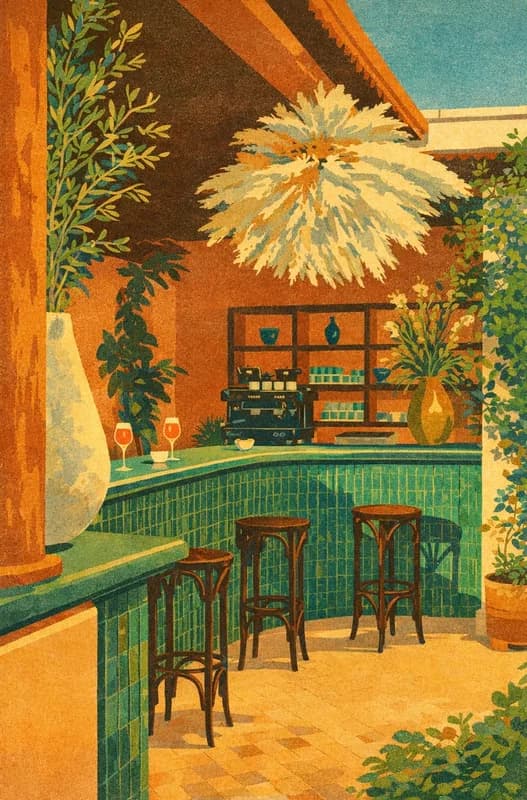
The rooftop bar is open to non-guests with reservation and is one of the only medina hotels where you can watch the Atlas Mountains change colour at sunset with a drink in hand. Book a table for 6pm on a clear day and stay through the call to prayer.
angles.
From Almohad Granary to Palace
The site has been occupied since the 12th century, when it stored grain for the Almohad caliphate. Eight centuries of use left layers of history in the walls. Caïd Azzi Boujemaa's 19th-century restoration turned it into a social hub under the French Protectorate. The five riads that La Sultana merged in 2004 each carried their own history, their own courtyard, their own architectural personality. The hotel preserves the layering rather than flattening it.
28 Rooms, Zero Repeats
Every room is unique. The Elephant Suite has bejewelled Indian bedding. Others feature zellige, carved wood, marble, safari themes, or jewel-toned Moroccan maximalism. The MICHELIN Guide noted the "definite flair for the dramatic." Lonely Planet said it "hasn't forsaken the razzle-dazzle of its Moroccan roots." The maximalism is the identity. Each room is a stage set committed to its own theme.
Two Tables, One Rooftop
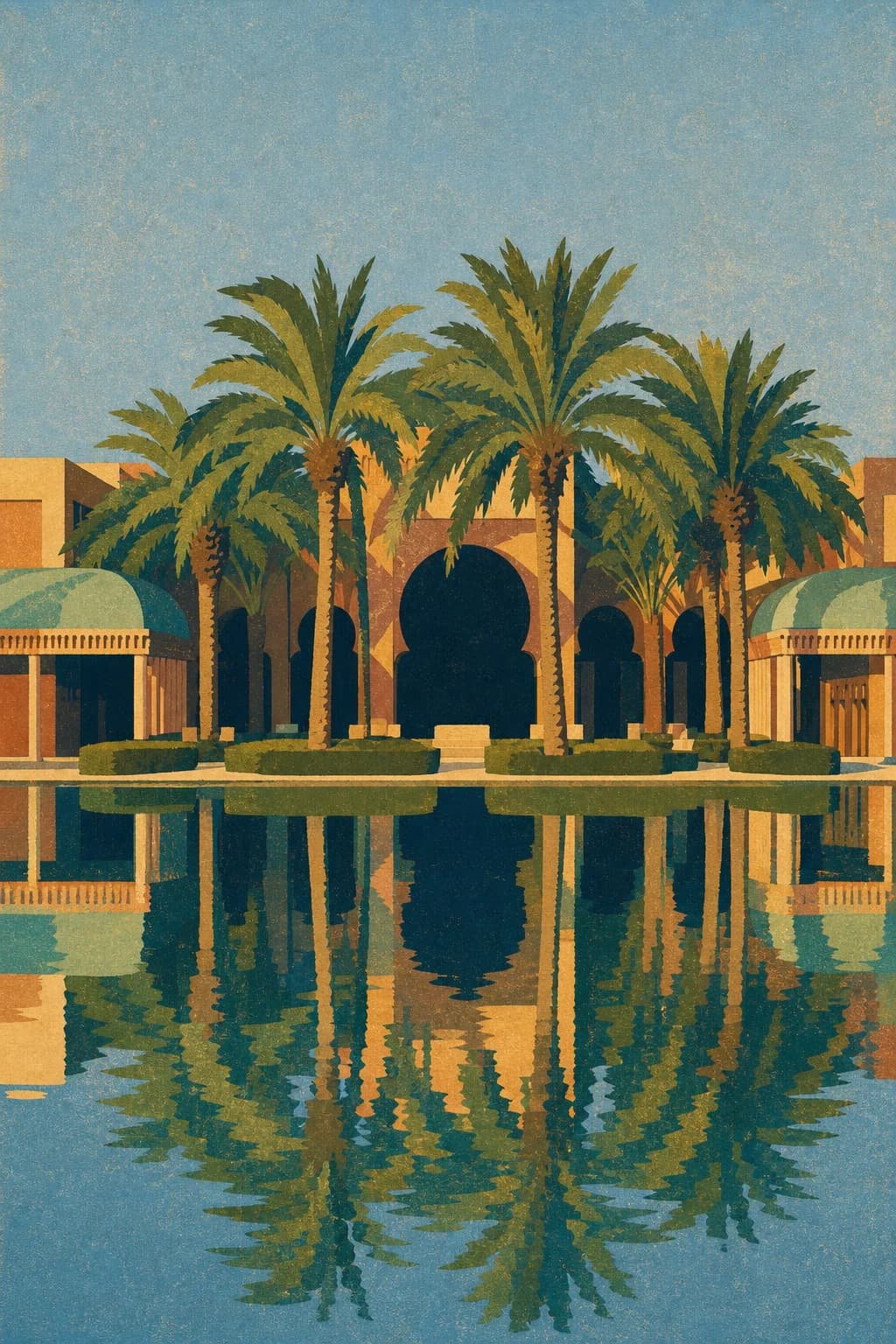
La Table de La Sultana serves French-Moroccan fine dining with cooking classes available. La Table du Souk, on the rooftop of Riad Bahia, serves Moroccan street food with views across the Kasbah rooftops to the mosque. The 2,000-square-metre rooftop terrace connects the two restaurants and adds pools, seating, and the widest Kasbah panorama available from any Medina hotel. The rooftop is where the five riads become one.
talk.
mapped.
“Luxury and a sense of history are the hallmarks. 8/10.”
record.
In the late 19th century it was gifted to Caïd Azzi Boujemaa, a loyal palace worker, whose family restored it into a centre for Marrakech society. Groupe La Sultana merged five adjacent riads (Saadia, Saba, Pool Riad, Scheherazade, and Bahia) and opened the hotel in 2004.
Twenty-eight rooms and suites, every one unique: from the Elephant Suite with bejewelled Indian bedding and fireplace to jewel-toned Moroccan maximalism and safari-print accents. Multiple pools across courtyards. A 2,000-square-metre rooftop terrace overlooking the Kasbah and the Moulay El Yazid Mosque. Hammam, jacuzzi, sauna. La Table de La Sultana serves French-Moroccan fine dining. La Table du Souk serves Moroccan street food on the rooftop of Riad Bahia. The Telegraph gave it 8/10. Fodor's called it "over-the-top charm." UNESCO World Heritage listed neighbourhood.
changed.
Book December four to six months out. October–November is the value window. Skip summer unless heat-tolerant.
In Marrakech, demand runs inverse to the thermometer. When Europe wants winter sun and the heat breaks, the city's riads compress into windows that close months ahead — and that pattern is entirely predictable.
December is the single Peak month, and it behaves like nothing else on the calendar. New Year's Eve collides with European winter-sun demand to squeeze the top properties into a roughly two-week window that books out far in advance. Plan on four to six months of lead time for Ultra-tier riads; three months is often already too late for properties like Riad BE or Le Riad Yasmine.
October and November deliver the best value relative to experience quality. Demand indexes high — 80 in October, 85 in November — but autumn rates at many properties run 30 to 60 percent below spring equivalents because the season falls outside European school holidays. October brings the 1-54 Festival, Marrakech's contemporary art biennale, adding a cultural layer spring lacks. November is the month our data flags as flat-out underpriced: it indexes at 85 without December's premium or the school-holiday crush.
March and April are the traditional high season, driven by Easter breaks and the spring weather window. Easter week is the tightest booking window outside December, and Jardin Majorelle requires timed-ticket advance purchase throughout this period. Ramadan shifts annually across the calendar; when it overlaps with March or April, restaurants and some services run reduced hours while hotels stay fully open.
Check the Ramadan dates before you book — they reshape the dining and nightlife experience far more than the hotel experience.
Summer is the strategic play for price-sensitive travelers who can handle heat. Demand drops below 30 from June through August, and properties that validate as sold out in October often show wide-open availability through July. The medina's thick walls and internal courtyards were built for this climate, so morning and evening exploration stay comfortable — the tradeoff is that midday outdoor sightseeing is impractical. What disappears entirely is the sold-out pressure that defines the rest of the year.
September is the transition window, and it favors the early mover. Temperatures moderate and demand begins to climb, but rates have not yet caught up to autumn levels.
approach.
briefing.
“Stunningly decorated...definite flair for the dramatic”
stands.
demand's going.
The real Instagram following over time, plus where this hotel sits for demand in Marrakech. Pick a range, toggle the lines. Followers are reach and demand, not engagement.
assessment.
File closes at VERY HIGH. Book direct two months out; the rooftop terrace alone justifies one evening on site. Skip if minimalism matters; the maximalist Indian aesthetic is its calling card.
The numbers behind the tiers
La Sultana Marrakech · SOURCE READINGS · REDACTED- Availability density · sampled
- Monthly search volume · raw
- TikTok hashtag views · raw
- YouTube total views · raw
- TikTok following · latest sweep
- Pinterest saves · latest sweep
More from Marrakech.
Get the hotel's Unbookable Score.
Any post or reel with a hotel in it. Booking.com hotel pages work too. One free check, no account needed.