La Brillante
Marrakech.
1 critic review
filed.
La Brillante is six rooms in Riad Zitoun with a direct-booking model and a design that sits between traditional Moroccan and contemporary European. For the tier it is a credible value play. The hype is quiet for good reason: the property does not chase visibility and the result is uneven coverage, so you are buying slightly on faith until you arrive.
Riad Zitoun is one of the few medina arteries where a walk from Jemaa el-Fna south toward the Kasbah hits a sequence of genuine everyday shops before it turns touristy. Start at the riad door, walk ten minutes toward the palace, and the first tea house on your right is where you stop.
angles.
Abounad's Kitchen
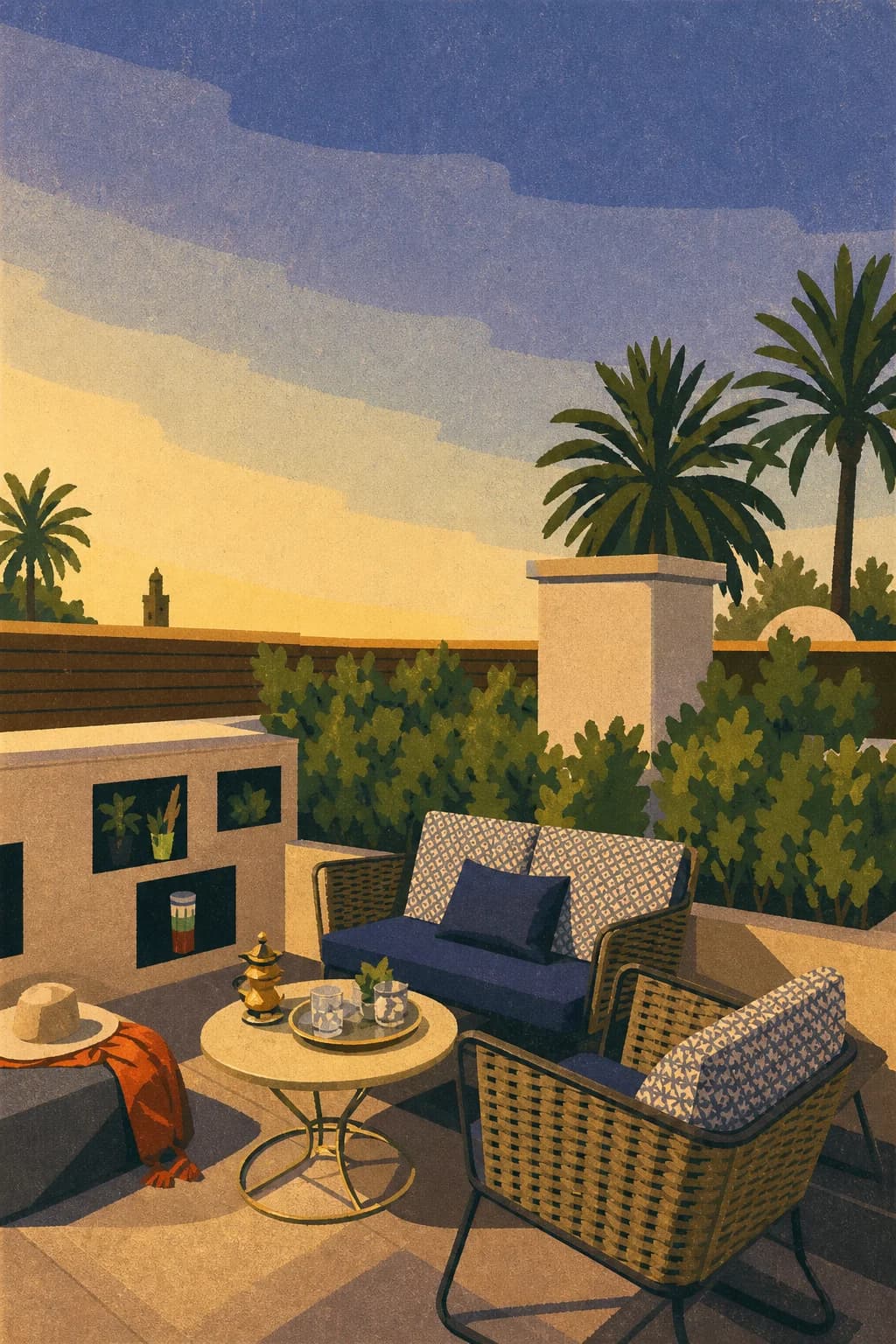
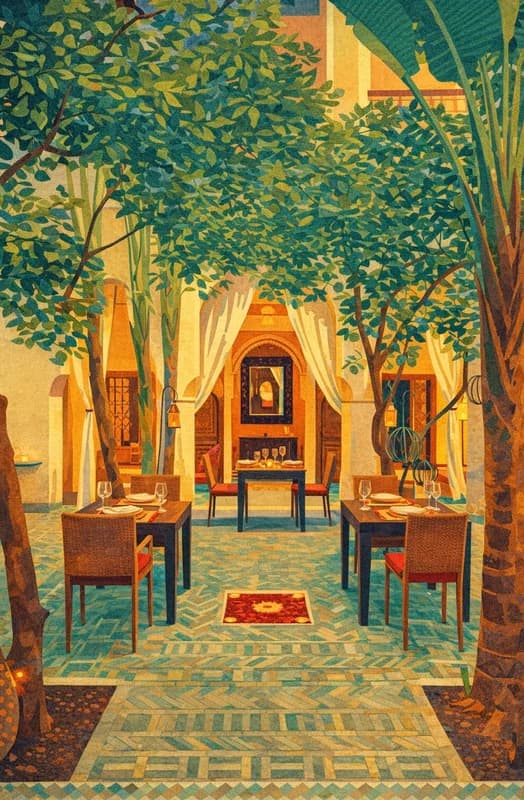
Mohammed Abounad trained for over ten years at the Royal Mansour under Yannick Alléno, one of France's most decorated chefs. At La Brillante, he runs two kitchens: La Terrasse on the rooftop (Mediterranean, à la carte, open air) and Laïla (modern Moroccan, intimate). The quality gap between Abounad's cooking and the standard Medina riad dinner is immediately obvious. This is serious food in a six-room setting.
The Courtyard Pool
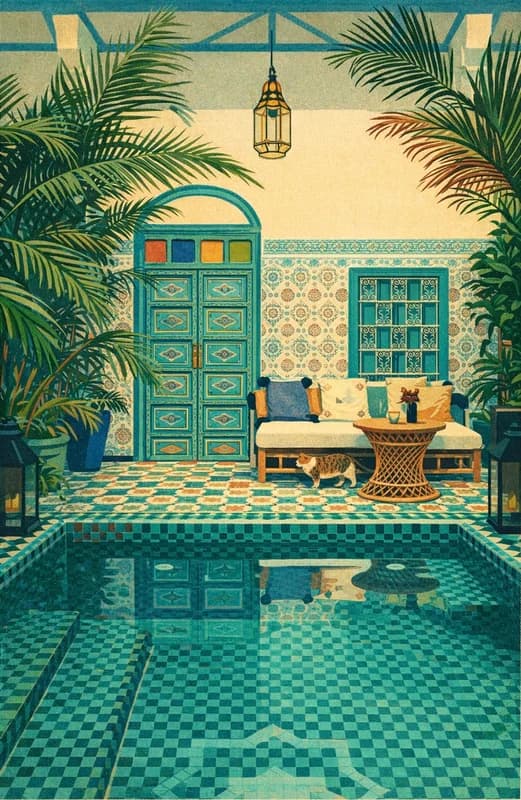
A heated pool sits in the central courtyard, surrounded by jasmine and rose. The aesthetic is deliberately feminine: soft light, botanical accents, contemporary Moroccan art on the walls. Alexandre Cadosch's concept, executed by a team of women designers, creates an atmosphere that feels personal rather than public. At six rooms, the courtyard rarely feels shared.
Riad Zitoun, Near Bahia
Riad Zitoun Jdid is the Medina neighbourhood closest to Bahia Palace, one of Marrakech's finest architectural landmarks. Jemaa el-Fna is a ten-minute walk north. The neighbourhood is residential, with local food stalls and workshops alongside increasingly design-conscious riads. La Brillante sits in the middle of this transition zone, where the traditional Medina meets the new hospitality wave.
talk.
mapped.
“La Brillante is the first contemporary boutique hotel that offers all the modern comforts of a 5-star hotel in the middle of the Marrakech Medina.”
record.
La Brillante opened in 2020 in Riad Zitoun Jdid, steps from Bahia Palace. The concept, designed by Alexandre Cadosch and a team of women designers, centres on a heated courtyard pool surrounded by jasmine and contemporary Moroccan art. The real draw is Chef Mohammed Abounad, who spent over a decade at the Royal Mansour under Yannick Alléno before coming here.
He runs two restaurants: La Terrasse de la Brillante on the rooftop (Mediterranean and European) and Laïla (modern Moroccan). Six rooms across three categories, from the 24-square-metre Deluxe Double to the 40-square-metre Deluxe Suite. Breakfast is included and exceptional. In a Medina where most riads serve safe tourist-friendly food, La Brillante took a Royal Mansour-trained chef and gave him his own stage.
changed.
Book December four to six months out. October–November is the value window. Skip summer unless heat-tolerant.
In Marrakech, demand runs inverse to the thermometer. When Europe wants winter sun and the heat breaks, the city's riads compress into windows that close months ahead — and that pattern is entirely predictable.
December is the single Peak month, and it behaves like nothing else on the calendar. New Year's Eve collides with European winter-sun demand to squeeze the top properties into a roughly two-week window that books out far in advance. Plan on four to six months of lead time for Ultra-tier riads; three months is often already too late for properties like Riad BE or Le Riad Yasmine.
October and November deliver the best value relative to experience quality. Demand indexes high — 80 in October, 85 in November — but autumn rates at many properties run 30 to 60 percent below spring equivalents because the season falls outside European school holidays. October brings the 1-54 Festival, Marrakech's contemporary art biennale, adding a cultural layer spring lacks. November is the month our data flags as flat-out underpriced: it indexes at 85 without December's premium or the school-holiday crush.
March and April are the traditional high season, driven by Easter breaks and the spring weather window. Easter week is the tightest booking window outside December, and Jardin Majorelle requires timed-ticket advance purchase throughout this period. Ramadan shifts annually across the calendar; when it overlaps with March or April, restaurants and some services run reduced hours while hotels stay fully open.
Check the Ramadan dates before you book — they reshape the dining and nightlife experience far more than the hotel experience.
Summer is the strategic play for price-sensitive travelers who can handle heat. Demand drops below 30 from June through August, and properties that validate as sold out in October often show wide-open availability through July. The medina's thick walls and internal courtyards were built for this climate, so morning and evening exploration stay comfortable — the tradeoff is that midday outdoor sightseeing is impractical. What disappears entirely is the sold-out pressure that defines the rest of the year.
September is the transition window, and it favors the early mover. Temperatures moderate and demand begins to climb, but rates have not yet caught up to autumn levels.
approach.
briefing.
stands.
demand's going.
The real Instagram following over time, plus where this hotel sits for demand in Marrakech. Pick a range, toggle the lines. Followers are reach and demand, not engagement.
assessment.
File closes at HIGH. Book direct a month out; the property still flies under the radar against larger Medina names. Skip if you want a tested venue; the rooftop seats fewer than twenty.
The numbers behind the tiers
La Brillante Marrakech · SOURCE READINGS · REDACTED- Availability density · sampled
- Monthly search volume · raw
- TikTok hashtag views · raw
- YouTube total views · raw
- TikTok following · latest sweep
- Pinterest saves · latest sweep
More from Marrakech.


Get the hotel's Unbookable Score.
Any post or reel with a hotel in it. Booking.com hotel pages work too. One free check, no account needed.