La Maison
Arabe.
7 critic reviews
filed.
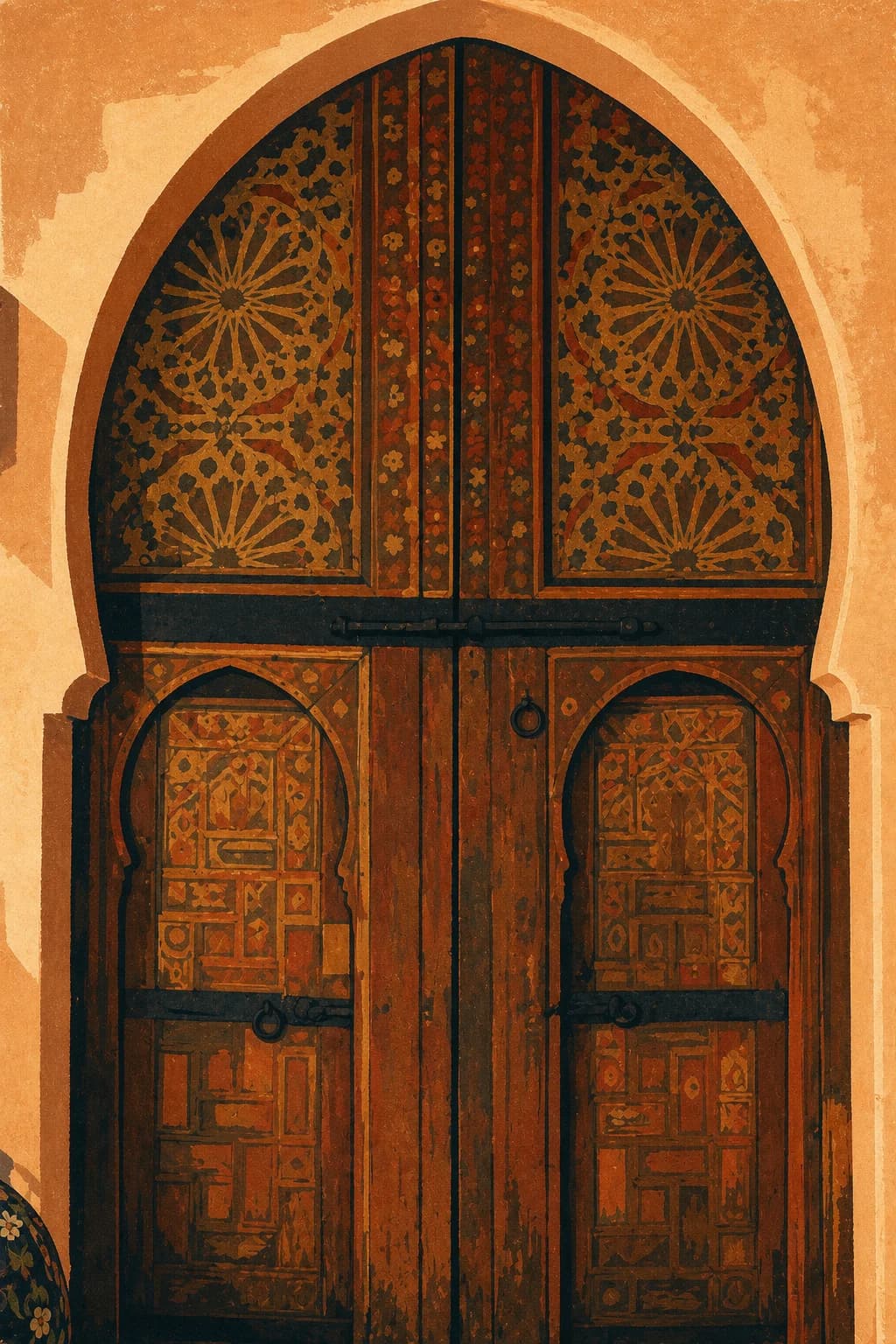
La Maison Arabe is the oldest Marrakech restaurant that turned into a hotel, and the kitchen pedigree still shows. The cooking school is a legitimate draw, the piano bar runs most nights, and the 26 rooms sit in a scale that lets the service stay consistent. The hype softens that the interiors lean classical and the pool is at an off-site garden location, which trips up guests expecting an on-site oasis.
The cooking school is open to non-guests and runs two daily sessions. Book the morning class, walk to the souks with the chef to buy your own ingredients, return for the cook, and leave with the recipes around 2pm. It is one of the best four-hour investments in the medina.
angles.
The First Riad Hotel
La Maison Arabe is credited as the first property to convert a traditional Medina riad into a hotel, opening in 1998 before the riad-hotel format became Marrakech's dominant hospitality model. The format that dozens of properties now follow started here. The first-mover status is an unchallengeable credential.
Prince Ruspoli's Craft
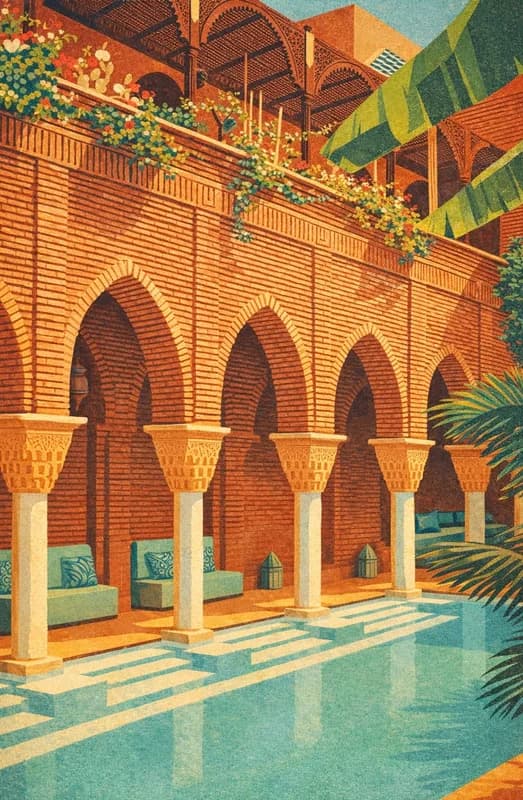
Italian Prince Fabrizio Ruspoli oversaw all craftsmanship: zellige, carved plaster, painted cedarwood, metalwork. The royal design eye applied Italian aesthetic standards to Moroccan artisan techniques. Ruspoli didn't delegate the design. He directed every detail personally.
Palmeraie Country Club
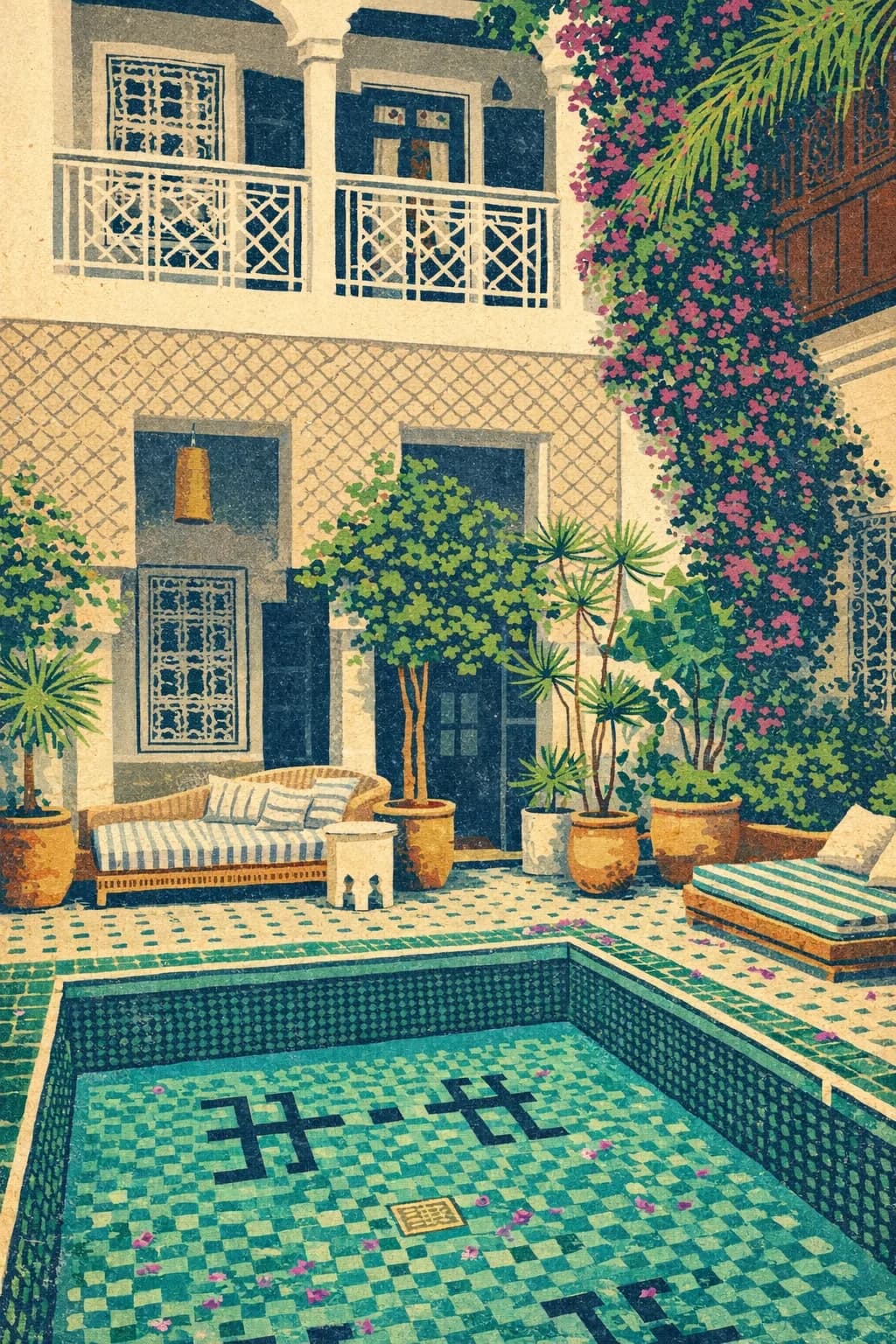
A country club in the Palmeraie gives guests a second location: gardens, pool, and dining beyond the Medina walls. The sister property Riad Elegancia also shares access. The country club solves the Medina's space constraint: gardens and pools that no riad's courtyard can match.
talk.
mapped.
“The first boutique hotel in Marrakech still holds its own.”
record.
Prince Fabrizio Ruspoli oversaw every element of the design and craftsmanship. Twenty-six rooms across interconnected buildings. Over 95,000 Instagram followers. Exceptional breakfast included. Connecting rooms for families.
At $$$$ pricing, the historical significance of being the first riad hotel gives La Maison Arabe a provenance that no subsequent opening can claim. Twenty minutes from RAK airport. The property that invented the format still operates it. A country club in the Palmeraie gives guests an additional amenity beyond the Medina walls.
changed.
Book December four to six months out. October–November is the value window. Skip summer unless heat-tolerant.
In Marrakech, demand runs inverse to the thermometer. When Europe wants winter sun and the heat breaks, the city's riads compress into windows that close months ahead — and that pattern is entirely predictable.
December is the single Peak month, and it behaves like nothing else on the calendar. New Year's Eve collides with European winter-sun demand to squeeze the top properties into a roughly two-week window that books out far in advance. Plan on four to six months of lead time for Ultra-tier riads; three months is often already too late for properties like Riad BE or Le Riad Yasmine.
October and November deliver the best value relative to experience quality. Demand indexes high — 80 in October, 85 in November — but autumn rates at many properties run 30 to 60 percent below spring equivalents because the season falls outside European school holidays. October brings the 1-54 Festival, Marrakech's contemporary art biennale, adding a cultural layer spring lacks. November is the month our data flags as flat-out underpriced: it indexes at 85 without December's premium or the school-holiday crush.
March and April are the traditional high season, driven by Easter breaks and the spring weather window. Easter week is the tightest booking window outside December, and Jardin Majorelle requires timed-ticket advance purchase throughout this period. Ramadan shifts annually across the calendar; when it overlaps with March or April, restaurants and some services run reduced hours while hotels stay fully open.
Check the Ramadan dates before you book — they reshape the dining and nightlife experience far more than the hotel experience.
Summer is the strategic play for price-sensitive travelers who can handle heat. Demand drops below 30 from June through August, and properties that validate as sold out in October often show wide-open availability through July. The medina's thick walls and internal courtyards were built for this climate, so morning and evening exploration stay comfortable — the tradeoff is that midday outdoor sightseeing is impractical. What disappears entirely is the sold-out pressure that defines the rest of the year.
September is the transition window, and it favors the early mover. Temperatures moderate and demand begins to climb, but rates have not yet caught up to autumn levels.
approach.
briefing.
“A gourmet haunt since the 1940s with all the right riad ingredients: an enviable medina location, attentive service, a sultry hammam, decadent dining, and all the five-star trappings”
stands.
demand's going.
The real Instagram following over time, plus where this hotel sits for demand in Marrakech. Pick a range, toggle the lines. Followers are reach and demand, not engagement.
assessment.
File closes at HIGH. Book direct a month out; the Medina location and Ruspoli interiors keep demand steady year-round. Skip if you want pool-day priority; the country club shuttle adds a half-day commitment.
The numbers behind the tiers
La Maison Arabe · SOURCE READINGS · REDACTED- Availability density · sampled
- Monthly search volume · raw
- TikTok hashtag views · raw
- YouTube total views · raw
- TikTok following · latest sweep
- Pinterest saves · latest sweep
More from Marrakech.
Get the hotel's Unbookable Score.
Any post or reel with a hotel in it. Booking.com hotel pages work too. One free check, no account needed.