Palais
Namaskar.
7 critic reviews
filed.
Palais Namaskar delivers on the Palmeraie scale with 41 rooms, multiple pools, and grounds that absorb the guest count. The Instagram presence reflects a real property behind the marketing. What the hype softens: the aesthetic mixes Moroccan and Asian influences in a way that reads as international luxury rather than place-specific, and the distance from the medina means you commit to resort mode.
The hotel's spa runs a Thai-trained massage team that is unusual for Morocco, and day-pass access includes the spa, the pools, and a lunch allowance. For travellers staying in the medina, a day-pass afternoon here is the cheapest way to experience the Palmeraie luxury scene.
angles.
Rahmouni's Feng Shui Palace
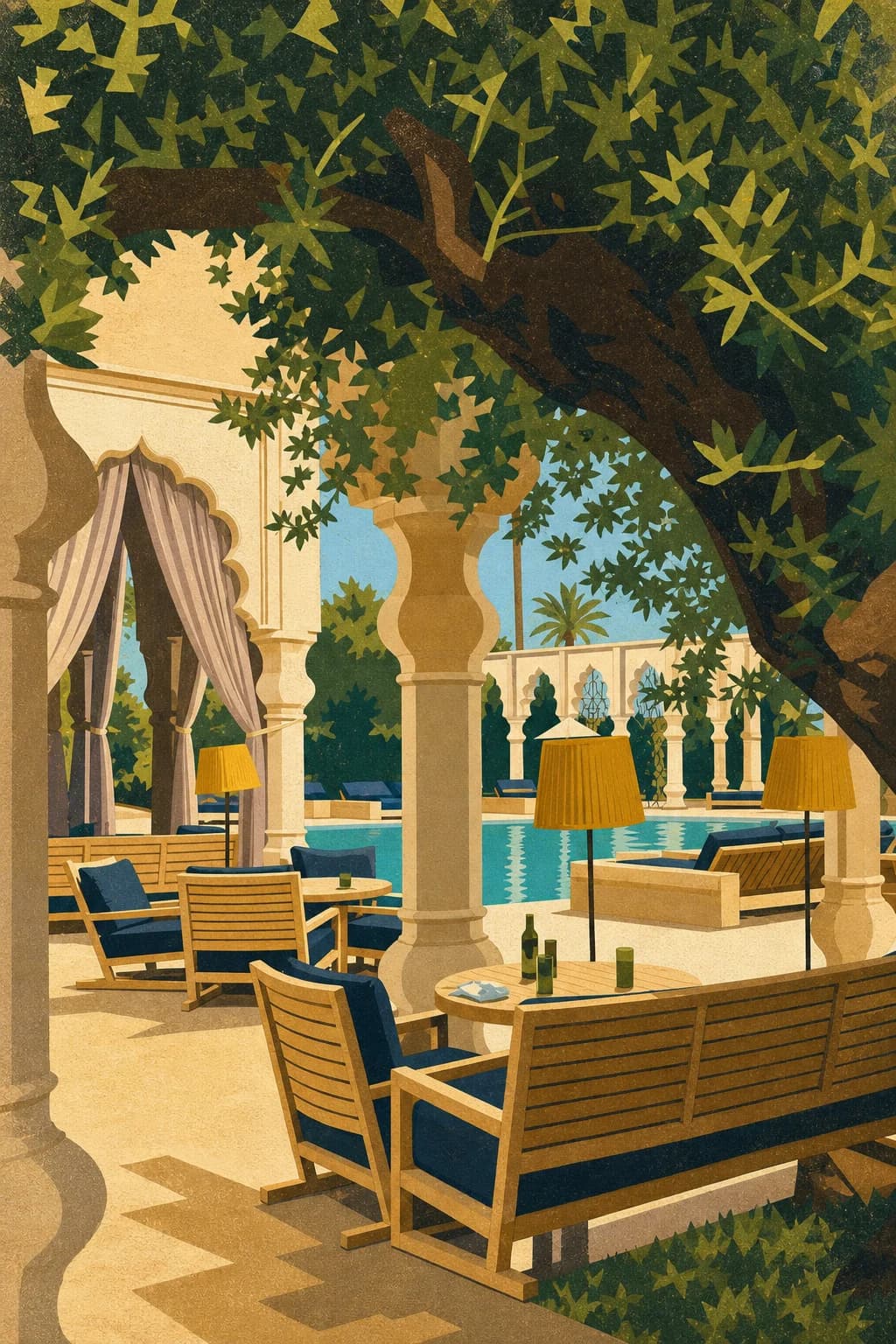
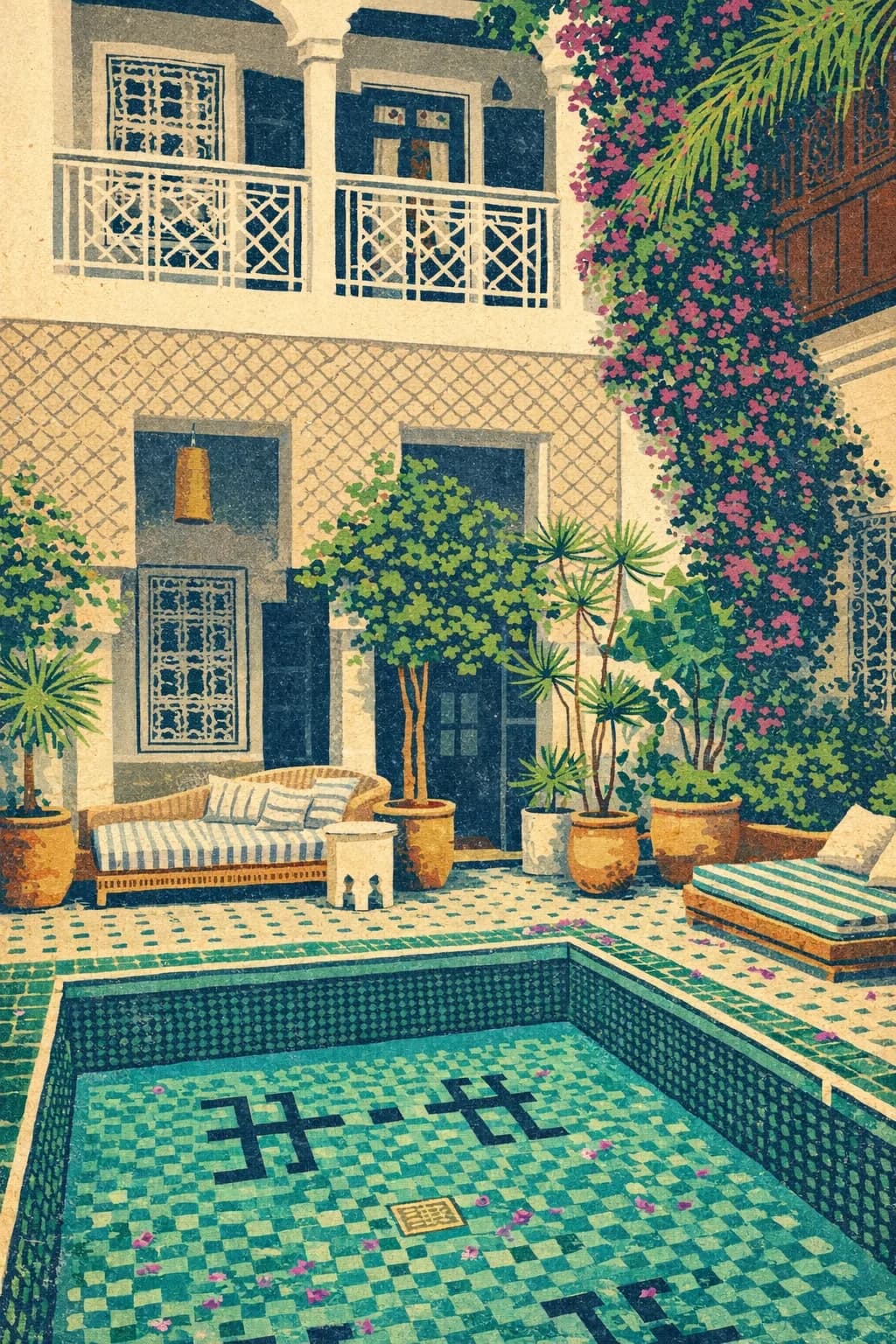
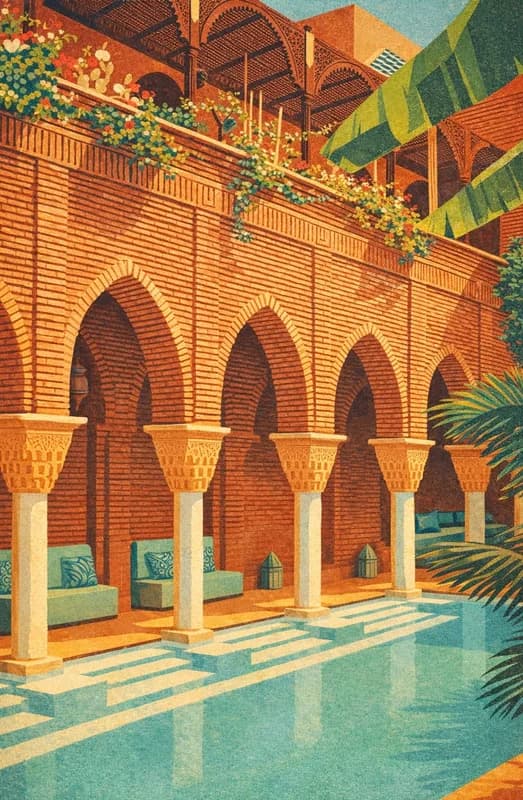
Imaad Rahmouni worked with Philippe Starck before designing Palais Namaskar. He organised the twelve-acre site around feng shui principles: water flows through the property in rivers and lakes, buildings are oriented to maximise natural energy, and every sightline terminates in either the Atlas Mountains or the Djebilet Hills. The result is Moorish-contemporary architecture that feels calm at a scale that could easily overwhelm. It works because the water does the work.
The Oetker Roster
The Oetker Collection doesn't collect casually. Le Bristol Paris, Hotel du Cap-Eden-Roc, The Lanesborough London. Palais Namaskar joined that roster in 2012. The Oetker stamp means service standards that match European grand hotels, applied to a Moroccan Palmeraie setting. The butlers, the pool service, the restaurant quality: all calibrated to a portfolio that defines European luxury. The Palmeraie location adds the space that European city hotels can't offer.
Twelve Acres of Water
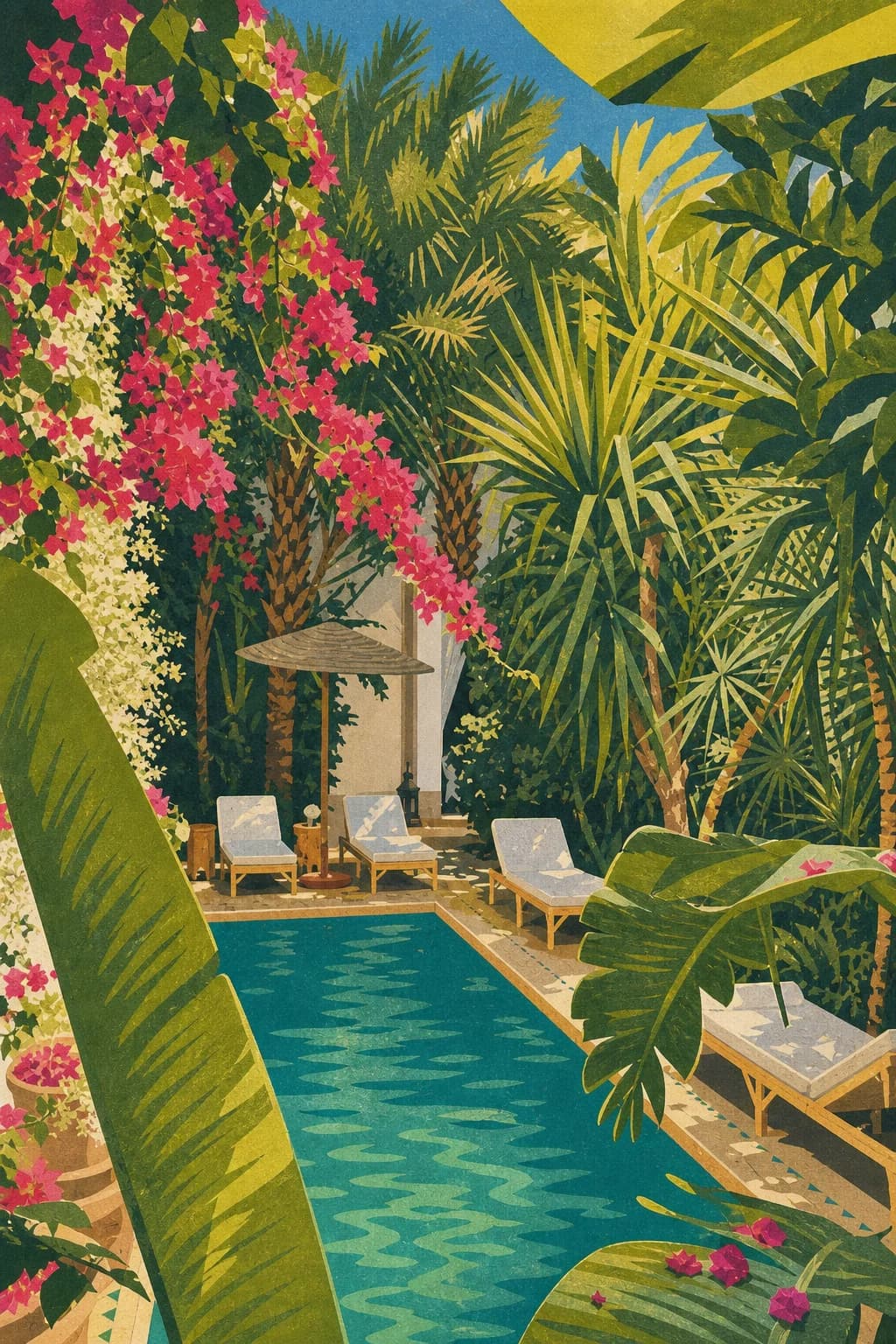
One and a half hectares of the property's twelve acres are rivers and lakes. Water flows through the gardens, around the restaurants, beneath bridges, and alongside rooms. In a desert-edge city like Marrakech, this much water is both a luxury and a statement. The organic gardens, supplied by the water system, feed the kitchen. Green Key certification covers the property's water conservation and waste separation programmes.
talk.
mapped.
“Book one of the six Junior Suites: each is like a small lake palace that opens out onto 1,800 square feet of private garden space with shimmering reflecting pools.”
record.
French businessman Philippe Soulier commissioned Palais Namaskar in the Palmeraie as a private pleasure palace: somewhere to host friends and throw parties, not accept reservations. He brought in Imaad Rahmouni, a French-Algerian designer and former Philippe Starck associate, who organised twelve acres of water gardens, rivers, and Moorish-contemporary architecture around feng shui principles.
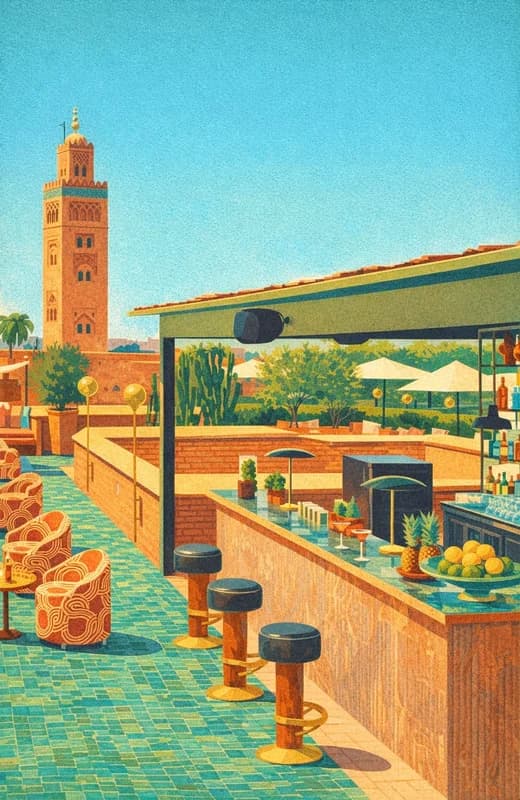
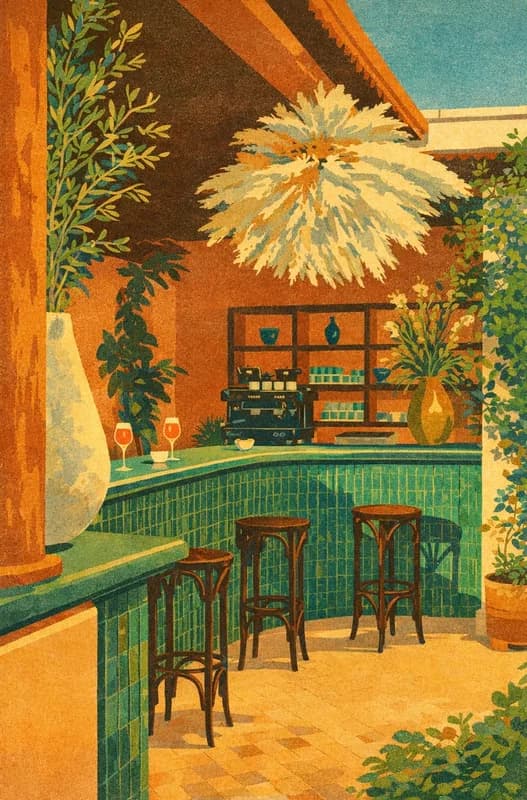
In April 2012 it entered the Oetker Collection, the portfolio that holds Le Bristol Paris and Hotel du Cap-Eden-Roc. Forty-one units span Superior Rooms with 90-square-metre garden terraces, Pool Suites, multi-bedroom Villas, and Palaces with private pools and round-the-clock butlers. Le Namaskar restaurant serves French-Moroccan cuisine poolside. The No Mad Bar operates on the rooftop. Green Key certified. Breakfast exceptional and included. The Atlas Mountains fill the southern horizon.
changed.
Book December four to six months out. October–November is the value window. Skip summer unless heat-tolerant.
In Marrakech, demand runs inverse to the thermometer. When Europe wants winter sun and the heat breaks, the city's riads compress into windows that close months ahead — and that pattern is entirely predictable.
December is the single Peak month, and it behaves like nothing else on the calendar. New Year's Eve collides with European winter-sun demand to squeeze the top properties into a roughly two-week window that books out far in advance. Plan on four to six months of lead time for Ultra-tier riads; three months is often already too late for properties like Riad BE or Le Riad Yasmine.
October and November deliver the best value relative to experience quality. Demand indexes high — 80 in October, 85 in November — but autumn rates at many properties run 30 to 60 percent below spring equivalents because the season falls outside European school holidays. October brings the 1-54 Festival, Marrakech's contemporary art biennale, adding a cultural layer spring lacks. November is the month our data flags as flat-out underpriced: it indexes at 85 without December's premium or the school-holiday crush.
March and April are the traditional high season, driven by Easter breaks and the spring weather window. Easter week is the tightest booking window outside December, and Jardin Majorelle requires timed-ticket advance purchase throughout this period. Ramadan shifts annually across the calendar; when it overlaps with March or April, restaurants and some services run reduced hours while hotels stay fully open.
Check the Ramadan dates before you book — they reshape the dining and nightlife experience far more than the hotel experience.
Summer is the strategic play for price-sensitive travelers who can handle heat. Demand drops below 30 from June through August, and properties that validate as sold out in October often show wide-open availability through July. The medina's thick walls and internal courtyards were built for this climate, so morning and evening exploration stay comfortable — the tradeoff is that midday outdoor sightseeing is impractical. What disappears entirely is the sold-out pressure that defines the rest of the year.
September is the transition window, and it favors the early mover. Temperatures moderate and demand begins to climb, but rates have not yet caught up to autumn levels.
approach.
briefing.
“Palais Namaskar, just outside Marrakech, offers soothing rooms and a rooftop bar with fabulous views of the Atlas mountains.”
stands.
demand's going.
The real Instagram following over time, plus where this hotel sits for demand in Marrakech. Pick a range, toggle the lines. Followers are reach and demand, not engagement.
assessment.
File closes at HIGH. Book direct a month out, and check OTA rates against direct since they sometimes undercut. Skip if you want to walk to the souks; the Palmeraie adds a thirty-minute drive each way.
The numbers behind the tiers
Palais Namaskar · SOURCE READINGS · REDACTED- Availability density · sampled
- Monthly search volume · raw
- TikTok hashtag views · raw
- YouTube total views · raw
- TikTok following · latest sweep
- Pinterest saves · latest sweep
More from Marrakech.
Get the hotel's Unbookable Score.
Any post or reel with a hotel in it. Booking.com hotel pages work too. One free check, no account needed.