Small
House Big Door.
4 critic reviews
filed.
If the draw is the open-source, all-white design concept, it is the real thing and Dezeen's coverage confirms it. The design concept is the draw here, not a sense of exclusivity.
A true hidden gem for design nerds: a hotel literally built from open-source files is the kind of story you will not find on a chain's website. Hiding in plain sight in Myeongdong, no less.
angles.
OPEN SOURCE, MADE PHYSICAL.
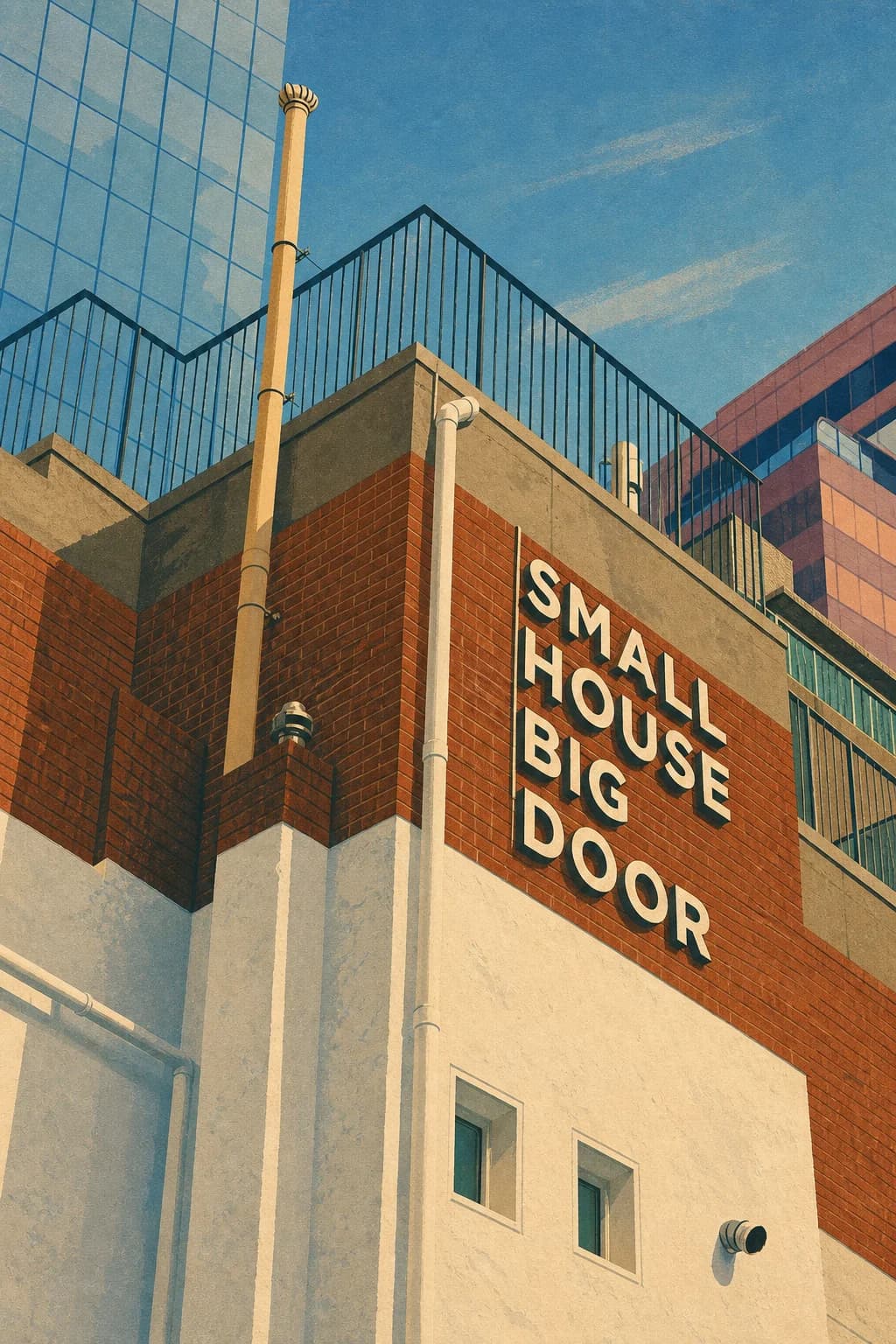
Most hotels buy their furniture. This one was built partly from open-source designs and 3D-printed signage by the Design Methods studio, which is a genuinely uncommon approach. Dezeen, in its coverage, confirms that "open-source furniture designs and 3D-printed signage are found throughout" the building. It turns a design ideology into something you actually sleep and sit inside, which gives the place a story most boutique hotels in the district simply do not have.
COMPLETELY, DELIBERATELY WHITE.
The aesthetic is single-minded. Time Out, reviewing it, writes that the hotel "has adopted a minimal concept" and is "completely white," with each room holding "a comfortable double bed." That is the experience: pared back, bright, and quiet, a converted building rather than a generic new-build. A gallery and bistro on the ground floor extend the design thinking past the rooms, so the whole property reads as one coherent idea.
GWANGJANG MARKET NEARBY.
The Toegye-ro address in Jung-gu sits within reach of Gwangjang Market, one of Seoul's great old food markets, where the bindaetteok and mayak gimbap stalls draw crowds for a reason. Staying here puts that within an easy outing, alongside the broader Myeongdong shopping and street-food grid. It is a central base for eating your way through this part of the city, with the market as the obvious first stop.
talk.
mapped.
“The hotel, which has adopted a minimal concept, is completely white. Each room comes furnished with a comfortable double bed”
record.
Dezeen, covering it, notes that "open-source furniture designs and 3D-printed signage are found throughout" the property.
Time Out describes the result plainly: "the hotel, which has adopted a minimal concept, is completely white," with "each room furnished with a comfortable double bed." Twenty-five rooms, a gallery and bistro on the ground floor, and a design idea you will not find at the chain next door. On booking, it is straightforward. Roughly 98 percent of sampled nights showed open rooms and the property distributes through the major channels, so this sits firmly at the Accessible end. The interesting thing here is the design philosophy, not a fight for a reservation.
changed.
Seoul's demand curve tracks two things travelers chase and one they flee. They chase the cherry blossom window in April and the maple-and-ginkgo turn in October — the two visual set-pieces that drive the city to its yearly peaks, with May riding the tail of spring into Seoul's most comfortable stretch. What they flee is the summer: July and August collapse into the monsoon and a wet, heavy heat that pushes demand to its annual low, even though the city never closes and the air-conditioned interiors of Gangnam and Myeongdong barely register the season.
The shoulder months are where the real strategy lives. March and November sit just below peak, and both are genuinely undervalued. March catches the pre-blossom palace quiet before the crowds land; November delivers crisp, dry, blue-sky weather after the foliage tourists have gone home. September is the same bet on the back end of summer.
If your trip is flexible, these are the months where the scarce hanok stays and downtown boutiques are reachable without booking a full season out.
For the peaks, lead time is everything — and it's sharpest where the rooms are fewest. A five-room hanok like Rakkojae Seoul or an eight-room stay like arr.dep. can sell out its April and October dates months ahead, because the cherry-blossom and autumn windows concentrate the entire year's demand into a few weeks against a room count that never grows. The larger design hotels and Gangnam boutiques give you more runway, but even Hotel28 Myeongdong tightens noticeably around the blossom peak.
December through February is the contrarian's season. Cold and dry, but clear, cheaper, and paired with the city's best indoor life — its bathhouses, night markets, and endless barbecue. Nothing shuts down. If you can handle the temperature, this is when Seoul is most bookable and least crowded, and when even the scarce rooms open up.
Time the visit to the neighborhood you want, then book the scarce end of the roster first. The hanoks and small boutiques set the pace; everything larger follows. Get those locked, and the rest of the trip falls into place around them.
approach.
briefing.
“Open-source furniture designs and 3D-printed signage are found throughout the Small House Big Door boutique hotel in Seoul.”
stands.
demand's going.
The real Instagram following over time, plus where this hotel sits for demand in Seoul. Pick a range, toggle the lines. Followers are reach and demand, not engagement.
assessment.
File closes at ACCESSIBLE. Around 98 percent of sampled nights show open rooms across the booking sites, with no working own site, so compare OTA rates and a week or two of notice is plenty. Skip if a completely white, pared-back room sounds cold rather than calm.
The numbers behind the tiers
Small House Big Door · SOURCE READINGS · REDACTED- Availability density · sampled
- Monthly search volume · raw
- TikTok hashtag views · raw
- YouTube total views · raw
- TikTok following · latest sweep
- Pinterest saves · latest sweep
More from Seoul.

Get the hotel's Unbookable Score.
Any post or reel with a hotel in it. Booking.com hotel pages work too. One free check, no account needed.