THE
CHAE.
2 critic reviews
filed.
The appeal is real if you understand what it is: a design-minded whole hanok for a group, not a hotel with room service. The craft, the art and the Seochon setting punch well above a standard city stay. Solo travellers and couples wanting hotel conveniences should look elsewhere.
With no big social presence and only a few design-press features, it stays off most itineraries. Seochon itself is quieter than tourist-heavy Bukchon, which adds to the feeling of a local secret. The people who find it tend to keep it to themselves.
angles.
Joined without a single nail
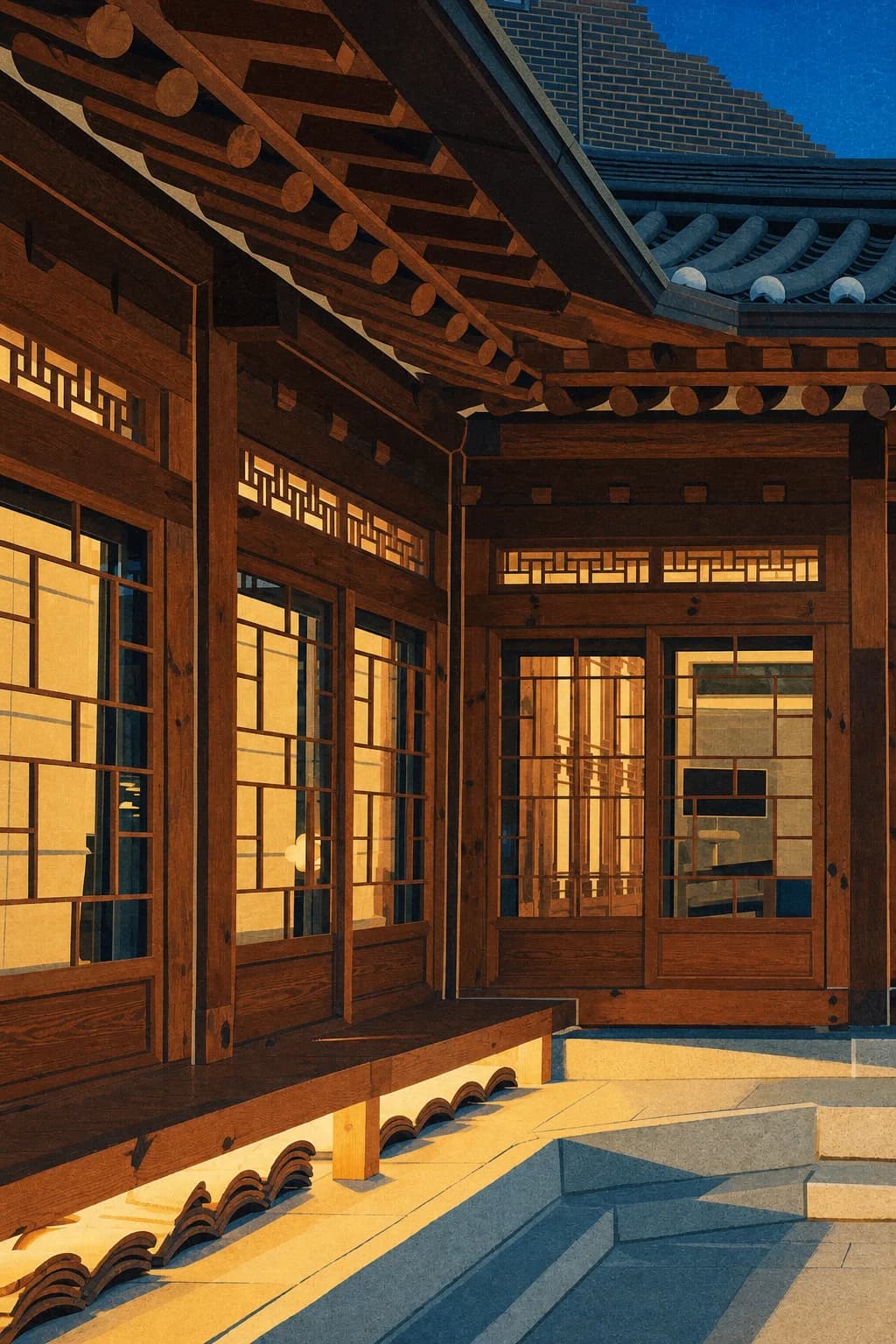
The hanok is built the old way, from stone, soil and timber, with the wooden-floored halls fitted together by joinery rather than nails. Studio Aeir made every piece of furniture by hand, and Lotus Design Lab shaped the wider space. Offcuts and salvage do real work here: pruned branches turned into hooks, a discarded manger reborn as a table. The craft is quiet but everywhere.
Sleep inside a small gallery
The gallery motif is not decoration talk. Work by artists from the Seochon lanes hangs in the rooms, chosen to suit each space, so the walls change the feel of a stay. Beyond the art there is a heated foot bath to sink into after a day of walking, brass singing bowls that hold a long echo, and wind-bells that catch the breeze on the eaves.
Seochon's old creative quarter
Seochon has drawn writers and painters for generations, and the neighbourhood still runs on that creative energy. Step out of the gate and the alleys deliver independent galleries, old hardware shops, small coffee bars and some of the best casual eating in central Seoul. Gyeongbokgung Palace is about ten minutes on foot, and Tongin Market with its lunch stalls is an easy wander from the door.
talk.
mapped.
“Tucked away in a narrow alley near Gyeongbokgung Palace, I initially wondered if a Hanok could really be hidden here.”
record.
THE CHAE: GALLERY sits in Seochon, the old artists' quarter behind Gyeongbokgung, and it treats the traditional Korean house as both shelter and exhibition. The bones are stone, soil and wood, and the wooden-floored halls were joined without a single nail.
Studio Aeir, a Seoul woodworking studio, made the furniture alongside Lotus Design Lab on the overall design, and their thrift shows: pruned street branches became coat hooks, a worn old manger was cleaned up into a table. Each room hangs work by artists from the surrounding lanes, so you sleep inside a small, rotating show. There is a heated foot bath, brass singing bowls, wind-bells on the eaves. With room for a single party of up to eight at a time, getting the dates you want takes planning.
changed.
Seoul's demand curve tracks two things travelers chase and one they flee. They chase the cherry blossom window in April and the maple-and-ginkgo turn in October — the two visual set-pieces that drive the city to its yearly peaks, with May riding the tail of spring into Seoul's most comfortable stretch. What they flee is the summer: July and August collapse into the monsoon and a wet, heavy heat that pushes demand to its annual low, even though the city never closes and the air-conditioned interiors of Gangnam and Myeongdong barely register the season.
The shoulder months are where the real strategy lives. March and November sit just below peak, and both are genuinely undervalued. March catches the pre-blossom palace quiet before the crowds land; November delivers crisp, dry, blue-sky weather after the foliage tourists have gone home. September is the same bet on the back end of summer.
If your trip is flexible, these are the months where the scarce hanok stays and downtown boutiques are reachable without booking a full season out.
For the peaks, lead time is everything — and it's sharpest where the rooms are fewest. A five-room hanok like Rakkojae Seoul or an eight-room stay like arr.dep. can sell out its April and October dates months ahead, because the cherry-blossom and autumn windows concentrate the entire year's demand into a few weeks against a room count that never grows. The larger design hotels and Gangnam boutiques give you more runway, but even Hotel28 Myeongdong tightens noticeably around the blossom peak.
December through February is the contrarian's season. Cold and dry, but clear, cheaper, and paired with the city's best indoor life — its bathhouses, night markets, and endless barbecue. Nothing shuts down. If you can handle the temperature, this is when Seoul is most bookable and least crowded, and when even the scarce rooms open up.
Time the visit to the neighborhood you want, then book the scarce end of the roster first. The hanoks and small boutiques set the pace; everything larger follows. Get those locked, and the rest of the trip falls into place around them.
approach.
briefing.
“THE CHAE: GALLERY was designed to bring the look of a gallery to the Korean traditional housing.”
stands.
demand's going.
The real Instagram following over time, plus where this hotel sits for demand in Seoul. Pick a range, toggle the lines. Followers are reach and demand, not engagement.
assessment.
File closes at MODERATE. A whole nail-free hanok in Seoul's old arts quarter, made for a group who wants craft and calm over a hotel lobby. Bring your people and book direct well ahead; solo travellers and spa-seekers should skip it.
The numbers behind the tiers
THE CHAE · SOURCE READINGS · REDACTED- Availability density · sampled
- Monthly search volume · raw
- TikTok hashtag views · raw
- YouTube total views · raw
- TikTok following · latest sweep
- Pinterest saves · latest sweep
More from Seoul.



Get the hotel's Unbookable Score.
Any post or reel with a hotel in it. Booking.com hotel pages work too. One free check, no account needed.