Le
Sirenuse.
19 critic reviews
filed.
The Michelin star at La Sponda, the 400 candles, the Gae Aulenti spa, and the Sersale family's continuous 75-year ownership are all true and all central to the experience. What the Instagram feed undersells is the scale: 58 rooms is a proper hotel, not a boutique, and not every room sees the sea. The consistency is the product the photos cannot capture.
Franco's Bar, the rooftop aperitivo spot at Le Sirenuse, is open to non-guests for early-evening drinks and is the single best sunset view in Positano for the price of a negroni. Get there by 6:30pm in season. Also worth knowing: the Sersale family runs Emporio Sirenuse nearby, a concept store with the same design sensibility where you can absorb the house aesthetic without a room rate.
angles.
La Sponda, 400 Candles
La Sponda is lit by 400 candles every evening. The Michelin star validates the kitchen, but the candles are what guests remember. The restaurant serves Campanian cuisine with Mediterranean seafood in a room where the light source is entirely flame. Reserve for your second evening; the first should be spent watching Positano from the terrace as the lights come on.
Aulenti's Spa, Kayser's Rooms
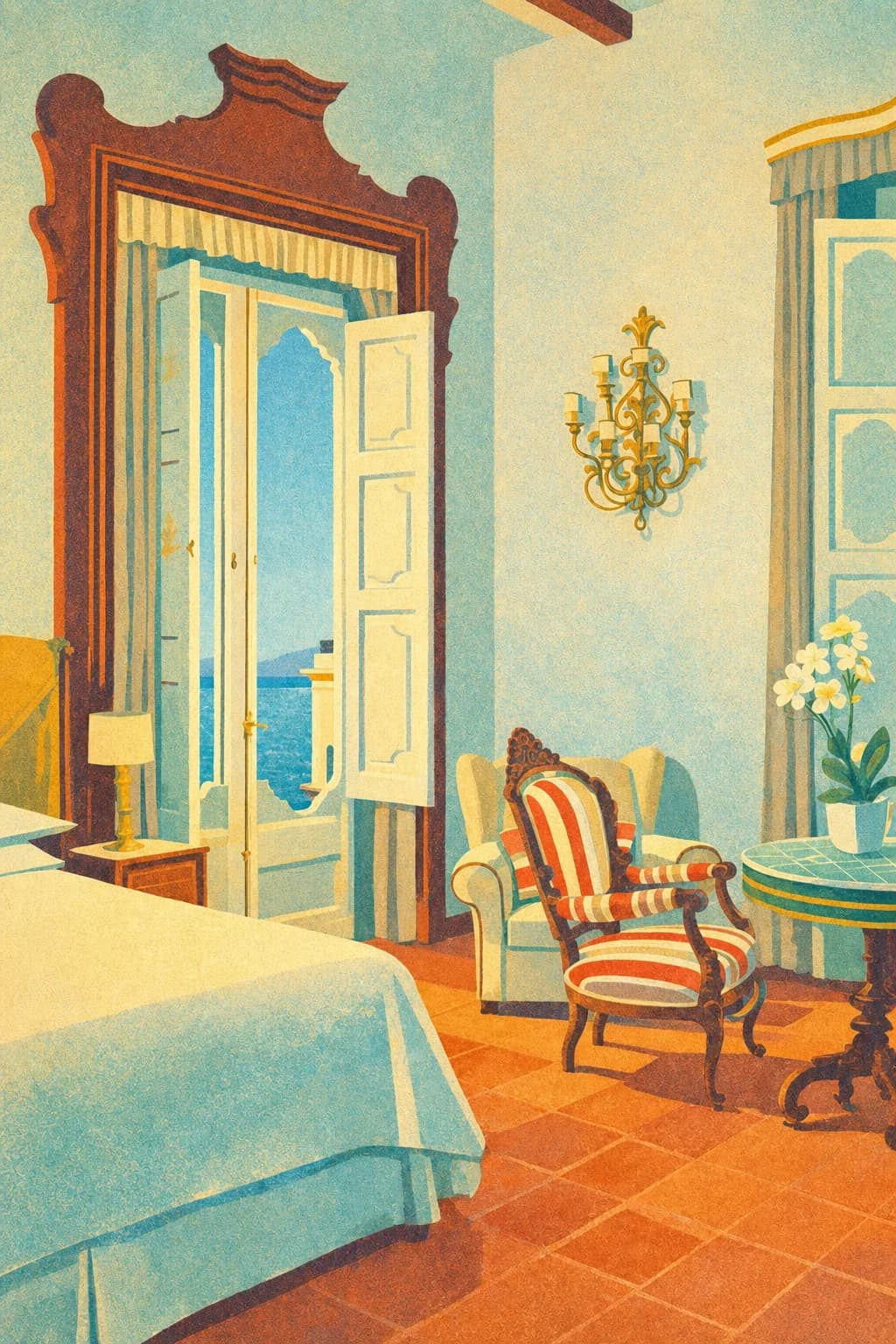
Gae Aulenti designed museums (the Musée d'Orsay's interior), train stations, and the Le Sirenuse spa. Georg Kayser handles the room interiors: Vietri ceramics, Campanian textiles, and a colour palette drawn from the Positano cliff. The combination of two significant designers across different parts of the same hotel gives Le Sirenuse an architectural depth that most boutique hotels achieve in neither.
75 Years of Sersales
Family ownership since 1951. No management company. No brand affiliation. The Sersale family operates the hotel, curates the art collection, and makes the operational decisions. In an industry dominated by groups and chains, seventy-five years of continuous family operation is increasingly rare. The longevity shows in details that change slowly and service that remembers returning guests.
talk.
mapped.
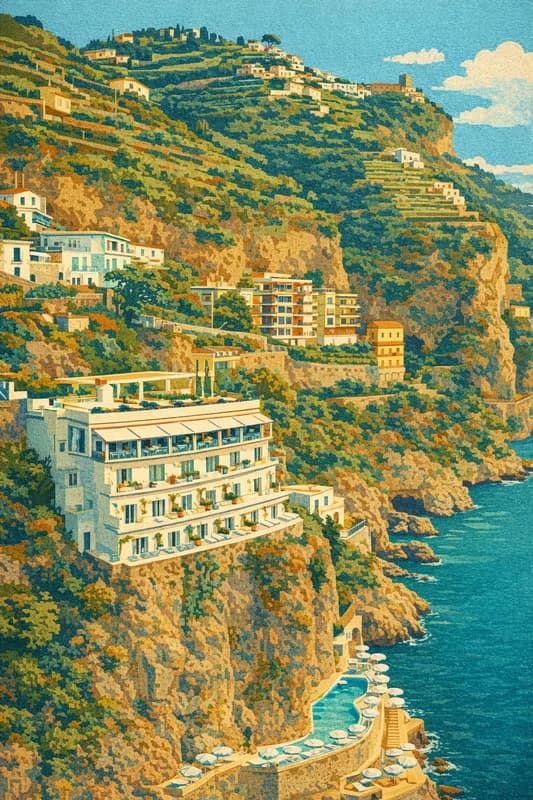
“Its cherry-red façade bright among the cliffs, Le Sirenuse is one of the most luxurious places to stay along the Amalfi Coast.”
record.
They named it after the sirens of Greek mythology. Seventy-five years later, Le Sirenuse has over 500,000 Instagram followers, a Condé Nast Traveler Gold List placing, eight consecutive Readers' Choice awards, and a Michelin-starred restaurant. La Sponda, the signature dining room, is lit by 400 candles every evening.
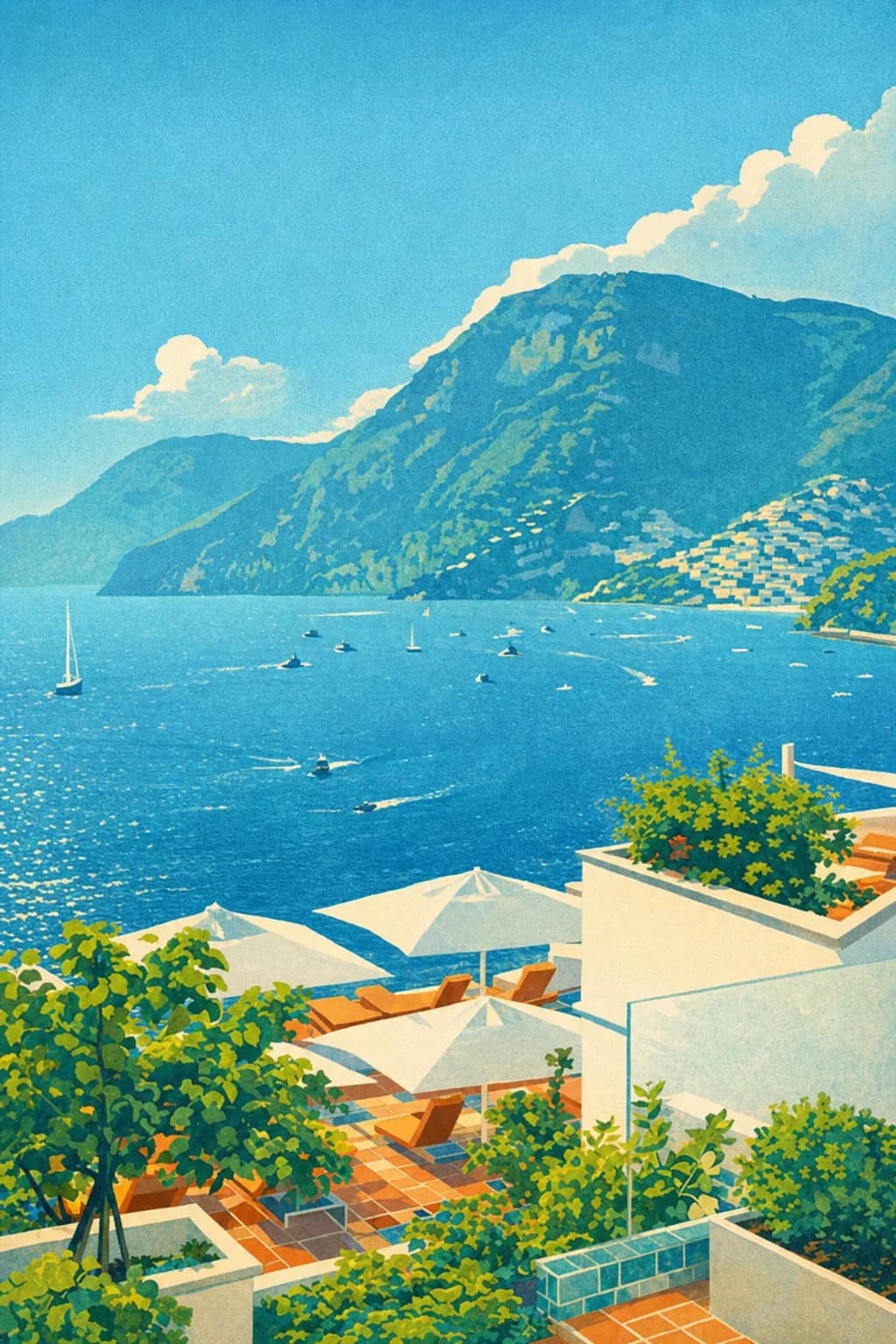
Gae Aulenti, one of Italy's most celebrated architects, designed the spa. Georg Kayser handles the interiors. Fifty-eight rooms in the Sersale family's original building, overlooking Positano's cascade of pastel houses down to the sea. U.S. News gave it 9.8. Travel + Leisure ranked it in the World's 50 Best Hotels. Exceptional breakfast included. Seventy-five minutes from Naples airport. The Sersale family still owns and operates it.
changed.
May–June and September are the sweet spots. Skip November–March: most hotels are closed. July–August demands four to six months of lead time.
The Amalfi Coast is not a year-round destination, and it doesn't pretend to be. Most hotels close entirely from November through March, and the handful that stay open run on reduced services and limited restaurant options. January through March posts demand scores in the single digits.
April opens the season, and Easter week delivers the first booking pressure of the year. Demand jumps to around 40, but availability stays reasonable outside the holiday itself. The weather suits walking the Path of the Gods and exploring without crowds, though some beach clubs and boat services haven't yet started running.
May and June are the sweet spot. Demand climbs from 65 to 85, the lemon groves are in full bloom, the sea warms enough for swimming by late May, and the SS163 coast road hasn't yet hit its summer gridlock. Restaurant reservations are manageable and hotel rates sit below their July peak. For Ultra-tier properties like Villa Cimbrone or Le Sirenuse, May still requires booking two to three months out, and June availability tightens further.
July and August are a different animal entirely. Demand hits 100 in July and 95 in August. The coast road slows to a crawl, particularly on weekends and around the Ferragosto holiday on August 15, when Italian domestic tourism surges and many restaurants switch to fixed holiday menus. Boat transfers become not just convenient but essential for moving between towns. Ultra-tier rooms in these months demand four to six months of lead time. The tradeoff is the fullest expression of the coast's energy: every restaurant open, every beach club running, warm seas, and long evenings.
September is the most undervalued month on the coast, when quality of experience and ease of booking align most favorably.
September rewards travelers who wait. Demand drops to 70 as European schools reopen, yet the sea stays warm from months of summer heat. Hotel rates step down, the SS163 clears, and the grape harvest adds a layer of activity in the hillside towns. Late September into early October is the window worth targeting.
October is the last shoulder month before the shutdowns. Demand falls to 40, some properties begin their seasonal closures in the final week, and the weather grows less reliable. It works best for travelers who prioritize quiet over guaranteed sunshine.
approach.
briefing.
“Le Sirenuse hotel, Positano, review: Exclusive luxury and intimacy.”
stands.
demand's going.
The real Instagram following over time, plus where this hotel sits for demand in Amalfi Coast. Pick a range, toggle the lines. Followers are reach and demand, not engagement.
assessment.
File closes at ULTRA. Book direct three to four months out for summer; May or October buys the same light with breathing room. Skip if solitude matters; this is the loudest terrace on the coast.
The numbers behind the tiers
Le Sirenuse · SOURCE READINGS · REDACTED- Availability density · sampled
- Monthly search volume · raw
- TikTok hashtag views · raw
- YouTube total views · raw
- TikTok following · latest sweep
- Pinterest saves · latest sweep
More from Amalfi Coast.
Get the hotel's Unbookable Score.
Any post or reel with a hotel in it. Booking.com hotel pages work too. One free check, no account needed.