Kasbah Bab
Ourika.
3 critic reviews
filed.
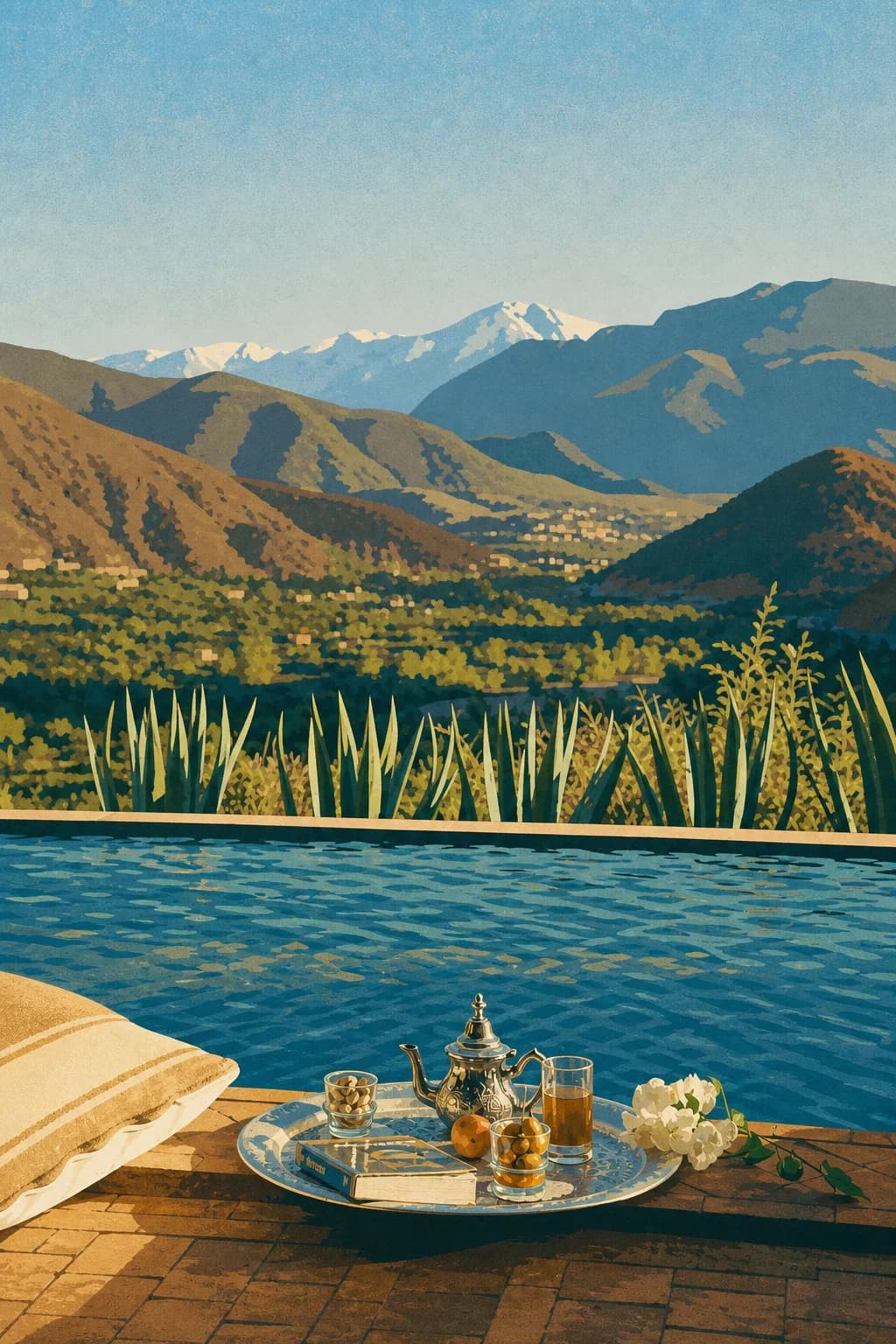
Kasbah Bab Ourika sits on a ridge an hour south of Marrakech with Atlas views across the Ourika valley, and the panorama is the reason people book. The 42-room scale and the garden-to-table programme hold up. The hype softens that getting to and from the city is a commitment and the hotel is effectively your whole day for the length of the stay, which is either the appeal or the constraint.
The staff can arrange a guided walk down to the Ourika riverbed through Berber villages that most hotels on the city side of the mountains never offer. Go with a local guide at 8am before the heat, and the walk takes about three hours with stops in two villages along the way.
angles.
Pisé and Solar Panels
The entire structure is rammed earth, built using techniques passed down through Berber communities for centuries. The walls regulate temperature naturally: cool in summer, warm in winter. Solar panels and a biodigester handle energy. Water is recycled through grey-water systems. Organic gardens feed the kitchen. This isn't a sustainability programme bolted onto a hotel. The building method itself is the sustainability.
Maximo's Layered Interiors
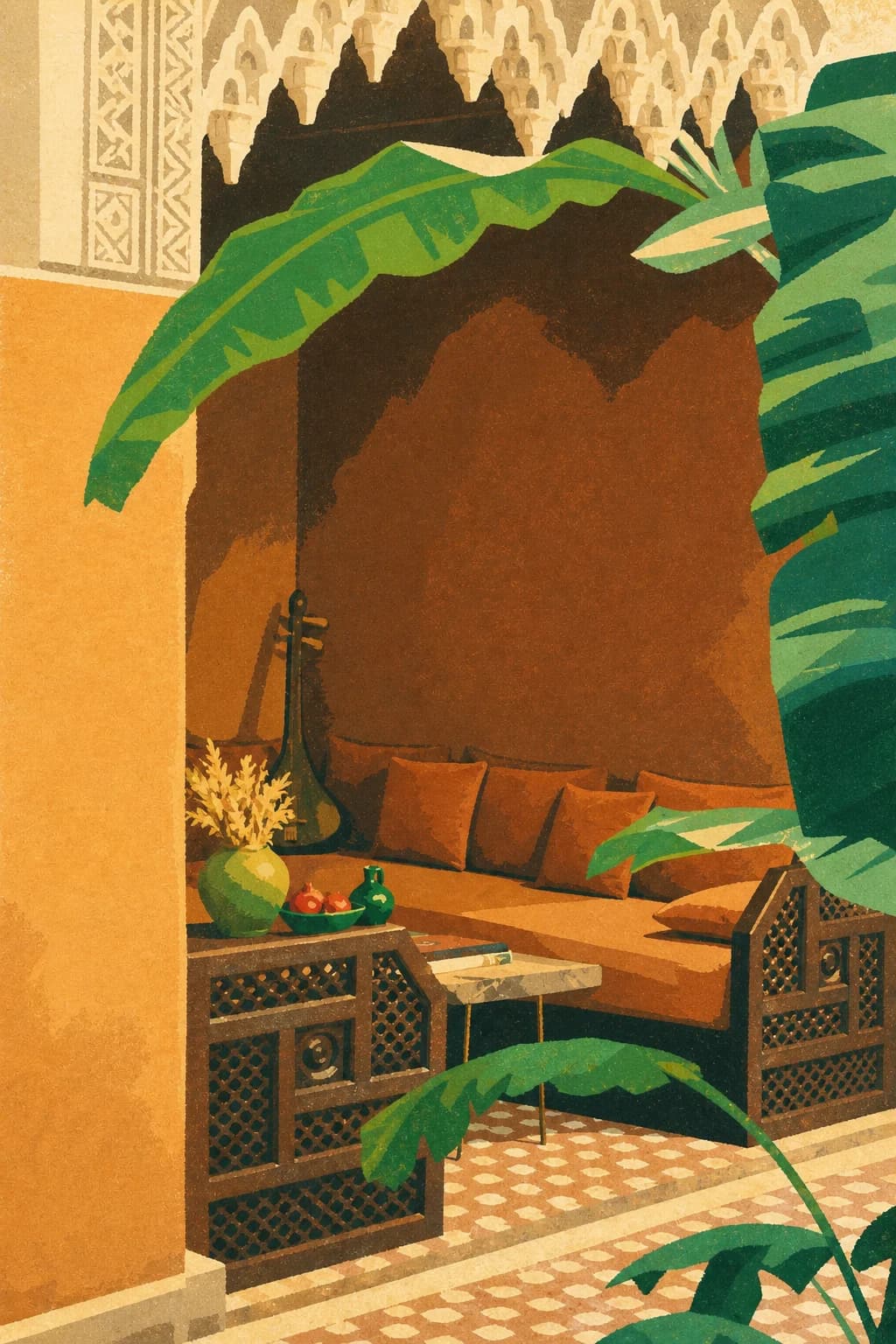
Beatriz Maximo, a Portuguese designer with a feel for oriental light, dressed the rammed-earth walls with Moroccan carpets, Art Deco furniture, and 1950s pieces. The contrast works: raw pisé next to polished wood, handwoven textiles against bare earth. Each room has its own composition. The design is warm without being fussy, which is harder than it sounds in a hotel built from mud and straw.
The Ourika Valley Community
Ninety-three percent of the staff come from Berber villages in the surrounding valley. Skinner didn't just build a hotel; he built an employer. The kitchen uses produce from on-site organic gardens and local suppliers. Guests can visit the nearby villages, some accessible only on foot. The valley itself is a river corridor flanked by terraced farms and traditional settlements.
talk.
mapped.
“The Kasbah Bab Ourika's location is breathtaking. The somewhat perilous approach gives way to an impeccably tasteful and wonderfully serene hilltop hideaway set in gorgeously groomed gardens.”
record.
In 2004, Stephen Skinner, an English lawyer living in Morocco, found a hilltop at the apex of the Ourika Valley with no road, no electricity, and no infrastructure. He decided to build a kasbah using pisé, the traditional Berber rammed-earth construction method. Water was carried up by animals during construction.
The interiors were handed to Beatriz Maximo, a Portuguese designer who layered Moroccan carpets, Art Deco pieces, and 1950s furniture against the raw earth walls. The property opened in 2008 and today runs entirely on solar panels and a biodigester. Organic kitchen gardens supply the restaurant. Ninety-three percent of the staff come from Berber communities in the surrounding valley. Forty-two rooms across standards, suites, a private five-room villa, and an eleven-room retreat. Forty minutes from Marrakech, at the foot of the Atlas.
changed.
Book December four to six months out. October–November is the value window. Skip summer unless heat-tolerant.
In Marrakech, demand runs inverse to the thermometer. When Europe wants winter sun and the heat breaks, the city's riads compress into windows that close months ahead — and that pattern is entirely predictable.
December is the single Peak month, and it behaves like nothing else on the calendar. New Year's Eve collides with European winter-sun demand to squeeze the top properties into a roughly two-week window that books out far in advance. Plan on four to six months of lead time for Ultra-tier riads; three months is often already too late for properties like Riad BE or Le Riad Yasmine.
October and November deliver the best value relative to experience quality. Demand indexes high — 80 in October, 85 in November — but autumn rates at many properties run 30 to 60 percent below spring equivalents because the season falls outside European school holidays. October brings the 1-54 Festival, Marrakech's contemporary art biennale, adding a cultural layer spring lacks. November is the month our data flags as flat-out underpriced: it indexes at 85 without December's premium or the school-holiday crush.
March and April are the traditional high season, driven by Easter breaks and the spring weather window. Easter week is the tightest booking window outside December, and Jardin Majorelle requires timed-ticket advance purchase throughout this period. Ramadan shifts annually across the calendar; when it overlaps with March or April, restaurants and some services run reduced hours while hotels stay fully open.
Check the Ramadan dates before you book — they reshape the dining and nightlife experience far more than the hotel experience.
Summer is the strategic play for price-sensitive travelers who can handle heat. Demand drops below 30 from June through August, and properties that validate as sold out in October often show wide-open availability through July. The medina's thick walls and internal courtyards were built for this climate, so morning and evening exploration stay comfortable — the tradeoff is that midday outdoor sightseeing is impractical. What disappears entirely is the sold-out pressure that defines the rest of the year.
September is the transition window, and it favors the early mover. Temperatures moderate and demand begins to climb, but rates have not yet caught up to autumn levels.
approach.
briefing.
“This luxurious retreat is a delightful example of how to build a near-perfect romantic getaway that's also eco-friendly, perched on an outcrop overlooking a national park.”
stands.
demand's going.
The real Instagram following over time, plus where this hotel sits for demand in Marrakech. Pick a range, toggle the lines. Followers are reach and demand, not engagement.
assessment.
File closes at HIGH. Book direct two months out; the eleven-room format clears fast for April and October peak. Skip if hotel-warmth matters; the altitude drops temperatures sharply after sunset.
The numbers behind the tiers
Kasbah Bab Ourika · SOURCE READINGS · REDACTED- Availability density · sampled
- Monthly search volume · raw
- TikTok hashtag views · raw
- YouTube total views · raw
- TikTok following · latest sweep
- Pinterest saves · latest sweep
More from Marrakech.

Get the hotel's Unbookable Score.
Any post or reel with a hotel in it. Booking.com hotel pages work too. One free check, no account needed.