Ksar
Char-Bagh.
8 critic reviews
filed.
Ksar Char-Bagh is Relais & Châteaux in the Palmeraie with 16 suites and a formal atmosphere that feels closer to a French country estate than a Moroccan resort. The hype gets the craftsmanship right. It softens how formal the dress code and service tempo are compared to the newer Palmeraie set, so younger travellers looking for a relaxed pool day will find this overly ceremonial.
The kitchen garden supplies the restaurant directly and the chef will give guests a short morning tour if asked. Pair it with the breakfast service, which runs on garden ingredients, and you get the whole farm-to-table story without any of the marketing around it.
angles.
Four Hectares of Paradise
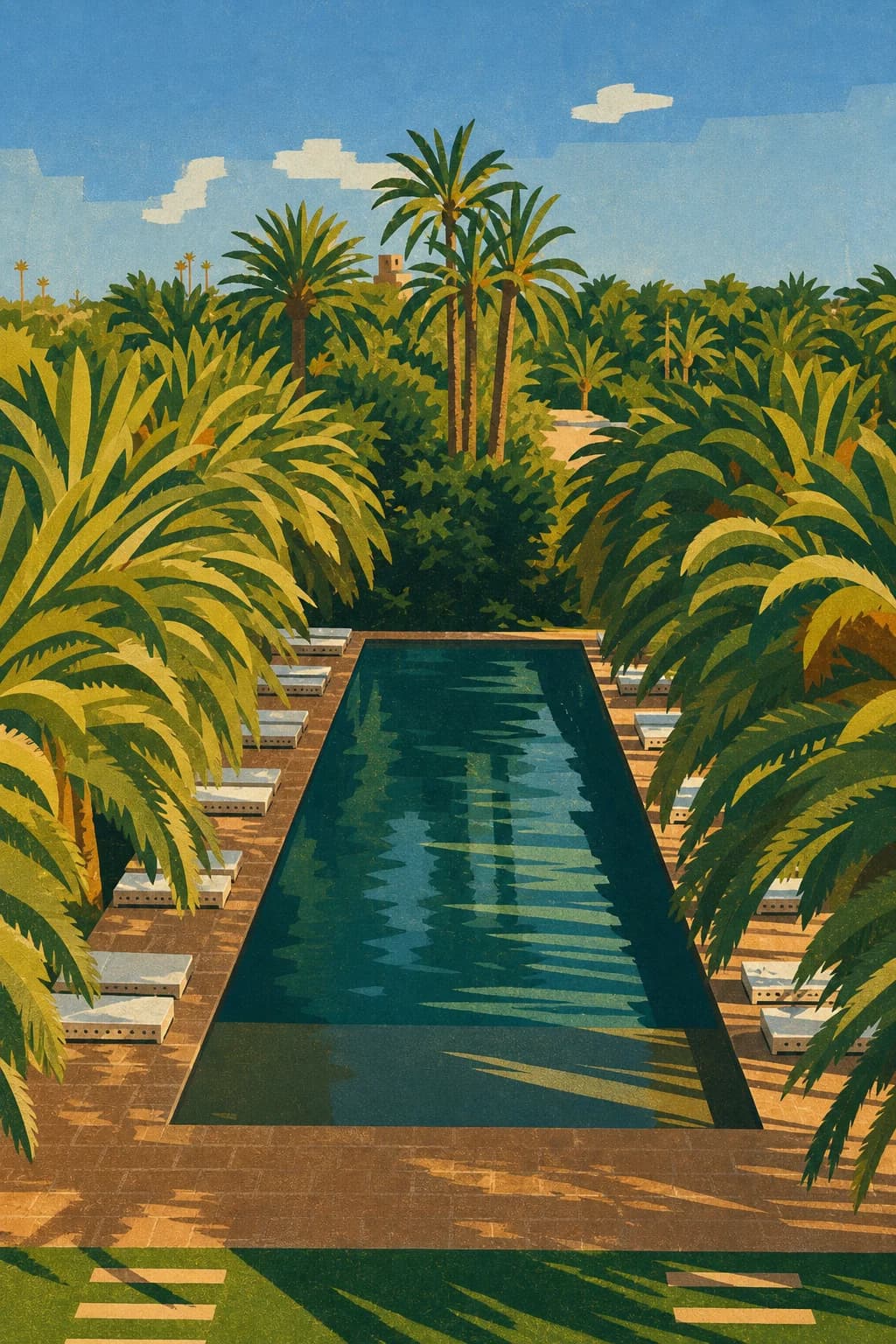
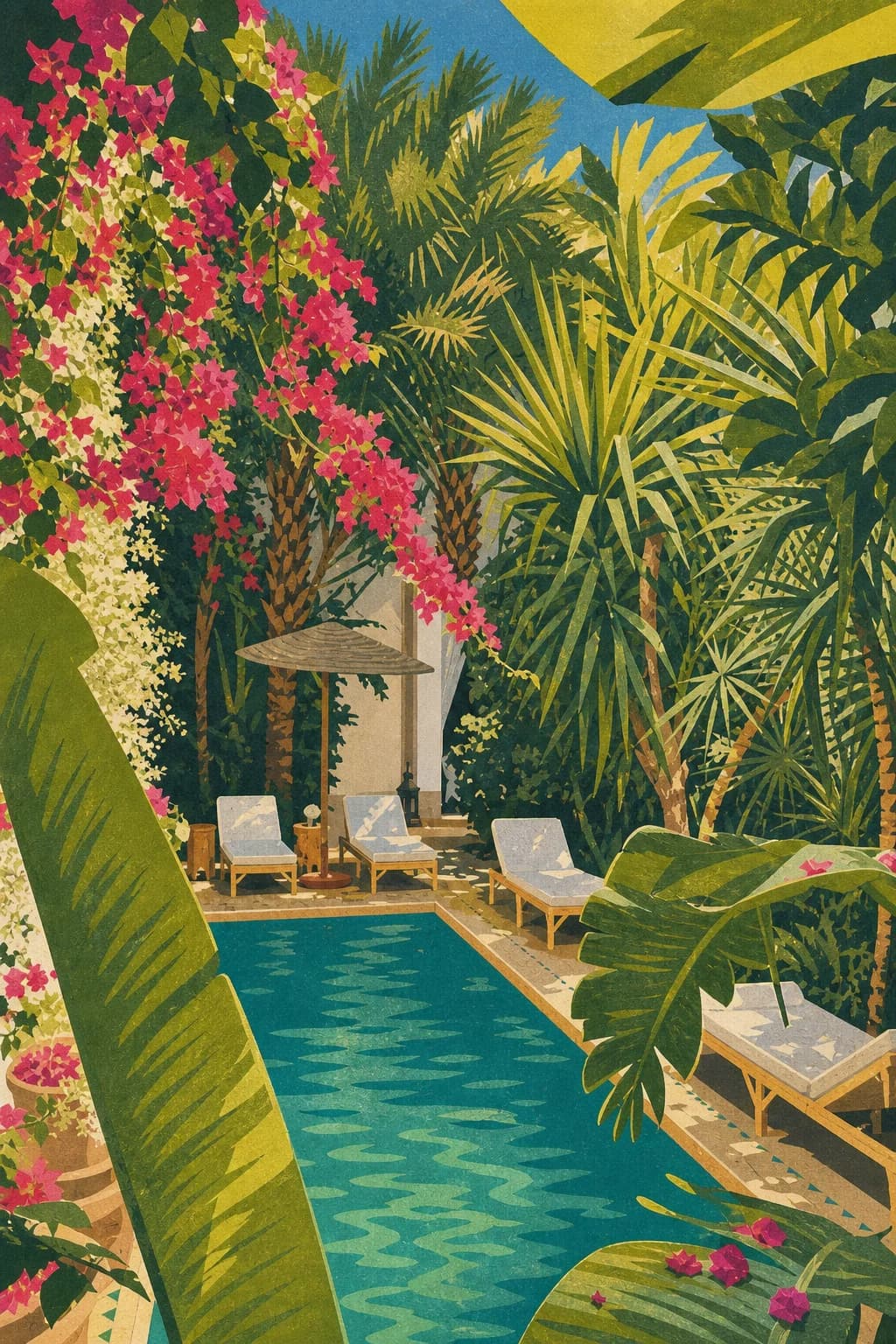
The garden is designed around a Persian concept: water channels representing the four rivers of paradise, dividing the four hectares into sections of rose beds, olive trees, palm groves, and herb gardens. The kitchen garden feeds the restaurant directly. The water system and planting were conceived as part of the architectural vision, not added later. In the Palmeraie, where most properties have gardens, Ksar Char-Bagh's feels designed rather than landscaped.
200 Workers, Fifteen Months
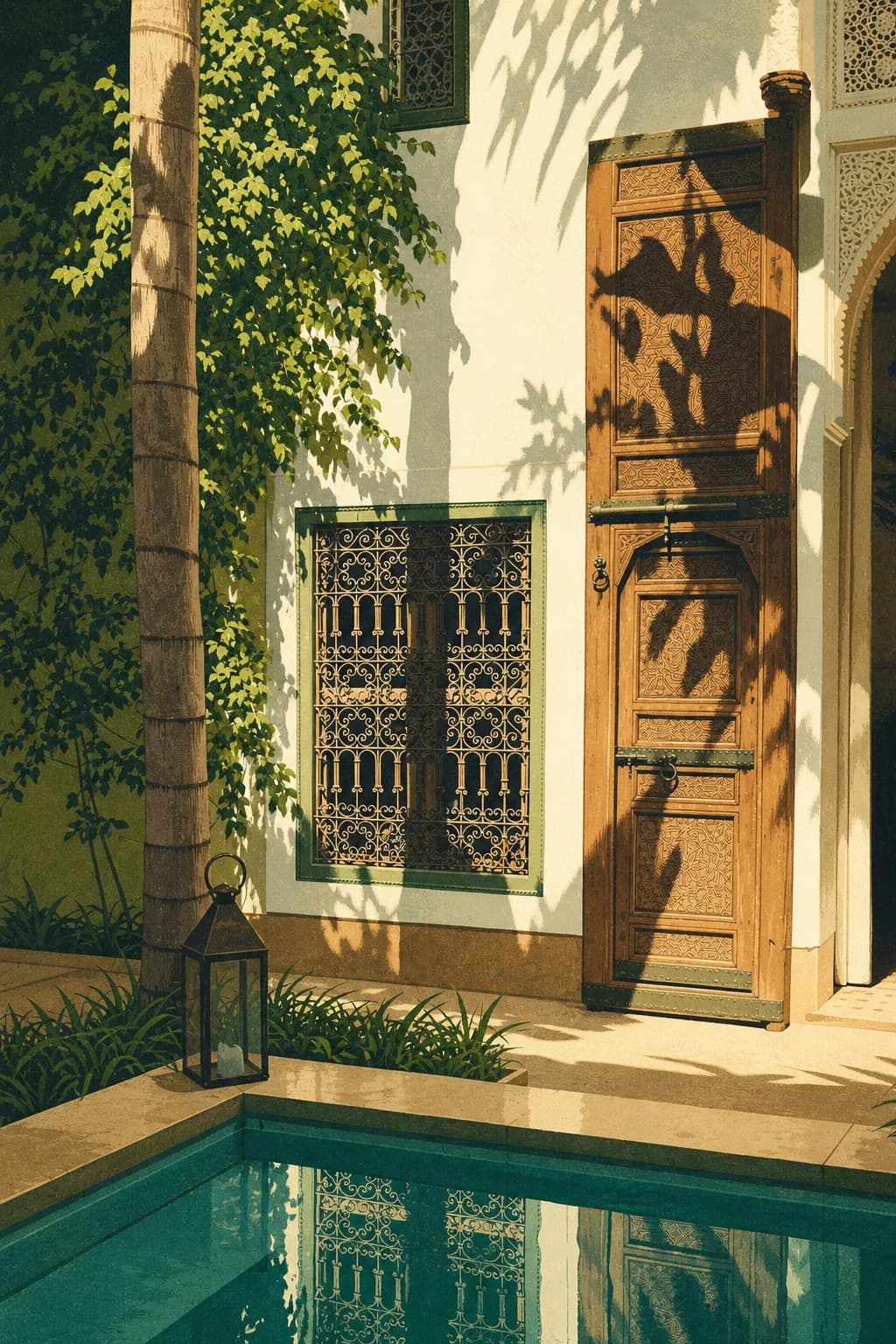
Nicole and Patrick didn't renovate an existing building. They built a Moorish palace from nothing, using traditional materials and 200 craftsmen working daily for fifteen months. Zellige tile, carved plaster, painted cedarwood: all done by hand in the construction methods that built the Alhambra. The effort shows in surfaces that age well because they were made to last centuries, not decades.
Relais & Châteaux, Then SLH
Joining Relais & Châteaux two years after opening (2005) validated the quality. The property later moved to Small Luxury Hotels of the World. Both memberships mean service and culinary standards calibrated to the highest tier of independent luxury. The dual pedigree is unusual for a Moroccan property and reflects what the Grandsire-Levillairs built.
talk.
mapped.
“The style is a blend of traditional opulence and sleek contemporary design, equal parts Moorish and minimalist, with plenty of open space and a dizzying array of amenities.”
record.
They spent three years on the design, then hired 200 craftsmen who worked for fifteen months to construct it. The architecture is modelled on 14th-century Alhambra-style Moorish buildings, set within four hectares of Persian-style garden where water channels symbolise the four rivers of paradise.
The property opened in 2003, joined Relais & Châteaux in 2005, and is now part of Small Luxury Hotels of the World. Sixteen suites (the property uses the term "harims" for its private apartment-style accommodations), each opening onto the gardens, some with private pools and terraces. The kitchen garden supplies herbs and vegetables to the restaurant, Le Grand Salon, which serves Mediterranean-Moroccan cuisine. Thirty minutes from the Medina. Breakfast exceptional and included.
changed.
Book December four to six months out. October–November is the value window. Skip summer unless heat-tolerant.
In Marrakech, demand runs inverse to the thermometer. When Europe wants winter sun and the heat breaks, the city's riads compress into windows that close months ahead — and that pattern is entirely predictable.
December is the single Peak month, and it behaves like nothing else on the calendar. New Year's Eve collides with European winter-sun demand to squeeze the top properties into a roughly two-week window that books out far in advance. Plan on four to six months of lead time for Ultra-tier riads; three months is often already too late for properties like Riad BE or Le Riad Yasmine.
October and November deliver the best value relative to experience quality. Demand indexes high — 80 in October, 85 in November — but autumn rates at many properties run 30 to 60 percent below spring equivalents because the season falls outside European school holidays. October brings the 1-54 Festival, Marrakech's contemporary art biennale, adding a cultural layer spring lacks. November is the month our data flags as flat-out underpriced: it indexes at 85 without December's premium or the school-holiday crush.
March and April are the traditional high season, driven by Easter breaks and the spring weather window. Easter week is the tightest booking window outside December, and Jardin Majorelle requires timed-ticket advance purchase throughout this period. Ramadan shifts annually across the calendar; when it overlaps with March or April, restaurants and some services run reduced hours while hotels stay fully open.
Check the Ramadan dates before you book — they reshape the dining and nightlife experience far more than the hotel experience.
Summer is the strategic play for price-sensitive travelers who can handle heat. Demand drops below 30 from June through August, and properties that validate as sold out in October often show wide-open availability through July. The medina's thick walls and internal courtyards were built for this climate, so morning and evening exploration stay comfortable — the tradeoff is that midday outdoor sightseeing is impractical. What disappears entirely is the sold-out pressure that defines the rest of the year.
September is the transition window, and it favors the early mover. Temperatures moderate and demand begins to climb, but rates have not yet caught up to autumn levels.
approach.
briefing.
“Earthen walls surround this lushly landscaped 12-suite compound in the middle of a vast, uninhabited, palm-planted plain 20 minutes outside Marrakech.”
stands.
demand's going.
The real Instagram following over time, plus where this hotel sits for demand in Marrakech. Pick a range, toggle the lines. Followers are reach and demand, not engagement.
assessment.
File closes at HIGH. Book direct one to two months out via Small Luxury Hotels. Skip if a Medina base matters; the Palmeraie reads slow and gardened, not souk-energetic.
The numbers behind the tiers
Ksar Char-Bagh · SOURCE READINGS · REDACTED- Availability density · sampled
- Monthly search volume · raw
- TikTok hashtag views · raw
- YouTube total views · raw
- TikTok following · latest sweep
- Pinterest saves · latest sweep
More from Marrakech.
Get the hotel's Unbookable Score.
Any post or reel with a hotel in it. Booking.com hotel pages work too. One free check, no account needed.