Volga

8 critic reviews
filed.
The building earns it, and it reads better in person than in photographs, best of all at seven in the morning when the courtyard is empty. The restaurant and the sound room are real draws rather than filler you tolerate. If you want a grand hotel with a full spa and an army of concierges, this is not that.
Not really. With more than 43,000 Instagram followers and write-ups from Design Milk, Hospitality Design and JustLuxe, Volga is well past the secret stage among people who follow Mexican architecture. What stays under-known is how usable it is: the courtyard at dawn, the gym, the mezcaleria on a Tuesday night.
angles.
Concrete built around water
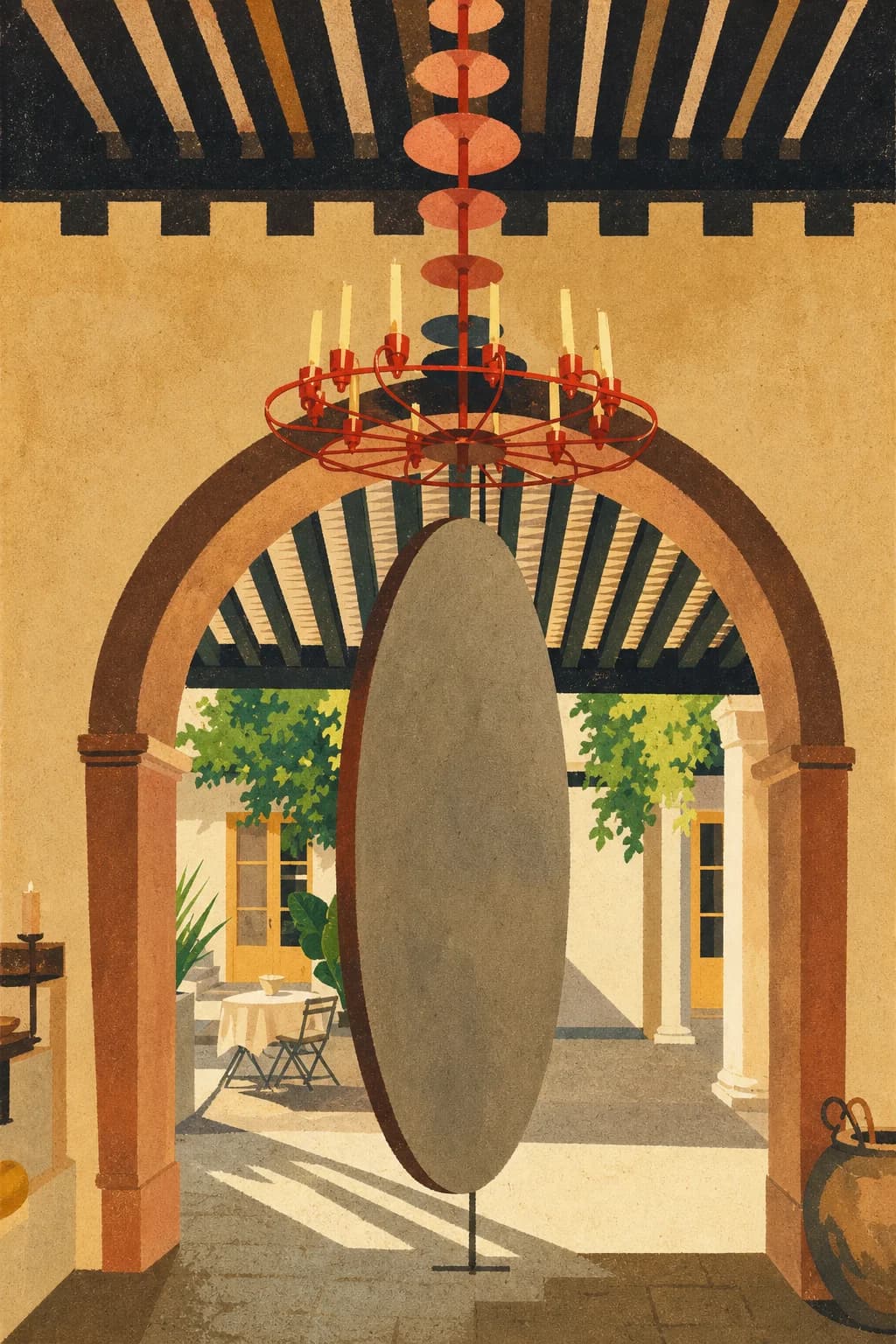
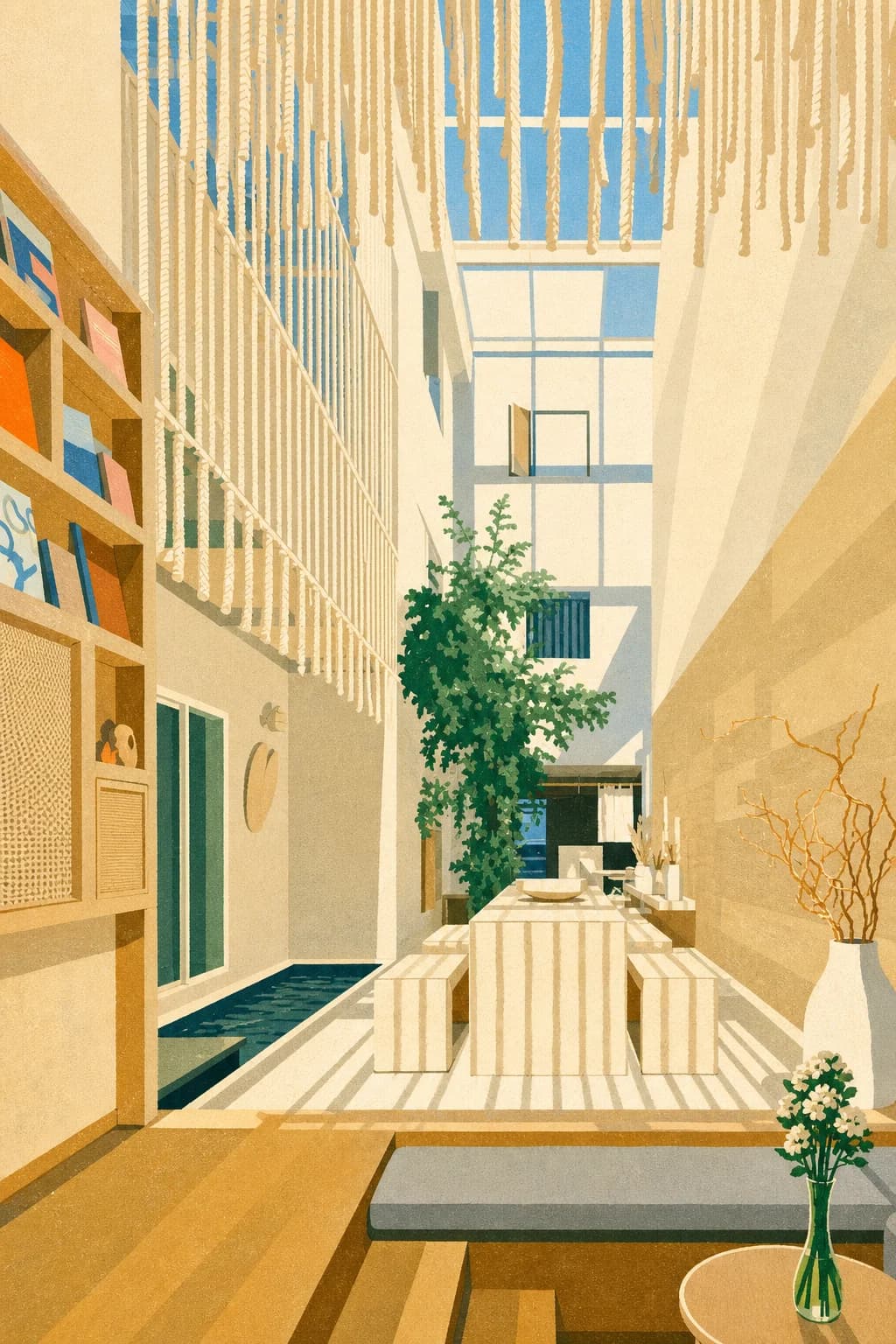
The move that makes Volga work is subtraction: JSa carved an open courtyard through the middle, called it an urban cenote, and let light and water do the decorating. Board-marked concrete stays raw, the geometry stays strict, and Perla Krauze's lava, stone, brass and travertine piece supplies the only ornament the ground floor needs. Every room looks inward at all of it.
Three very different drinking rooms
Elora handles the restaurant end, contemporary Mexican cooking built on local produce, and it is genuinely good rather than hotel-good. The mezcaleria is a spare room with long communal tables where a tasting turns into a conversation with strangers. Then Minos, the hi-fi sound room downstairs, dim and loud in the right way, with proper speakers and cocktails built to match.
A quiet street off Reforma
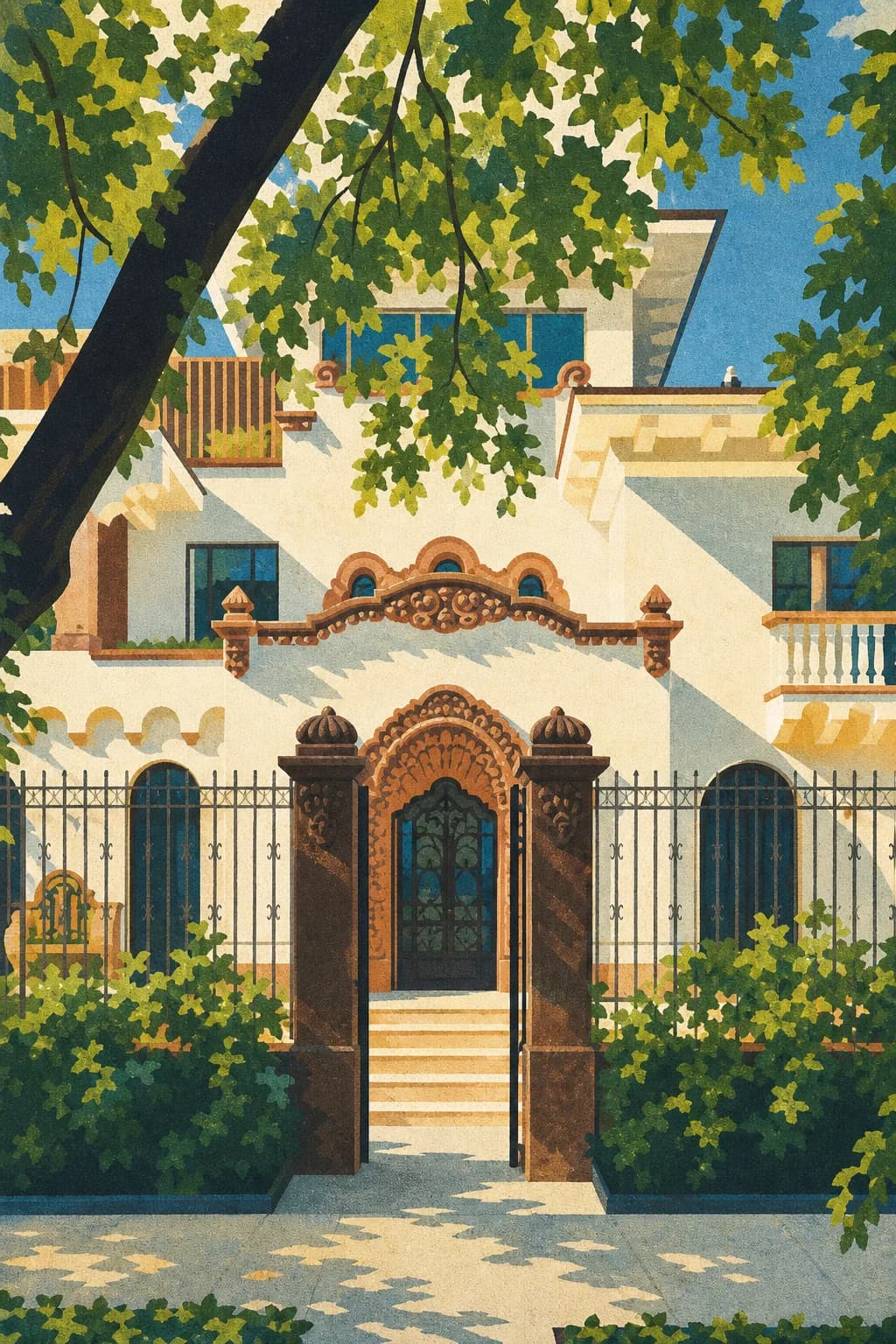
Río Volga is a residential side street in Cuauhtémoc, one block of trees and low buildings off Paseo de la Reforma. The Angel of Independence is a short walk, Chapultepec and the National Museum of Anthropology sit at the end of the avenue, and Roma Norte and Condesa are twenty-odd minutes on foot. You can go three days without a car.
talk.
mapped.
“Volga marries Japanese and Mexican influences in bustling Cuauhtémoc. Indulge in Edo Kobayashi's delicious omakase dinners.”
record.
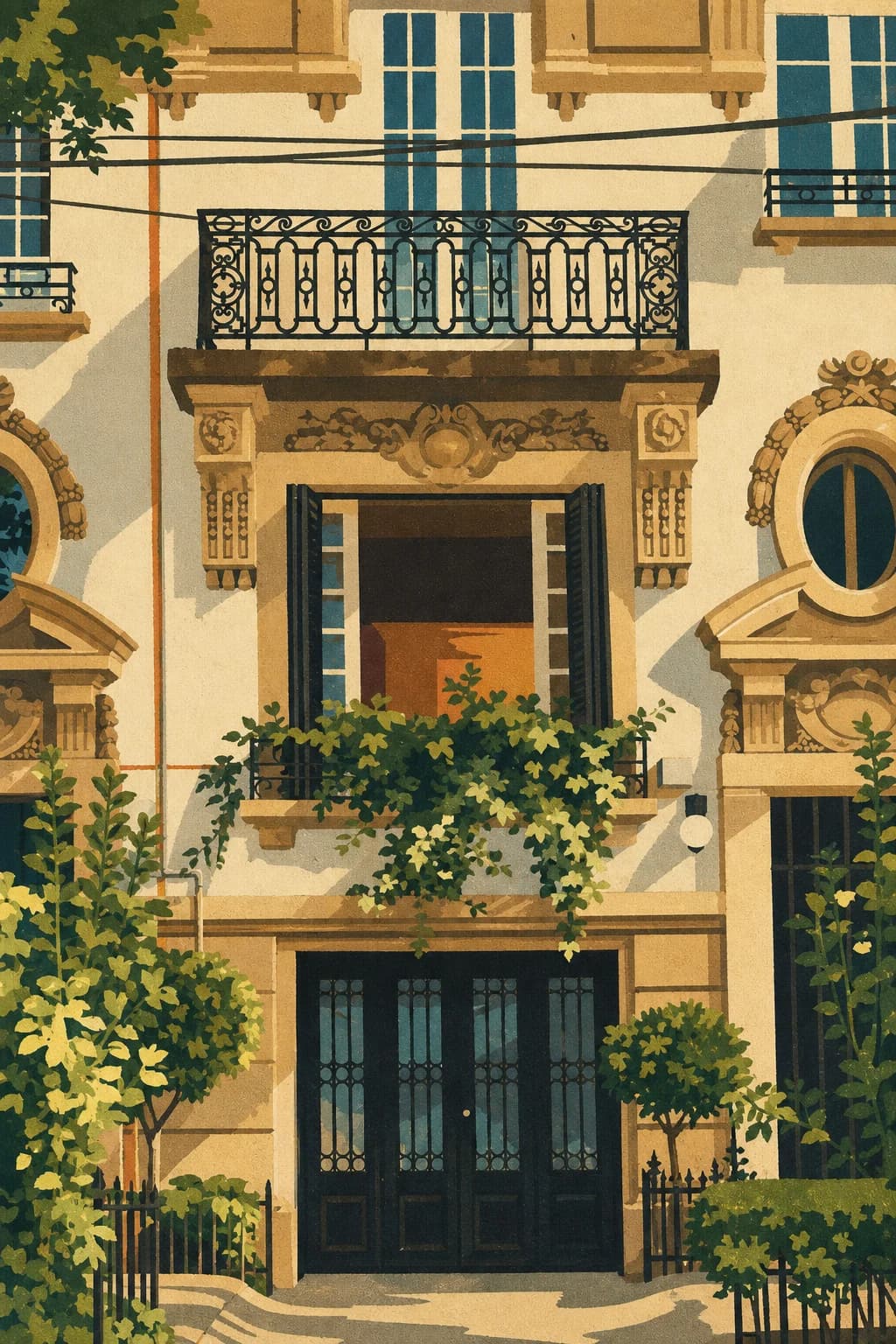
Matador Network called it the city's most Instagrammable hotel, which undersells the building. Mexican firm JSa Arquitectos designed it in bold brutalist concrete with precise geometric lines, wrapped around an interior courtyard the hotel calls an urban cenote: stone, water, and a shaft of daylight that crosses the walls all afternoon. JSa founder Javier Sánchez, winner of the Golden Lion in Venice in 2006 and an AIA Housing Award in 2022, is credited on the project.
Sculptor and painter Perla Krauze made the large-scale lava, stone, brass and travertine work that anchors the ground floor. Forty-nine rooms face that courtyard rather than the street, so Río Volga stays outside. Upstairs, a rooftop swimming channel with cabanas and a DJ; downstairs, a mezcaleria with long communal tables and a hi-fi listening room. It stays bookable if you plan. It does not stay bookable if you decide on a Thursday.
changed.
Mexico City runs on a two-peak calendar, and understanding why the curve looks the way it does is worth more than any temperature chart. The first peak is spring, roughly March into April, the dry-season stretch when the jacarandas turn the city violet and the skies stay clear. The second is late October into November, when Day of the Dead brings the single biggest travel surge of the year. Those are the weeks the city sells to the world, and they are the weeks the small design houses fill first.
For those peaks, plan far ahead. The Roma and Polanco properties that matter, the handful in the upper tiers, can close out three months before Day of the Dead and the jacaranda weeks, and there is no overflow wing when a hotel has nine or twenty rooms. If your trip is fixed to those dates, book the room before the flights.
The genuinely undervalued window is the summer rainy season, June through August. The rain scares people off, but it arrives as short, predictable afternoon storms that clear by evening, leaving bright mornings for everything you actually came to do. Demand drops to its yearly low, the same rooms that vanish in October sit open, and rates soften across the board. Shoulder travelers who do not need the jacarandas get the best value of the year here.
The rest of the calendar fills in around the peaks. February, May, September, and December run warm with demand: September carries Independence Day on the 16th and its plaza celebrations, and December brings the Guadalupe pilgrimage and Christmas, both of which tighten the center in particular. January sits quiet after the holidays, another soft, workable window.
The one thing Mexico City never does is close. There is no dead season, no shuttered-hotel month; the city works year-round, so the only real decision is how much company you want and how early you are willing to commit. Book the peaks early, take the summer if you can be flexible.
approach.
briefing.
“Traveling to a sprawling major city is better when you know you'll arrive to comfort and convenience, and for that.”
stands.
demand's going.
The real Instagram following over time, plus where this hotel sits for demand in Mexico City. Pick a range, toggle the lines. Followers are reach and demand, not engagement.
assessment.
File closes at HIGH. Volga stays bookable for anyone planning six weeks out, and flexible for anyone happy with a Tuesday. Book it for the concrete, the courtyard and the sound room. Skip it if you want a spa, a real pool, or a rooftop that stays quiet.
The numbers behind the tiers
Volga · SOURCE READINGS · REDACTED- Availability density · sampled
- Monthly search volume · raw
- TikTok hashtag views · raw
- YouTube total views · raw
- TikTok following · latest sweep
- Pinterest saves · latest sweep
More from Mexico City.




Get the hotel's Unbookable Score.
Any post or reel with a hotel in it. Booking.com hotel pages work too. One free check, no account needed.