Node
Hotel.
4 critic reviews
filed.
If your idea of a great hotel is living inside a modern-art collection wrapped in raw concrete, Node overdelivers. If you want warmth, deep service, or classic Kyoto tradition, the same building will feel austere. Know which camp you are in before you book.
For a design-forward property with real art and a serious architectural pedigree, Node stays surprisingly under the radar next to Kyoto's big luxury names. Its downtown-but-quiet address keeps it off the standard tour circuit. It is a genuine hidden gem for travelers who chase interiors over brand names.
angles.
Concrete From An Ando Alumnus
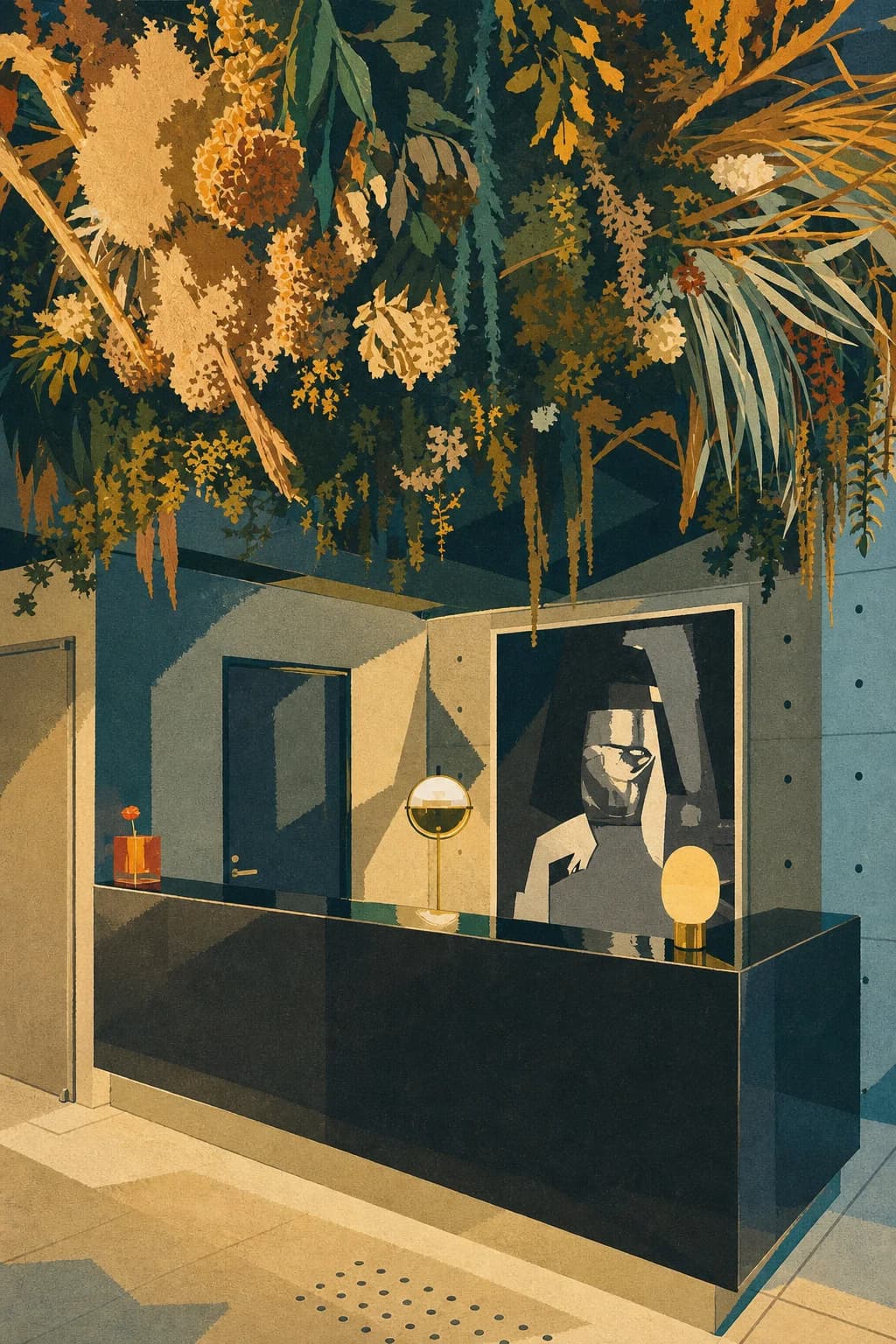
Seiichiro Takeuchi trained at Tadao Ando Architects & Associates before designing Node, and the DNA shows: a five-storey reinforced-concrete and glass structure squeezed onto a narrow downtown plot, ash-hued walls, cement finishes, marble-like ceilings. It is austere from the street and flooded with light inside. A vertical garden and a six-metre living wall soften the grey without ever tipping into soft.
Over Sixty Real Artworks Inside
This is less hotel, more art collector's house you can sleep in. More than sixty works hang across the public rooms and the guestrooms, and each room is given its own original piece. Interior designer Daisuke Enomoto of Indian Creek Fete Kyoto built the custom marble-and-iron furniture, laid aged oak floors, added deep velvets, and set a neon-pink Shiro Kuramata vase to greet you at reception.
Downtown, Away From The Crowds
Node sits in Downtown Kyoto, central enough to walk to Nishiki Market and toward Gion, but set on a quieter street away from the shrine-tour scrum. The ground floor opens into a gallery-like lobby and a farm-to-table restaurant under a double-height bar, floor-to-ceiling windows, and that living wall. It is the rare Kyoto base that feels like a neighbourhood rather than a queue.
talk.
mapped.
“In defiance of the local hospitality stereotype, Node Kyoto is as modern as they come — industrial-chic architecture rather than ryokan style.”
record.
Architect Seiichiro Takeuchi, once an architect at Tadao Ando Architects & Associates, poured this place in concrete on the plot of a former printing factory downtown: ash walls, cement finishes, marble-toned ceilings, a five-storey box that reads like a private gallery.
Interior designer Daisuke Enomoto of Indian Creek Fete Kyoto filled it with custom furniture in marble and iron, aged white oak underfoot, velvet where you least expect it. Real art hangs in the halls and in the rooms, one piece per guest, with a Barry McGee painting stretched overhead in the restaurant. The junior suites run past a hundred square metres, closer to apartments than hotel rooms. All of that, split across twenty-five keys, is what makes it scarce. Plan early or watch it sell out.
changed.
Kyoto's demand curve is one of the most legible in Japan because it is almost entirely botanical. Two events set the peaks: cherry blossom in late March and April, and maple color in November. In those windows the city runs at capacity.
The two blossom peaks are a lead-time contest, not a booking exercise. Small houses in Gion and Higashiyama get spoken for six to nine months out, and the marquee rooms go further still. If your heart is set on blossom or foliage at a specific address, treat lead time as the whole game and book the moment dates open.
The shoulder months either side reward flexibility. February and December stay busy without hitting the peak — plum blossom and year-end temple illuminations, respectively. January is genuinely quiet: cold, clear, with the occasional dusting of snow on temple roofs that photographers wait years for. These are the months to chase the houses that vanish in spring.
Summer is the real value story, and the least understood. June through September reads as low demand despite holding one of Japan's great festivals, Gion Matsuri, which fills July with float processions, plus the Daimonji bonfires on August 16. The suppressant is simple: heat and humidity climb well into the thirties, and many travelers stay away.
If you can tolerate the weather, summer is when the hardest rooms open up at the softest rates.
The practical read is a split. Peak seasons are about discipline and early commitment; shoulder and low seasons are about opportunism. Because the curve tracks leaves rather than school holidays or weather comfort, the undervalued months are the counterintuitive ones — the hot ones. Nothing in Kyoto closes across the year, so the only real constraint is the two blossom peaks and how far ahead you are willing to plan.
approach.
briefing.
“Situated on the site of a former printing factory, NODE's location is conveniently central yet remains out of the hustle and bustle of Kyoto's touristic hotspots.”
stands.
demand's going.
The real Instagram following over time, plus where this hotel sits for demand in Kyoto. Pick a range, toggle the lines. Followers are reach and demand, not engagement.
assessment.
File closes at HIGH. Scarce on just twenty-five rooms, Node rewards art-and-design travelers who book early; skip it if you want tradition, warmth, or full-service extras. For the right guest, the concrete gallery is the whole point.
The numbers behind the tiers
Node Hotel · SOURCE READINGS · REDACTED- Availability density · sampled
- Monthly search volume · raw
- TikTok hashtag views · raw
- YouTube total views · raw
- TikTok following · latest sweep
- Pinterest saves · latest sweep
More from Kyoto.
Get the hotel's Unbookable Score.
Any post or reel with a hotel in it. Booking.com hotel pages work too. One free check, no account needed.