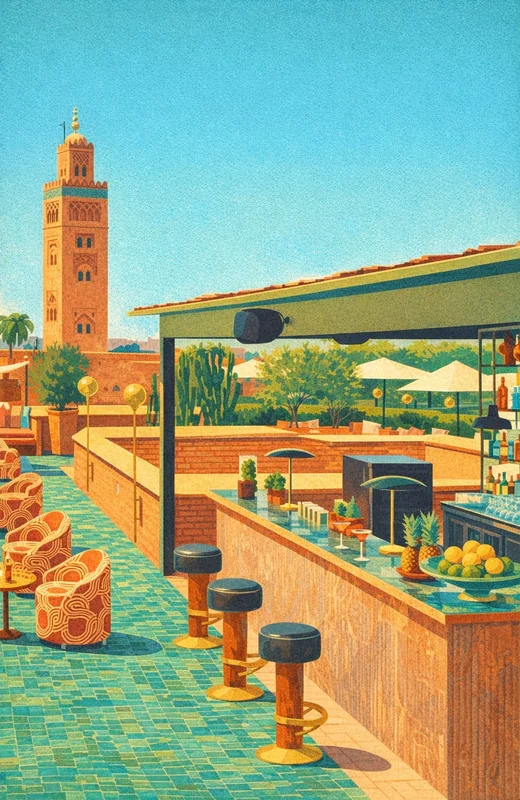
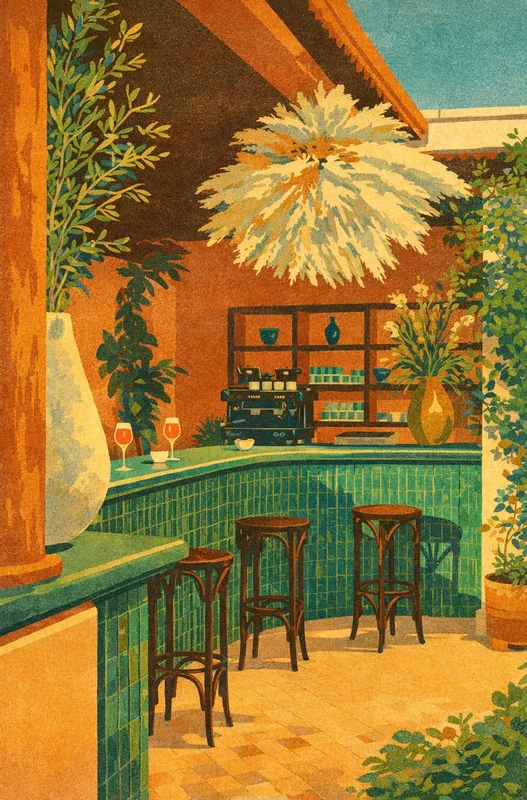
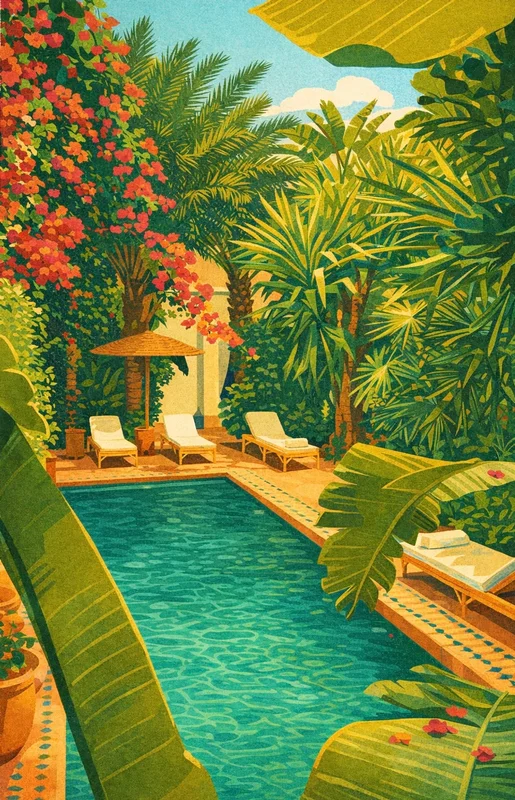
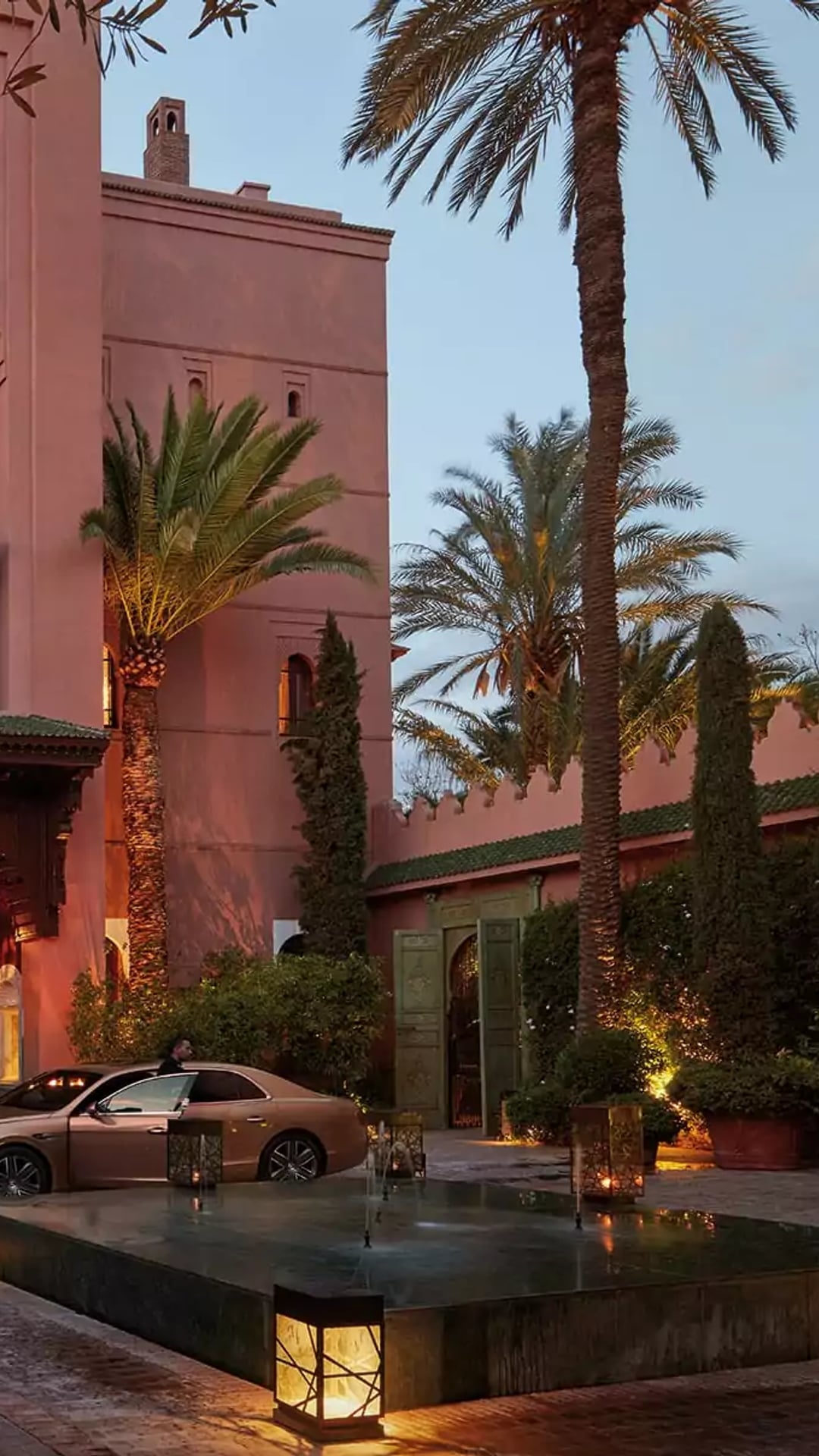
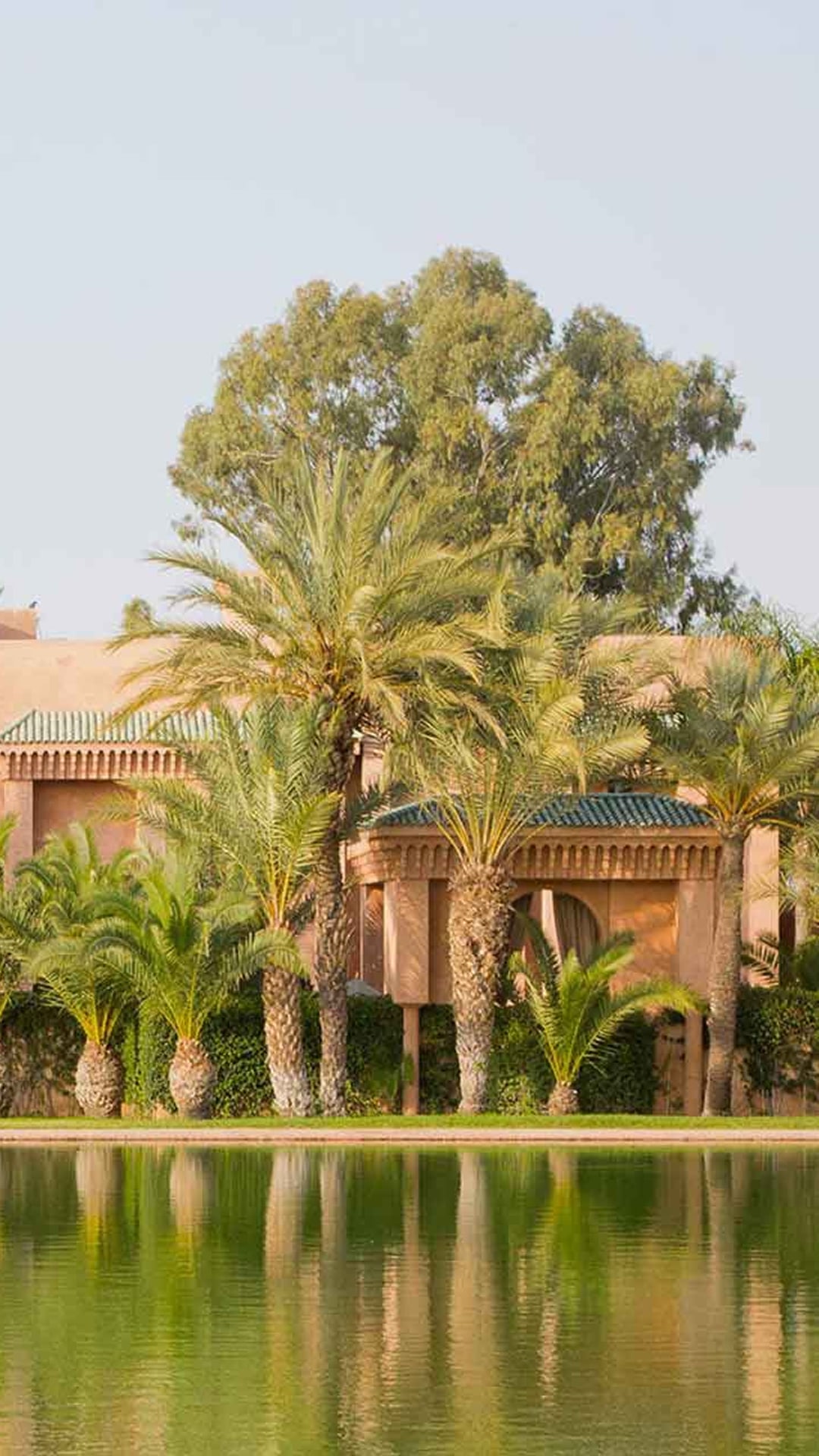
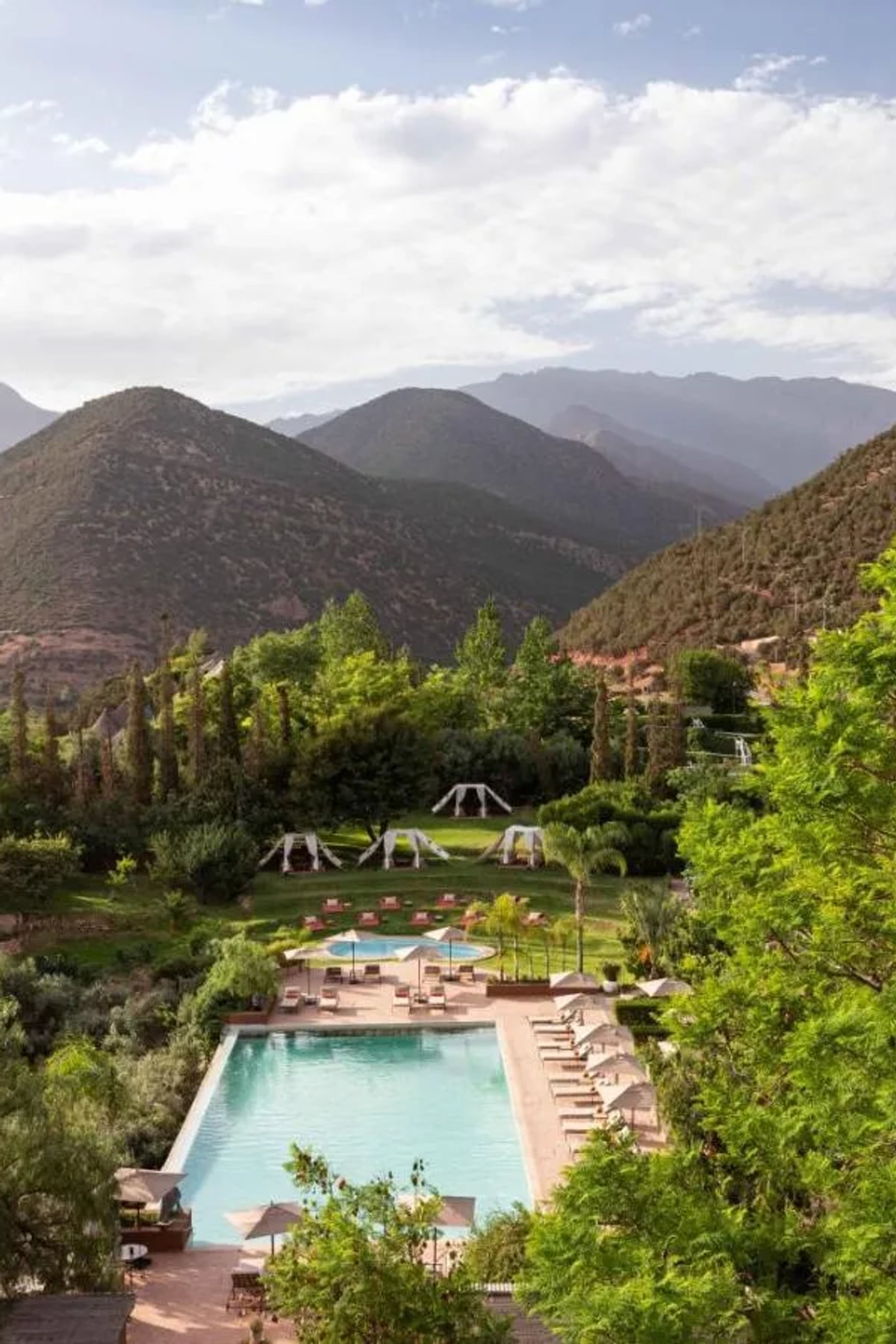
Le Palais Paysan is a 16-room property on the road to Amizmiz that leans rural-Morocco rather than urban-Moroccan, with olive groves and an outdoor pool that catches the Atlas foothills. The hype softens that the property sits a solid drive from the city and the social media presence is lower than its direct competitors, so word of mouth does most of the selling.
The property is close to one of the weekly Berber markets in the Amizmiz region, which runs on a specific day and is largely unknown to Marrakech-based guides. Ask the hotel to check the calendar on booking and plan the day accordingly; the souks here are the unfiltered version the medina can no longer offer.
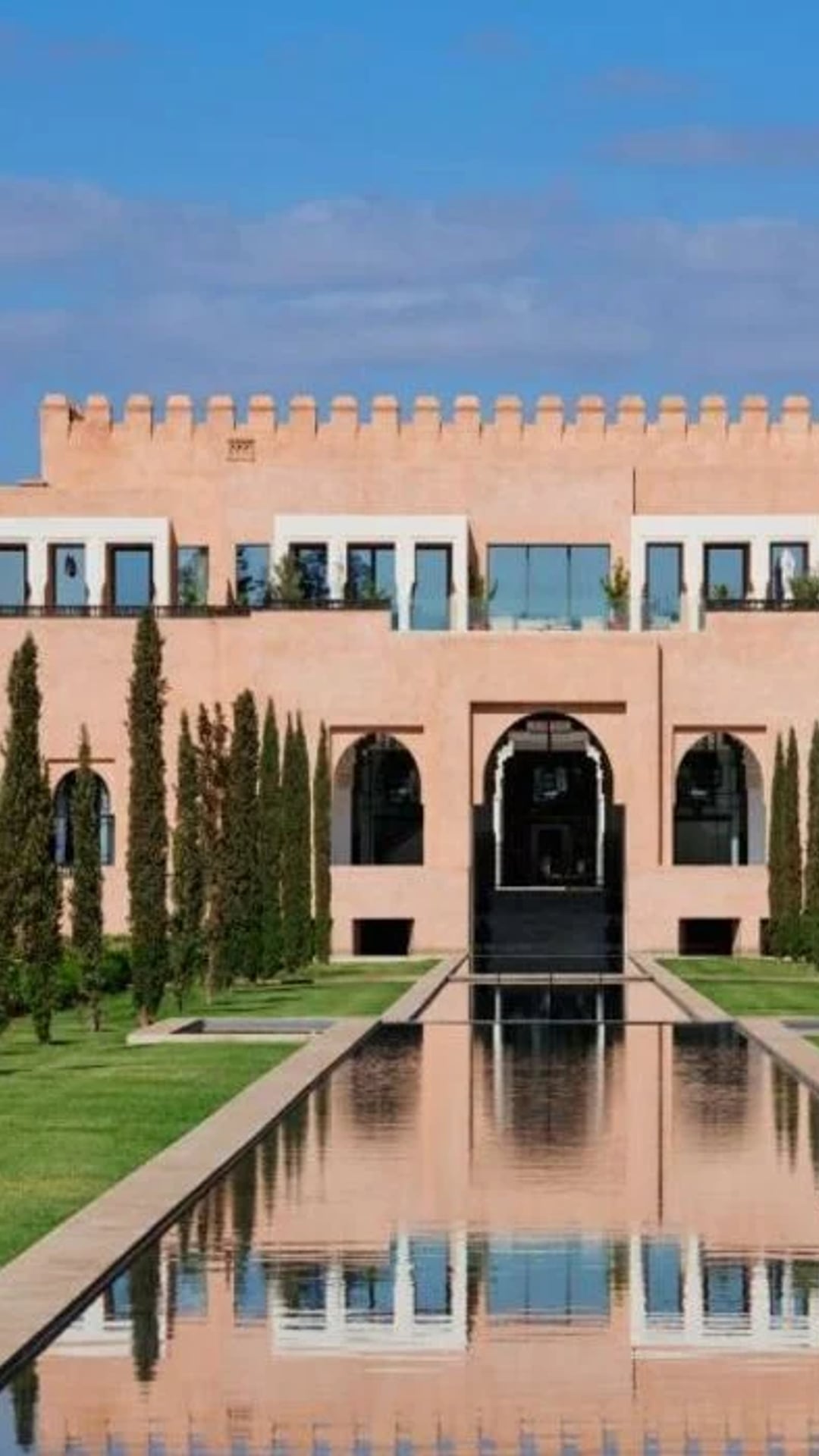
Philippe Taburiaux is an art merchant and interior architect who built Le Palais Paysan with his own design and local craftspeople using traditional adobe construction. The building technique is the same as the surrounding Berber villages. The result is a palace that looks like it grew from the landscape rather than landing on it. Taburiaux's eye for objects and materials shows in surfaces where art and architecture blur.
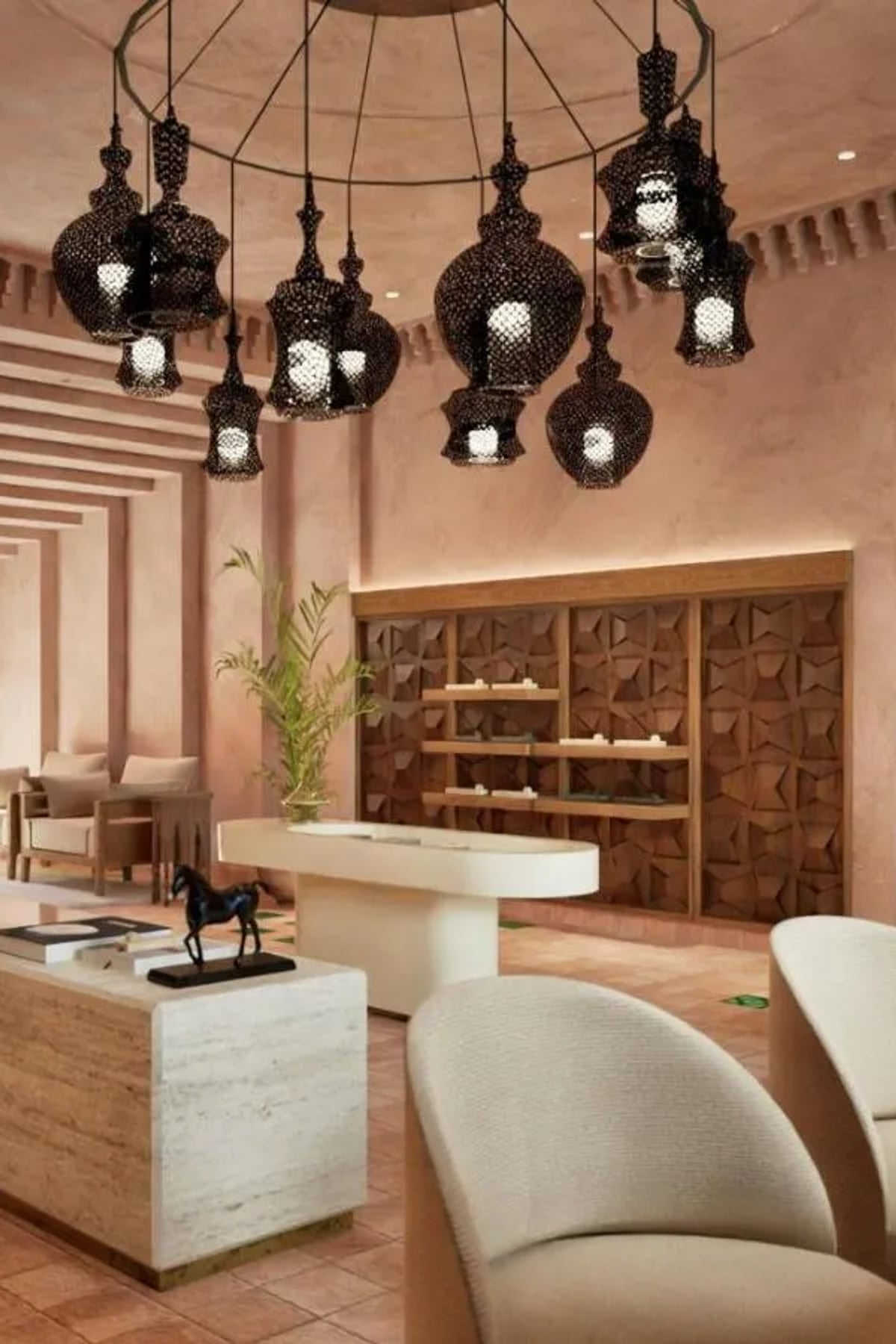
Ludovic Petit of LUP31 handled the interiors with a philosophy of absolute sobriety: raw materials, bold single colours, no clutter. The contrast between the warm adobe exterior and the restrained interiors creates rooms that feel spacious and intentional. Every room has a private garden and terrace facing the Atlas Mountains. The design discipline is rare in a region where most properties default to maximalist Moroccan decoration.
The estate sits on seven hectares of agricultural land on the Route d'Amizmiz, between Marrakech and the Atlas foothills. The scale means privacy, silence, and views that no Medina riad can offer. Gardens, orchards, and open land surround the building. The countryside location is the product: an hour from the city, you're in rural Morocco with the mountains in every direction.
Sixteen rooms across a seven-hectare estate on Route d'Amizmiz, an hour from Marrakech in agricultural countryside. No nightlife or shopping: committed retreat-only stay.
No published Instagram signal. Bookings come from word-of-mouth design-press readers and Atlas-foothills-curious travellers, not Marrakech-medina-first-time tourists.
All sixteen rooms have private gardens and Atlas-facing terraces. Differences are in floor (ground-floor garden access vs upper-floor mountain panorama). Aesthetic is consistent Petit/Taburiaux.
At $$$ in agricultural countryside, Palais Paysan competes with Kasbah Bab Ourika ($$$ Ourika ridgetop). Paysan wins on adobe construction and Belgian art-merchant pedigree, not on view drama.
High Booking Difficulty for a property that most GPS systems can't find. Le Palais Paysan sits on a seven-hectare estate on the Route d'Amizmiz, roughly an hour from Marrakech toward the Atlas foothills. Belgian art merchant and interior architect Philippe Taburiaux designed and built the structure himself using traditional adobe and local craftspeople. His partner Horst Reddmann co-founded the project.
Interiors by Ludovic Petit of LUP31: raw materials, bold colours, absolute sobriety. Sixteen rooms, all with private gardens and terraces facing the Atlas Mountains. Restaurant and spa on-site. Breakfast exceptional and included. Pet friendly. The property feels like a rural estate that happens to accept guests. The Route d'Amizmiz location places it between the city and the mountains, in agricultural countryside that most Marrakech visitors never see.
Book December four to six months out. October–November is the value window. Skip summer unless heat-tolerant.
1-2 weeks
Signal stable — composite holding within ±2 points over 17 days (currently 34). No single dimension moved more than the rest.
File closes at MODERATE. Book direct two weeks out; the rural distance keeps booking competition softer than the Medina queue. Skip if you want city access; expect a sixty-minute drive each way.