Hotel Continental
Saigon.
2 critic reviews
filed.
The history is real and rare: this is Vietnam's oldest hotel, and room 214 genuinely earns its plaque. What it is not is a polished five-star, so calibrate for atmosphere over amenities. If you value standing where the story happened more than a rooftop bar and a rain shower, it delivers.
Hardly a secret: it is a well-known address and the guidebooks found it long ago. But plenty of travellers chase the newer riverfront towers and skip the older landmark, which keeps it quieter than its reputation would suggest.
angles.
Colonial bones, tropical engineering
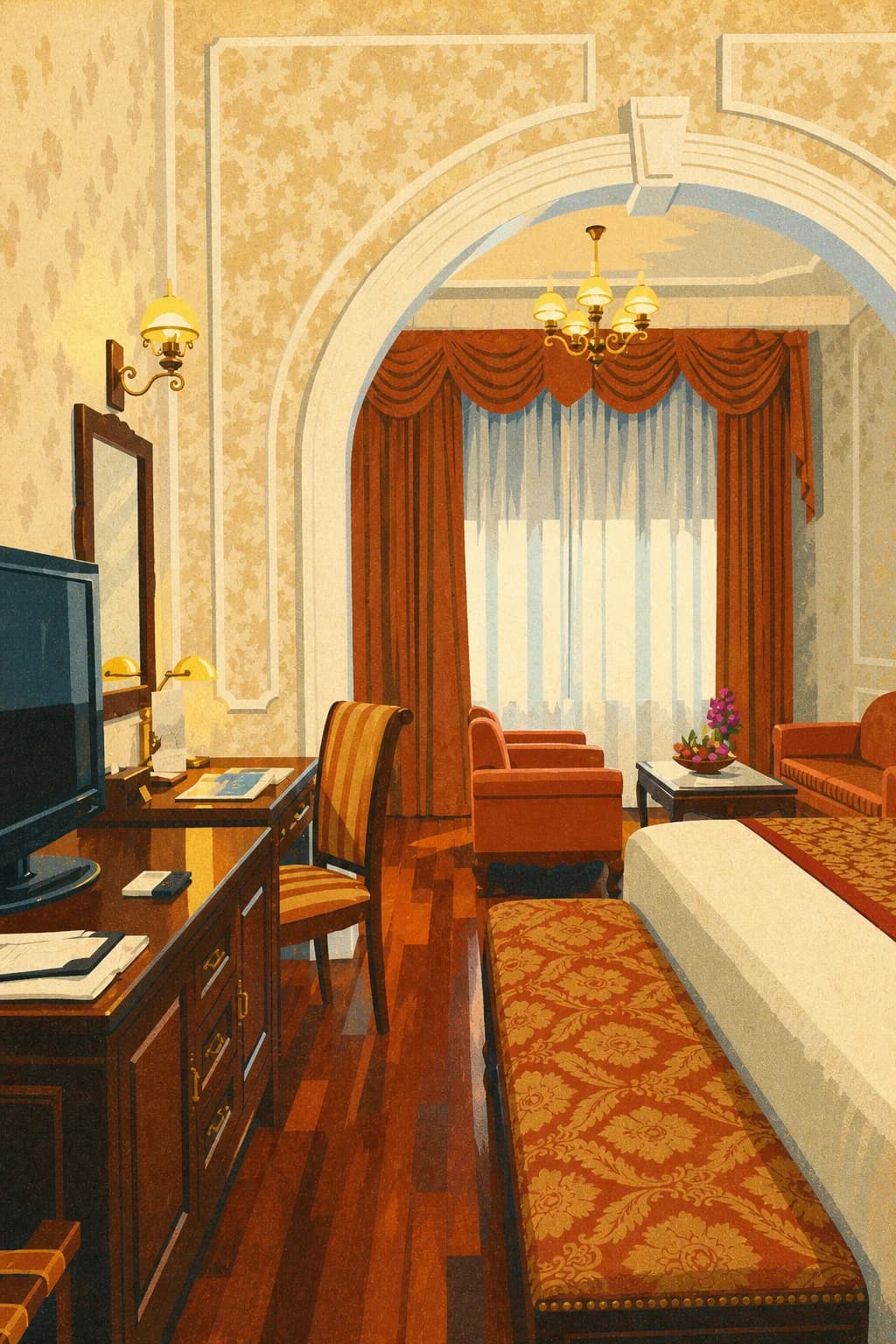
The 1880 structure was built to beat the climate, not just to impress. Ceilings rise close to four metres, brick walls run thick enough to keep the afternoon sun from turning rooms into ovens, and shuttered windows and balconies open onto either the interior courtyard or the Opera House. French colonial detailing throughout: tiled floors, tall casements, the kind of proportions modern hotels stopped building because they cost too much.
The courtyard is the point
Le Bourgeois, the all-day dining room, faces the Opera House and leans European, sometimes with a piano and violin working the room. The better ritual is breakfast in the central courtyard, where the spread mixes Vietnamese plates with continental standards and the garden does the heavy lifting on atmosphere. It is a calmer, greener pocket than the traffic outside would lead you to expect.
Directly across from the Opera House
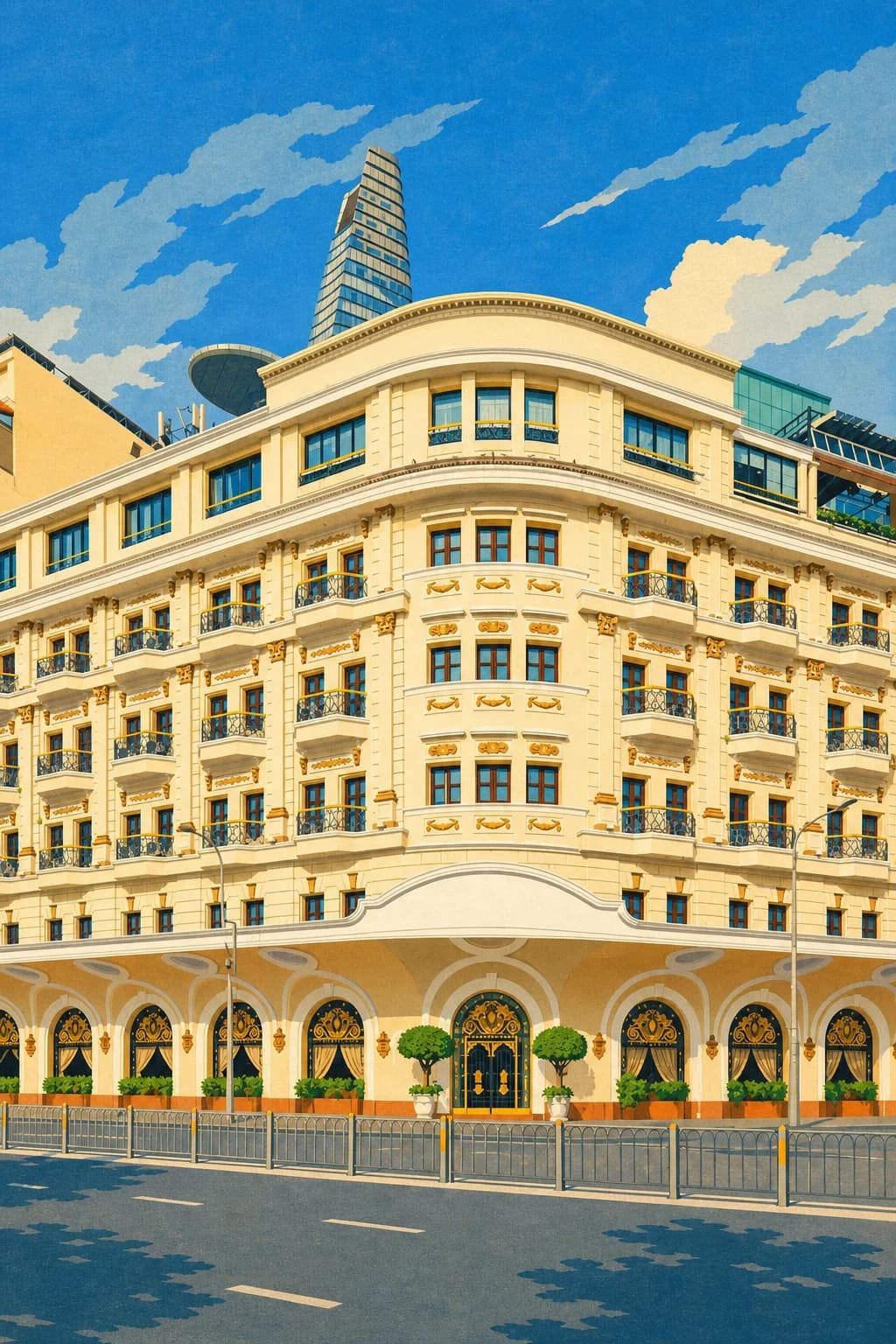
You are on Dong Khoi, the old Rue Catinat, a genuinely walkable stretch of central Saigon. The Opera House sits directly opposite, Notre Dame Cathedral and the Central Post Office are a short stroll away, and Nguyen Hue's pedestrian boulevard runs nearby. Step out the door and you are in the district where the city keeps its coffee, its shopping, and its evening crowds.
talk.
mapped.
“The courtyard, with its carp ponds, century-old frangipani trees, and cascades of bougainvillea, was as peaceful a spot as you could find in the noisy heart of Ho Chi Minh City.”
record.
Construction began in 1878, financed by Pierre Cazeau, a maker of home appliances and building materials, and the doors opened in 1880. He named it after the Hôtel Continental in Paris, and it remains the oldest hotel in Vietnam.
The bones show it: four-metre ceilings, brick walls thick enough to hold off the tropical heat, shuttered rooms opening onto a courtyard garden or the Opera House across the street. Graham Greene lived here long-term in room 214 and conceived The Quiet American within these walls. During the war the place became the Continental Palace, and the correspondents drinking downstairs nicknamed the bar the Continental Shelf. It still trades on that weight of history, which means peak dates go early. Plan ahead.
changed.
Saigon's demand curve is blunt, and reading it before you book is the difference between the room you wanted and whatever's left. Four months — December through March — sit at the top for a reason: this is the only stretch when the city's heat arrives without the daily monsoon, and it overlaps with Tet, the Lunar New Year that pulls the entire country into motion at once.
December through March is peak, and it fills from the top down. The dry season delivers the conditions everyone wants, which is exactly why the good room categories close first. For the central design hotels or a small Thao Dien boutique in this window, treat four to eight weeks of lead time as your floor and book the better categories immediately.
Tet itself deserves its own strategy. Falling in late January or February, it is the single busiest booking moment of the year — and the strangest on the ground. Many family-run restaurants and shops shut for several days as locals return to their hometowns, and the normally relentless traffic thins to something almost calm. Plan around the closures and it's fascinating; ignore them and it's frustrating.
The shoulders are where the value hides. April and November carry high but not peak demand, buying you dry-season conditions without the Tet surcharge — the sweet spot repeat visitors quietly aim for. This is the window that rewards travelers who know the calendar without paying for the crowd.
September and October are the easiest months of the year to walk into the room you actually wanted: warm, green, quiet, and roughly half the demand of peak.
The long wet season, May through October, cuts demand by about half. Rates and booking friction fall with it. The rain is real but rarely a washout — it arrives as heavy afternoon downpours that clear within an hour or two, leaving mornings and evenings open. There is no closed season in Saigon and no month the city stops working; what changes is the math of getting a bed. Plan the peak months like a competition, the shoulders like a gift, and let the wet season carry the trips where flexibility matters more than sunshine.
approach.
briefing.
“The Continental still cuts a graceful and evocative picture in the historic heart of Saigon.”
stands.
demand's going.
The real Instagram following over time, plus where this hotel sits for demand in Ho Chi Minh City. Pick a range, toggle the lines. Followers are reach and demand, not engagement.
assessment.
File closes at MODERATE. Bookable most of the year, tighter at peak, and worth the effort if you come for 1880s bones and Graham Greene's ghost. Book it for the history and the courtyard; skip it if you need a modern five-star's polish.
The numbers behind the tiers
Hotel Continental Saigon · SOURCE READINGS · REDACTED- Availability density · sampled
- Monthly search volume · raw
- TikTok hashtag views · raw
- YouTube total views · raw
- TikTok following · latest sweep
- Pinterest saves · latest sweep
More from Ho Chi Minh City.
Get the hotel's Unbookable Score.
Any post or reel with a hotel in it. Booking.com hotel pages work too. One free check, no account needed.