Condesa
DF.
3 critic reviews
filed.
The building earns its reputation, and the neighbourhood does the rest. Service is warm and human rather than drilled, so calibrate for that before you arrive. If you want a hotel that makes Condesa feel like yours within a day, this does it; if you want silence and precision, look at Polanco.
Not a hidden gem in Mexico City itself, where anyone who has spent a weekend in Condesa knows the wedge-shaped building on the corner. Outside the country it stays quieter than it deserves: a small following, and coverage from The Hotel Guru, A Hotel Life and TravelUpdate rather than constant attention.
angles.
Geometry does the work
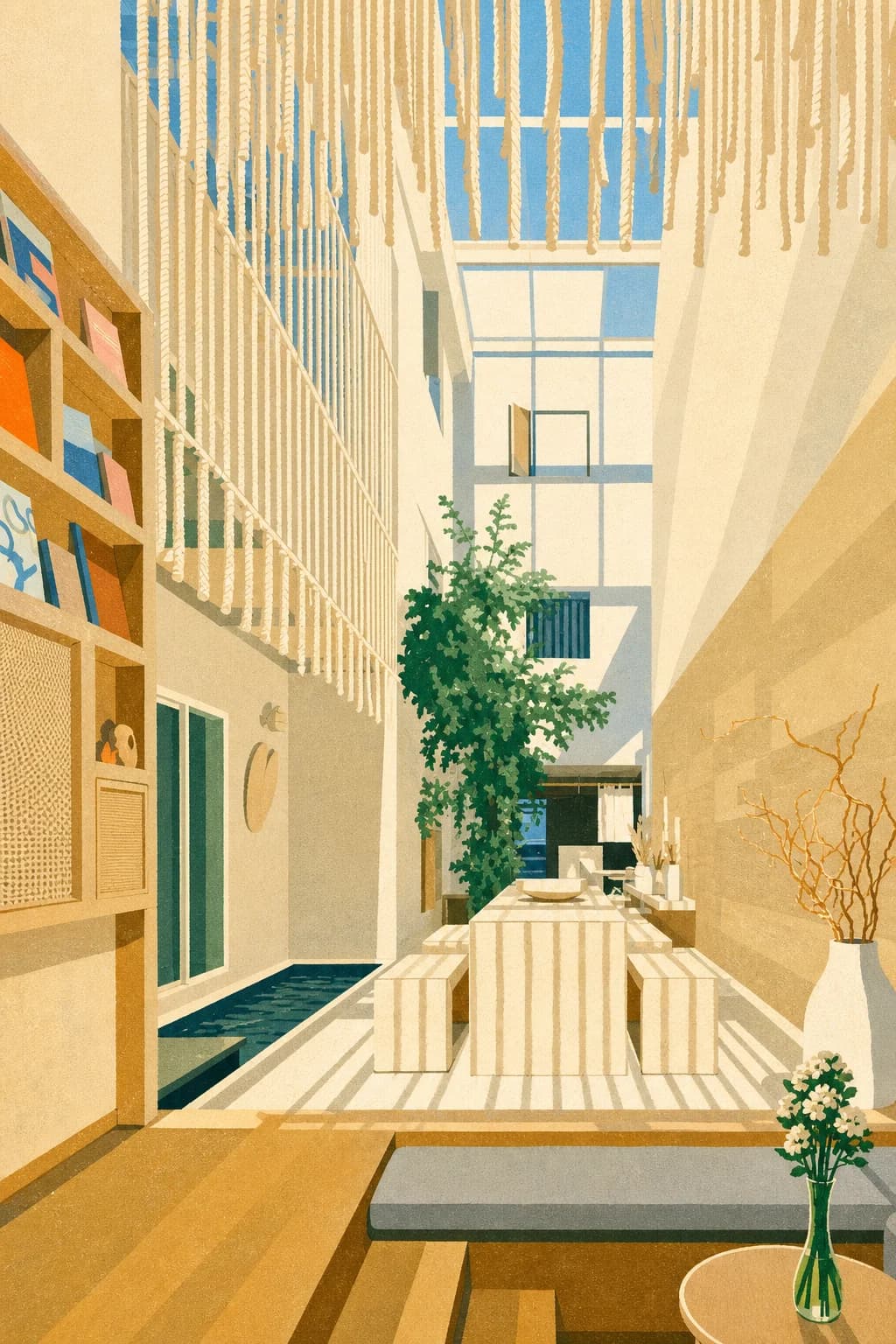
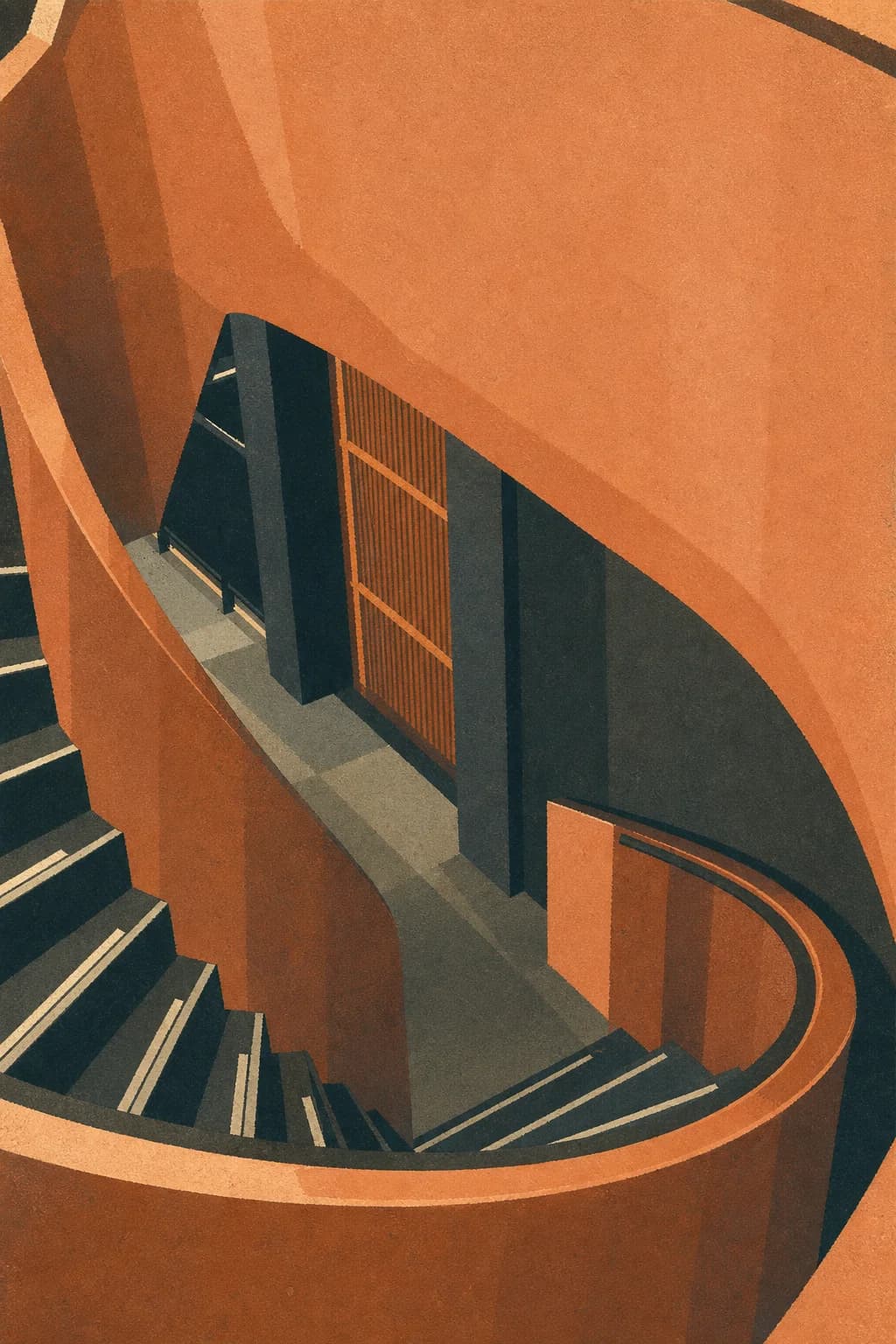
The triangular plot forces every design decision. Corridors bend, the courtyard becomes the lung of the building, and daylight drops through the open middle to the ground floor. Honeycomb wooden screens filter that light into the rooms, and mint and pale turquoise carry through the furniture. It reads as one idea executed everywhere, rather than a lobby concept that gives up above the second floor.
Dinner happens on the roof
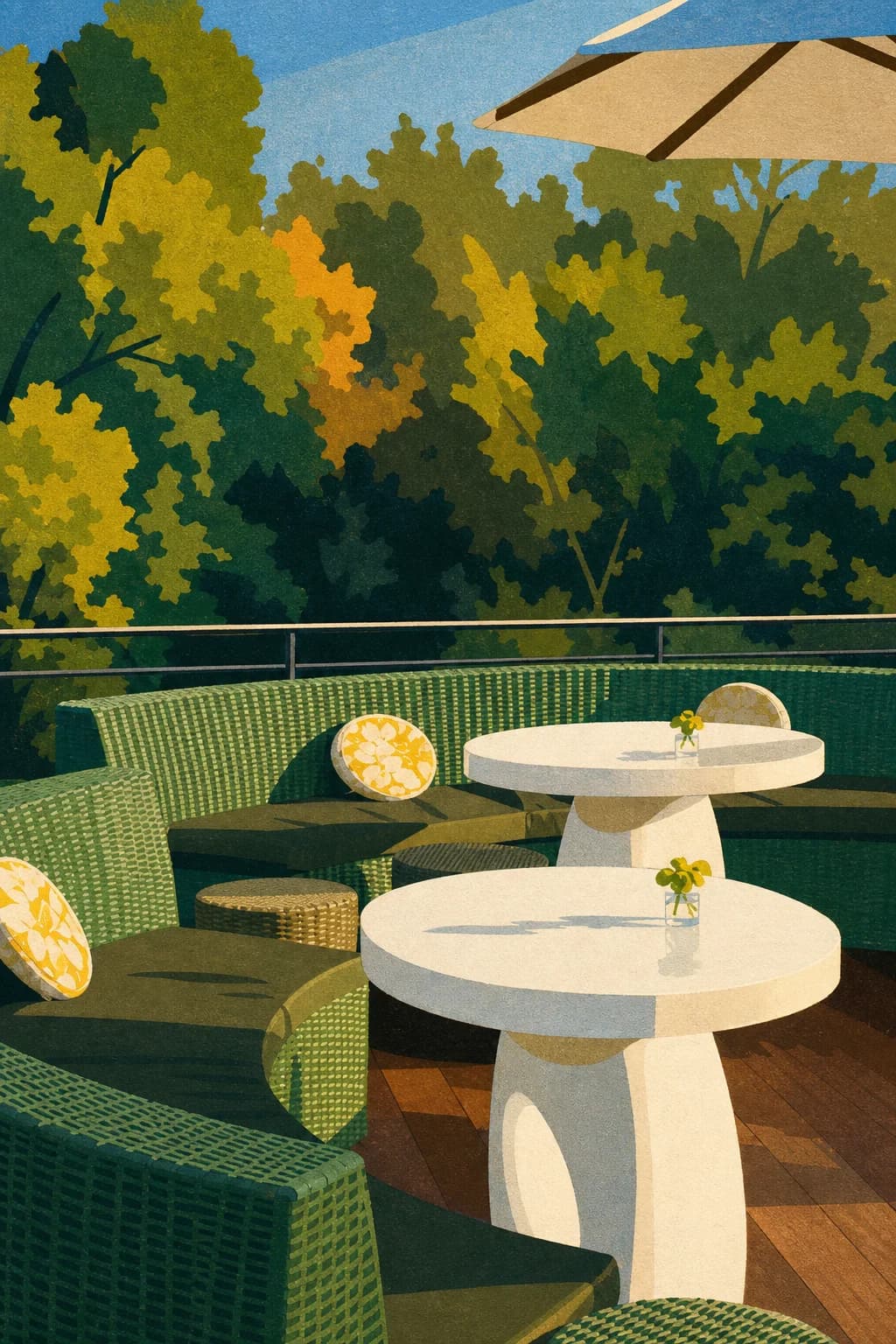
Two kitchens, two moods. The ground-floor courtyard restaurant does Mexican plates under the open sky, loud and social from mid-evening onward. The rooftop switches register entirely: sushi, raw plates, a mezcal list, and a view straight over the canopy of Parque España toward the towers of Reforma. Sunset on the terrace is why locals who are not staying here turn up anyway.
Condesa begins at the door
Step outside and you are at the top of Parque España, with Parque México a few blocks south and Avenida Amsterdam looping between them, a landscaped oval you can walk in twenty minutes. Roma Norte's galleries and taquerías are a fifteen-minute stroll east. Almost nothing here needs a car, which in Mexico City is worth more than any hotel amenity.
talk.
mapped.
“Condesa DF's huge wedge-shaped central atrium is bathed in light while bold graphics and accents in shades of green reflect the parks that surround it.”
record.
The building is the real draw. It sits where two avenues meet at an angle, so the whole structure narrows to a wedge, and the rooms wrap a triangular courtyard open to the sky.
Inside, the palette runs mint and turquoise against dark wood, with perforated screens throwing patterns across the floors as the light moves. There are 40 rooms, several with balconies over Parque España, where dog walkers and joggers start early. The rooftop does sushi and mezcal above the canopy; the courtyard downstairs fills with a neighbourhood crowd by nine. For a hotel this specific, it stays comparatively gettable, which in Condesa is the exception rather than the rule.
changed.
Mexico City runs on a two-peak calendar, and understanding why the curve looks the way it does is worth more than any temperature chart. The first peak is spring, roughly March into April, the dry-season stretch when the jacarandas turn the city violet and the skies stay clear. The second is late October into November, when Day of the Dead brings the single biggest travel surge of the year. Those are the weeks the city sells to the world, and they are the weeks the small design houses fill first.
For those peaks, plan far ahead. The Roma and Polanco properties that matter, the handful in the upper tiers, can close out three months before Day of the Dead and the jacaranda weeks, and there is no overflow wing when a hotel has nine or twenty rooms. If your trip is fixed to those dates, book the room before the flights.
The genuinely undervalued window is the summer rainy season, June through August. The rain scares people off, but it arrives as short, predictable afternoon storms that clear by evening, leaving bright mornings for everything you actually came to do. Demand drops to its yearly low, the same rooms that vanish in October sit open, and rates soften across the board. Shoulder travelers who do not need the jacarandas get the best value of the year here.
The rest of the calendar fills in around the peaks. February, May, September, and December run warm with demand: September carries Independence Day on the 16th and its plaza celebrations, and December brings the Guadalupe pilgrimage and Christmas, both of which tighten the center in particular. January sits quiet after the holidays, another soft, workable window.
The one thing Mexico City never does is close. There is no dead season, no shuttered-hotel month; the city works year-round, so the only real decision is how much company you want and how early you are willing to commit. Book the peaks early, take the summer if you can be flexible.
approach.
briefing.
“Located in the heart of Condesa, one of the best neighborhoods in Mexico City, the hotel is a trendy yet timeless spot.”
stands.
demand's going.
The real Instagram following over time, plus where this hotel sits for demand in Mexico City. Pick a range, toggle the lines. Followers are reach and demand, not engagement.
assessment.
File closes at ACCESSIBLE. A recognisable building with a modest following, so dates are usually there for anyone who plans around the city's calendar. Book it if you want Condesa at street level; skip it if you need quiet, space, and a hotel that runs like a machine.
The numbers behind the tiers
Condesa DF · SOURCE READINGS · REDACTED- Availability density · sampled
- Monthly search volume · raw
- TikTok hashtag views · raw
- YouTube total views · raw
- TikTok following · latest sweep
- Pinterest saves · latest sweep
More from Mexico City.
Get the hotel's Unbookable Score.
Any post or reel with a hotel in it. Booking.com hotel pages work too. One free check, no account needed.