Casa
Decu.
2 critic reviews
filed.
Yes on the building and the location, with caveats on the service level. In Mexico magazine gave it a feature in its architecture and design section, and HIP Hotels has covered it, which tells you the appeal is architectural rather than amenity-driven. If you measure a stay by rooftops, spas and room service, you will feel short-changed; if you measure it by mornings in a restored 1937 building with coffee you made yourself, it delivers.
Partly. It is a genuine hidden gem by hotel-brand standards, with a modest social following and no chain machinery behind it, but Condesa regulars and design-minded travellers already know the address. Call it well-kept rather than undiscovered: quiet enough to feel like a find, busy enough that peak weeks require a plan.
angles.
Light comes from within
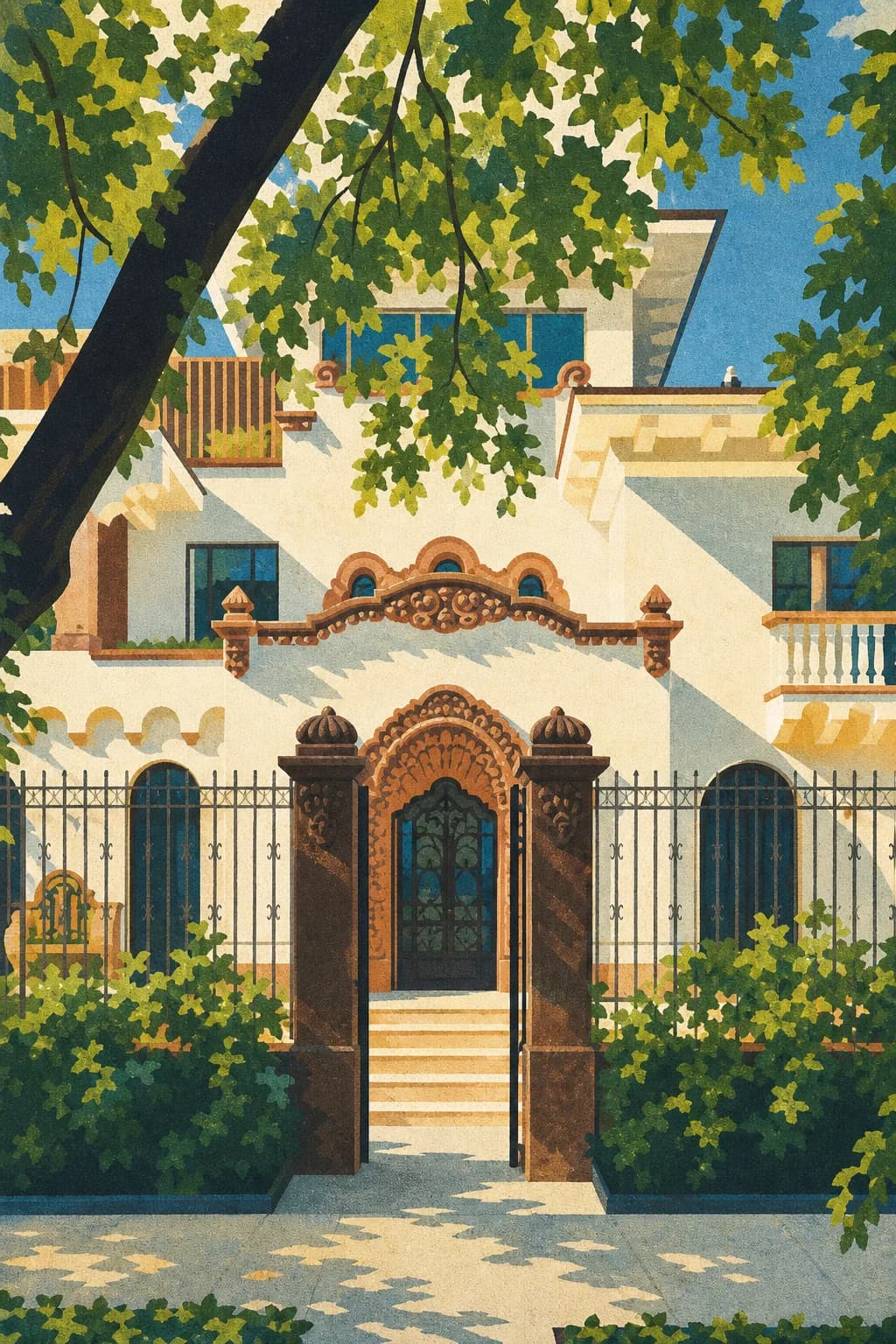
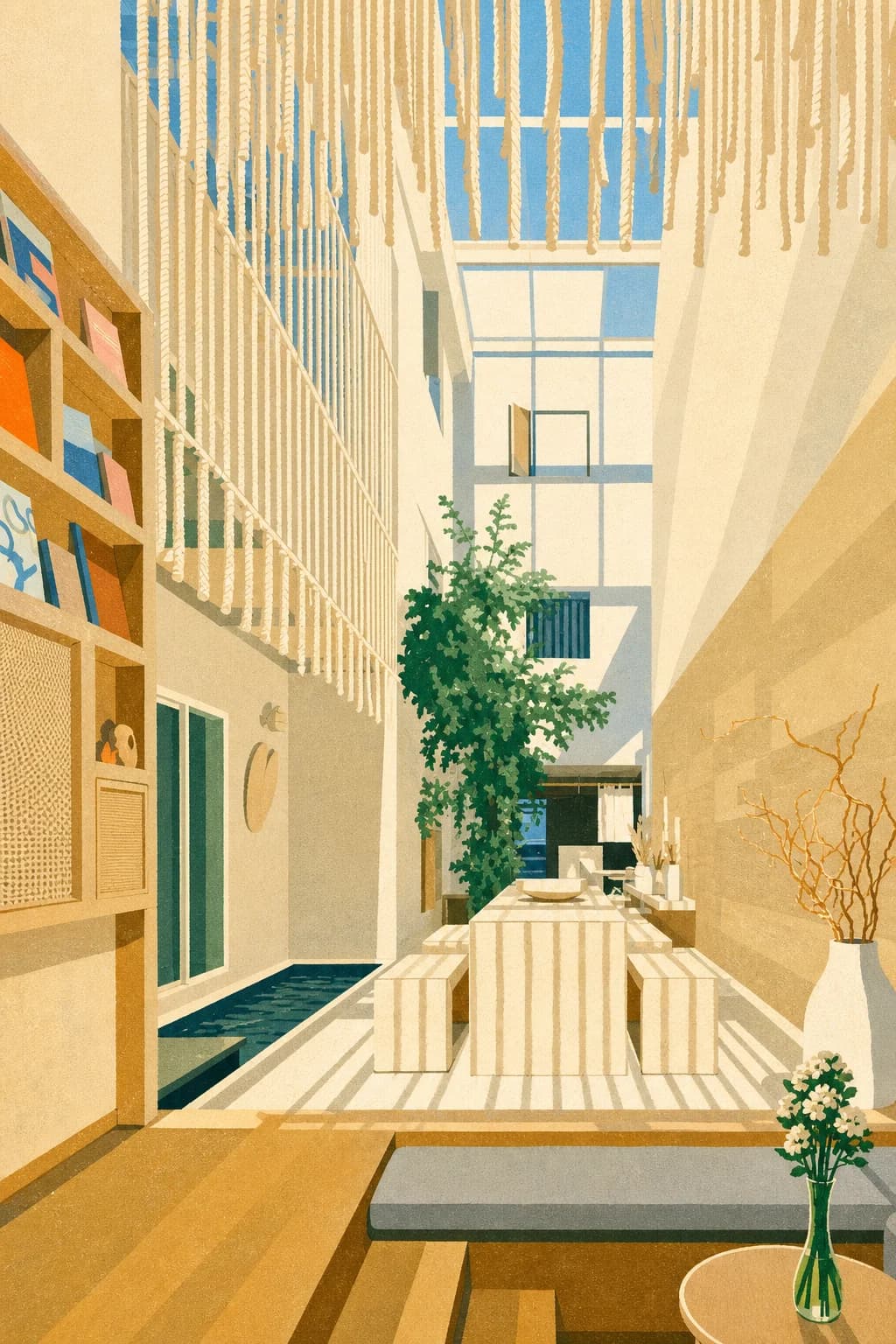
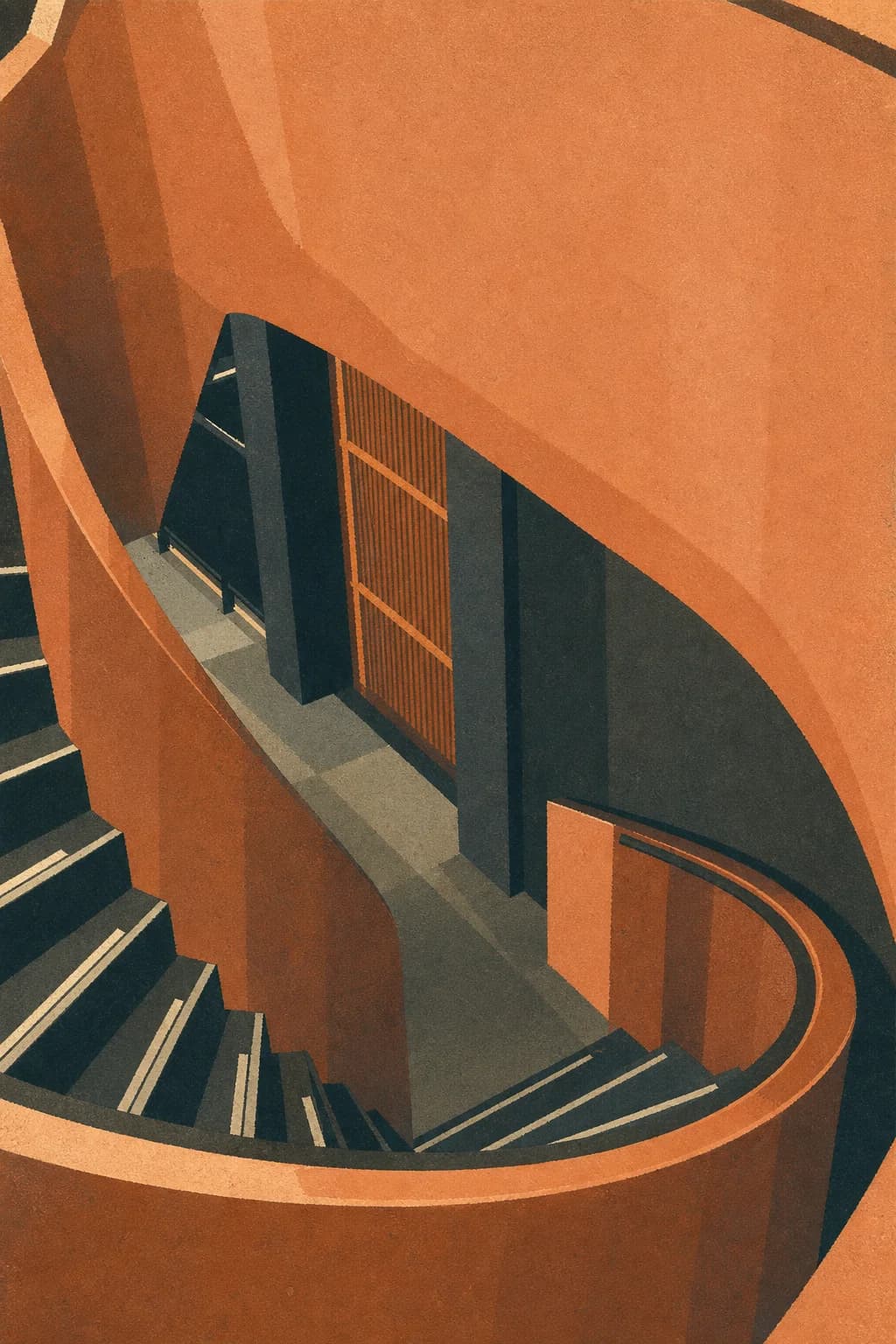
The conversion's smartest move was structural humility. Only one façade touches the street, so instead of fighting for windows, the architects opened interior patios and let daylight fall down through the building. The main courtyard sits under a translucent roof. Original 1930s glass, stairs and flooring were restored rather than replaced, so the Art Deco lines read as inherited, not applied.
Ámsterdam runs in an oval
The hotel sits on the corner where Ámsterdam meets Culiacán, on a street that curves in a long oval around Parque México. Walk it at any hour and you pass jacarandas, Art Deco façades, dog walkers and a bakery queue. Roma Norte begins a few blocks east, so two of the city's best eating neighbourhoods are on foot from the front door.
Every room has a kitchen
There are 26 rooms, between about 20 and 50 square metres, and each one comes with a kitchen, a sofa and a table to eat at. That changes how you use the city: you shop Mercado Medellín, you cook eggs, you stop treating breakfast as an event. The Duplex Suite adds a second bedroom and bathroom for people travelling together.
talk.
mapped.
“Blending timeless comfort and luxury with contemporary concepts and design, Casa Decu is a discreet stay that still overflows with oodles of undeniable character and style.”
record.
The building went up in 1937, an apartment block on a Hipódromo Condesa corner that sat abandoned until the Mexico City firms Arroyo Solís Agraz and taller paralelo converted it, finishing in 2017. They kept what mattered: the original glass, the stairs, the floors, the street façade.
With only one side facing the road, they pushed light inward instead, threading interior patios through the plan so all 26 rooms borrow daylight from a courtyard rather than a corridor; the main patio sits under a translucent roof. Rooms run from roughly 20 to 50 square metres, and every one has a kitchen, a sitting area and a full bathroom. Checking in feels less like a hotel than borrowing an apartment from a friend with better taste. It stays bookable most of the year, but peak weeks thin the good rooms fast.
changed.
Mexico City runs on a two-peak calendar, and understanding why the curve looks the way it does is worth more than any temperature chart. The first peak is spring, roughly March into April, the dry-season stretch when the jacarandas turn the city violet and the skies stay clear. The second is late October into November, when Day of the Dead brings the single biggest travel surge of the year. Those are the weeks the city sells to the world, and they are the weeks the small design houses fill first.
For those peaks, plan far ahead. The Roma and Polanco properties that matter, the handful in the upper tiers, can close out three months before Day of the Dead and the jacaranda weeks, and there is no overflow wing when a hotel has nine or twenty rooms. If your trip is fixed to those dates, book the room before the flights.
The genuinely undervalued window is the summer rainy season, June through August. The rain scares people off, but it arrives as short, predictable afternoon storms that clear by evening, leaving bright mornings for everything you actually came to do. Demand drops to its yearly low, the same rooms that vanish in October sit open, and rates soften across the board. Shoulder travelers who do not need the jacarandas get the best value of the year here.
The rest of the calendar fills in around the peaks. February, May, September, and December run warm with demand: September carries Independence Day on the 16th and its plaza celebrations, and December brings the Guadalupe pilgrimage and Christmas, both of which tighten the center in particular. January sits quiet after the holidays, another soft, workable window.
The one thing Mexico City never does is close. There is no dead season, no shuttered-hotel month; the city works year-round, so the only real decision is how much company you want and how early you are willing to commit. Book the peaks early, take the summer if you can be flexible.
approach.
briefing.
“The rooftop terrace is actually open 24/7, so you can grab your own snacks and head up here to enjoy some downtime in a semi-private space any time during the day.”
stands.
demand's going.
The real Instagram following over time, plus where this hotel sits for demand in Mexico City. Pick a range, toggle the lines. Followers are reach and demand, not engagement.
assessment.
File closes at MODERATE. Gettable across most of the calendar, squeezed in peak weeks, and the big suites disappear first. Book it if you want a 1937 Condesa building and your own kitchen. Skip it if stairs, no air conditioning and a basic breakfast would bother you.
The numbers behind the tiers
Casa Decu · SOURCE READINGS · REDACTED- Availability density · sampled
- Monthly search volume · raw
- TikTok hashtag views · raw
- YouTube total views · raw
- TikTok following · latest sweep
- Pinterest saves · latest sweep
More from Mexico City.


Get the hotel's Unbookable Score.
Any post or reel with a hotel in it. Booking.com hotel pages work too. One free check, no account needed.